
Animation isn’t just cartoons for kids. Around the world, animators are pushing boundaries-telling adult stories, challenging norms, and building entire worlds with brushstrokes, code, or clay. From the emotional depth of Japanese anime to the hyper-real textures of CGI blockbusters and the raw, hand-made chaos of experimental films, international animation is one of the most diverse art forms alive today. But what makes each style different? And why does it matter?
Anime: Emotion in Every Frame
Anime isn’t one thing. It’s a thousand voices speaking through ink, digital paint, and motion. In Japan, animation has been a mainstream medium since the 1960s, not a niche. Studio Ghibli’s My Neighbor Totoro and Makoto Shinkai’s Your Name aren’t just popular-they’ve broken box office records in multiple countries. Why? Because anime doesn’t shy away from complexity.
Character design in anime often uses exaggerated eyes, flowing hair, and minimal background detail to focus emotion. A single tear rolling down a cheek can carry more weight than a full dialogue scene in live-action. This style thrives on symbolism. In Neon Genesis Evangelion, mechs aren’t just robots-they’re metaphors for trauma. In Attack on Titan, walls represent isolation, fear, and the cost of safety.
Production techniques vary. Some studios like Trigger use limited animation to save costs but amplify impact through bold motion. Others, like Studio Colorido, spend millions on 2D rendering that rivals CGI. The result? Anime can feel intimate and epic at the same time. It’s not about realism-it’s about emotional truth.
CGI: The Digital Canvas
CGI animation dominates global box offices. Pixar, DreamWorks, and Disney have turned digital rendering into an art form that feels almost alive. In Spider-Man: Into the Spider-Verse, even though it’s CGI, the film deliberately mimics comic book halftones, motion lines, and ink bleeds. That’s not a limitation-it’s a creative choice.
Modern CGI isn’t just about making things look real. It’s about control. Animators can adjust lighting, physics, and texture down to the nanometer. In The Lion King (2019), every blade of grass was simulated. The result? A photorealistic world that feels eerily lifelike. But that realism comes at a cost: emotional distance.
Many viewers feel CGI lacks soul. Why? Because it’s often too perfect. Human imperfection-slight hand tremors, uneven brush strokes, accidental smudges-is gone. That’s why studios like Laika mix CGI with stop-motion in films like Kubo and the Two Strings. They keep the digital precision but ground it in tangible texture.
CGI also dominates non-Western markets. South Korea’s Space Sweepers (2021) used local talent and U.S.-style CGI to build a sci-fi world that felt fresh. China’s Ne Zha (2019) became the highest-grossing animated film in Chinese history, proving CGI can carry culturally specific stories to global audiences.
Experimental Animation: Breaking the Rules
If anime is poetry and CGI is symphony, experimental animation is free jazz. It doesn’t follow rules. It invents them. Artists like Jan Švankmajer, Len Lye, and more recently, Caroline Leaf and Bill Plympton, use sand, cutouts, paint, even food to create motion.
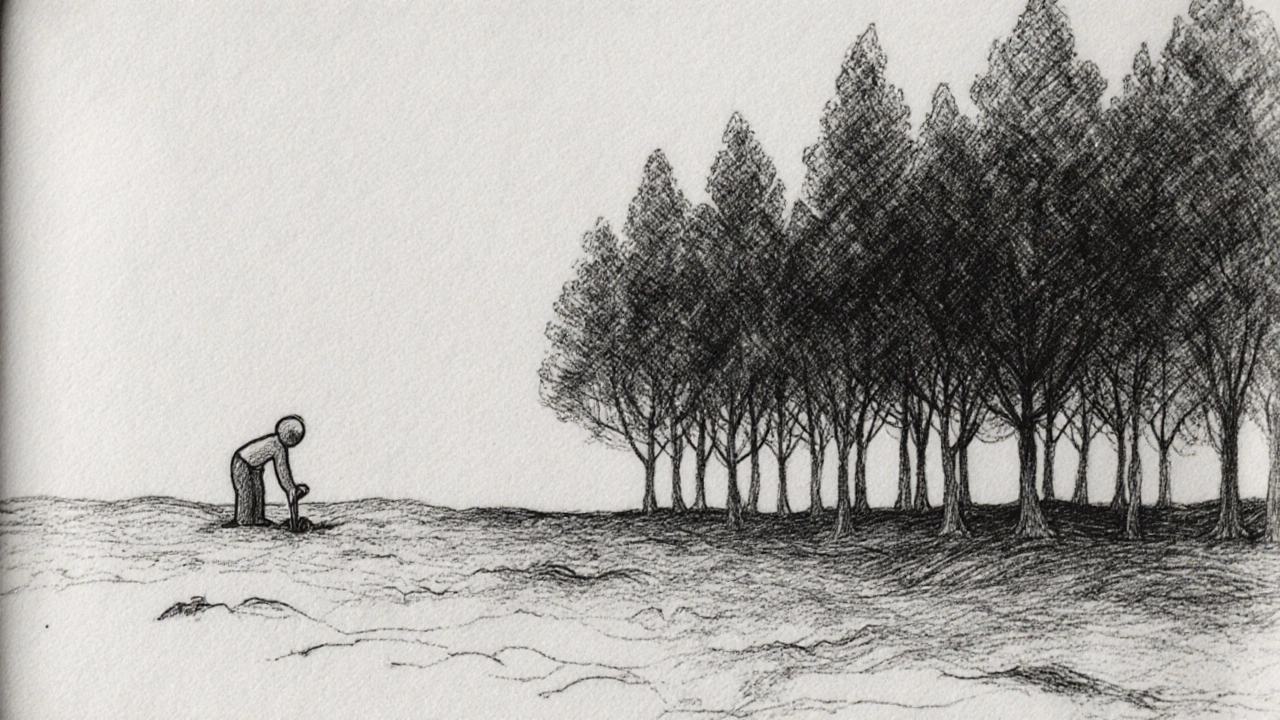
Take The Man Who Planted Trees (1987). No dialogue. No music. Just hand-drawn pencil sketches that slowly transform over decades as a lone man reforests a valley. It’s quiet. It’s slow. And it’s one of the most powerful animations ever made.
Modern experimental work thrives on digital tools but rejects commercial polish. Films like World of Tomorrow by Don Hertzfeldt use simple stick figures to explore time travel, consciousness, and existential dread. The visuals are crude-but the ideas are razor-sharp.
These films rarely make money. They’re shown at festivals like Annecy or Sundance. But they influence everything. The surreal transitions in Everything Everywhere All at Once? That’s experimental animation bleeding into mainstream cinema. The glitchy, fragmented visuals in Arcane? They owe a debt to pioneers like Norman McLaren.
Experimental animation proves that animation doesn’t need budgets, studios, or even a script. It just needs a vision-and the courage to follow it.
Why Style Matters: More Than Just Looks
Choosing a style isn’t about aesthetics. It’s about intent.
Anime uses stylization to amplify emotion. CGI uses realism to build immersion. Experimental animation uses abstraction to provoke thought. Each one serves a different kind of story.
Consider Persepolis (2007). It’s black-and-white, hand-drawn, and deliberately simple. But it tells the true story of a girl growing up during the Iranian Revolution. The minimal style forces you to focus on the emotion, not the details. A CGI version would have drowned it in texture. A live-action version would have lost its symbolic power.
Animation’s superpower is flexibility. You can make a child cry with a single line. You can show a planet dying in 30 seconds. You can turn a thought into a visual metaphor. That’s why studios around the world keep investing in different styles-they’re not competing. They’re expanding what animation can do.
Global Trends Shaping the Future
By 2025, streaming platforms have changed everything. Netflix, Disney+, and Crunchyroll are funding animation from Brazil, India, Nigeria, and Poland. Blue Eye Samurai (2023), a Netflix series blending anime aesthetics with Western storytelling, was made by a U.S.-based team with Japanese consultants. It’s not “Japanese” or “American”-it’s hybrid.
AI tools are also entering the scene. Some studios use AI to generate background frames or smooth out motion. But the best creators use it as a helper, not a replacement. The soul still comes from the artist.
Young animators today aren’t tied to one style. They mix techniques. A student in Toronto might start with claymation, add digital effects, and end with a glitchy, lo-fi edit. The lines between genres are dissolving.
What’s next? More collaboration. More cultural fusion. More stories told in ways no one has seen before.
What to Watch Next
If you want to explore the range of international animation, start here:
- Anime: Parasyte: The Maxim (2014) for psychological depth, Demon Slayer (2019) for breathtaking action
- CGI: Guillermo del Toro’s Pinocchio (2022) for handmade feel in digital form, Strange World (2022) for bold color and design
- Experimental: The Danish Poet (2006) for minimalist beauty, Love, Death & Robots (2019) for genre-bending shorts
Watch them not just to be entertained-but to understand how different cultures use movement, color, and form to say what words cannot.
What makes anime different from other animation styles?
Anime stands out because of its emphasis on emotional expression through stylized visuals-like large eyes, exaggerated movements, and symbolic backgrounds. Unlike Western CGI, which often aims for realism, anime prioritizes mood and inner feeling. It’s also produced for all ages in Japan, covering complex themes like trauma, identity, and politics, not just children’s stories.
Is CGI animation better than hand-drawn animation?
Neither is better-they serve different purposes. CGI offers precision, control, and scalability, making it ideal for large-scale productions. Hand-drawn animation, including anime and traditional 2D, carries more human imperfection, which often feels more personal and emotionally resonant. Many modern films, like Spider-Man: Into the Spider-Verse, combine both to get the best of each.
Why do experimental animations look so strange?
Experimental animation isn’t meant to be easy to watch. It uses unconventional techniques-like painting on glass, scratching film, or using found objects-to challenge how we think about movement and storytelling. These films often explore abstract ideas like memory, time, or identity. Their strangeness is intentional; it’s designed to make you feel, not just understand.
Can animation be considered serious art?
Absolutely. Films like Persepolis, The Triplets of Belleville, and Waltz with Bashir have won awards at Cannes and been studied in film schools worldwide. Animation can tackle war, grief, politics, and philosophy just as deeply as live-action films. The medium doesn’t define the message-it amplifies it.
Are traditional animation techniques dying out?
Not at all. While CGI dominates commercial releases, there’s a strong revival of hand-drawn and stop-motion techniques. Studios like Ghibli still produce full 2D films. Independent animators worldwide use pencil, paint, and even sand to create new works. Streaming platforms are also funding niche styles, giving traditional methods a new audience.





Comments(10)