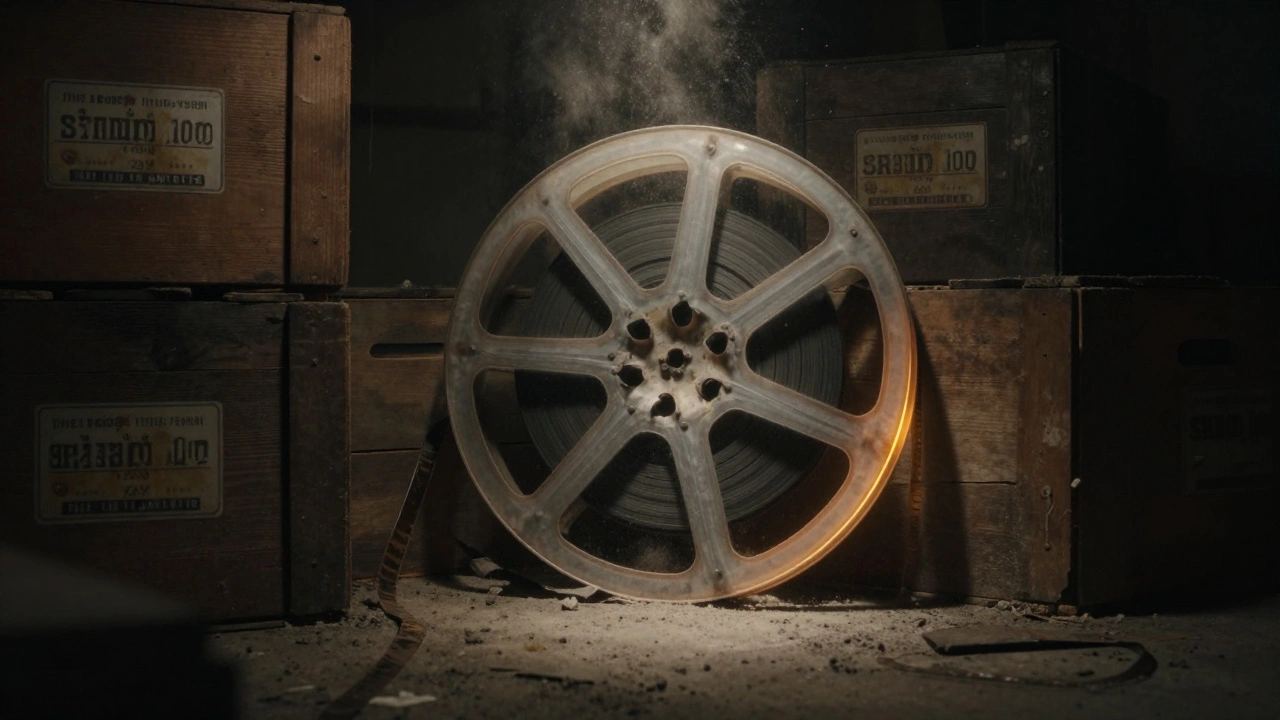
Over 75% of silent films made before 1929 are gone forever. Not because they were bad, but because no one thought to save them. Nitrate film, the kind used in the early days of cinema, was flammable, cheap, and easy to discard. Studios saw movies as disposable products-like today’s social media clips. Once they stopped making money, they were melted down for their silver content, burned in storage fires, or left to rot in damp basements. Today, we’re only just beginning to understand what we’ve lost.
What Happened to All Those Films?
The silent era gave us groundbreaking directors like D.W. Griffith, Buster Keaton, and Charlie Chaplin. Their films shaped storytelling, comedy, and visual language. But out of roughly 11,000 silent films produced in the U.S. between 1912 and 1929, fewer than 3,000 survive in complete form. Many others exist only as fragments-a few seconds of footage, a reel missing its beginning, or a single print found in a basement in New Zealand.
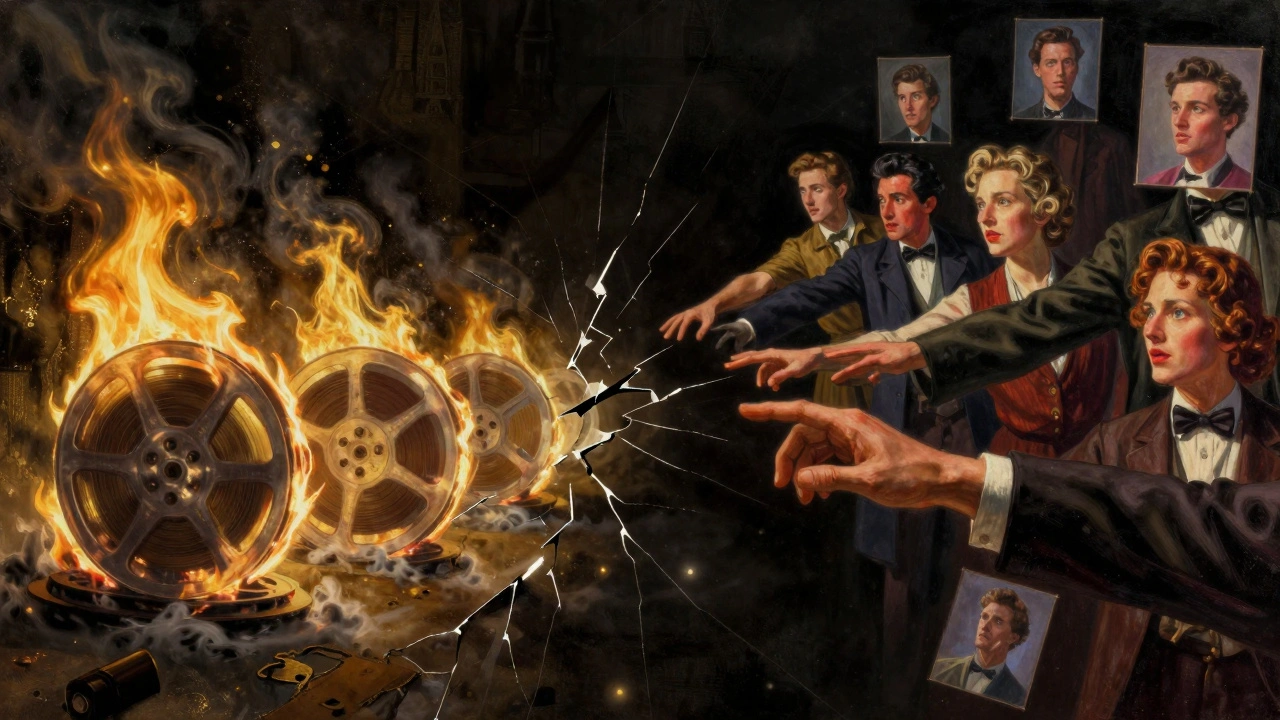
It wasn’t just neglect. Studios actively destroyed films to reclaim storage space. In 1965, Warner Bros. dumped hundreds of silent-era negatives into the Pacific Ocean. MGM burned over 400 silent films in 1967 to clear warehouse space. Even the Library of Congress, now a major archive, once considered film reels too bulky and unimportant to keep.
International losses were even worse. In the Soviet Union, many pre-revolution films were destroyed as "bourgeois" artifacts. In Japan, over 90% of silent films from the 1920s vanished due to war, fire, and lack of funding. The same story repeats across Europe, Latin America, and Southeast Asia. Film wasn’t seen as cultural heritage-it was just entertainment.
Why Film Preservation Matters
Preserving film isn’t about nostalgia. It’s about understanding how culture evolves. A lost film isn’t just a missing movie-it’s a missing voice. The 1927 film The Passion of Joan of Arc was thought lost until a copy was found in a Norwegian mental hospital in 1981. Its raw, intimate close-ups of Renée Falconetti changed how filmmakers thought about acting and emotion. Without that print, we’d have no idea how powerful silent acting could be.
Early films also show us how society thought. The 1913 film Blacksmith Scene by Edwin S. Porter isn’t famous, but it reveals how people dressed, spoke, and moved. The 1918 film His Picture in the Papers shows how advertising and celebrity culture were already taking root. These aren’t just artifacts-they’re time capsules.
Modern filmmakers still borrow from lost works. Quentin Tarantino has said he studied lost 1970s blaxploitation films to understand rhythm and tone. Directors like Martin Scorsese and Bong Joon-ho have spoken about how the absence of early films limits their ability to trace cinematic lineage. We can’t build on what we can’t see.
How Films Are Saved Today
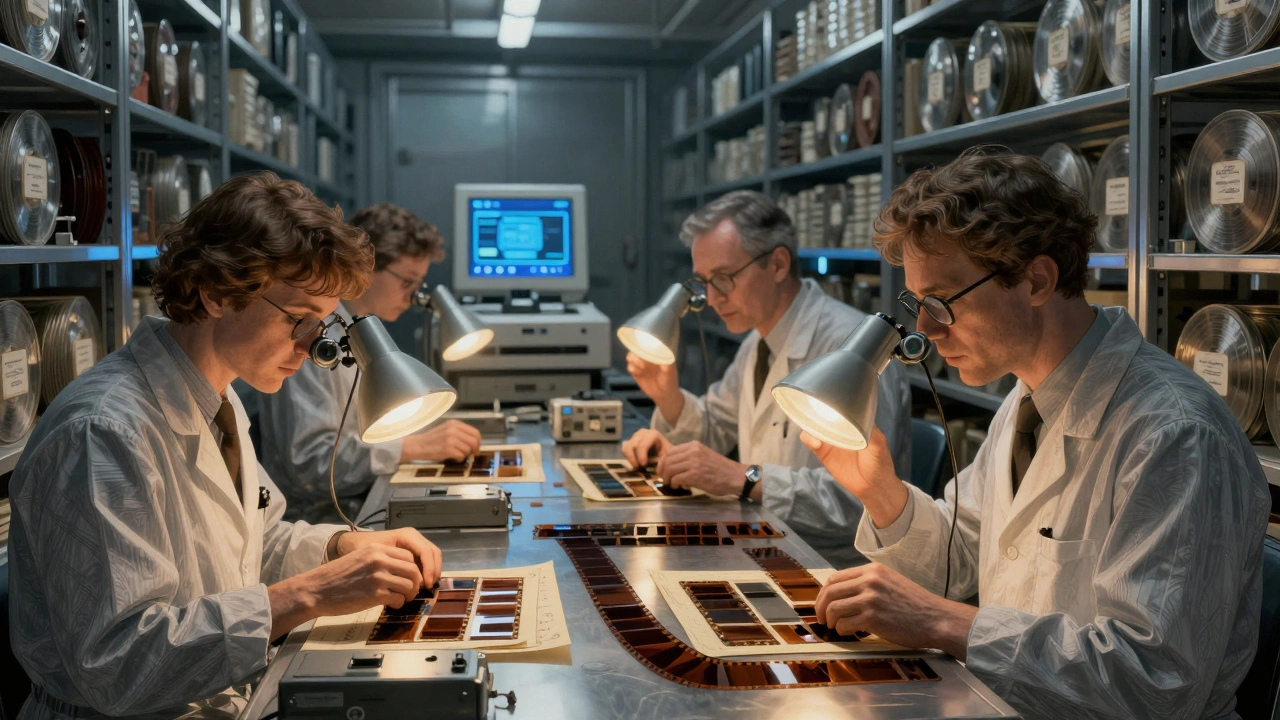
Modern film preservation is a mix of science, patience, and luck. The process starts with finding surviving prints-often in private collections, foreign archives, or forgotten storage units. The George Eastman Museum in Rochester, New York, has recovered over 200 lost films by tracking down collectors who kept reels as family heirlooms.
Once found, the film must be cleaned, repaired, and copied. Nitrate film is unstable. It turns to powder if exposed to humidity. Acetate film, used from the 1950s on, suffers from "vinegar syndrome," where it emits a sour smell and shrinks. Digital scanning is now standard. Archives use 4K or 6K scanners to capture every grain. The result? A digital master that can be copied endlessly without damage.
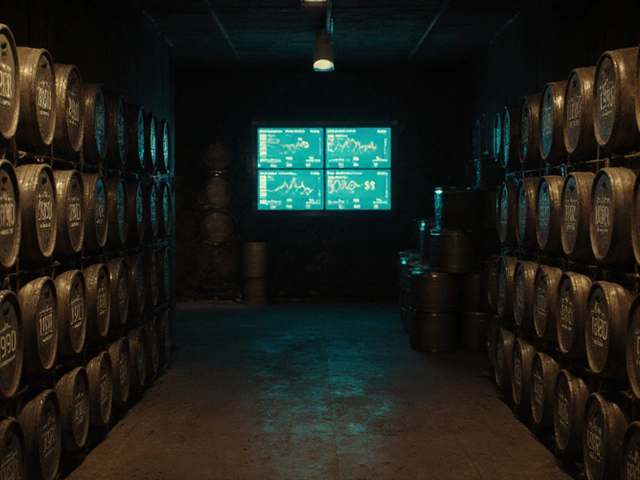
But digitization isn’t enough. The original film must be stored in cold, dry vaults-often at 35°F and 30% humidity. The Academy Film Archive in Los Angeles has vaults that cost over $1 million to build and maintain. Even then, restoration takes years. The 1925 film The Lost World took seven years to restore, using 12 different prints from five countries.
Who’s Doing the Work?
Major institutions lead the charge. The Library of Congress, the British Film Institute, and the Cinémathèque Française have entire departments dedicated to restoration. The Film Foundation, founded by Martin Scorsese in 1990, has restored over 900 films, including Metropolis and Sunrise.
But private efforts matter too. In 2010, a retired engineer in New Jersey found a box of 16mm prints labeled "1930s newsreels" in his attic. He donated them to the National Archives. Among them was a previously unknown 1931 film of a Harlem street fair-now one of the most valuable visual records of Black life in the early 20th century.
Even film festivals help. The San Francisco Silent Film Festival and the Pordenone Silent Film Festival in Italy regularly screen restored prints. These aren’t just screenings-they’re acts of resurrection. When audiences watch a 100-year-old film on a big screen, they’re not just watching a movie. They’re witnessing a miracle.
The Race Against Time
Every year, more films decay. The American Film Institute estimates that 70% of films made between 1950 and 1980 are at risk. Television broadcasts from the 1950s and 60s were often erased and reused. The BBC wiped over 100 episodes of Doctor Who in the 1960s. Only 26 survive today.
Even digital films aren’t safe. Early digital formats like DigiBeta and Betacam SP are already obsolete. Hard drives fail. Cloud servers shut down. The 2003 film Ghost World was nearly lost when the original digital master was stored on a corrupted hard drive. It took two years to recover.
There’s no magic fix. Preservation needs funding, space, and trained archivists. Few universities offer degrees in film restoration. Most archivists are overworked, underpaid, and working with outdated equipment. The National Film Preservation Board in the U.S. gets $2 million a year. That’s less than what a single Netflix original series costs to produce.
What You Can Do
You don’t need to be an archivist to help. If you have old home movies on VHS, 8mm, or MiniDV, digitize them now. Don’t wait. Tape degrades. Cameras break. Memories fade.
Support organizations that restore films. Donate to the Film Foundation. Join a local film society. Attend screenings of restored classics. When you pay to see a 1920s silent film in a theater, you’re not just buying a ticket-you’re funding the next recovery.
And if you find an old film reel in your attic, don’t throw it away. Call your local university film department or the Library of Congress. They’ll tell you how to handle it safely. That reel might be the last copy of a film no one else has seen in 80 years.
The Future of Lost Films
Artificial intelligence is now being used to restore damaged frames. Researchers at Google and the University of Southern California have trained AI to fill in missing pixels, reduce noise, and even colorize black-and-white footage. In 2023, AI restored a 1902 French film, A Trip to the Moon, with color and smoother motion-something no human restorer could have done without decades of manual labor.
But AI can’t replace human judgment. It can’t tell you what a director intended. It can’t understand the cultural weight of a gesture or a look. Restoration isn’t just about making old films look new. It’s about honoring the people who made them.
Every film saved is a voice brought back from silence. Every frame restored is a piece of history reclaimed. We can’t bring back all the lost films. But we can make sure the ones still here aren’t lost again.
Why are silent films so hard to preserve?
Silent films were shot on nitrate film, which is highly flammable and chemically unstable. It degrades quickly in heat and humidity, turning to powder or catching fire. Studios didn’t see them as valuable after their theatrical run, so most were destroyed or discarded. Only a fraction survived because someone, somewhere, kept them.
Are there any famous lost films still being searched for?
Yes. The 1926 film Don Juan, starring John Barrymore, was once thought lost until a print was found in a private collection in 2021. Another major search is for London After Midnight (1927), a horror film starring Lon Chaney, often called "the holy grail of lost films." No complete print has ever been found, though stills and scripts exist.
Can digital files really preserve films forever?
No. Digital files are just as vulnerable as film-they can become corrupted, unsupported, or lost when servers shut down. The best approach is to preserve both the original film and a high-resolution digital copy. The original film is the only true archive. Digital is a backup, not a replacement.
How do archives find lost films?
Archives track down lost films through collector networks, estate sales, international archives, and even garage sales. Sometimes, films turn up in foreign countries where they were distributed but never returned. In 2015, a 1920s Chinese silent film was found in New Zealand. In 2020, a 1912 film was discovered in a French attic-hidden behind wallpaper.
Is film preservation expensive?
Extremely. Restoring a single film can cost between $50,000 and $500,000, depending on damage and length. A full archive setup with climate-controlled vaults can cost millions. Most funding comes from private donors, foundations, and government grants-not studios or streaming services.





Comments(8)