Most students can watch a movie and tell you if they liked it. Very few can explain why the director made specific choices that triggered that emotional response. That gap is where film criticism begins. It isn't about assigning grades or picking favorites; it's about decoding the language of cinema. When we teach this skill, we aren't just training future critics. We are building a generation of viewers who understand how images construct meaning.
The challenge for educators is that film feels intuitive. You don't need a textbook to watch a scene. But analyzing it requires a different mental framework. Students often default to plot summaries instead of structural analysis. They talk about what happens, not how it happens. Shifting their focus from narrative to technique is the first hurdle in any effective curriculum.
Defining the Scope of Visual Analysis
Before students can critique, they need a vocabulary. Without it, their observations remain vague. Instead of saying "the lighting was scary," they should be able to identify low-key lighting with hard shadows. This precision matters because it connects aesthetic choices to thematic intent.
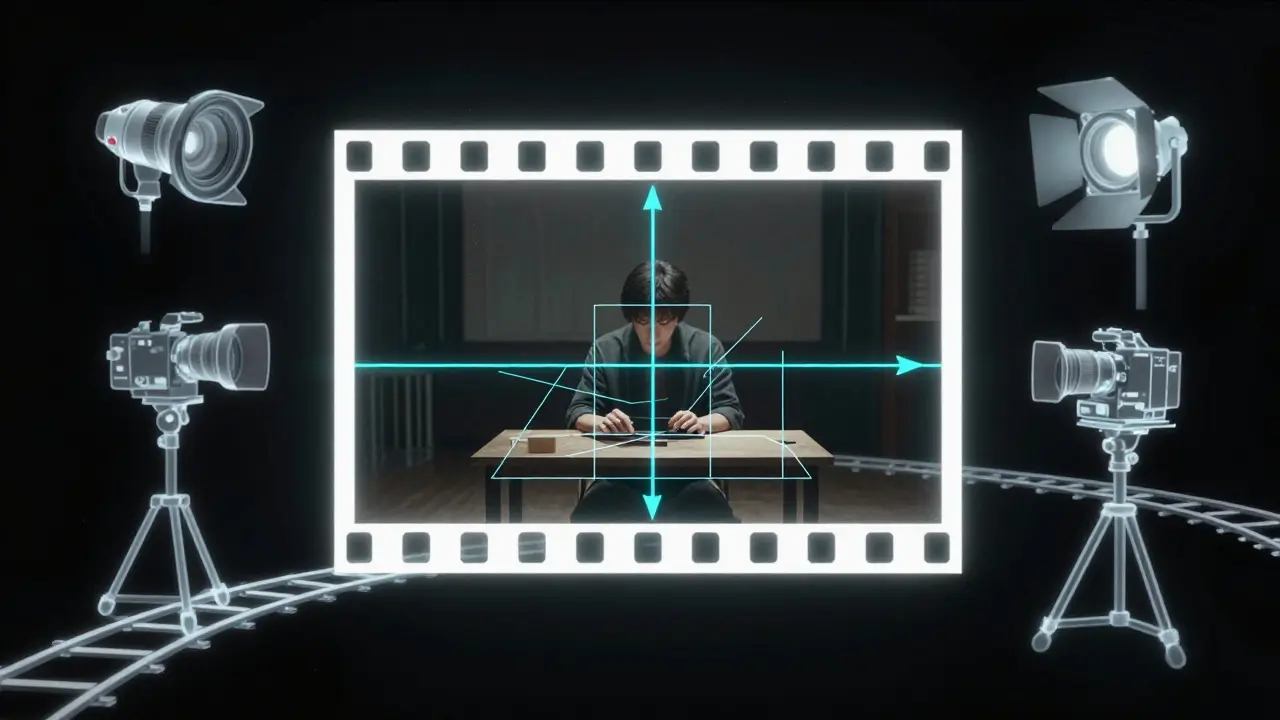
Cinematography is the art and technology of recording motion pictures, encompassing composition, lighting, camera movement, and lens choice. It is the primary tool directors use to guide audience attention. When teaching this, break it down into manageable components:
- Framing: How subjects are positioned within the shot. Is the character isolated in negative space? Are they trapped by foreground objects?
- Camera Movement: Static shots create stability or stagnation. Handheld cameras introduce anxiety or immediacy. Dolly moves suggest progression or revelation.
- Lens Choice: Wide-angle lenses distort perspective and exaggerate depth. Telephoto lenses compress space and isolate subjects.
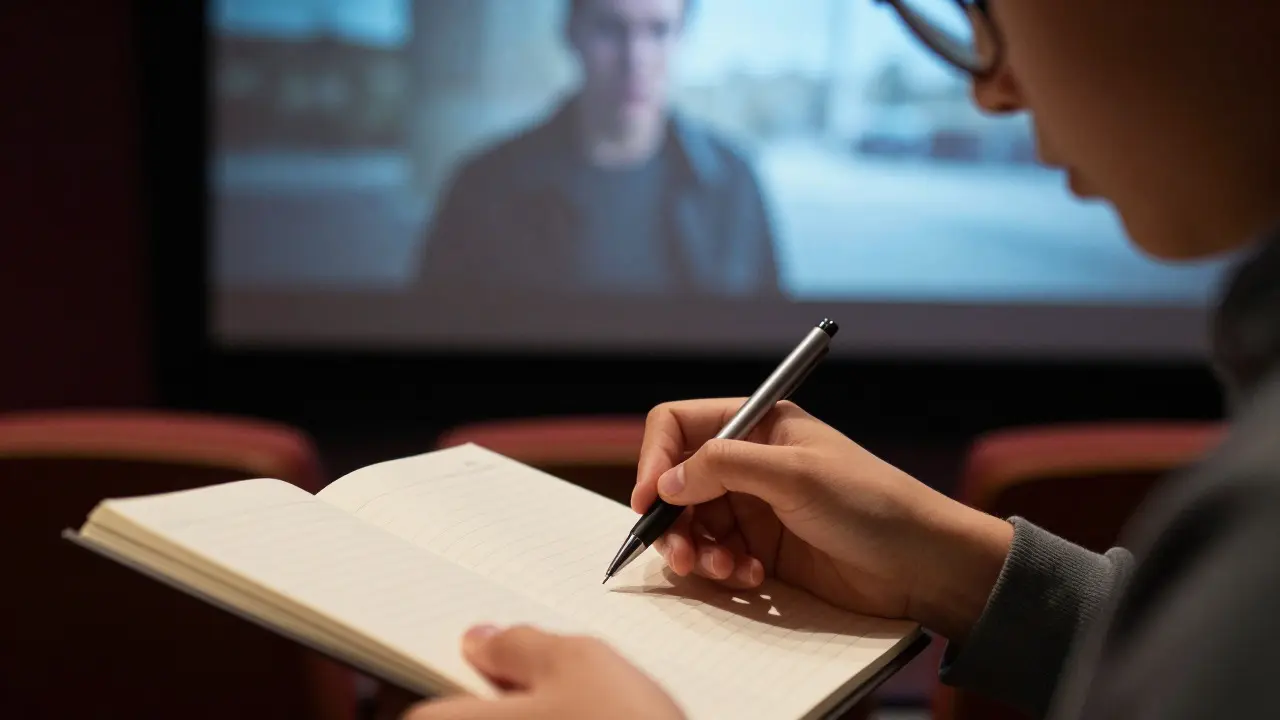
Students should practice identifying these elements in isolation before combining them. A simple exercise involves pausing a film every thirty seconds and describing only the visual geometry of the frame. This forces them to look past the actors' faces and see the construction behind the image.
From Observation to Interpretation
Observation is the data; interpretation is the argument. The jump between the two is where most student writing fails. They list techniques without connecting them to meaning. To bridge this gap, instructors must model the analytical process explicitly.
Consider a scene where a character sits at a table while others stand. A novice might say, "The standing people seem powerful." An advanced critic notes the vertical hierarchy implied by the blocking, connects it to the power dynamics of the scene, and references similar compositions in other films to establish a pattern. This move from description to inference is the core of critical thinking.
To build this muscle, use the "So What?" method. After a student identifies a technique, ask them to justify its presence. Why did the editor cut here rather than there? What is lost if the shot lasts five seconds longer? These questions push students to defend their interpretations with evidence rather than intuition.
Integrating Historical and Cultural Context
Films do not exist in a vacuum. They respond to cultural moments, technological constraints, and genre conventions. Ignoring context leads to anachronistic readings. For example, judging a 1940s noir film by modern standards of pacing misses the deliberate slowness that builds tension through atmosphere rather than action.
Genre Conventions are established patterns of storytelling, visual style, and thematic concerns that define specific categories of film. Understanding these norms allows students to recognize when a director adheres to or subverts expectations. If a horror film uses bright, high-key lighting, is it parodying the genre? Or is it signaling a psychological shift?
Incorporating historical context also helps students understand the evolution of language. Early cinema relied on theatrical staging because camera technology was limited. As mobility increased, so did the complexity of visual storytelling. Teaching this progression shows that film grammar is not static; it evolves with technology and audience expectations.
Practical Classroom Exercises
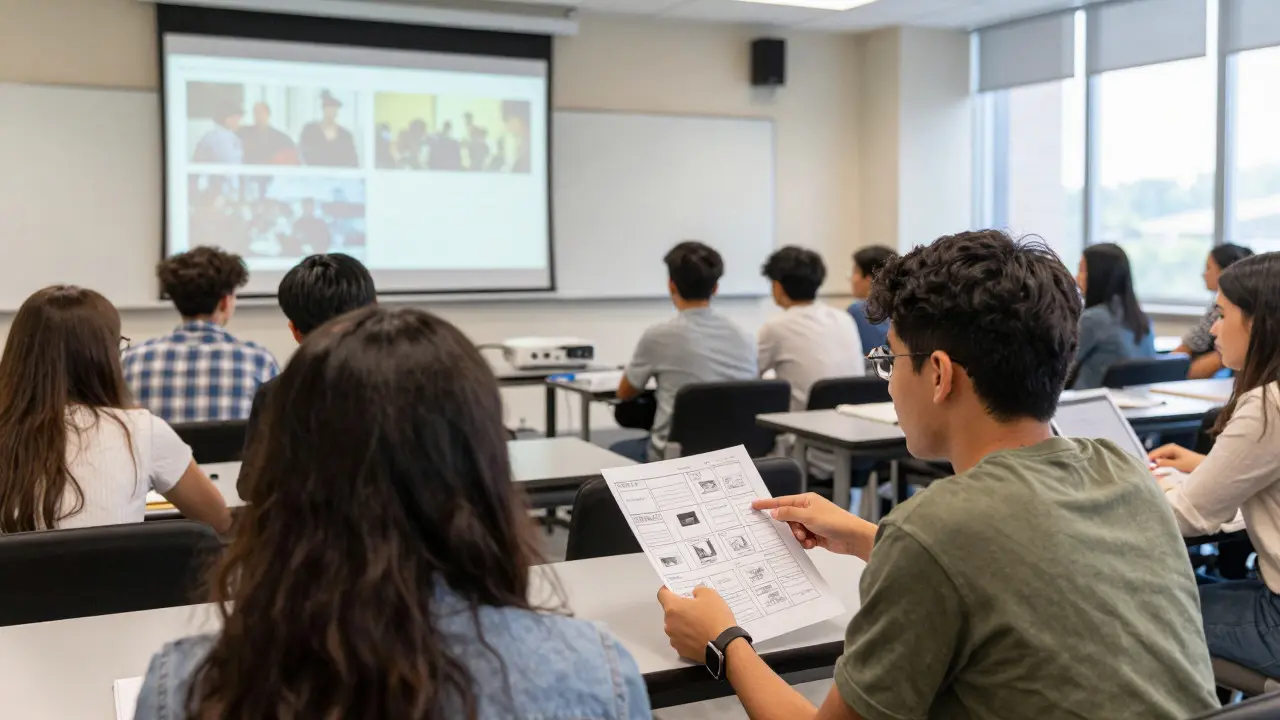
Theory alone doesn't stick. Students need hands-on activities that simulate the work of a critic. Here are three effective exercises that move beyond passive viewing:
- The Silent Treatment: Show a scene with no audio. Ask students to describe the mood based solely on visuals. Then, add the soundtrack and sound effects. Discuss how the audio layer alters the perception of the same images. This highlights the interdependence of sound and picture.
- Re-editing Challenge: Provide students with raw footage from a public domain film. Ask them to cut the sequence in two different ways: one to create comedy, one to create drama. This demonstrates how editing rhythm dictates emotional response.
- Critique Response: Have students read professional reviews of a recent film alongside their own drafts. Compare the arguments. Where do they agree? Where do they diverge? This exposes them to diverse critical voices and reinforces that interpretation is subjective but must be supported.
These activities make the abstract concrete. They show students that criticism is an active construction, not a passive reception.
Evaluating Critical Writing
Assessing film criticism is tricky because there is no single correct answer. However, clarity, coherence, and evidence-based argumentation are measurable criteria. Use a rubric that separates technical observation from interpretive depth.
| Criteria | Novice (1-2) | Developing (3-4) | Proficient (5) |
|---|---|---|---|
| Technical Vocabulary | Vague terms, minimal usage | Correct terms used inconsistently | Precise terminology integrated naturally |
| Argument Structure | List of observations, no thesis | Clear thesis, weak connections | Strong thesis, logical flow, clear evidence |
| Contextual Awareness | Ignores genre/history | Mentions context superficially | Uses context to deepen interpretation |
| Clarity of Expression | Unclear sentences, jargon-heavy | Generally clear, occasional ambiguity | Concise, accessible, engaging prose |
Focus feedback on the argument, not just the accuracy of the terms. A student who misidentifies a lens type but constructs a compelling argument about spatial isolation has learned more than a student who lists correct terms without insight.
Common Pitfalls to Avoid
Even experienced instructors fall into traps that hinder student growth. One common mistake is over-emphasizing the director's intent. While helpful, intent is often inaccessible. Focus instead on the effect on the viewer. Did the scene work? Why or why not? This keeps the analysis grounded in observable reality.
Another pitfall is treating all films as equal texts. Some films are dense with symbolic layers; others prioritize spectacle. Adjust expectations accordingly. Not every blockbuster requires the same depth of deconstruction as an arthouse drama. Teach students to calibrate their analysis to the film's goals.
Finally, avoid gatekeeping. Film criticism is not an elite club. It is a set of tools available to anyone willing to look closely. Encourage curiosity over correctness. The best critics are those who ask better questions, not those who know all the answers.
Frequently Asked Questions
Do students need to memorize technical terms before starting?
No. Introduce terms gradually as they become relevant. Overloading students with vocabulary early on can discourage engagement. Let the need for precise language drive the learning process.
How do you handle disagreements about interpretation?
Embrace them. Disagreement is healthy in criticism. Focus on whether the student supports their view with evidence from the film. Two valid interpretations can coexist if both are well-argued.
Is watching many films necessary for good criticism?
Yes, breadth helps. Familiarity with various styles and genres provides a baseline for comparison. However, depth in a few key films is more valuable than shallow exposure to many.
What role does sound play in film criticism?
Sound is half the experience. Music, dialogue, and ambient noise shape mood and pace. Critics who ignore sound miss a major layer of meaning. Always analyze audio alongside visual elements.
Can short films be used for deep analysis?
Absolutely. Short films are ideal for classroom use because they allow for repeated viewings and detailed breakdowns without time pressure. They force efficiency in storytelling, which makes technical choices more visible.