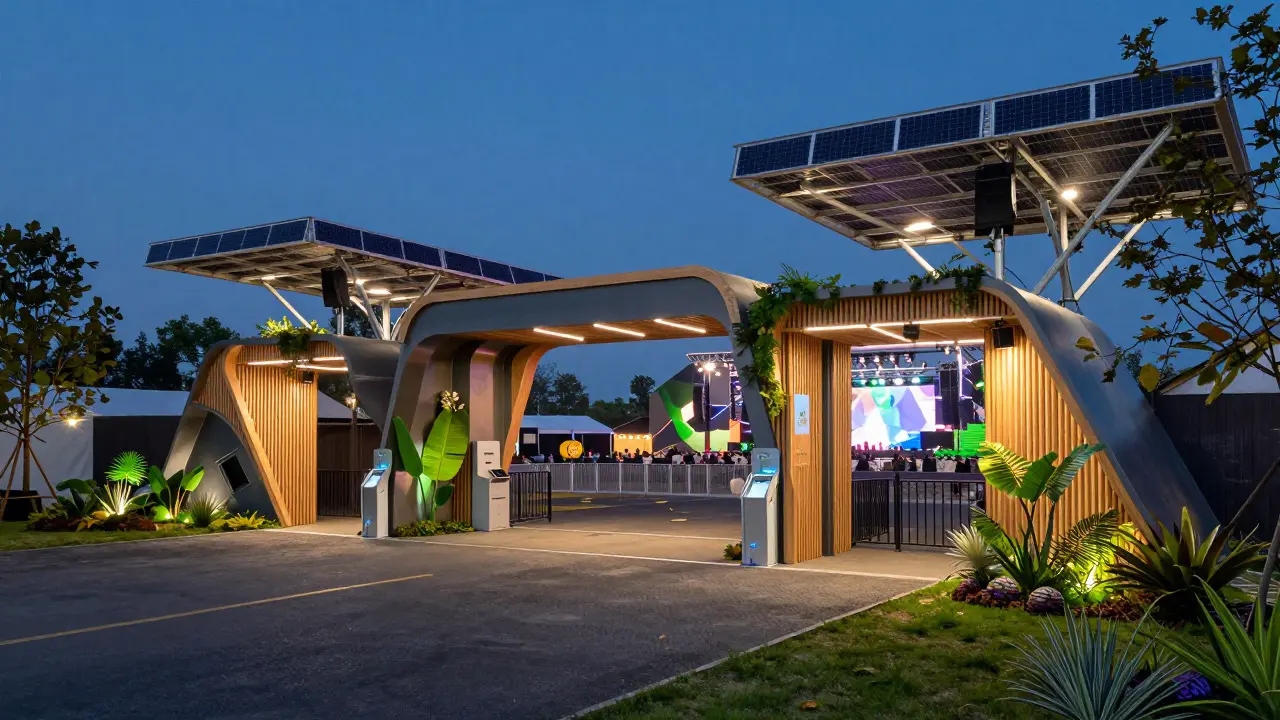
Imagine standing at the gate of a major music festival. You aren't just buying a ticket; you are entering a temporary city with its own supply chain, waste stream, and energy grid. For years, the industry assumed that sustainability was a marketing add-on-a nice touch for the press release but irrelevant to the bottom line. That era is over. In 2026, green policies are no longer optional garnishes; they are structural constraints that dictate how events are built, powered, and cleaned up.
The shift has been driven by two forces: rising operational costs and consumer expectation. Energy prices have remained volatile, making efficient power usage a financial imperative rather than just an ethical one. Simultaneously, attendees-particularly those under 35-expect transparency. They want to know if their favorite band is flying in on private jets or if the food trucks are serving local produce. This pressure has forced organizers to rethink every aspect of event operations, from logistics to lighting design.
The Economics of Sustainable Infrastructure
Let’s talk numbers. The biggest cost driver in any large-scale event is logistics: moving materials in, powering them, and moving trash out. Traditional setups rely heavily on diesel generators and single-use plastics. A standard 50,000-person festival might use 15-20 diesel generators, consuming thousands of liters of fuel daily. Switching to renewable sources isn’t just about saving trees; it’s about insulating the budget from oil price spikes.
Many top-tier festivals now use hybrid power systems. These combine solar canopies on stage roofs with battery storage units. During the day, solar panels charge the batteries. At night, when the sun goes down, the batteries power the stages and lighting rigs. If demand exceeds capacity, small backup generators kick in, but they run far less frequently than in traditional setups. This reduces fuel costs by up to 40% and eliminates the noise pollution that often complaints about late-night decibels.
There is also the matter of water. Hydration stations are now standard, but the infrastructure behind them has changed. Instead of shipping in millions of plastic bottles, which weighs tons and creates massive landfill waste, organizers install high-capacity refill stations sourced from local municipal supplies. Some festivals even use portable filtration systems to treat greywater from sinks and showers for toilet flushing and irrigation. It sounds complex, but the payback period is usually within two to three seasons due to reduced disposal fees and transportation costs.
Waste Management Beyond the Bin
For decades, "recycling" at festivals meant placing a few blue bins near the exit gates. Attendees would toss anything in there, leading to low contamination rates and poor recovery. Today, effective waste management starts before the first note plays. It begins with vendor contracts.
Organizers now mandate that all food vendors use compostable serviceware. No more foam trays or plastic cutlery. Vendors must provide their own collection bins for organic waste, which are then hauled to industrial composting facilities. This shifts the burden away from the central event team and ensures higher purity in the compost stream. The result? Many major festivals now divert over 80% of their total waste from landfills.
Another critical area is packaging. Merchandise is a huge revenue stream, but it also generates significant waste. T-shirts come in polybags; posters come in tubes. The trend in 2026 is toward minimal or zero packaging. Artists collaborate with designers to create merchandise that doesn’t need protective wrapping. Posters are sold as digital downloads or printed on recycled stock without sleeves. It’s a small change, but when multiplied across thousands of sales, it saves hundreds of kilograms of plastic.
Transportation and Carbon Offsetting
You can’t ignore the fact that most attendees drive to festivals. Even if the venue is perfectly green, the carbon footprint of travel dwarfs everything else happening on-site. So, what are organizers doing?
First, they are partnering with public transit authorities to offer discounted shuttle services from major cities. Second, they are encouraging carpooling through ticketing platforms. When you buy a ticket, you’re prompted to register your ride-share group. Third, some festivals are introducing electric vehicle charging hubs on-site, catering to the growing number of EV owners who want to ensure their cars are charged for the drive home.
But what about the flights? Headliners still fly internationally. To address this, many festivals now calculate the total carbon footprint of artist travel and offset it through verified reforestation projects. However, savvy attendees know that offsets are not a magic bullet. The real goal is to reduce unnecessary travel. This means curating lineups that balance international acts with strong local and regional talent, reducing the overall air miles required per show.

Lighting and Sound Efficiency
This is a niche area that general audiences rarely think about, but it accounts for a significant portion of energy consumption. LED technology has already replaced incandescent bulbs everywhere, but the next step is smart control. Modern lighting rigs use DMX protocols to dim lights instantly when not needed, rather than leaving them at full brightness during quiet moments. Similarly, sound systems are being tuned for efficiency. Older analog amplifiers wasted energy as heat; modern digital amplifiers are far more efficient, converting more electricity into actual sound waves.
Producers are also experimenting with acoustic zones. Certain areas of the festival grounds are designated as "low-decibel" spaces where only natural or amplified acoustic instruments are allowed. This reduces the need for massive PA systems in those areas, lowering both energy use and noise fatigue for attendees. It’s a subtle operational change that enhances the experience while cutting costs.
Measuring Success: KPIs for Green Events
How do you know if your green policies are working? You don’t guess; you measure. Top-tier festivals publish annual sustainability reports that include specific Key Performance Indicators (KPIs). These metrics allow for year-over-year comparison and accountability.
| Metric | Description | Typical Target (2026) |
|---|---|---|
| Waste Diversion Rate | Percentage of total waste kept out of landfills via recycling/composting | >75% |
| Renewable Energy Share | Percentage of total energy consumed from non-fossil sources | >50% |
| Water Consumption | Liters of water used per attendee per day | <15L |
| Single-Use Plastic Count | Total units of plastic packaging/ware distributed | Near Zero |
| Carbon Footprint | Total CO2e emitted per attendee (including travel) | Year-on-Year Reduction |
These targets aren’t arbitrary. They are based on industry benchmarks set by organizations like the Green Show Alliance. If a festival misses these targets, it risks losing sponsorship from brands that have their own ESG (Environmental, Social, and Governance) goals. This creates a feedback loop where sponsors push for better data, which pushes organizers to improve operations.
The Role of Technology in Tracking Impact
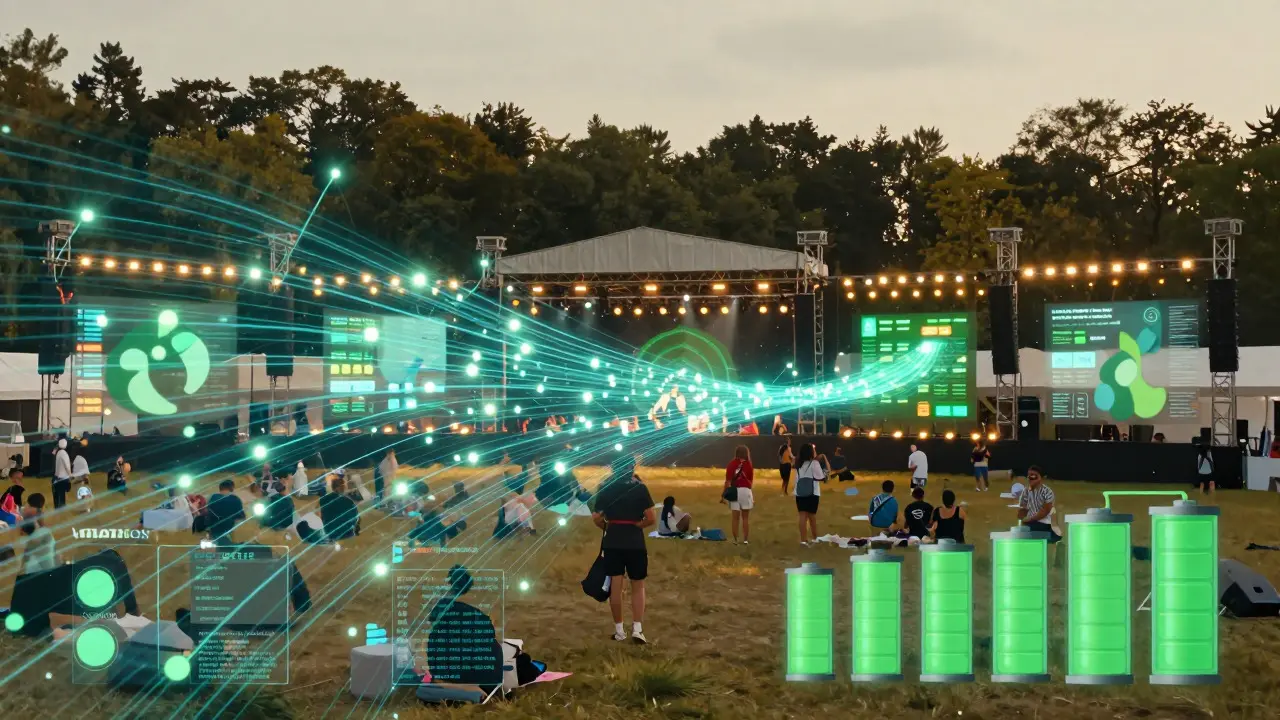
Manual counting is too slow and error-prone for modern scale. IoT (Internet of Things) sensors are becoming common in waste bins. These sensors monitor fill levels, allowing waste collection teams to optimize their routes. Instead of emptying every bin every night, they only visit bins that are actually full. This reduces truck mileage and associated emissions.
Similarly, smart meters on generator sets and grid connections provide real-time data on energy usage. Organizers can see exactly which stage is using the most power and adjust operations accordingly. For example, if the main stage is drawing excessive power during a lull in the performance, technicians can dim auxiliary lighting or shut down unused equipment. This level of granularity was impossible five years ago but is now standard in high-end productions.
Challenges and Pitfalls
It’s not all smooth sailing. One major pitfall is "greenwashing." Some events slap a leaf logo on their website and call it a day. Real sustainability requires deep integration into the budget and timeline. If you wait until six weeks before the event to start planning green initiatives, you’ll likely fail because sustainable sourcing takes time. Vendor lead times for compostable plates are longer than for plastic ones. Solar installations require site surveys well in advance.
Another challenge is attendee behavior. Even with the best infrastructure, if people don’t know how to sort their waste, the system fails. Education is key. Signage must be clear, multilingual, and visually intuitive. Staff training is equally important. Volunteers who understand the system can guide attendees effectively, turning a potential frustration point into a positive interaction.
Future Trends: What’s Next?
Looking ahead, we expect to see more circular economy models. This means designing events so that materials are reused multiple times. Stage structures made from modular components that can be disassembled and stored for the next season, rather than built and torn down annually. Food waste will increasingly be converted into biogas on-site, providing energy for cooking or heating. The boundary between the event and the local community will blur further, with festivals acting as temporary hubs for local environmental education.
The bottom line is that green policies are no longer a separate track running parallel to event operations. They are the operating system. Every decision, from choosing a caterer to selecting a lighting fixture, now has an environmental dimension. For organizers, mastering this complexity is the new baseline for success. For attendees, it means a cleaner, quieter, and more thoughtful experience. The future of festivals isn’t just about bigger crowds or louder bass; it’s about doing more with less, efficiently and responsibly.
Do green festivals cost more to organize?
Initially, yes, due to upfront investments in infrastructure like solar panels or composting facilities. However, over a multi-year horizon, operational savings from reduced fuel, waste disposal, and water usage often offset these initial costs. Additionally, sponsorships from eco-conscious brands can provide additional funding streams.
What is the biggest barrier to implementing sustainable practices?
The biggest barrier is often logistical complexity and vendor coordination. Sustainable alternatives may have longer lead times or require specialized handling. Organizers need to build relationships with reliable green suppliers early in the planning process to avoid last-minute compromises.
How can attendees contribute to a greener festival experience?
Attendees can bring reusable water bottles, sort their waste correctly, choose local food options, and consider carpooling or using public transport. Small individual actions, when aggregated across thousands of people, make a significant difference in the event's overall impact.
Are carbon offsets a valid part of festival sustainability?
Carbon offsets should be viewed as a supplement, not a solution. The primary goal should always be emission reduction. Offsets can help neutralize unavoidable emissions, such as international artist flights, but they work best when paired with robust on-site efficiency measures.
What technologies are emerging in green event management?
Key emerging technologies include IoT-enabled waste monitoring, AI-driven energy optimization for lighting and sound, and portable biogas generators that convert organic waste into usable fuel on-site. These tools allow for real-time data analysis and dynamic resource allocation.





Comments(9)