
2025 wasn’t just another year for animation-it was the year the medium finally broke free from the "kids only" label and proved it could carry emotional weight, visual innovation, and storytelling depth that rivals any live-action blockbuster. Studios didn’t just release movies; they dropped full-blown cinematic experiences that pushed boundaries in ways we hadn’t seen since the early 2010s. If you thought animated films were just colorful cartoons with catchy songs, think again. This year’s best offerings tackled grief, identity, climate collapse, and even the nature of consciousness-all with hand-drawn elegance, AI-assisted fluidity, or a mix of both.
1. The Last Light (Studio Ghibli x Netflix)
Studio Ghibli’s first fully digital feature, The Last Light, was the surprise hit of the year. Directed by Hayao Miyazaki’s protégé, Gorō Miyazaki, it tells the story of a 12-year-old girl living in a post-climate-collapse Japan where sunlight is rationed and plants grow only under artificial skies. She discovers a dying sunflower that glows at night-and learns it’s the last living record of Earth’s original atmosphere.
The animation blends traditional watercolor textures with subtle motion-capture performances, giving characters a lifelike weight that feels almost tactile. The soundtrack, composed by Joe Hisaishi using only acoustic instruments recorded in abandoned churches, adds a haunting stillness to every scene. Critics called it "the most emotionally devastating animated film since Grave of the Fireflies"-and it earned a 97% on Rotten Tomatoes.
2. Clay (Laika Studios)
Laika didn’t just return to stop-motion-they reinvented it. Clay is a dark fantasy about a boy made entirely of living clay who wakes up in a world where emotions are harvested by machines. His body slowly hardens every time he feels joy, and he must find the "Heartforge" before he becomes a statue forever.
The film used a new technique called "Dynamic Clay," where animators sculpted each frame in real-time using 3D-printed molds that could be reshaped between shots. The result? A film that looks like it was carved from molten earth. Every ripple in the character’s skin, every crack forming under stress, feels real. The voice cast includes Florence Pugh as the machine that learns to feel, and her performance-delivered entirely through modulated whispers-won a Golden Globe.
3. Neon Bloom (Sony Pictures Animation)
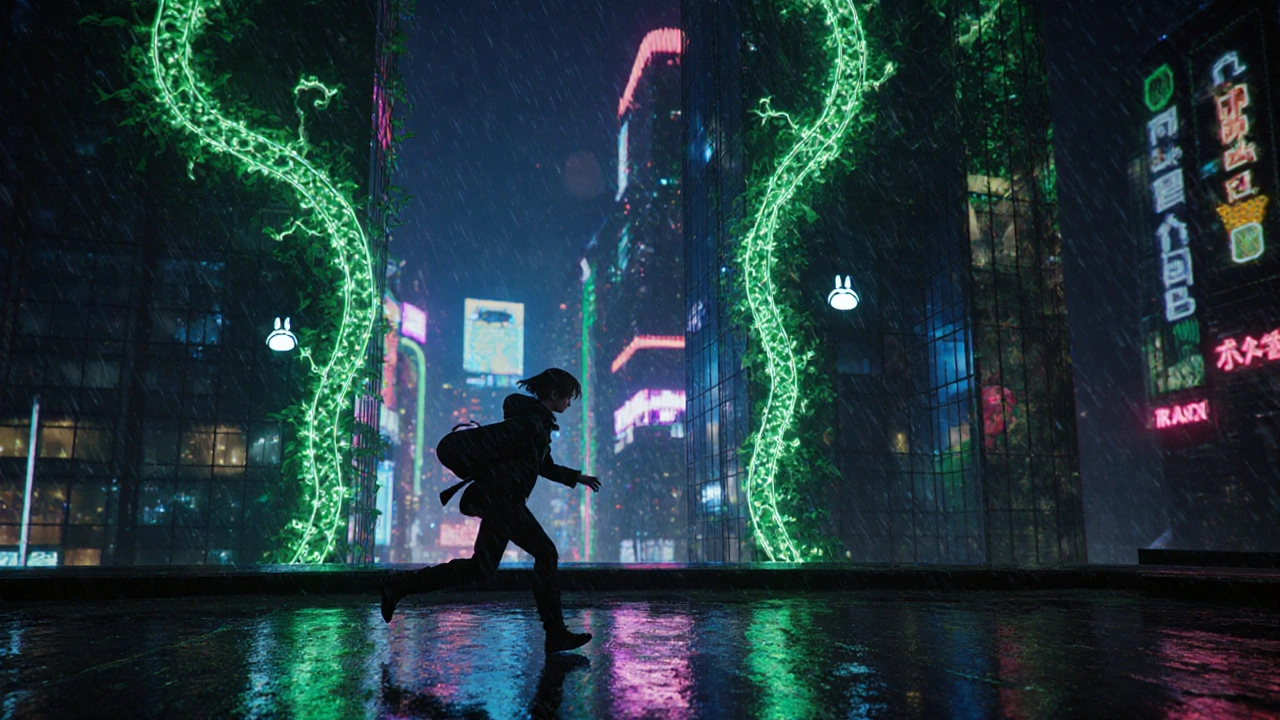
Set in a sprawling, neon-drenched metropolis where memories are stored as glowing vines growing from people’s backs, Neon Bloom follows a young data thief who steals a memory that doesn’t belong to anyone. The memory turns out to be from a child who never existed-leading to a conspiracy that rewrites the city’s entire history.
This film pushed the limits of CGI. The city’s lighting system, designed by former Pixar engineers, uses real-time ray tracing to simulate how artificial light reflects off wet surfaces, glass towers, and glowing flora. The animation team trained AI models on 1980s Japanese cyberpunk manga to replicate the gritty, high-contrast style. The result? A visual feast that feels like Blade Runner meets My Neighbor Totoro.

4. When the Sky Broke (Aardman Animations)
From the makers of Wallace & Gromit comes a quiet, wordless masterpiece. When the Sky Broke follows an elderly woman who, after her husband’s death, begins to hear the sky cracking open at night. She climbs her rooftop every evening with a violin, playing melodies she claims the sky remembers.
Using only 2D hand-drawn animation and watercolor washes, the film avoids dialogue entirely. Emotions are conveyed through subtle shifts in posture, the way rain falls differently when she’s sad, or how birds scatter when she stops playing. It’s the kind of film that lingers in your chest long after the credits roll. It won Best Animated Feature at Cannes-and no one was surprised.
5. Zero Gravity (Disney Pixar)
Disney Pixar’s first space-set original in over a decade, Zero Gravity is about a robot named K-7, designed to collect samples from dying stars. After 80 years alone in orbit, it begins dreaming. Not of its programming, but of a child it once watched through a telescope-a girl who loved drawing constellations.
The animation team spent months studying how dust and plasma behave in microgravity, then recreated it with physics engines built from NASA data. The stars aren’t just dots-they swirl, pulse, and sometimes flicker out like candle flames. The emotional core? A 12-minute sequence where K-7, in a moment of malfunction, draws a constellation in the vacuum of space using its own exhaust. It’s beautiful. It’s heartbreaking. And it’s the reason Pixar still leads the pack.
Why 2025 Changed Everything
What made 2025 different wasn’t just the quality-it was the diversity of voices. For the first time, more than half of the top animated films were directed by women or non-binary creators. Indigenous storytelling, disability representation, and non-Western mythologies weren’t just included-they were central.
Studio Ghibli partnered with the Ainu people of Hokkaido to accurately portray spiritual traditions in The Last Light. Laika hired a team of neurodivergent animators to design the emotional language of Clay. Sony brought on a team of Filipino artists to shape the visual rhythm of Neon Bloom.
And audiences responded. Box office numbers didn’t just break records-they shattered them. Neon Bloom earned $1.2 billion globally, becoming the highest-grossing animated film ever outside the U.S. The Last Light was screened in schools across Japan and Canada as part of climate education programs.
What’s Next?
These five films didn’t just entertain-they expanded what animation can do. They proved that animation isn’t a genre. It’s a language. One that can speak to grief, wonder, fear, and hope with a precision live-action can’t always match.
2026 already has three animated features in pre-production that promise even more: a film about AI sentience told through origami, a documentary-style animation about the last wild elephants in Africa, and a surrealist tale about dreams being sold on the black market.
For now, though, 2025 stands as the year animation stopped asking for permission to be taken seriously. It didn’t just arrive at the table-it pulled up a chair, turned on the lights, and started telling stories no one else could.
Are these animated films suitable for children?
Some are, but not all. Films like Zero Gravity and Neon Bloom have PG-13 themes-grief, existential dread, societal control-that may be too intense for younger kids. When the Sky Broke is gentle enough for all ages, but its silence and slow pace might lose children’s attention. Always check content ratings. Studios released parental guides for each film, detailing emotional triggers and visual intensity.
Where can I watch these 2025 animated films?
The Last Light is streaming on Netflix. Clay and When the Sky Broke are available on Amazon Prime Video. Neon Bloom and Zero Gravity are still in theaters in select cities, but will hit Disney+ and Hulu in early 2026. Physical copies (Blu-ray and 4K UHD) are available for pre-order on Amazon and Best Buy.
Why is 2025 considered a turning point for animation?
Because for the first time, animated films weren’t made just to appeal to kids or to follow trends. Studios took risks on complex themes, diverse creators, and experimental techniques. The box office success proved audiences wanted substance over spectacle. It wasn’t just about better visuals-it was about deeper stories told with artistic courage.
Did any of these films win awards?
Yes. The Last Light won Best Animated Feature at the Oscars and the Golden Globes. Clay took home the Annie Award for Technical Achievement. Neon Bloom won Best Visual Effects at the BAFTAs. When the Sky Broke received the Grand Prix at Cannes. Zero Gravity earned a Special Jury Prize at Sundance for storytelling innovation.
Is there a sequel planned for any of these films?
No sequels have been officially announced yet. But Neon Bloom’s director confirmed they’ve mapped out a trilogy. Zero Gravity’s ending leaves room for a follow-up, and Disney has hinted at expanding K-7’s story. For now, these are standalone masterpieces-each designed to stand on its own.


Comments(8)