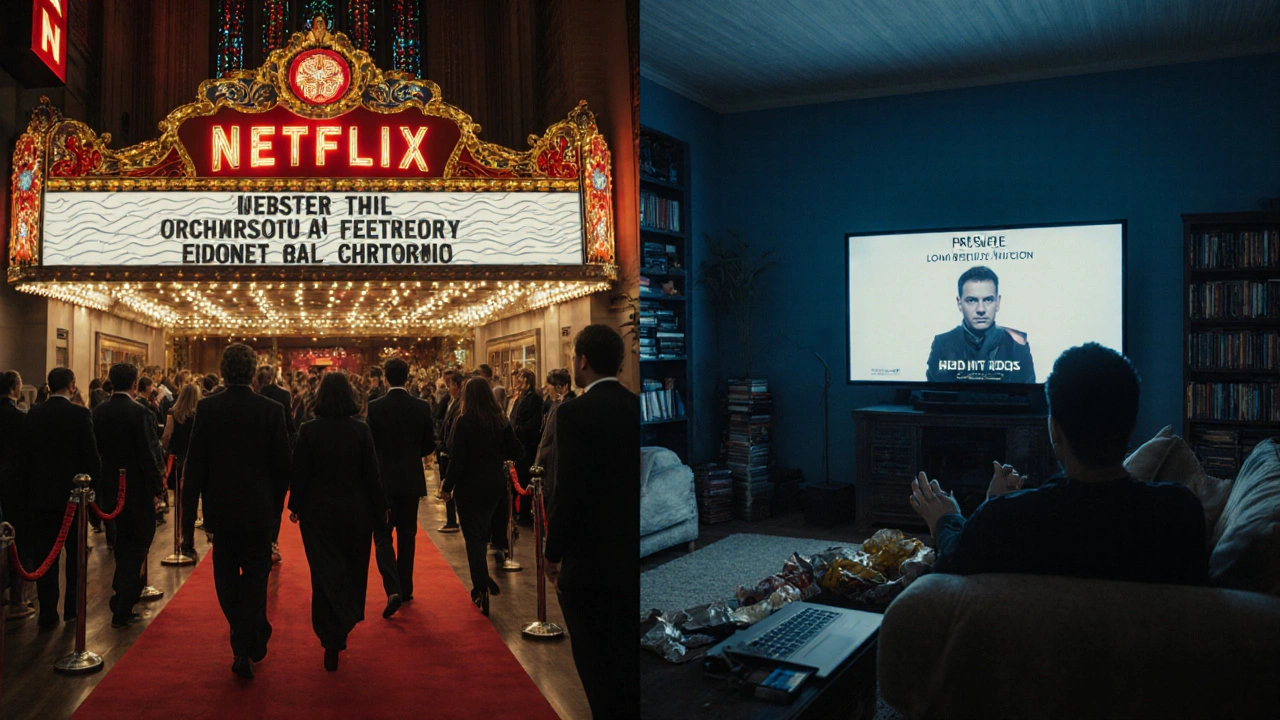
When a movie hits streaming platforms, the way it makes money decides when it lands, how it’s promoted, and even who sees it first. Two models dominate this space: SVOD and AVOD. They’re not just different payment systems-they’re completely different engines driving how films are released and marketed today.
What SVOD and AVOD Actually Mean
SVOD stands for Subscription Video on Demand. Think Netflix, Hulu, Max, Disney+. You pay a monthly fee, and you get access to a library of movies and shows. No ads. No extra charges per title. You watch what you want, when you want.
AVOD is Advertising-Based Video on Demand. Think Tubi, Pluto TV, Freevee, or even YouTube. It’s free to watch, but you sit through ads-sometimes 3 to 5 minutes of commercials before a 90-minute movie. The platform makes money from advertisers, not subscribers.
These aren’t just technical terms. They shape the entire life cycle of a film. A movie on Netflix is treated like a crown jewel. A movie on Tubi? It’s part of a bulk catalog, meant to fill time and keep viewers scrolling.
Release Windows: How Money Decides When You See It
Ten years ago, movies had a rigid release path: theaters first, then DVD, then cable, then streaming. Today, that path is broken. And the split between SVOD and AVOD is what’s replacing it.
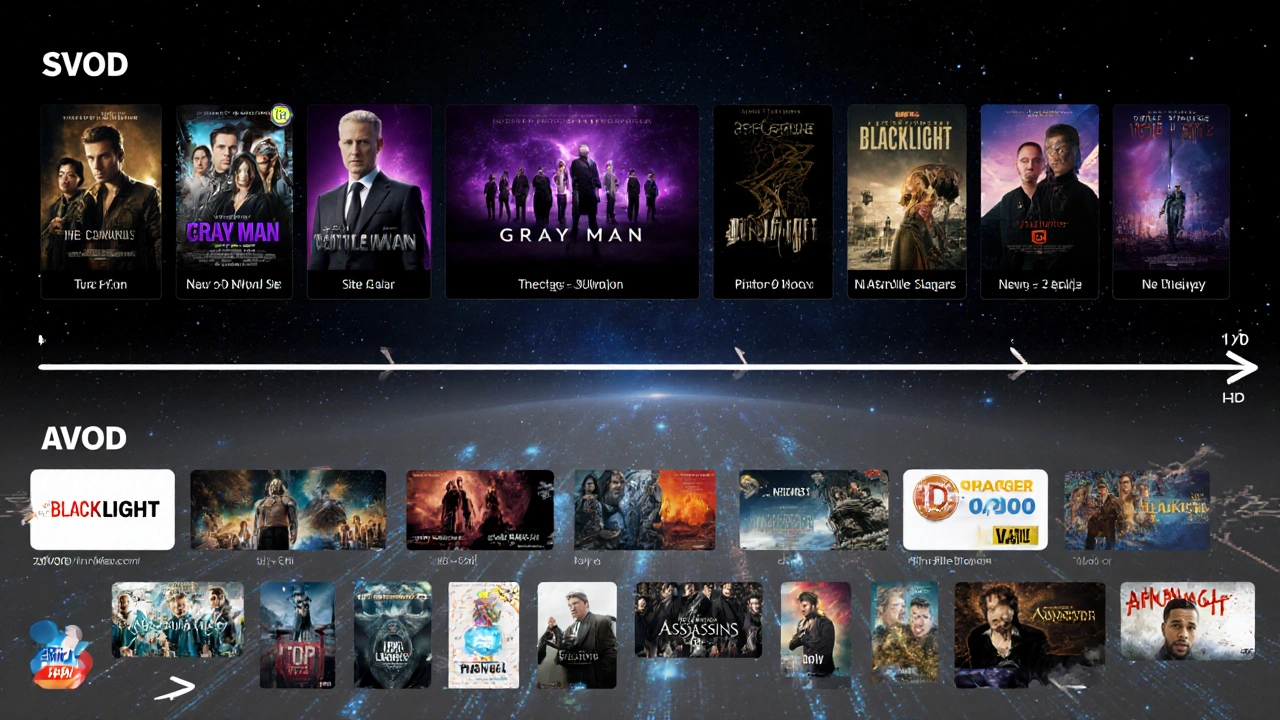
SVOD platforms pay big money for exclusive rights. They want to be the only place you can watch a film for a while. That’s why Netflix dropped The Gray Man globally on the same day it premiered. They spent $200 million on production and another $100 million on marketing. They needed that exclusivity to justify the cost and keep subscribers from canceling.
AVOD platforms don’t pay that kind of money. They buy older films, B-movies, or titles that didn’t perform in theaters. You’ll find John Wick: Chapter 4 on Max six months after its theatrical run. But you’ll find Blacklight or The Ice Road on Freevee just 60 days after it left theaters-because AVOD doesn’t need exclusivity. It needs volume.
The result? A two-tiered release system. Blockbusters go to SVOD with long windows. Low-budget or underperforming films get dumped into AVOD within weeks. Studios now plan releases based on which model will pay them more-not which one gives the best audience experience.
Marketing: Big Budgets vs. Algorithmic Bait
Marketing for SVOD films looks like a Hollywood premiere. Trailers on TV, billboards in Times Square, influencer campaigns, TikTok challenges. Netflix spent $50 million promoting Stranger Things Season 4. That’s not just ads-that’s a full-scale cultural rollout.
AVOD marketing? It’s quiet. And it’s smart. Platforms like Tubi and Freevee don’t spend millions on ads. They rely on algorithms. If you watched three action movies last week, you’ll see Renegade pop up as a "Recommended for You" tile. They use data, not billboards.
Studios know this. So they don’t push AVOD titles hard. Instead, they focus on making the thumbnails clickable. A movie with a title like Assassin’s Code gets a cover with a guy in a trench coat holding a gun and a red arrow pointing at his head. That’s the entire marketing budget.
SVOD films get trailers with orchestral scores and emotional voiceovers. AVOD films get 15-second clips with loud sound effects and text that says "YOU WON’T BELIEVE WHAT HAPPENS!"
Why This Split Matters for Filmmakers
If you’re an indie director with a film that screened at Sundance, your path depends on who buys it. If Netflix picks it up, you get a global launch, a press tour, and maybe a shot at awards season. Your film becomes part of a curated collection.
If an AVOD platform buys it, you get a check-maybe $50,000, maybe $200,000-but no fanfare. Your movie goes into a sea of 10,000 others. It won’t trend. It won’t be reviewed. But it will make money, because AVOD platforms need content to keep viewers hooked.
Some filmmakers now make movies specifically for AVOD. They know the formula: fast pacing, clear stakes, a twist in the third act, and a 90-minute runtime. They’re not trying to win Oscars. They’re trying to get watched. And it works. In 2024, AVOD platforms streamed over 1.2 billion hours of indie films-up 47% from the year before.
What’s Changing in 2025
Streaming isn’t just splitting into SVOD and AVOD anymore. It’s getting hybrid. Disney+ just launched a cheaper tier with ads. Hulu now lets you upgrade to ad-free for $3 more a month. Even YouTube is testing subscription tiers for some channels.
Studios are playing both sides. They’ll sell a film to Netflix for $50 million, then license the same film to Freevee six months later for $5 million. That’s not cannibalization-it’s monetization stacking. One film, two revenue streams.
And viewers? They’re not confused. They’ve learned the rules. If you want to see the new Marvel movie without ads, you pay. If you want to watch a thriller from 2022 while eating cereal on the couch, you pick Freevee. The choice is clear.

Who Wins and Who Loses
SVOD wins when they get exclusive, high-quality content. But they’re burning cash. Netflix lost 2 million subscribers in 2023 after raising prices. Disney+ is struggling to keep up with HBO Max’s library. The pressure to keep paying big for content is crushing them.
AVOD wins because it’s cheap to run. Tubi’s operating costs are a fraction of Netflix’s. They don’t need to produce originals. They just need to keep the ads flowing. In 2024, AVOD ad revenue hit $12 billion in the U.S. alone.
But the losers? Independent theaters. Mid-budget films that don’t fit neatly into either model. A $40 million movie that’s too big for AVOD and too small for SVOD gets stuck. It might get a week in theaters, then vanish into the digital void.
And audiences? They’re getting smarter. They know when they’re being sold a product. They’ll pay for SVOD if the content feels special. They’ll tolerate AVOD if the ads aren’t too long and the movie isn’t trash. But if you give them a mediocre film on a paid service with ads? They’ll leave.
What This Means for You
If you’re a viewer: Know what you’re signing up for. Pay for SVOD if you want quality, no interruptions, and new releases. Use AVOD if you want free, fast, and don’t mind ads. Don’t expect the same experience from both.
If you’re a filmmaker: Build your film for the platform that will pay you. Don’t chase prestige if your budget is under $10 million. A well-placed AVOD deal can fund your next project. And if you’re going SVOD? Make sure your film has a hook-something that makes it stand out in a sea of $200 million productions.
If you’re a studio: Stop pretending one model fits all. Use SVOD for your tentpoles. Use AVOD for your leftovers-and your experiments. Stop trying to make every film a blockbuster. Let some be quiet hits.
Future of Film Release Windows
The old 90-day theatrical window is dead. The new window? It’s flexible. And it’s determined by money, not tradition.
Big film? 45-60 days in theaters, then SVOD. Mid-budget? 30 days in theaters, then AVOD. Low-budget? Direct to AVOD. No theaters at all.
Some studios are testing 24-hour windows: theatrical release on Friday, SVOD on Saturday. But that only works if you’re Disney or Universal-and only if you’ve already sold the AVOD rights for later.
The future isn’t about waiting. It’s about matching the right film to the right monetization model-and letting the audience choose how they want to pay.
Is AVOD better than SVOD for indie filmmakers?
It depends on your goals. If you want exposure, awards, and a long-term career, SVOD is better. But if you need cash fast, AVOD pays quicker and with fewer strings attached. Many indie filmmakers now use AVOD as a launchpad-get paid, build a catalog, then pitch a bigger project to SVOD.
Why do some movies appear on both SVOD and AVOD?
It’s called licensing stacking. Studios sell the first-run rights to SVOD for a high price. Then, after a set period (usually 6-12 months), they sell the secondary rights to AVOD for a smaller fee. This lets them earn from the same film twice-once from subscribers, once from advertisers.
Do SVOD platforms still care about theaters?
Yes, but only for prestige. Netflix and Amazon still release a few films in theaters to qualify for Oscars. But they don’t rely on box office. A film can make $1 million in theaters and $50 million on streaming and still be a win. Theaters are now just a marketing tool, not a revenue source.
Are AVOD ads getting worse?
Some are. Platforms like Tubi and Freevee have increased ad load to boost revenue. But they’re careful not to push viewers away. Most now cap ads at 5 minutes per hour, with a maximum of 3 breaks per movie. If ads get too long, viewers leave-and that hurts ad revenue more than it helps.
Can I make money from AVOD if I’m not a studio?
Absolutely. Platforms like Tubi and Freevee accept direct submissions from independent filmmakers. You upload your film, they review it, and if it fits their audience, they’ll offer a license deal. Payments range from $10,000 to $250,000, depending on length, quality, and genre. No agents needed.
Streaming isn’t going back to the old way. The future is split: one path for the big, the other for the bold. The choice isn’t about which model is better-it’s about which one fits your story, your budget, and your audience.



Comments(10)