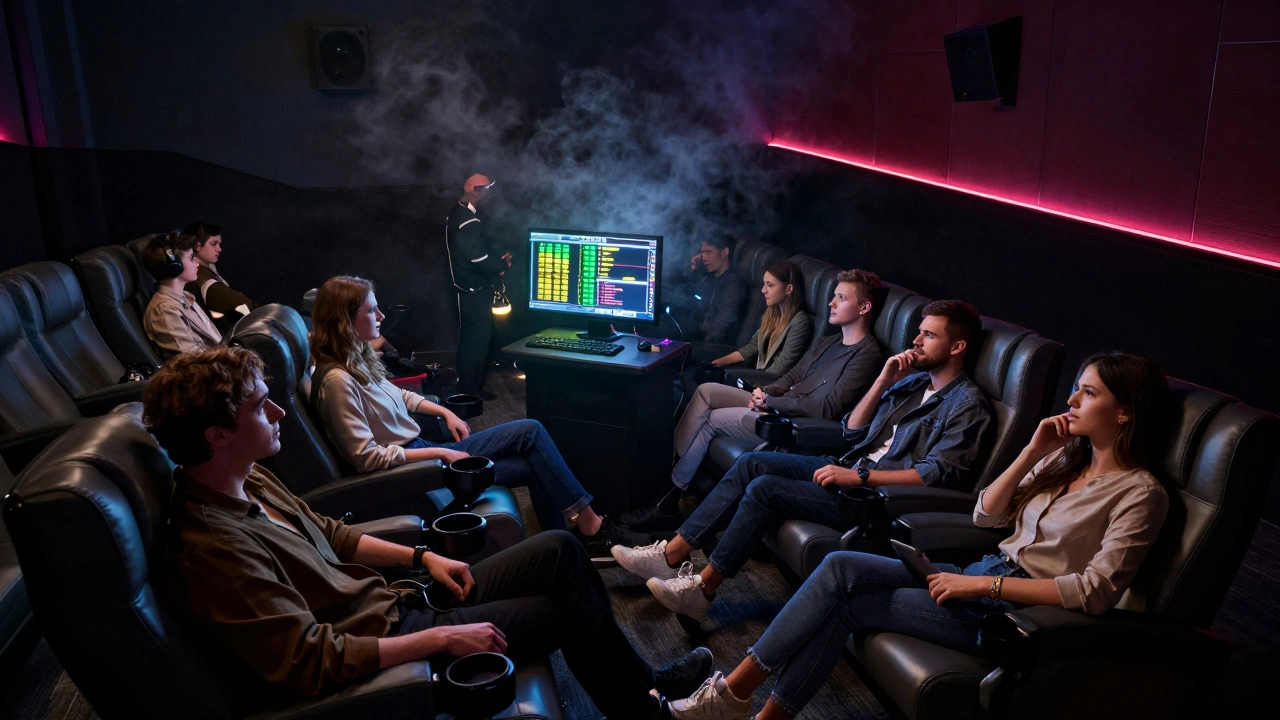
Imagine sitting in a movie theater when your seat suddenly lurches forward, tilts sideways, and sprays mist on your face-all while explosions shake the room. That’s 4DX. It’s not just a movie anymore; it’s a full-body experience. But behind the thrills is a quiet, critical job: keeping audiences safe while delivering those jaw-dropping effects. For theater operators, managing dynamic seat motion safety isn’t optional. It’s a daily responsibility tied to legal compliance, equipment maintenance, and real-time risk control.
What Makes 4DX Seats Different from Regular Theater Chairs
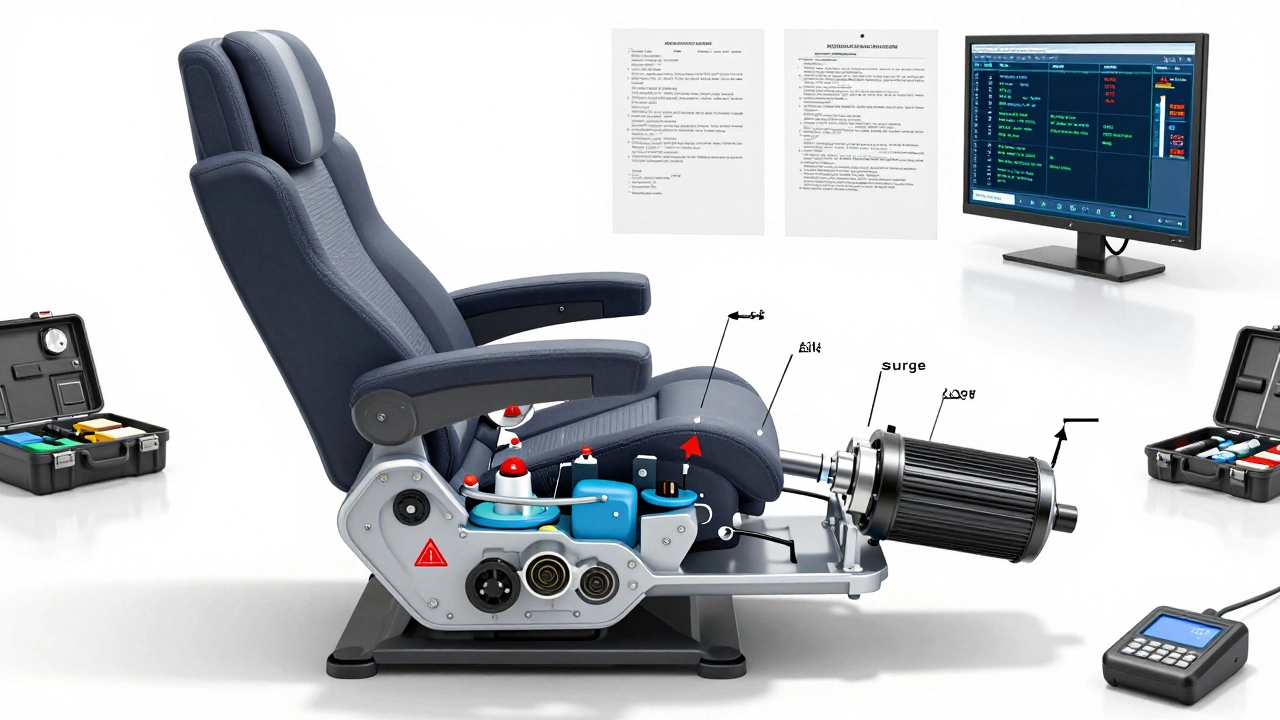
Standard theater seats don’t move. 4DX seats do-up to 12 different ways. They tilt, vibrate, rotate, surge forward and backward, and even release wind, scents, and water sprays synced to the film. These aren’t simple motors. Each seat has a custom-built actuator system, hydraulic or electric, designed to respond to precise cues from the film’s data stream. A single 4DX theater can have 100+ seats, each with 6-10 motion axes. That’s over 800 moving parts per theater, all running in perfect sync.
That complexity creates risk. A stuck actuator can pinch a guest. A misaligned tilt could throw someone off balance. A delayed spray might soak a child’s phone. These aren’t hypotheticals. In 2023, the U.S. Consumer Product Safety Commission logged 17 incidents related to motion theater seating, including two cases of minor spinal strain and three cases of falls due to sudden motion without warning.
Who Sets the Rules? Regulatory Frameworks for Motion Seats
There’s no single federal law called the “4DX Safety Act.” Instead, operators follow a patchwork of guidelines from multiple sources:
- ASTM F2892 - The American Society for Testing and Materials standard for amusement ride safety. Even though 4DX isn’t technically a ride, courts and insurers treat it like one. This standard requires impact testing, emergency stop functions, and load capacity ratings.
- OSHA General Duty Clause - Requires employers to provide a workplace free from recognized hazards. That includes ensuring staff can safely monitor and shut down systems during malfunctions.
- Local Building and Fire Codes - Many cities classify 4DX theaters as “special amusement devices.” This triggers requirements for emergency exits, clear pathways, and audible alarms.
- 4DX Manufacturer Guidelines (CJ 4DPLEX) - The company that designs the system provides detailed operational manuals. These aren’t suggestions-they’re binding for warranty and liability coverage.
Operators who ignore these rules don’t just risk lawsuits-they risk losing insurance. In 2024, a theater chain in Texas lost $2.3 million in coverage after an audit found they hadn’t updated their motion seat maintenance logs for 18 months.
How Operators Actually Stay Compliant Day-to-Day
Compliance isn’t a checklist you fill out once a year. It’s a rhythm. Here’s how top-performing theaters do it:
- Daily Pre-Show Checks - Before the first screening, technicians run a 15-minute diagnostic. Each seat is tested for smooth motion, noise levels, and response time. If a seat hesitates or jerks, it’s flagged and taken offline until repaired.
- Guest Screening and Communication - No one under 48 inches tall is allowed in 4DX seats. Signs are posted at entry, and staff verbally confirm height and health status. Guests with pregnancy, heart conditions, or neck injuries are given a warning form to sign. It’s not about liability-it’s about preventing harm.
- Staff Training Certification - Every 4DX operator must complete a 4-hour certified course from CJ 4DPLEX. They learn how to read error codes, reset systems safely, and perform emergency shutdowns. Training is renewed every 12 months.
- Real-Time Monitoring - A central control panel displays the status of every seat. If one fails, the system auto-pauses the film and alerts the technician. No one is allowed to override this without a supervisor present.
- Monthly Maintenance Logs - Every lubrication, belt tension check, and motor calibration is recorded digitally. These logs are stored for at least five years. Insurance auditors ask for them. Regulators demand them.
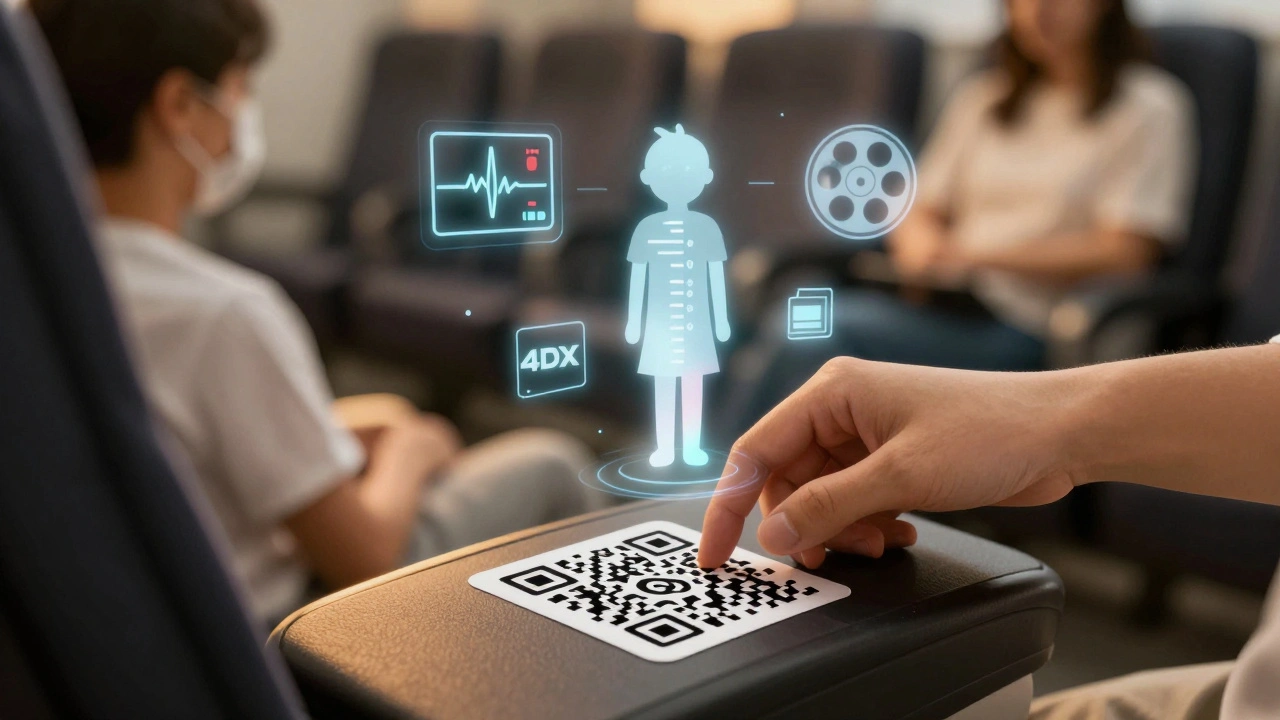
One theater in Ohio started using QR codes on each seat. Guests scan before sitting to see a 30-second video explaining motion limits and safety rules. Since then, reported discomfort complaints dropped by 62%.
The Hidden Costs of Cutting Corners
Some operators try to save money by skipping training, using third-party parts, or delaying maintenance. The savings are real-but short-lived.
In 2024, a small chain in Florida replaced original actuators with cheaper aftermarket ones. Six months later, three seats failed during a screening of Mad Max: Fury Road. One guest suffered a herniated disc. The lawsuit cost $1.8 million. The theater closed within the year.
Contrast that with AMC’s 4DX theaters. They spend $12,000 per seat annually on maintenance, training, and upgrades. Their motion seat incident rate is 0.03% per 10,000 attendees-lower than amusement park rides. That’s not luck. That’s discipline.
What Happens When Something Goes Wrong?
Even the best systems fail. The key is how you respond.
When a motion seat jams during a film:
- The system auto-pauses the movie.
- Emergency lights flash.
- A voice announcement tells guests to remain seated and stay calm.
- Staff enters the theater with handheld diagnostic tools.
- Guests are not allowed to stand or move until the technician confirms it’s safe.
That last point is critical. Panic is the biggest risk. A guest trying to escape a moving seat can get hurt faster than the seat itself. Training staff to manage fear as much as mechanics is part of the job.
After every incident, theaters file an internal report. If it’s serious, they also report to the CPSC. Transparency builds trust. Cover-ups destroy it.
What’s Next for 4DX Safety?
Technology is catching up. Newer 4DX systems now include:
- Biometric sensors that detect elevated heart rate or sudden movement in a guest and automatically reduce motion intensity.
- AI-driven predictive maintenance that flags failing components before they break.
- Real-time guest feedback apps that let people report discomfort during the film.
But tech alone won’t fix safety. The human element remains irreplaceable. A machine can’t read a child’s scared face. It can’t tell if someone’s clutching their chest because of motion sickness or a medical emergency. That’s why trained staff, clear rules, and consistent routines still matter more than any new sensor.
Why This Matters Beyond the Theater
4DX is just one example of a larger trend: immersive experiences that blur the line between entertainment and physical interaction. Virtual reality arcades, motion simulators, and even themed restaurants are adopting similar tech. The safety lessons from 4DX apply everywhere.
If you’re running any experience that moves, shakes, sprays, or surprises guests-you need a safety plan. Not a poster. Not a waiver. A daily practice. A culture. A team that knows how to stop the show when something’s wrong.
Because the goal isn’t just to thrill. It’s to bring people back.
Are 4DX seats safe for children?
Yes, but only if they meet height and health requirements. Most theaters require guests to be at least 48 inches tall. Children under 12 must be accompanied by an adult. Operators also screen for conditions like epilepsy, heart issues, or recent injuries. If a child seems anxious or overwhelmed, staff are trained to pause the experience and offer a break.
Can pregnant women use 4DX seats?
Most theaters strongly advise against it. The sudden movements, vibrations, and G-forces can be risky during pregnancy. While there’s no legal ban, theaters require pregnant guests to sign a waiver and often recommend skipping 4DX entirely. Staff are trained to gently discourage participation without making guests feel judged.
Do 4DX theaters need special insurance?
Yes. Standard theater liability policies don’t cover motion systems. Operators need specialized coverage that includes amusement ride liability, equipment failure, and guest injury from synchronized effects. Premiums vary by location and seat count, but most theaters pay 20-35% more than for standard auditoriums.
How often are 4DX seats inspected?
Daily checks are mandatory before showtime. These include motion tests and visual inspections. Full mechanical inspections-including motor torque, hydraulic pressure, and sensor calibration-are done monthly. Annual third-party audits are required for insurance compliance. Some high-volume theaters do bi-weekly deep checks.
What happens if a 4DX seat breaks during a movie?
The system automatically pauses the film. Emergency lights activate. Staff enter the theater and use diagnostic tools to isolate the faulty seat. Guests are instructed to remain seated until it’s safe. The affected seat is taken offline immediately. The film resumes only after the issue is resolved and the system is re-tested. No guest is ever asked to exit during motion.



Comments(5)