Imagine building a massive Victorian mansion for a two-week shoot, only to tear it down and send 40 tons of wood to a landfill. That was the standard practice for decades. Today, Sustainable Production Design is a creative and logistical approach that prioritizes reusing existing structures, sourcing recycled materials, and planning for post-production disposal or donation. It’s not just about saving money; it’s about proving that high-end visual storytelling doesn’t have to come at an environmental cost.
The shift isn’t accidental. Studios and streaming platforms are now demanding lower carbon footprints per finished minute. For a production designer, this means the job starts before the first nail is hammered. You need to ask: Do we actually need to build this from scratch? Can we rent what exists? If we must build, can we take it apart later?
Why the Industry Is Finally Paying Attention
For a long time, sustainability in film was treated as a PR checkbox. But the math has changed. Waste removal fees in major hubs like Los Angeles and London have skyrocketed. Hauling debris off-site costs thousands of dollars per truckload. Meanwhile, audience awareness has grown. Viewers care where their favorite shows were filmed and how responsibly they were made.
There is also a talent factor. Younger art directors and set decorators are entering the industry with environmental ethics baked into their workflow. They bring knowledge of circular economy principles to the table. This cultural shift within the crew makes sustainable choices easier to implement because the people doing the work already believe in them.
Strategies for Reusing Existing Film Sets
The most effective way to reduce waste is to stop building new things when you don’t have to. This involves three main strategies:
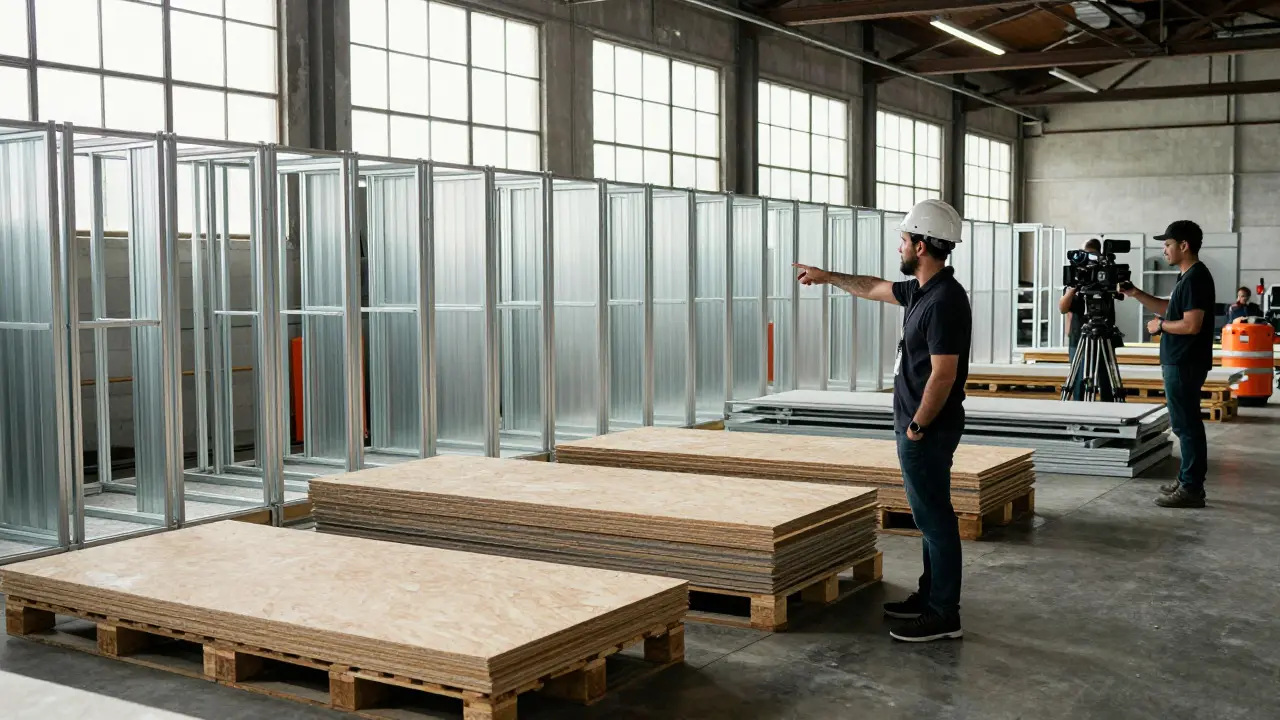
- Renting Pre-Built Sets: Many large studios maintain warehouses of modular walls, floors, and ceilings. Instead of constructing a generic office or apartment, you rent these components. When the shoot ends, you return them. The next production uses them again. This extends the life of materials indefinitely.
- Location Hybridization: Instead of building a full interior, use a real location for the wide shots and build only the necessary close-up elements. If you need a kitchen, find a real house with a decent kitchen and only build the specific counter or shelf that needs to be dressed for camera angles.
- Collaborative Sharing: Productions shooting in the same region often overlap in schedule. Coordinating with other productions to share built sets can save both time and materials. A hospital set built for one medical drama might be reused by a thriller shooting nearby a few weeks later.
This requires strong communication between the production manager and the art department. It means scheduling your build earlier so you can source rentals rather than cutting lumber on-site.
Material Selection: Choosing What Lasts
If you do need to build, the choice of material matters more than ever. The goal is to select items that can be disassembled, repaired, or repurposed after the shoot.
| Material | Reusability | End-of-Life Option | Best Use Case |
|---|---|---|---|
| Modular Metal Framing | High (10+ years) | Recycle metal | Walls, partitions, structural support |
| Plywood Sheets | Medium (3-5 shoots) | Repurpose as crates/furniture | Floors, backdrops, tables |
| Polystyrene Foam | Low (Single use) | Specialized recycling only | Props, sculptural details |
| Reclaimed Wood | High (Indefinite) | Donation/Sale | Visible surfaces, rustic aesthetics |
| Painted Drywall | Very Low | Landfill | Avoid if possible |
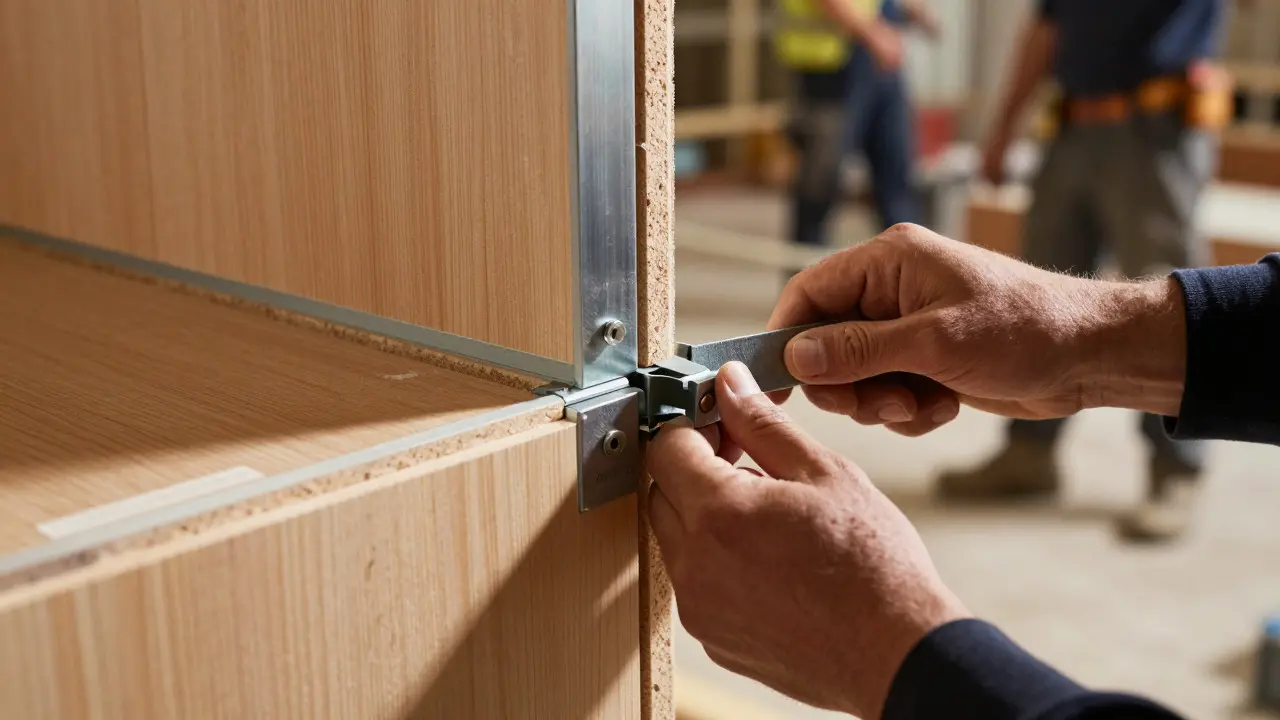
Notice the pattern: durable, unadorned materials win. Painted drywall is the enemy of sustainability because once painted, it’s hard to reuse. Modular metal framing, however, can be stripped of its skin, cleaned, and shipped to the next job site. It’s robust, light, and infinitely recyclable.
When selecting finishes, look for water-based paints and non-toxic adhesives. These aren’t just better for the environment; they’re safer for the cast and crew working on set. VOC-free options have improved significantly in quality, meaning you no longer have to sacrifice color depth for health benefits.
Logistics: Planning the Teardown Before the Build
Here is a rule of thumb that separates professional sustainable designers from amateurs: Plan the teardown on day one. Don’t wait until the last week of shooting to figure out how to get rid of the set. That’s too late.
- Label Everything: During construction, tag every piece of lumber and hardware with a unique ID. Note which pieces are reusable and which are disposable. This saves hours during cleanup.
- Design for Disassembly: Avoid gluing parts together when screws or clamps will do. If you glue something, make sure it’s a non-permanent adhesive that can be sanded off later.
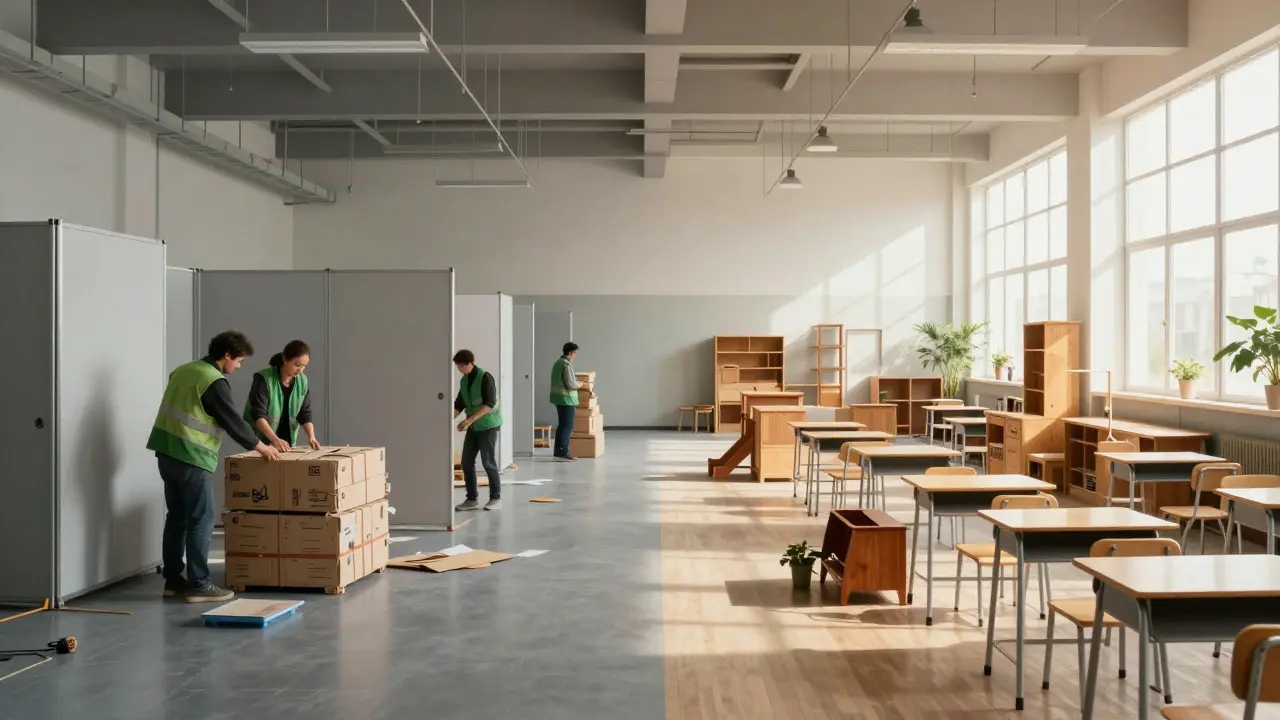
- Secure a Buyer or Donor Early: Contact local schools, community theaters, or furniture makers before you start building. Offer them your excess materials. Knowing who is taking your stuff changes how you cut and finish it. If a local carpenter wants your plywood, you’ll cut it cleanly. If it’s going to the dump, you might not care as much.
- Calculate Weight and Volume: Know exactly how many trucks you’ll need for disposal versus how many for transport to the next project. This helps budget accurately.
This proactive approach turns waste management from a chaotic final scramble into a streamlined part of the production schedule.
Case Study: The Modular Office Complex
Consider a recent corporate drama shot in Atlanta. The production needed a sprawling open-plan office. Instead of building walls from scratch, the art department rented 200 units of a modular partition system. The system used interlocking panels that could be moved without tools.
During the shoot, the layout changed weekly based on story requirements. Because the panels were lightweight and lockable, the crew could rearrange the entire office in under four hours. At the end of the production, the panels were returned to the rental company. Zero wood was cut. Zero paint was applied. The carbon footprint of the set construction was nearly zero compared to traditional methods.
This example highlights the power of standardized components. When you move away from custom-carpentry for every single element, you unlock speed and sustainability simultaneously.
Common Pitfalls to Avoid
Even with good intentions, teams can stumble. Here are the most common mistakes:
- Over-Decorating: Adding too many small props creates clutter that is difficult to sort and dispose of. Stick to essential dressing. Less is more, both visually and logistically.
- Ignoing Local Regulations: Some cities have strict rules about dumping construction debris. Check local ordinances early. Fines can wipe out any savings from reusing materials.
- Lack of Crew Buy-In: If the carpenters feel that sustainable practices slow them down, they will resist. Involve them in the planning process. Show them how modular systems actually save them time in the long run.
- Assuming 'Green' Means Expensive: Often, renting is cheaper than buying and disposing. Calculate the total cost of ownership, including haul-away fees, not just the initial purchase price.
The Future of Green Filmmaking
As technology advances, we are seeing digital alternatives to physical sets. Virtual production using LED volumes allows actors to perform against digital backgrounds, reducing the need for physical builds entirely. However, physical texture and lighting interaction remain crucial for realism. So, a hybrid model is likely the future: minimal physical structures augmented by digital environments.
For now, the core principle remains simple. Respect the material. Treat every board, every panel, and every prop as a resource with a second life. Sustainable production design isn’t a constraint on creativity; it’s a discipline that forces you to be more intentional, more efficient, and ultimately, a better storyteller.
Is sustainable production design more expensive than traditional methods?
Not necessarily. While upfront costs for high-quality modular materials may be higher, the savings on waste disposal, hauling, and labor for teardown often offset the difference. Additionally, many studios now offer incentives or tax credits for verified green practices, which can further reduce net costs.
What is the best material for reusable film sets?
Modular metal framing systems are widely considered the best option for walls and structures because they are durable, lightweight, and easily disassembled. For floors, high-grade plywood that can be sanded and refinished is preferred over particle board or MDF, which degrade quickly.
How can a small indie film afford sustainable practices?
Start with location scouting. Using real locations reduces the need for builds entirely. For necessary props, source from thrift stores or online marketplaces. Collaborate with local universities or trade schools that need practical projects for their students, offering them materials in exchange for labor.
Does reusing sets affect the visual quality of the film?
No, provided the materials are well-maintained. In fact, reused materials often have a patina and character that new, factory-finished items lack. This can add authenticity to period pieces or gritty contemporary stories. The key is proper cleaning and repair between uses.
Where can production teams find data on their carbon footprint?
Several organizations, such as the Green Screen Alliance and various national film commissions, provide calculators and guidelines. Tracking fuel usage for generators, material weight, and transportation miles are the primary metrics. Many production management software platforms now include modules specifically for tracking environmental impact.