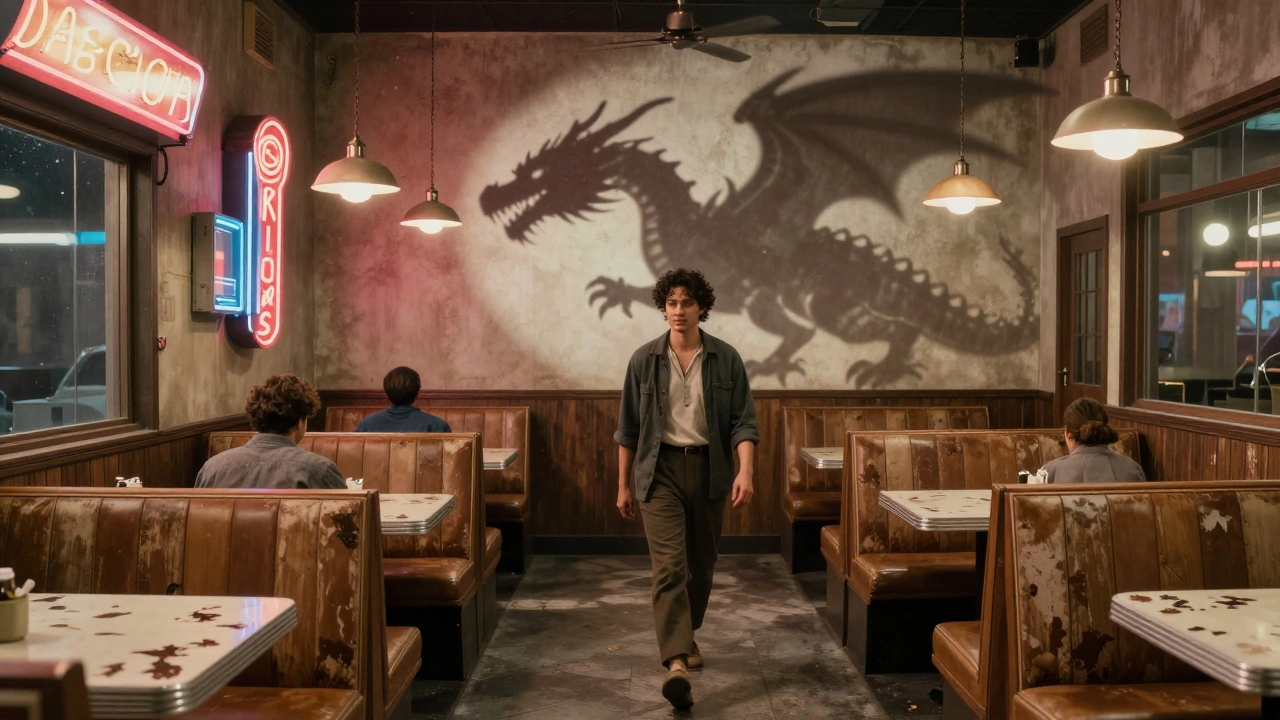
When you watch a scene where a dragon flies over a crumbling castle, and the castle looks real enough to touch - but the dragon is clearly digital - you’re seeing the quiet magic of VFX design. It’s not just about slapping CGI on top of a set. It’s about making sure the physical and digital worlds feel like they were born in the same room. This is where production design meets visual effects, and the best films don’t just blend them - they fuse them.
Why Practical Sets Still Matter in a Digital Age
Some people think VFX means you don’t need real sets anymore. That’s wrong. The more digital effects you use, the more you need real, physical environments to anchor them. Think about the Lord of the Rings trilogy. The Shire wasn’t just painted on a green screen - it was built. Dirt under the actors’ boots, real wood grain on the doors, wind blowing through actual trees - those details make the digital dragons feel real. Without that foundation, CGI looks like a video game cutscene.
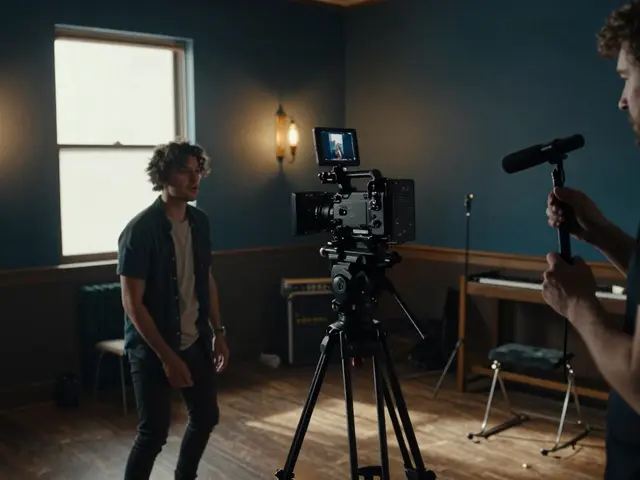
Practical sets give actors something to react to. An actor staring at a tennis ball on a stick won’t deliver the same performance as someone walking through a hallway that feels like it’s been lived in for a hundred years. That’s why studios like Industrial Light & Magic and Weta Digital now send their VFX supervisors to set construction sites months before shooting. They’re not just watching - they’re advising. Where should the camera move? What part of the set needs to be removable so a rig can be mounted? What material reflects light the way the digital sky will?
How Digital Effects Are Built to Fit Real Spaces
It’s not enough to just shoot a scene and add a spaceship later. The digital world has to match the real one in every detail. Lighting, texture, scale, even the way dust floats in the air. If the practical set has weathered wood with chipped paint, the digital castle next to it can’t be shiny and new. That mismatch breaks immersion.
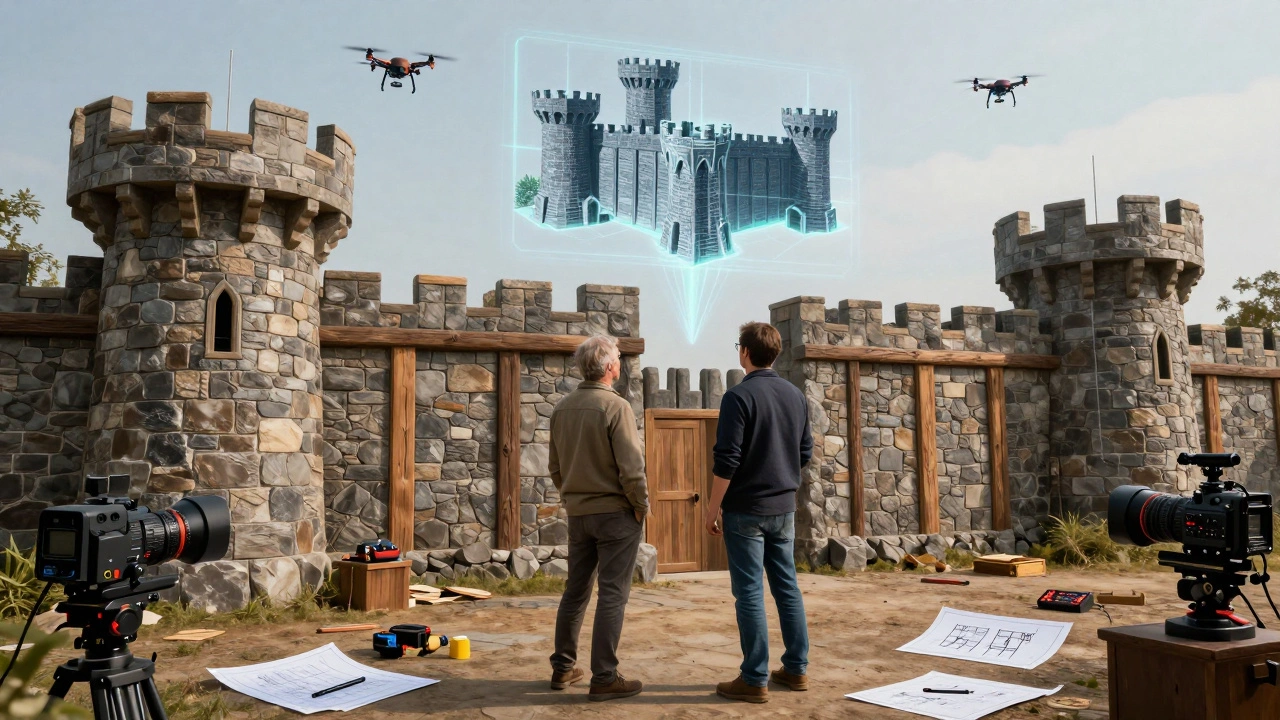
Production designers and VFX teams now work side by side from day one. They use photogrammetry - scanning real sets with high-res cameras to create 3D models that match exactly. That model becomes the blueprint for the digital extension. If the set has a 3-foot-tall stone archway, the digital extension can’t suddenly become 10 feet. The scale has to be locked in.
One of the most common mistakes? Ignoring parallax. If you shoot a character walking past a window, and the digital city outside doesn’t shift slightly as the camera moves, it looks fake. That’s why VFX teams often shoot reference footage on set - using handheld cameras to capture how light moves across walls, how shadows fall at different times of day. That data gets fed into the digital artists’ software. It’s not guesswork. It’s measurement.
The Role of the Production Designer in VFX Planning
The production designer isn’t just the person who picks the color of the walls. They’re the architect of the entire visual world - physical and digital. In Blade Runner 2049, the production designer, Dennis Gassner, worked with VFX supervisors to design sets that could be extended digitally without losing their gritty, lived-in feel. The interiors were built with real materials - rusted metal, cracked concrete, flickering neon - so the digital rain and holograms could interact with them naturally.
That means the production designer has to think ahead. Will this wall need to be extended into a 3D environment? Should this floor have a seam where the real set ends and the digital one begins? Even the texture of the carpet matters - if the digital floor has a different pattern, the audience’s brain notices, even if they can’t say why.
On Avatar: The Way of Water, the production team built full-scale sets for the Na’vi village - not just for the actors, but so the VFX team could study how light bounced off the bark-like walls, how vines moved in the wind, how water dripped from leaves. That data helped them build digital versions that felt alive, not rendered.
Tools That Bridge the Gap Between Real and Digital
Technology has made this integration easier - but only if used right. LED volume stages, like the ones used in The Mandalorian, let actors perform in front of real-time digital backgrounds. But those backgrounds have to match the lighting and perspective of the physical set. If the LED wall shows a desert at noon, but the set is lit like a night scene, the reflection on the actor’s helmet will look wrong.
Real-time rendering engines like Unreal Engine are now standard on set. Directors can walk through a digital version of the scene while filming, adjusting camera angles and lighting on the fly. But the digital environment has to be built from the same blueprints as the physical set. That means production designers and VFX artists share the same 3D files - not separate ones.
Even simple tools like laser scanners and drone photogrammetry are now routine. On Mad Max: Fury Road, the crew scanned every rock and dune in the Namibian desert. That scan became the base for the digital sandstorms and explosions. The result? The digital effects didn’t just sit on top of the footage - they became part of it.
Common Mistakes That Break the Illusion
Even big-budget films get this wrong. One classic error: adding digital elements that don’t interact with the real world. A character walks through a doorway, and a digital dragon flies behind them - but the dragon’s shadow doesn’t fall on the actor. Or worse - the dragon’s shadow falls on the wall, but the wall was never built to have a shadow there. It’s a tiny thing, but your brain catches it.
Another mistake? Using digital textures that don’t match the real ones. A real wooden table has grain, scratches, wear. A digital table might be perfectly clean. That’s fine if it’s a futuristic space station - but not if it’s a 1920s diner. The textures have to age the same way.
Then there’s scale. A digital building might look huge on screen, but if the people walking beside it are the wrong size, the whole scene collapses. That’s why VFX teams use reference objects - a 6-foot-tall pole, a standard door frame - placed on set so they can measure everything later.

What Happens When It All Works
When practical and digital design sync up perfectly, you don’t notice the join. You just believe it. In 1917, the entire film looks like one continuous shot. Most of it was shot on real locations - trenches, barns, ruined towns. But the explosions, the flares, the distant gunfire - those were digital. And yet, you never question whether they belong. Why? Because the lighting matched. The smoke behaved the same. The dirt kicked up by the explosions matched the real dirt on the ground.
That’s the goal. Not to make digital effects invisible - but to make them feel inevitable. Like they were always meant to be there.
How to Start Thinking Like a VFX-Integrated Designer
If you’re a production designer, start asking these questions early:
- What parts of this set will be extended digitally?
- What materials reflect light the way the digital environment will?
- Where will the camera move? Will it pan across a wall that needs to be extended?
- What physical objects will interact with digital elements? (A character touching a hologram, wind blowing through digital leaves)
- Can we scan this set? Can we build a 3D model from it before we tear it down?
Don’t wait until post-production to talk to the VFX team. Bring them into the design meetings. Give them access to your sketches, your material samples, your lighting tests. The more they know about the physical world you’re building, the better their digital world will fit.
And if you’re on the VFX side? Don’t just render. Observe. Study how real light hits real surfaces. Shoot reference footage. Measure shadows. Take notes. The best digital effects aren’t made in a render farm - they’re made on set, with a ruler, a camera, and a lot of curiosity.
Final Thought: The Best VFX Is the One You Don’t Notice
People talk about the coolest explosions, the most detailed dragons, the most realistic aliens. But the real art is in the quiet stuff. The way a digital raindrop lands on a real puddle. The way a digital shadow stretches across a real brick wall. The way a character’s breath fogs in the air, matching the digital cold outside.
That’s where design becomes storytelling. Not by showing off what technology can do - but by making sure the world feels alive. Because in the end, audiences don’t care if something is real or digital. They only care if it feels true.
Do practical effects cost more than digital ones?
It depends. Building a full-scale set or animatronic creature can cost millions upfront, but it saves time and money in post-production. Digital effects might seem cheaper at first, but high-quality VFX with realistic lighting, physics, and interaction can take months of work and cost just as much - or more. The smartest productions use a mix: practical for what’s possible, digital for what’s not.
Can a film be made without any practical sets if everything is digital?
Technically, yes - but it rarely works well. Actors perform better with real environments to react to. Lighting becomes harder to control without physical surfaces to bounce off. And audiences can sense when a world feels hollow, even if they can’t explain why. Most films that try to go fully digital end up looking like video games. The best ones use real sets as the foundation.
What’s the biggest challenge in blending practical and digital worlds?
Lighting. Digital elements have to match the exact color temperature, direction, and intensity of real light. If the sun is coming from the left in the practical set, the digital dragon’s shadow must fall to the right. A mismatch of just 5 degrees can break the illusion. That’s why VFX teams now shoot reference footage on set - to capture the real lighting behavior.
Do VFX artists need to understand production design?
Absolutely. The best VFX artists don’t just render - they think like designers. They study architecture, texture, material science, and how light behaves in the real world. They ask questions like: Why is this wall cracked? What’s the history of this room? That understanding turns a digital effect into a believable part of the story.
How do you know if a digital effect has been successfully integrated?
You stop noticing it. If the audience is thinking about the effect - whether it’s real or fake - it’s failed. The goal isn’t to impress with technology. It’s to make the audience feel like they’re inside the world. When the dragon’s wings cast a shadow on the actor’s face, and the actor flinches because it feels real - that’s success.


Comments(8)