Key Takeaways for Reviewers
- Music should be analyzed as a narrative device, not just a soundtrack.
- Distinguish between the melodic score and the atmospheric sound design.
- Look for "leitmotifs"-recurring themes tied to specific characters or ideas.
- Evaluate how silence is used as a rhythmic tool to build tension.
Understanding the Layers of Cinematic Sound
Before you start typing, you need to know what you're actually hearing. Most people lump everything together as "the music," but professionals break it down into specific categories. First, there is the Film Score is the original music written specifically to accompany a film, often performed by an orchestra or electronic ensemble. This is the intentional, composed music that guides the emotional arc of a scene.
Then you have the Soundtrack, which often refers to the curated list of pre-existing songs-think of the needle drops in a Quentin Tarantino movie. While the score creates an atmosphere, the soundtrack often provides a cultural or temporal context. Finally, there is Sound Design, which includes the non-musical sounds like the hum of a spaceship or the crunch of gravel. In modern cinema, the line between a low-frequency synth drone (score) and a wind howl (sound design) is often blurred, creating a seamless sonic environment.
Spotting the Leitmotif
One of the most powerful tools in a composer's kit is the Leitmotif. This is a short, recurring musical phrase associated with a particular person, place, or idea. If you're reviewing a film and notice that a specific melody plays every time the villain appears, you've found a leitmotif.
Why does this matter for your review? Because it shows how the music evolves. Does the melody change? If a heroic theme starts out bold and brassy but ends up fragmented and quiet by the third act, the music is telling you the character is broken. Mentioning this transition in your review proves you're paying attention to the film music review process on a deeper level. Instead of saying "the music was sad," explain how the leitmotif shifted from a major to a minor key to mirror the protagonist's descent.
| Element | Primary Purpose | Example | Impact on Viewer |
|---|---|---|---|
| Original Score | Emotional guidance | John Williams' sweeping themes | Tells you how to feel (Awe, Terror) |
| Diegetic Music | World building | A radio playing in a room | Makes the scene feel grounded/real |
| Non-Diegetic Music | Psychological layer | Invisible orchestral swell | Adds subtext the characters aren't aware of |
| Foley/Sound Effects | Tactile realism | Footsteps on dry leaves | Increases immersion and tension |
The Art of Silence and Negative Space
Sometimes the most important part of the score is the part where there is no music. Silence is a rhythmic choice. When a film suddenly cuts all sound during a high-tension moment, it creates a vacuum that forces the audience to lean in. It's a psychological trick that makes the subsequent sound-a scream, a gunshot, a whisper-hit ten times harder.
In your review, ask yourself: Was the music constant? Did it breathe? A common pitfall in modern blockbusters is "mickey-mousing," where the music mimics every single action on screen (like a slide whistle when someone falls). This can feel manipulative or overbearing. On the other hand, a minimalist approach, like the work of Max Richter, uses sparse arrangements to let the actors' performances carry the weight. Contrast the noise with the silence to evaluate if the film is trusting its audience or just trying to tell them exactly what to feel.
Analyzing Instrumentation and Texture
What instruments are being used, and why? If a director chooses a lonely cello over a full string section, they're communicating isolation. If they use distorted synthesizers and industrial clanging, they're evoking anxiety and modernity. You don't need a degree in music theory to notice this; you just need to describe the "texture" of the sound.
Consider the use of Electronic Music versus orchestral arrangements. In sci-fi films, the blend of organic instruments with digital glitches often represents the conflict between humanity and technology. If you're reviewing a horror movie, look for "dissonance"-sounds that clash and feel "wrong." This creates a physical sense of discomfort in the listener. By describing these textures, you move your review from a simple opinion piece to a technical analysis of the film's atmosphere.
Connecting Sound to the Visual Narrative
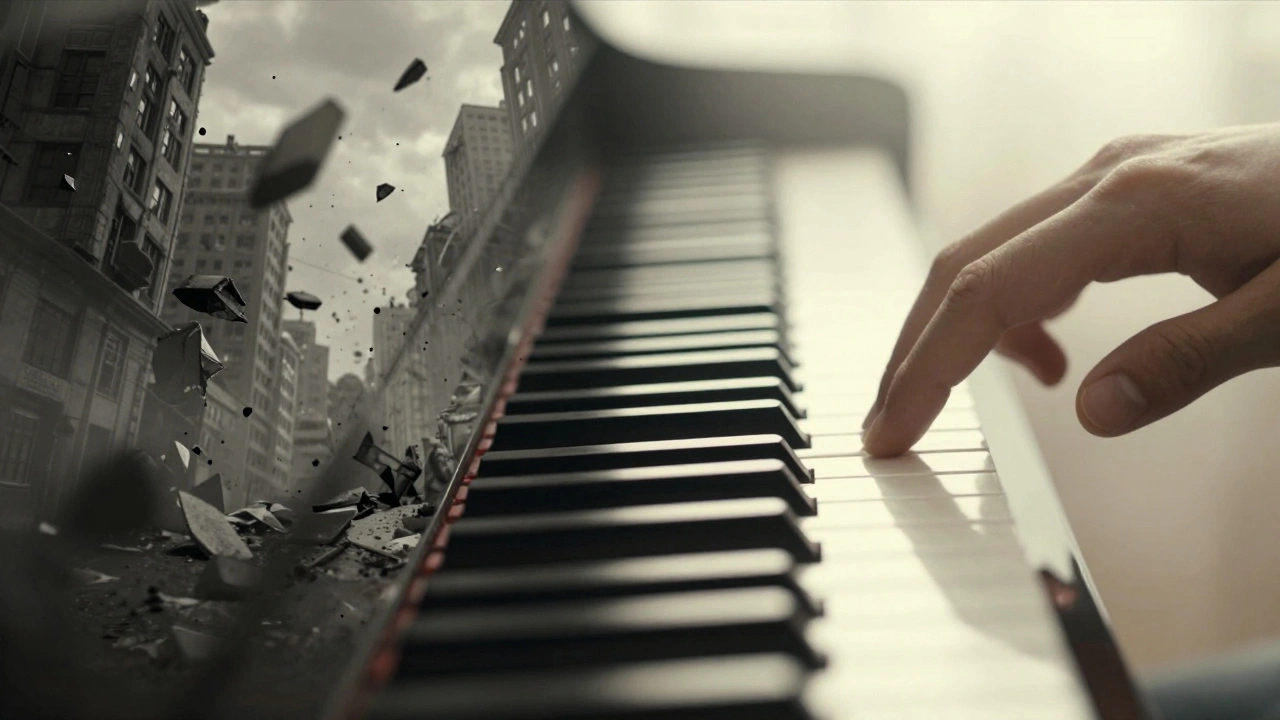
The final step is analyzing the synchronization between the image and the audio. This is where you look at "counterpoint." Counterpoint happens when the music contradicts the image. Imagine a slow-motion scene of a chaotic battle, but the music is a calm, beautiful opera piece. This creates a surreal, ironic distance that can make a scene feel more tragic or absurd.
When writing this part of your review, focus on specific scenes. Instead of a general statement, say: "The contrast between the brutal imagery of the collapse and the delicate piano melody creates a haunting sense of inevitability." This tells the reader exactly how the audio interacted with the visuals to produce a specific emotional response. You are essentially decoding the director's intent for the reader.
What is the difference between a score and a soundtrack?
A score is the original music composed specifically for the movie to enhance the drama and emotion, usually instrumental. A soundtrack is the broader collection of all music in the film, which often includes licensed songs and pop tracks that weren't necessarily written for that specific project.
How do I describe music if I don't know music theory?
Focus on adjectives that describe the "feeling" and "texture." Use words like "metallic," "airy," "oppressive," "lush," or "jagged." Describe how the music makes you feel physically (e.g., "a pulsing beat that increased my heart rate") rather than trying to name specific chords or keys.
What is diegetic music?
Diegetic music is any sound that the characters within the movie can actually hear. For example, if a character turns on a radio or a band is playing at a party in the scene, that music is diegetic. If a sweeping orchestra plays during a montage but the characters can't hear it, that's non-diegetic.
Why is the use of silence important in a movie?
Silence creates tension and contrast. It clears the sonic palette and makes the next sound more impactful. It also forces the audience to focus on the visual performance and the internal emotions of the characters without being told how to feel by a melody.
How can I identify a leitmotif while watching?
Listen for a recurring melody or a specific instrument that always appears when a certain character or theme is present. If you hear a specific three-note pattern every time the mystery is mentioned, that's a leitmotif. Note how it changes as the plot develops.
Next Steps for Your Analysis
If you're still struggling to put sound into words, try this: watch a pivotal scene with the sound off. Note how the scene feels. Then, watch it again with the sound on. The difference between those two experiences is exactly what the music is doing. For your next review, try to isolate one specific instrument and track its presence through the film. You'll find that the more you listen, the more the audio reveals the hidden architecture of the story.





Comments(8)