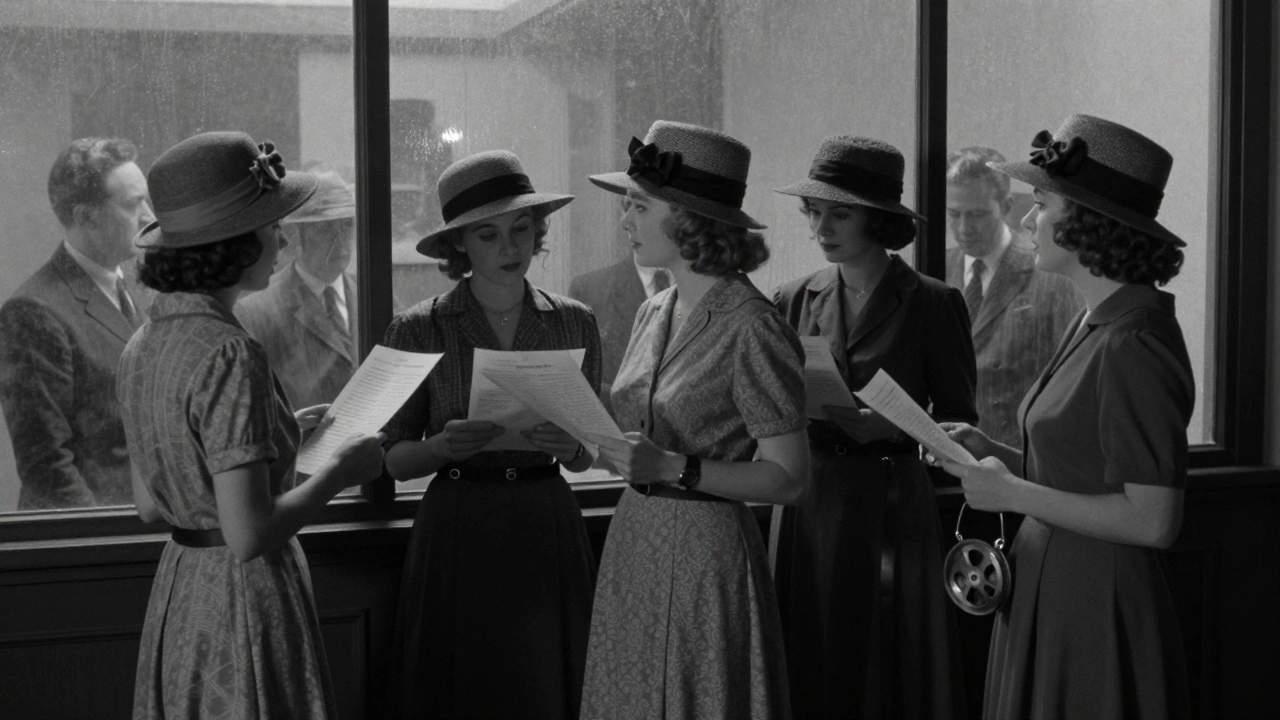
For decades, women in film unions faced walls that weren’t just made of rules-they were built by tradition, silence, and exclusion. While men negotiated contracts, led strikes, and held leadership seats, women were often pushed to the edges: as secretaries, assistants, or unpaid extras on the set. But change didn’t come from speeches. It came from women who showed up anyway-picketing, organizing, filing lawsuits, and refusing to disappear.
The Early Days: Invisible Labor
In the 1920s and 1930s, women made up nearly half of Hollywood’s workforce. They were script supervisors, editors, costume designers, and even studio executives. But when unions formed, women were rarely included in leadership. The International Alliance of Theatrical Stage Employees (IATSE), founded in 1893, didn’t have a single woman on its national board until 1978. Even when women held skilled jobs-like film editors or makeup artists-they were denied union membership in many locals. Why? Because union leaders believed their roles were "temporary" or "supportive," not worthy of collective bargaining.
Take the case of Margaret Booth, a legendary film editor who worked on over 150 films, including Gone with the Wind. She was one of the most respected editors in Hollywood, yet she wasn’t allowed to join the Editors Guild until 1955-over 20 years after she started. When she finally did, she was the only woman in the room. She didn’t complain. She just kept editing.
Union Exclusion and the "Women’s Work" Myth
Unions didn’t just ignore women-they actively redefined their work as non-skilled. A woman who operated a film splicer? That was "clerical." A woman who designed costumes? "Artistic," not technical. But when a man did the same job, he was a "craftsman" eligible for union wages and benefits.
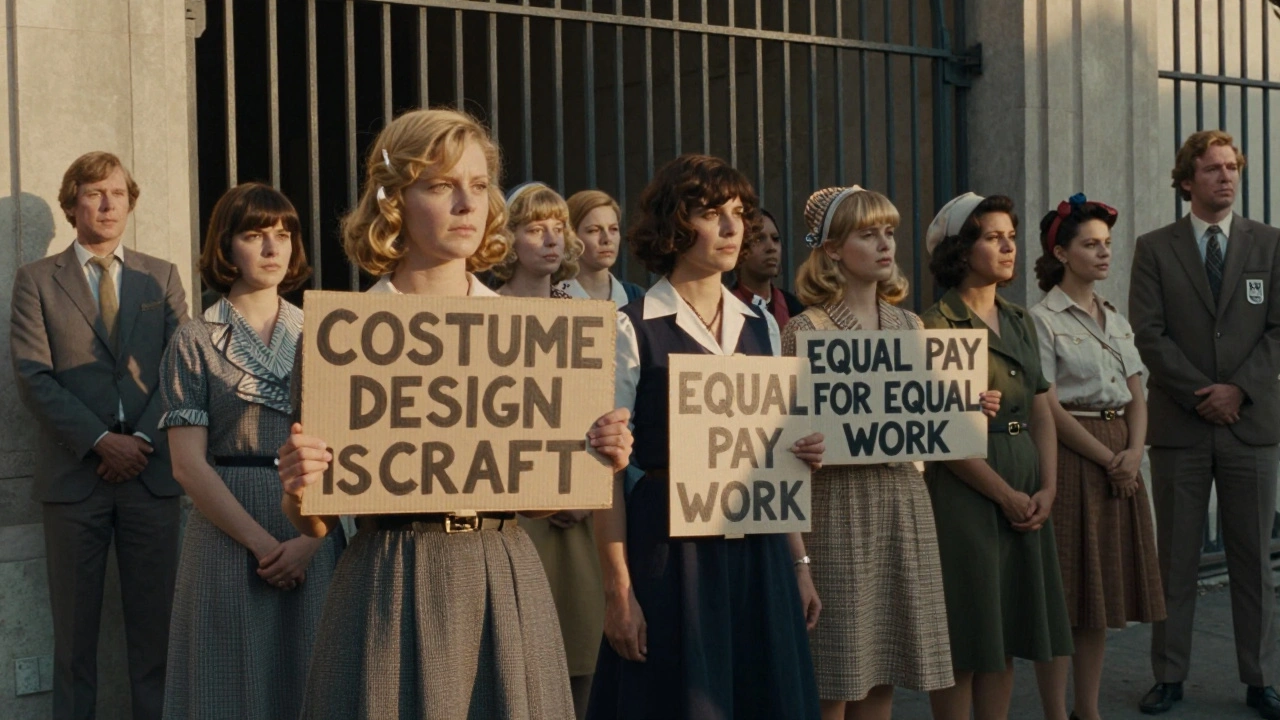
By the 1960s, this gap became impossible to ignore. Women in the Costume Designers Guild were paid 40% less than their male counterparts, even when working on the same films. In 1973, a group of women in the union walked out and demanded equal pay. They didn’t just want raises-they wanted the union to recognize costume design as a skilled craft, not a side job for women.
Their strike lasted six weeks. It ended with a new classification: Costume Designer as a craft role with full union protections. That victory didn’t just change pay-it changed how unions saw women’s labor.
Breaking Into Leadership
Even when women got into unions, they were rarely elected to leadership. The Directors Guild of America (DGA) didn’t have a woman president until 1997, when Mimi Leder took office. Before her, women were told they weren’t "ready," or that they "lacked experience." But Leder didn’t wait for permission. She built her career directing episodes of ER and The Practice, then ran for office. She won by a landslide.
Her election wasn’t an accident. It was the result of years of organizing. Women directors had been meeting in secret for over a decade, sharing scripts, lobbying studios, and tracking hiring numbers. When Leder ran, they had data: fewer than 5% of studio films were directed by women. That wasn’t a pipeline issue-it was a power issue.
The Fight for Equity: Lawsuits and Data
In 2014, the DGA filed a landmark class-action lawsuit against major studios for gender discrimination in hiring directors. It wasn’t just about who got hired-it was about who got a chance to even apply. The lawsuit showed that women directors were 80% less likely to be called for interviews on big-budget films, even when they had identical credits.
That same year, the Producers Guild of America (PGA) launched a diversity initiative that required studios to report hiring numbers. The results were stark: in 2015, only 7% of producers on top-grossing films were women. By 2025, that number had climbed to 29%. Not perfect-but a direct result of union pressure, public data, and sustained advocacy.
Modern Progress: Who’s Leading Now?
Today, women hold key leadership roles in nearly every major film union. In IATSE, women now make up over 35% of local union leadership. The Writers Guild of America (WGA) elected its first female president in 2021. The Screen Actors Guild-American Federation of Television and Radio Artists (SAG-AFTRA) has had two women presidents in the last decade.
But leadership isn’t just about titles. It’s about contracts. In 2023, SAG-AFTRA negotiated a new agreement that required studios to disclose gender and racial breakdowns for all crew positions. It also mandated that productions with budgets over $5 million must hire at least one woman as department head in at least three key areas: camera, editing, production design, or sound.
That rule didn’t come from a committee. It came from a group of women camera operators who tracked every major film’s crew for five years. They built a database of 12,000 hires. They showed that even when studios claimed they "wanted diversity," they still hired the same 3% of male crew members over and over.

The Real Change: Culture Shifts, Not Just Policies
Unions didn’t just change rules-they changed culture. Women started mentoring each other in ways they never could before. A female gaffer in New York began training young women in lighting. A female sound editor in Atlanta started a workshop for women in audio. These weren’t union programs-they were grassroots movements that unions later adopted.
Today, you’ll find women running the most technical departments on big-budget films: the camera truck, the sound booth, the edit suite. They’re not exceptions. They’re becoming the norm.
What Still Needs to Change
Progress is real-but incomplete. Women of color still make up less than 10% of union leadership in film. Transgender and nonbinary crew members still face barriers to union membership in some locals. And in many regions, women in lower-wage roles-like makeup assistants or craft services-are still not unionized at all.
The next frontier isn’t just hiring. It’s retention. It’s fair pay for overtime. It’s childcare on set. It’s paid parental leave for crew. These aren’t "women’s issues." They’re labor issues. And unions are finally starting to treat them that way.
Women didn’t break into film unions by asking nicely. They broke in by showing up, speaking up, and refusing to be erased. And now, the next generation is building on that legacy-not to get a seat at the table, but to redesign the whole table.
When did women first start organizing within film unions?
Women began organizing in the 1930s, but their efforts were largely ignored until the 1970s. In 1973, women in the Costume Designers Guild staged a walkout demanding recognition as skilled craftsmen, which led to the first major union victory for women in Hollywood. Before that, informal networks of women editors, writers, and assistant directors had been sharing resources and lobbying studios since the silent film era.
Which film union was the last to have a woman president?
The Directors Guild of America (DGA) was the last major film union to elect a woman as president, doing so in 1997 with Mimi Leder. While other unions like SAG-AFTRA and the Writers Guild had female leaders earlier, the DGA’s leadership had been exclusively male for over 60 years. Leder’s election followed years of pressure from women directors who tracked hiring disparities and published data showing systemic exclusion.
What role did lawsuits play in advancing women’s rights in film unions?
Lawsuits forced transparency. The 2014 DGA class-action lawsuit against major studios was the first to use data to prove gender discrimination in hiring directors. It revealed that studios consistently overlooked qualified women, even when they had identical resumes to male candidates. The lawsuit led to mandatory reporting requirements and the creation of diversity task forces within studios and unions, directly increasing hiring rates for women by 2020.
How did data collection change the game for women in film unions?
Before data, claims of discrimination were dismissed as anecdotal. In 2018, a coalition of women cinematographers built a public database tracking 12,000 crew hires across 1,500 films. They found that 92% of camera operators were men, and 80% of those were hired from the same small pool. This data became the foundation for SAG-AFTRA’s 2023 contract rule requiring studios to hire at least one woman in three key departments on big-budget films-turning anecdotal evidence into enforceable policy.
Are women still underrepresented in film union leadership today?
Yes, but the trend is shifting. As of 2025, women hold 35% of leadership roles across major film unions, up from under 5% in 1990. However, women of color remain severely underrepresented, holding less than 10% of these positions. Progress has been fastest in unions with mandatory diversity reporting, like SAG-AFTRA and the PGA. Without those rules, change has been slow or nonexistent.



Comments(6)