Key Takeaways for Green Production
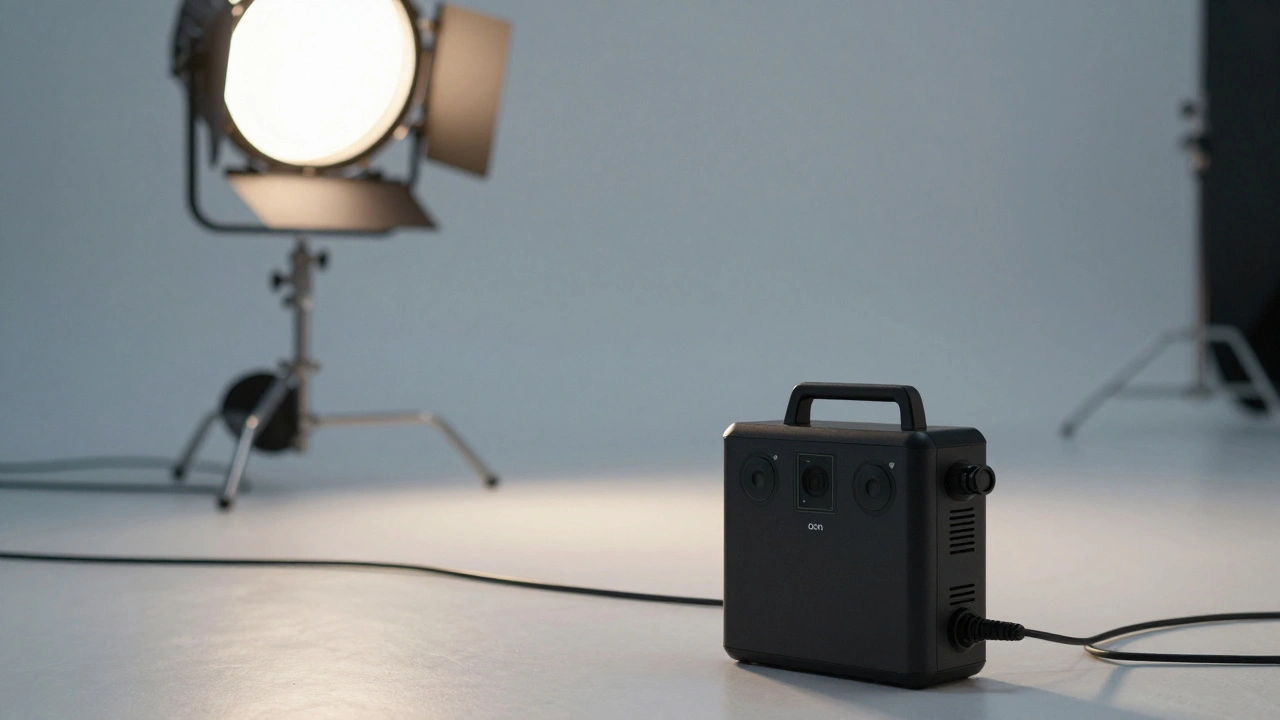
- LEDs have replaced tungsten, cutting power needs by up to 80% for the same light output.
- LiFePO4 batteries are the new gold standard for safety and longevity on set.
- Portable Power Stations eliminate the need for noisy, polluting generators on small to mid-sized shoots.
- Smart power management prevents 'phantom loads' that waste energy during breaks.
The Shift to LED Cinematography Lighting
For a long time, the 'film look' required massive amounts of heat and electricity. A standard 2K tungsten lamp pulls about 2,000 watts and generates enough heat to make your actors sweat through their costumes in minutes. Enter LED Lighting is a semiconductor-based light source that converts electricity directly into light with minimal heat emission.
Modern LED panels and tubes, like those from Aputure or ARRI, don't just save power; they offer precision. Because they use a fraction of the wattage, you can power a high-output key light from a battery instead of a mains circuit. This removes the 'cable spaghetti' from your floor, reducing trip hazards and setup time. When you compare a traditional HMI light to a modern LED equivalent, you're looking at a power draw reduction of nearly 70-90% for similar luminosity. This shift is the foundation of any sustainable set because it lowers the total energy demand from the start.
Battery Tech: Moving Beyond Lead-Acid
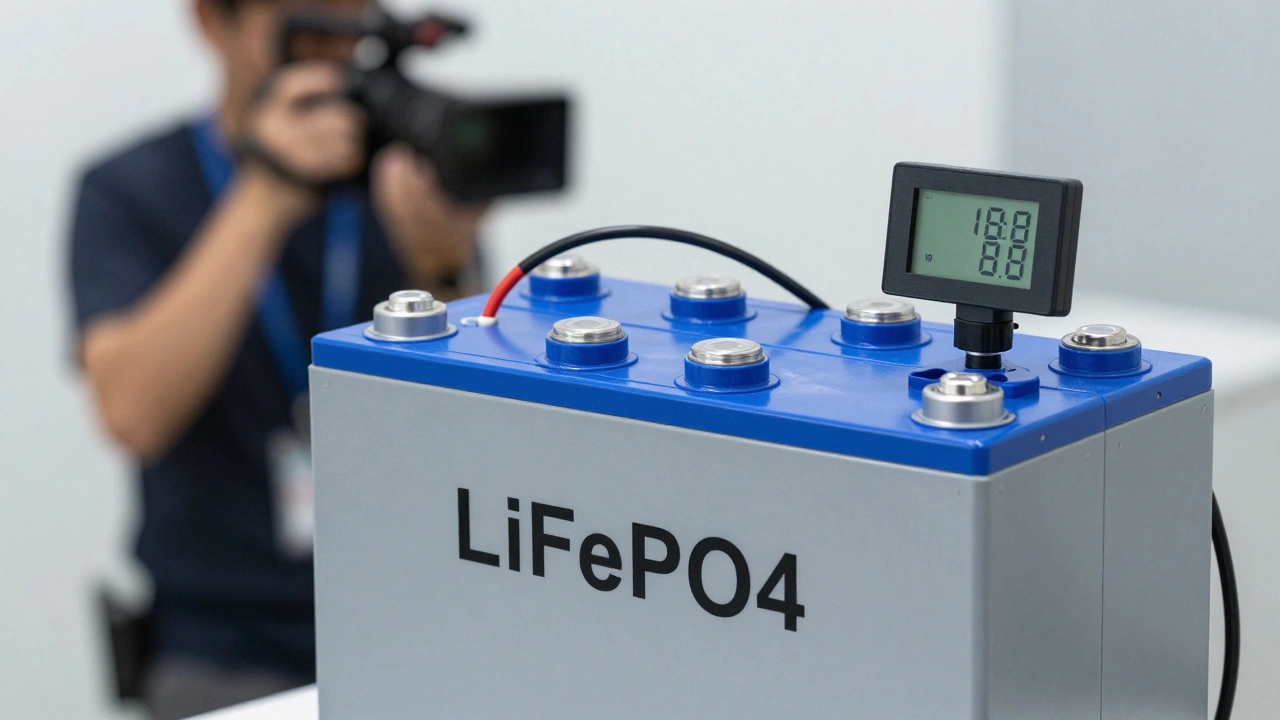
If you've ever lugged around a heavy lead-acid battery, you know they're inefficient and prone to failure. Today, the industry is pivoting toward LiFePO4 is Lithium Iron Phosphate, a type of lithium-ion battery known for its extreme stability, safety, and long cycle life. Unlike standard Cobalt-based lithium batteries found in laptops, LiFePO4 doesn't suffer from 'thermal runaway,' meaning they won't catch fire if they get bumped or overheat-a critical requirement for high-pressure film sets.
These batteries provide a consistent voltage output until they are nearly empty. In the old days, as a battery drained, your lights would dim or your gear would reboot. With LiFePO4, your gear runs at peak performance until the cutoff. For a DP (Director of Photography), this means no unexpected color shifts in your lighting as the day progresses. Plus, they can be recharged thousands of times before they start to degrade, whereas older chemistries would die after a few hundred cycles.
| Feature | Diesel Generator | Lead-Acid Battery | LiFePO4 Power Station |
|---|---|---|---|
| Noise Level | High (Loud) | Silent | Silent |
| Carbon Emission | High | Low | Zero (at use) |
| Lifespan | High (Mechanical) | Low | Very High |
| Weight/Density | Very Heavy | Heavy | Light/Compact |
Portable Power Stations and the 'Silent Set'
The most immediate change for indie filmmakers is the adoption of Portable Power Stations is high-capacity battery systems with integrated inverters that provide AC and DC power in a portable form factor. These units act as a bridge between a small battery and a giant generator. Instead of running a noisy generator just to power a few monitors and a laptop, you plug everything into a power station.
Why does this matter? Sound. There is nothing worse than having to stop a perfect take because a generator kicked in or sputtered. By using silent power stations, you can place the energy source right next to the gear without contaminating the audio track. For a typical 10-hour shoot, a 2kWh power station can easily handle your DIT (Digital Imaging Technician) station, charging batteries for the camera, and powering a few small LED fill lights without ever needing to plug into a wall.
Integrating Renewable Energy on Location
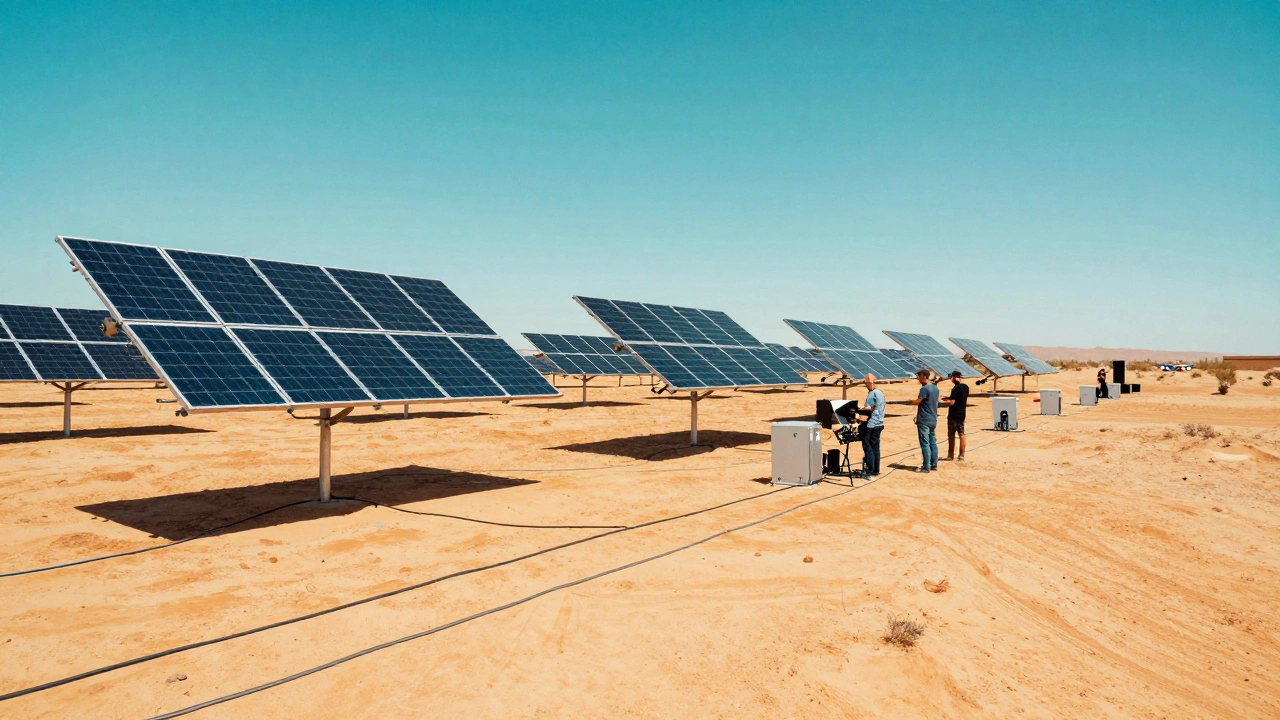
We're now seeing a rise in 'hybrid sets' that combine batteries with Solar Generators is systems that use photovoltaic panels to charge high-capacity batteries, providing a fully renewable energy loop. On a multi-day remote shoot, you can't always bring enough batteries to last the whole trip. By deploying foldable solar arrays during the day, you can trickle-charge your power stations while the crew is eating lunch or resetting a shot.
It's not just about the panels. It's about the ecosystem. When you use a solar-charged battery to power an LED light, you've created a closed loop. No fuel transport, no exhaust fumes, and no noise. In regions like the American Southwest or Southern Europe, where sunlight is abundant, this is becoming a viable alternative to bringing in fuel trucks for small-scale productions.
Practical Power Management Strategies
Having green gear is only half the battle; you have to use it smartly. Many sets suffer from 'energy leaks'-gear left on during breaks or chargers plugged in long after the battery is full. A simple rule of thumb is to implement a 'Power Down' protocol. Every time the director calls 'Cut' for a meal or a location move, every non-essential light and monitor should be killed.
Another pro tip is to match your power source to the load. Don't use a 5kW generator to power a 500W load; it's incredibly inefficient. Instead, use a tiered system: a large battery array for the main lights, and smaller, dedicated power banks for the on-camera accessories. This prevents a single point of failure from shutting down the entire production and ensures you aren't wasting energy through inefficient power conversion.
The Future of the Green Set
As we look toward 2027 and beyond, the goal is a completely 'Net Zero' production. We are seeing the emergence of hydrogen fuel cells as a replacement for the biggest generators on massive Hollywood sets. While solar and LiFePO4 handle the indie and mid-tier shoots, hydrogen can provide the massive wattage needed for virtual production volumes and giant cranes without the carbon output.
The transition to sustainable tech is also changing how we budget. While the initial cost of a high-end LiFePO4 system is higher than a cheap diesel rental, the long-term savings on fuel, transport, and the reduction in 'sound-pollution' delays make it a financial win. The industry is moving away from the 'burn and churn' mentality toward a more circular, efficient way of creating art.
Are LED lights as good as tungsten for skin tones?
Yes, modern LEDs with high CRI (Color Rendering Index) and TLCI (Television Lighting Consistency Index) ratings-typically 95 or higher-are virtually indistinguishable from tungsten. Many now offer full RGBWW control, allowing you to dial in the exact color temperature needed for a scene.
Is LiFePO4 actually safer than standard Lithium-ion?
Significantly. LiFePO4 has a much higher thermal stability threshold. While standard Li-ion batteries can enter a runaway loop and catch fire if punctured or overheated, LiFePO4 is much more stable and far less likely to ignite, making it the ideal choice for the chaotic environment of a film set.
How do I calculate how much battery power I need for a day?
List all your gear and their wattage (e.g., LED panel: 60W, Monitor: 20W, Laptop: 60W). Total the wattage and multiply by the hours of use. If your total is 1,200 watt-hours (Wh), look for a power station with at least 1,500Wh to account for inverter efficiency loss (usually around 10-20%).
Can I use solar panels to power a large production?
For a massive production, solar alone usually isn't enough to power the main lighting rig. However, it is perfect for 'base camp' operations, charging camera batteries, and powering the craft services area. It works best as a supplementary power source to extend the life of your battery arrays.
What is the best way to dispose of old film batteries?
Never throw them in the trash. Lithium and lead-acid batteries contain toxic chemicals. Use certified e-waste recycling centers or manufacturer take-back programs. Many professional rental houses also have partnerships with recycling firms to handle battery disposal safely.



Comments(8)