
Turning a thick, layered novel into a two-hour movie isn’t just trimming pages-it’s rewriting the soul of the story. Think of novel adaptation as trying to fit an entire ocean into a teacup. Some books, like War and Peace or Cloud Atlas, are built on internal monologues, shifting timelines, and dozens of characters whose lives intertwine over decades. Movies don’t have that kind of space. They need momentum, visual clarity, and emotional punch in under 130 minutes. That’s where things fall apart.
The Problem With Inner Lives
Novels thrive on thoughts. Characters think. They doubt. They remember. They reflect. In Madame Bovary, Flaubert spends pages inside Emma’s head as she spirals into despair. In a film, that’s either a voiceover (which feels dated) or a stare into the distance (which feels empty). Audiences don’t connect with a character’s inner turmoil unless they see it in action. That’s why adaptations of literary giants like Proust or Woolf rarely work-they’re not stories about what happens, but what happens inside. Movies need external conflict. Books can afford to linger in silence.Too Many Characters, Not Enough Time
A novel like Game of Thrones has over 1,000 named characters. The TV series cut that down to about 200. Even then, viewers got lost. Now imagine trying to fit all of Don Quixote or Moby-Dick into a single film. You’d have to merge characters, drop subplots, and simplify motivations. In the 2007 film adaptation of The Golden Compass, entire arcs from Philip Pullman’s book were erased-like the betrayal by the witch Serafina Pekkala or the political intrigue among the Gyptians. Why? Because the studio thought audiences wouldn’t care. They were wrong. Fans felt betrayed. The movie didn’t just lose plot-it lost the book’s heartbeat.Structure Doesn’t Translate
Books can jump around. They can start in the middle, end in the beginning, or tell the same event from five different perspectives. Movies? They follow a three-act structure. If you try to adapt a nonlinear novel like House of Leaves or Slaughterhouse-Five without simplifying its rhythm, the audience gets confused. The 2013 film The Great Gatsby tried to keep Fitzgerald’s lyrical tone, but the nonlinear flashbacks felt forced. The director used voiceover to explain the past, but it drowned out the visuals. The result? A beautiful-looking movie that felt like a textbook summary.Symbolism Gets Lost in Translation
In books, a red door can mean repression. A broken clock can stand for lost time. A character’s habit of biting their nails can hint at anxiety. In film, those symbols have to be shown, not told. And if they’re not obvious, viewers miss them. The 1993 film The Remains of the Day tried to capture Kazuo Ishiguro’s quiet, restrained emotion-but the subtleties of class, repression, and regret were flattened into polite glances and slow walks. The book’s power came from what was unsaid. The movie showed too much, and said too little.
Length Isn’t the Only Issue-Pacing Is
Some novels are slow by design. Middlemarch spends 800 pages watching people live their lives. Movies need rising tension. Every scene must push the story forward. When Anna Karenina was adapted into a 2012 film with a stage-set aesthetic, it looked stunning. But the pacing felt off. Scenes dragged because the filmmakers were trying to honor the book’s rhythm. Audiences left bored. The solution? Cut the fat. The 1948 version of Anna Karenina with Vivien Leigh trimmed the story to its emotional core: love, shame, and suicide. It worked because it understood: cinema thrives on urgency.What Makes an Adaptation Successful?
The best adaptations don’t try to be faithful-they try to be true. The Godfather took Mario Puzo’s novel and cut half the characters, simplified the plot, and turned Michael Corleone’s arc into a tragedy of power. It didn’t follow the book word-for-word. It captured its spirit. Same with Shawshank Redemption. Stephen King’s novella was bleak and short. The film added hope, music, and time. It became iconic because it didn’t copy-it transformed.Successful adaptations know their medium. They treat the novel as inspiration, not scripture. They ask: What’s the emotional core? What’s the visual metaphor? What can we cut without losing meaning? The answer isn’t in the page count. It’s in the feeling.
When Adaptations Fail-And Why
Failures usually come from one of two places: fear or arrogance. Fear means the studio is scared to change anything. They keep every subplot, every character, every footnote. The result? A bloated, confusing mess. Arrogance means they think they know better. They change the ending, kill off beloved characters, or turn a quiet story into an action flick. The 2019 Little Women film got praise for its modern feel-but it changed Jo March’s ending to make her a writer instead of a mother. Some fans loved it. Others felt erased. Neither side was wrong. It’s a trade-off: modern relevance versus literary integrity.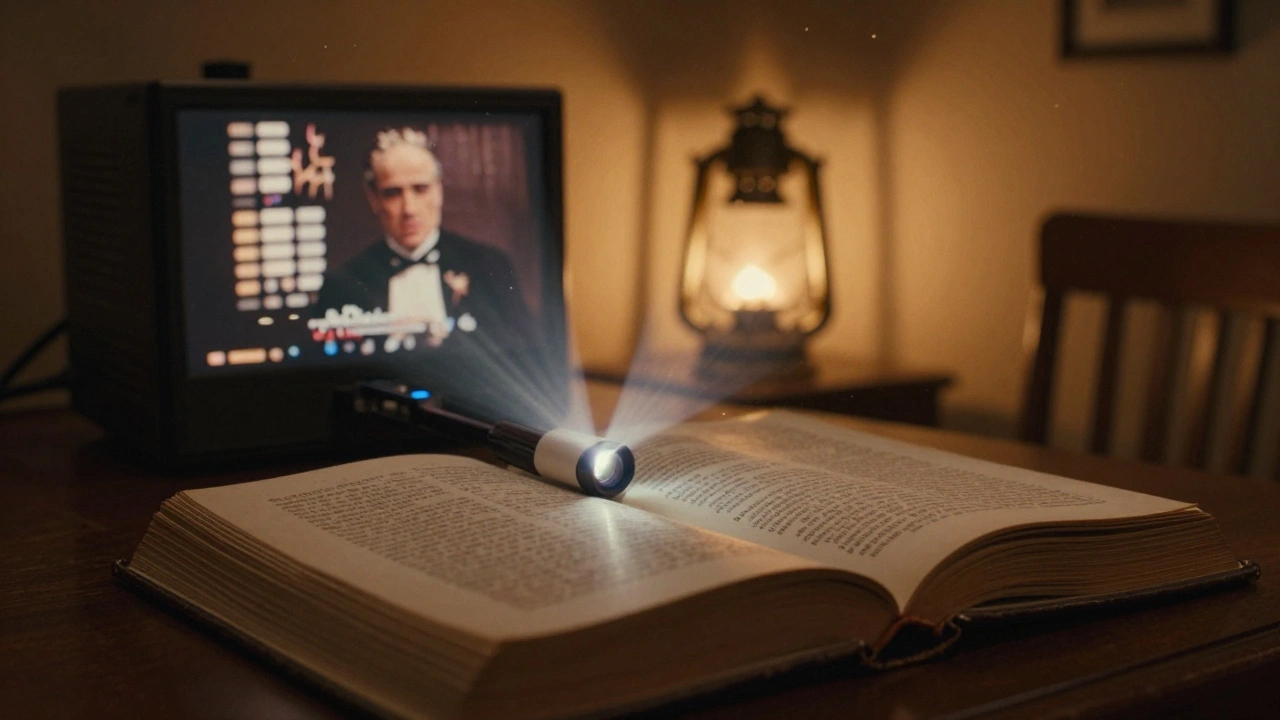
What Audiences Really Want
People don’t go to see adaptations because they want the book on screen. They go because they loved the book and want to feel it again. But not exactly the same. They want the emotion, the atmosphere, the characters they remember. They don’t need every chapter. They need the soul. That’s why The Lord of the Rings films worked, even with massive cuts. Peter Jackson knew the heart of Tolkien’s story wasn’t the maps or the languages-it was friendship, sacrifice, and the cost of power. He focused on that. And audiences cried.How to Judge a Good Adaptation
Ask yourself three questions after watching:- Did it make me feel what I felt when I read the book?
- Did it change the story in a way that made sense for film?
- Did it leave me wanting to reread the book-or at least respect it more?
If the answer to all three is yes, it succeeded. If not, it’s just a movie with the same title.
Final Thought: The Book Is Still There
No adaptation replaces the novel. It never should. A book lets you imagine the voice, the silence, the texture. A film gives you a single vision. That’s not a failure-it’s a different kind of art. The best adaptations don’t compete with the book. They invite you back to it.Why do most book adaptations feel different from the original?
Because books and movies are different languages. Books use words to build worlds inside your mind. Movies use images, sound, and pacing to create emotion in real time. What’s subtle in a novel-like a character’s guilt or longing-often needs to become an action, a look, or a line of dialogue in film. That shift changes everything. It’s not a bad thing-it’s just translation.
Can a movie ever be better than the book?
Yes, but not because it’s more faithful. It’s better when it captures the emotional truth of the book in a way the book couldn’t. The Shawshank Redemption didn’t follow Stephen King’s novella closely, but it made the hope and resilience feel more powerful than the text. The film gave the story a rhythm and warmth the book didn’t have. Sometimes, a film doesn’t improve the book-it completes it.
Why do studios keep adapting complex novels if they always fail?
Because the source material already has a built-in audience. People who loved the book will show up. Studios don’t need everyone to like it-they just need enough fans to make it profitable. Plus, complex novels come with prestige. Even a flawed adaptation gets awards buzz. It’s a low-risk, high-reward gamble. If it works, you get a classic. If it flops, you still made money.
What’s the most successful adaptation of a complex novel?
Many would say The Godfather. It took a 600-page crime epic with dozens of characters and turned it into a tight, operatic tragedy about family and power. It cut half the book’s content, changed the ending, and removed subplots. But it kept the soul: the slow corruption of Michael Corleone, the weight of tradition, the cost of ambition. That’s why it’s still studied decades later.
Should I read the book after watching the movie?
Always. The movie is a snapshot. The book is the whole life. You’ll find layers the film missed-inner thoughts, historical context, side characters who shaped the world. Even if the movie was great, the book will surprise you. That’s the magic of adaptation: it doesn’t replace the original. It points you back to it.


Comments(6)