You’ve probably seen those shimmering, hyper-realistic backgrounds in recent blockbusters. That’s not magic-it’s LED volumes, a technology that is quietly rewriting the rules of sustainable filmmaking. If you’re still hauling tons of physical sets to remote locations or painting endless green screens, you’re burning fuel and time for reasons that no longer exist.
The core promise here isn’t just visual fidelity; it’s environmental responsibility. Traditional film production is notoriously wasteful. Think about the cardboard sets built for one week of shooting, then tossed into landfills. Now think about the diesel generators powering lights on location. LED volumes cut through this waste by shifting the burden from physical materials to digital pixels. But how exactly does swapping a paintbrush for a pixel help the planet? Let’s break down the mechanics, the numbers, and the practical steps for making the switch.
The Hidden Carbon Cost of Traditional Sets
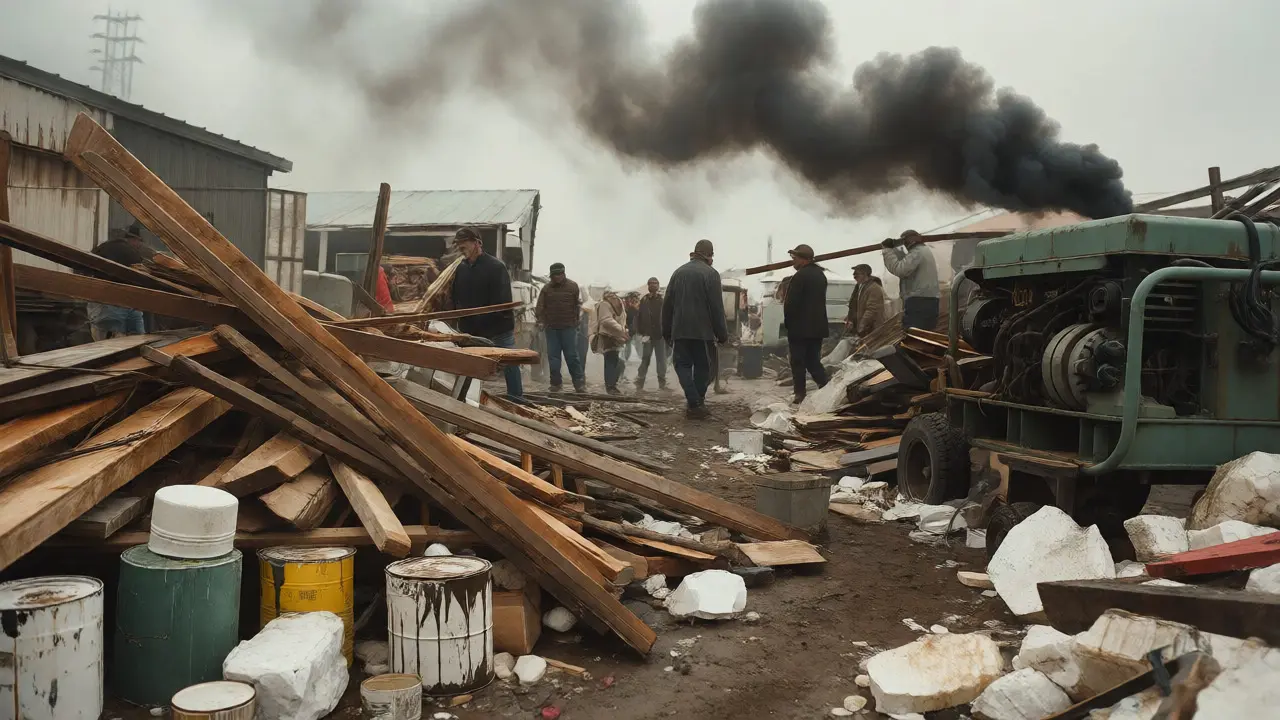
To understand why LED tech matters, you have to look at what it replaces. In the old model, creating a believable world meant physical construction. A standard feature film might use hundreds of pounds of wood, plastic, foam, and paint per set piece. According to the Environmental Media Association, the average major motion picture generates around 600 metric tons of CO2e (carbon dioxide equivalent) during production alone. Much of this comes from transportation and material disposal.
When you shoot on location, you’re also moving crew, equipment, and actors via trucks and planes. Each mile traveled adds to the footprint. Even studio shoots aren’t immune; they require massive HVAC systems to cool hot tungsten lights and extensive lighting rigs that draw significant power. The problem isn’t just the energy used during the shoot-it’s the embodied energy required to manufacture, transport, and dispose of the physical assets.
How LED Volumes Change the Equation
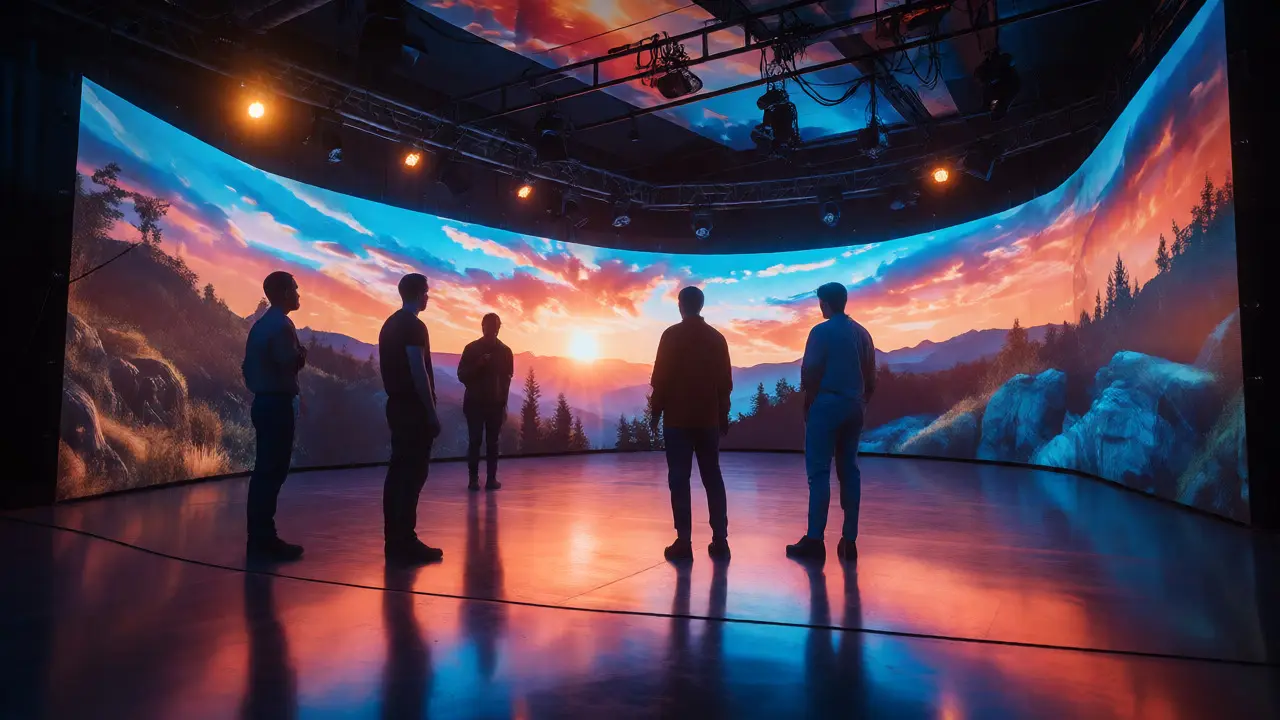
An LED volume is essentially a giant, high-resolution video wall that surrounds the camera and actors. Instead of a green screen that gets painted over in post-production, the background is rendered in real-time using game engines like Unreal Engine. This shift creates three distinct environmental benefits:
- Reduced Material Waste: You don’t build physical walls. You render them. Once the shot is done, the "set" disappears without leaving a scrap of debris.
- Lower Transportation Emissions: Since the environment is digital, you can shoot anywhere with a stable power supply. You don’t need to fly a crew to Iceland if you can render Iceland in Atlanta.
- Energy Efficiency: Modern Micro-LED panels are far more efficient than traditional stage lighting setups needed to light a green screen evenly.
Consider the case of The Mandalorian, which popularized this tech. By using LED volumes, the production team avoided traveling to multiple international locations for exterior shots. While the servers rendering the images do consume electricity, the net reduction in travel and physical logistics often results in a lower total carbon footprint for large-scale productions.
Comparing Footprints: LED vs. Green Screen vs. Practical
Not all methods are created equal. Here’s a realistic look at where the emissions hide in each approach. Note that these figures vary based on production size, but the trends hold true across the industry.
| Factor | Practical Location | Green Screen Studio | LED Volume Stage |
|---|---|---|---|
| Material Waste | High (wood, paint, props) | Low (minimal set dressing) | Negligible (digital assets) |
| Transportation | Very High (crew/equipment travel) | Moderate (commute to studio) | Low (centralized hub) |
| Energy Use | Moderate (natural light + gensets) | High (heavy lighting rigs) | Moderate-High (servers + LEDs) |
| Post-Production Load | Low | Very High (compositing/rendering) | Low-Moderate (final grade only) |
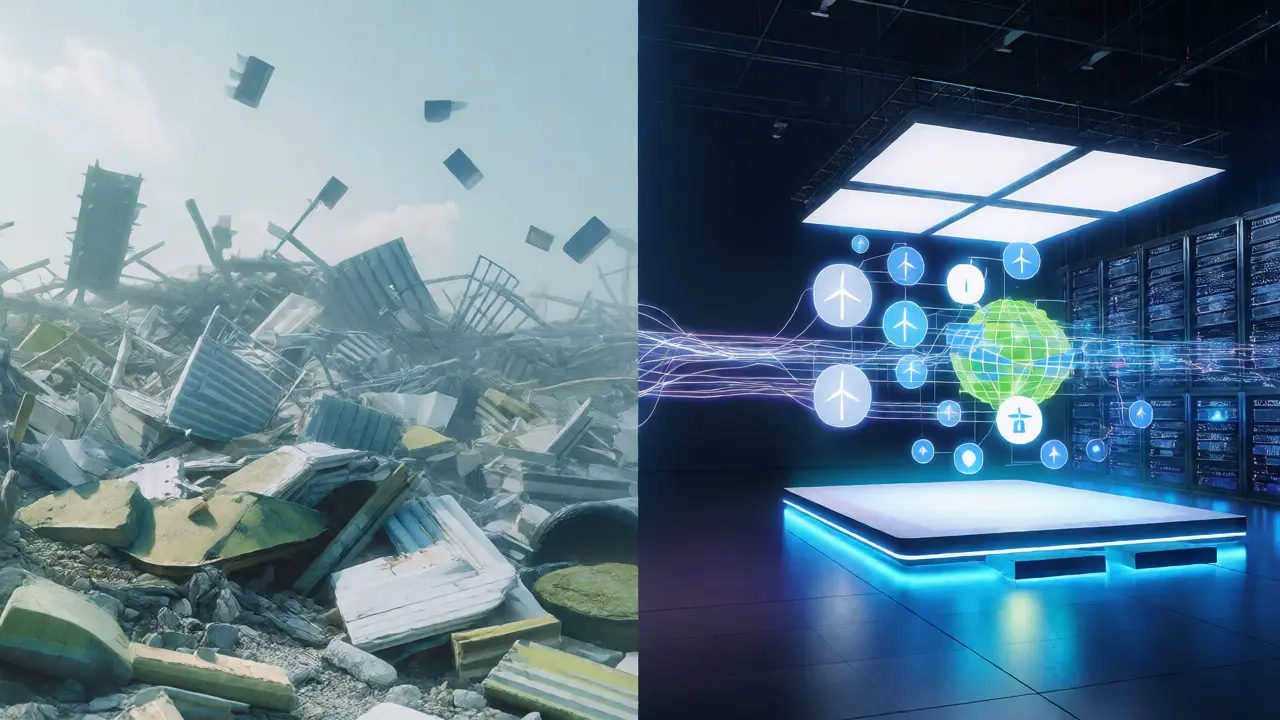
The trade-off is clear: LED volumes shift energy consumption from physical logistics and heavy lighting to computational power. However, data centers and render farms are increasingly powered by renewable energy sources, whereas diesel generators on remote locations rarely are. This makes the LED approach more adaptable to future grid decarbonization.
Implementing Sustainable Practices in Virtual Production
If you’re a producer or director looking to adopt this tech, don’t just buy the screens and call it a day. Sustainability requires intentional choices throughout the pipeline. Here is how to maximize the environmental benefit:
- Optimize Asset Reuse: Digital assets cost nothing to duplicate. Create modular environments that can be reused across projects. A forest scene rendered once can be re-lit for ten different movies without new material costs.
- Choose Efficient Hardware: Not all LED panels are equal. Look for displays with high refresh rates and low power draw per square meter. Newer micro-LED technologies offer better efficiency than older OLED or LCD-based walls.
- Minimize On-Site Travel: Use the volume’s ability to simulate weather and time-of-day changes. This reduces the need for reshoots due to bad weather, saving days of crew travel and accommodation.
- Power Management: Ensure your facility uses renewable energy contracts. Since the main load is electrical, sourcing clean power directly offsets the server demand.
A common pitfall is treating the LED volume as a "fix-it-in-post" tool. If you rely on the screen to save bad framing or poor lighting decisions, you end up spending more time-and energy-rendering corrections. Plan your shots with the same rigor you would for a physical set. Precision saves power.
The Future of Green Filmmaking
We are moving toward a hybrid model. Small indie films might stick to practical locations because they lack the budget for a volume. Huge blockbusters will lean heavily on LED stages. But the middle ground is growing fast. As hardware costs drop, mid-budget productions can access virtual production tools that were previously exclusive to Marvel-sized budgets.
This democratization means more productions can reduce their footprint without sacrificing quality. It also encourages a culture shift. Crews are learning to think digitally first, physically second. This mindset change is perhaps the biggest win for sustainability. When you stop seeing the world as something to be built and start seeing it as something to be simulated, waste naturally decreases.
Are we there yet? Not entirely. The manufacturing of LED panels involves rare earth minerals and complex supply chains. Disposal of old panels remains a challenge. But compared to the landfill-bound mountains of styrofoam and plywood from traditional sets, the trajectory is undeniably greener. The goal isn’t perfection; it’s progress. And right now, the pixels are winning.
Do LED volumes actually save money?
Initially, yes, but long-term savings depend on asset reuse. The upfront cost of an LED stage is high, but eliminating travel, set construction, and extensive post-production compositing can significantly lower the total budget for large productions.
What happens to the digital assets after filming?
Digital assets are stored on servers. Unlike physical sets, they don’t rot or take up warehouse space. They can be archived indefinitely or deleted with minimal environmental impact, though server storage does consume some energy over time.
Is virtual production suitable for small indie films?
It’s becoming more accessible. Smaller LED walls and cloud-rendering services allow indie filmmakers to rent time in existing volumes rather than building their own. This pay-as-you-go model makes it viable for smaller budgets.
How does lighting work in an LED volume?
The LED screens themselves act as light sources. This provides natural-looking reflections on actors and props, reducing the need for additional physical lighting rigs, which cuts down on both equipment rental and electricity usage.
Can LED volumes replace all practical effects?
No. Physical interactions, such as rain, wind, or fire, still require practical elements. The best results come from combining digital backgrounds with selective practical effects to maintain realism.