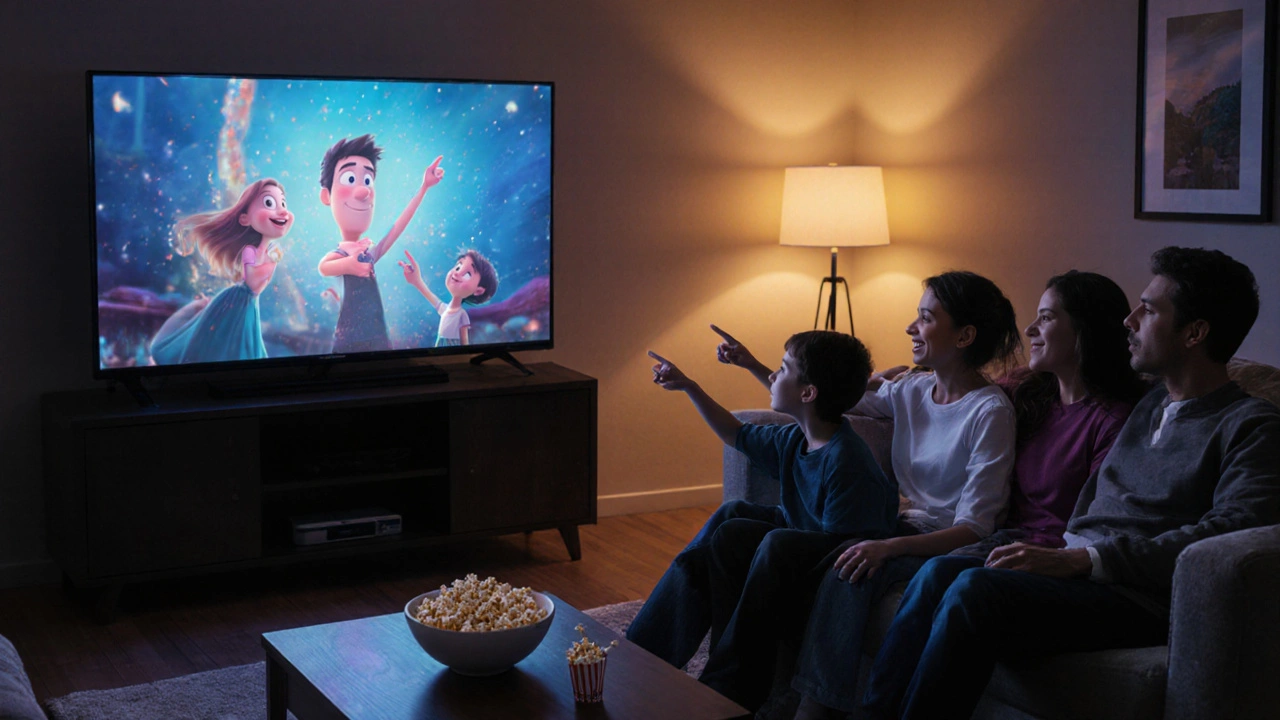
Animated streaming films aren’t just cartoons anymore. They’re the new bedtime stories, weekend rituals, and sometimes, the only thing keeping kids quiet during a long car ride. But behind the bright colors and talking animals is a quiet business strategy that’s reshaping how studios think about storytelling, audience loyalty, and long-term profits.
Why Families Are Choosing Animated Streaming Films
Before Netflix, Disney+, and Amazon Prime Video pushed animated features into homes, families went to theaters or rented DVDs. Now, they click play on a tablet during breakfast, a laptop after school, or a smart TV before bed. It’s not just convenience-it’s control. Parents pick the time, pause for snacks, skip the ads, and replay favorite scenes without paying extra.
Studies from 2024 show that 68% of U.S. households with kids under 12 watch at least one animated streaming film per week. That’s up from 41% in 2020. The reason? These films are designed to be bingeable. They’re shorter than theatrical releases-usually 70 to 90 minutes-and packed with hooks that make kids want to watch again. Think catchy songs, simple moral lessons, and characters that look like they’d fit on a lunchbox.
And it’s not just kids. Parents are watching too. Animated films like The Mitchells vs. The Machines a 2021 Sony Pictures Animation film released on Netflix, blending chaotic family dynamics with sci-fi action and viral humor or The Sea Beast a 2022 Netflix original that reimagines pirate legends with emotional depth and stunning animation have adult themes woven in-grief, identity, rebellion-that keep grown-ups engaged. That’s the secret sauce: content that works for both ages.
How Studios Turn One Film Into a Franchise
One animated film doesn’t make a fortune anymore. But a franchise? That’s gold.
Look at The Super Mario Bros. Movie a 2023 Illumination release that grossed over $1.3 billion globally, sparking a wave of merchandising and sequel plans. It wasn’t just a movie-it was a launchpad. Merchandise sold out in hours. YouTube shorts featuring Mario and Luigi got millions of views. A TV series followed within months. And now, a sequel is locked in.
Streaming platforms don’t need box office numbers to justify sequels. They track watch time, rewatch rates, and completion percentages. If 85% of viewers finish a film and 60% rewatch it within two weeks, that’s a green light for a spin-off. Studios now design animated films with franchise potential baked in from day one.
Character design matters more than ever. Think of Kipo and the Age of Wonderbeasts a Netflix original that launched in 2020, featuring a diverse cast and modular world-building that allowed for multiple spin-offs and video game tie-ins. The main character, Kipo, has a unique look-bright pink hair, oversized goggles, and a customizable outfit-that makes her instantly recognizable. That’s not just style. That’s merchandising fuel.
Even minor characters get expanded. In The Bad Guys a 2022 DreamWorks Animation film on Peacock and later Netflix, where a group of animal criminals try to go straight, the sidekick snake, Mr. Wolf’s partner, became so popular that a standalone short film was released within six months. Studios now have teams dedicated to spotting breakout side characters before the film even drops.
The Hidden Rules of Family-Friendly Animation
Not every animated film works for families. Some are too scary. Others are too preachy. The ones that stick follow a few unspoken rules.
- Conflict must be resolvable in under 90 minutes. Kids have short attention spans. If the problem feels too big or unresolved, they tune out.
- Parents aren’t villains. In older cartoons, moms and dads were often absent or clueless. Modern films show them as flawed but caring. In Wish Disney’s 2023 animated film, the mother is a supportive figure who helps her daughter find her voice, not a barrier to overcome.
- Humor has layers. Slapstick works for kids. Sarcasm and wordplay work for adults. The best films use both. Chicken Run a 2000 Aardman film still watched today on streaming, uses British wit and physical comedy to appeal to all ages.
- Music is a character. A strong theme song can make a film unforgettable. Encanto Disney’s 2021 hit, where every family member has a musical number tied to their personality, led to over 2 billion streams on Spotify and YouTube.
These aren’t random choices. They’re tested in focus groups with real families. Studios now hire child psychologists and parenting bloggers to review scripts before animation begins.

Why Some Animated Films Fail-Even With Big Budgets
Not every animated film becomes the next Avatar: The Last Airbender a Nickelodeon series that was later adapted into a successful streaming film, proving that loyal fanbases can carry a franchise even without a theatrical release. Some flops cost more than $100 million and vanish in weeks.
One common mistake? Trying to copy what worked last year. In 2023, three studios released films with talking animals in space, hoping to ride the wave of The Mitchells vs. The Machines. None made it past 50% completion rates. Kids sensed the lack of originality.
Another? Ignoring cultural nuance. A 2024 film set in a fictional Latin American village used stereotypes in its character designs and dialogue. It got pulled from streaming platforms within days. Today’s families demand authenticity-not just diversity.
And then there’s timing. A film about climate change released during a heatwave in July might feel too heavy. The same film released in October, after school projects on the environment, lands perfectly.
What Comes Next? The Rise of Interactive Animation
The next frontier isn’t just watching-it’s participating.
Netflix’s Puss in Boots: The Last Wish a 2022 film that became a surprise hit, led to an interactive spin-off where viewers choose the hero’s path during key scenes was a test run. Viewers could pick whether Puss fights, flees, or forgives. Different endings led to different merchandise. The result? A 40% increase in rewatching among kids aged 6-9.
Other studios are testing AI-driven characters. Imagine a film where the sidekick remembers your child’s name from a previous watch and says, “Hey, you’re the one who picked the dragon last time!” That’s not sci-fi-it’s in development at DreamWorks and Illumination.
And don’t forget the merchandising ecosystem. Animated films now launch with companion apps, printable coloring packs, and even AR experiences. A child watches a film, then uses their tablet to project the main character into their living room. That’s not just entertainment-it’s engagement.

What Parents Should Look For
With so many options, how do you pick the right one?
- Check the completion rate on the streaming platform. If over 70% of viewers finish it, it’s likely well-paced.
- Look for sequels or spin-offs. If there’s a TV series or short films, the original likely has strong storytelling.
- Read reviews from real parents-not just critics. Sites like Common Sense Media filter reviews by age group.
- Watch the first 10 minutes. If the child is hooked, the film will hold attention.
- Avoid films that rely on pop culture references only adults get. Kids tune out when they feel left out.
The goal isn’t just to keep kids quiet. It’s to find stories that spark conversations-about courage, kindness, or even what it means to be different.
Why are animated streaming films so popular with families?
Animated streaming films are popular because they’re easy to access, easy to pause, and designed to work for both kids and adults. Parents appreciate the control over viewing time, while kids love the colorful characters and repeatable storylines. Many films include humor and themes that adults enjoy too, making them shared experiences rather than just kids’ content.
How do studios decide which animated films become franchises?
Studios track how many people finish the film and how often they rewatch it. If a character becomes popular on social media or drives high merchandise sales, that’s a sign. They also look at how easily the world can be expanded-like adding new locations, side characters, or spin-off stories. Films with strong visual designs and emotional hooks are more likely to grow into franchises.
Are animated streaming films better than theatrical releases for kids?
They’re different, not better. Theatrical films often have bigger budgets and more polished animation, but streaming films are made for home viewing. They’re shorter, have fewer ads, and let families watch together without leaving the house. Many streaming films now match or exceed theatrical quality-like The Sea Beast or Wish.
What makes a good animated film for the whole family?
A good family animated film balances simple, exciting plots for kids with deeper themes or humor for adults. It avoids stereotypes, features relatable family dynamics, and includes music or visuals that stick. Films like The Mitchells vs. The Machines and Encanto succeed because they make everyone feel seen-whether you’re six or sixty.
Should I let my child rewatch the same animated film over and over?
Yes. Repetition helps kids learn emotional cues, language, and problem-solving. When they know what’s coming, they feel safe and in control. Many kids use rewatching as a way to process feelings-like fear or excitement. If they’re engaged and happy, it’s not a problem. In fact, studios design films knowing kids will rewatch them.
Final Thoughts: It’s Not Just Entertainment-It’s Connection
Animated streaming films have become the modern family ritual. They’re the thing you watch together after dinner, the story you quote at breakfast, the character your child draws on their notebook. Behind the scenes, studios are engineering these films to last-not just in view counts, but in memory.
What makes them work isn’t just the animation. It’s the care taken to understand what families need: stories that are fun, safe, and meaningful. And as technology evolves, the line between viewer and participant will keep blurring. The next generation won’t just watch animated films. They’ll live inside them.




Comments(8)