
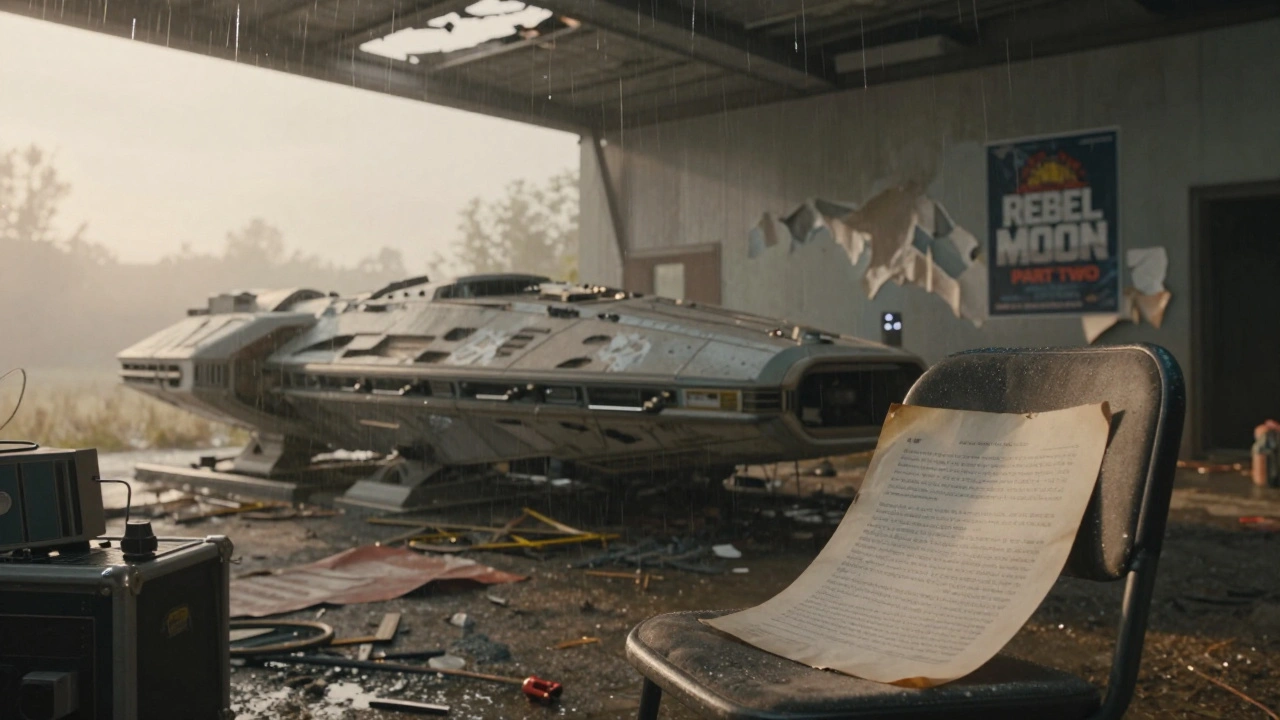
Every year, dozens of films vanish without a trace. They’re not lost in a flood or buried in a studio vault. They’re killed by a button click inside a corporate office. You might have heard about one - maybe Rebel Moon Part Two got delayed, or Wish was quietly shelved after a test screening. But most? No announcement. No press release. Just silence.
Here’s the truth: streaming platform cancellations are now the biggest reason films never reach audiences. Not bad box office. Not poor reviews. Not creative differences. Just corporate math. And it’s happening more than you think.
How a Film Gets Cancelled - Without Anyone Knowing
It starts with a greenlight. A studio signs a deal. A director is hired. A cast is locked in. Budgets are approved - sometimes over $100 million. Then, months or even years later, the film is quietly pulled from the release schedule.
There’s no official statement. No “due to creative differences.” No “we’re rethinking our strategy.” The film just disappears from the platform’s calendar. No trailer. No poster. No IMDB page update. It’s like it never existed.
Why? Streaming platforms don’t need to explain themselves. Unlike theaters, where a film’s release is a public event, streaming services operate behind closed doors. They don’t owe audiences a reason. They only owe their shareholders a return.
And here’s the kicker: many of these films are already finished. Shot. Edited. Scored. Some even have marketing campaigns ready to go. But if the internal data says it won’t drive enough sign-ups or keep people watching past the first episode, it gets axed.
The Data That Kills Movies
Streaming platforms don’t cancel films because they’re bad. They cancel them because they’re not strategic.
Think of it like this: a streaming service has a budget for 12 original films this year. They need to maximize how long people stay subscribed. So they ask: which films will hook viewers for 30 days? Which ones will make someone say, “I’m keeping this service just for this movie”?
They use data from:
- Test screenings - not just reactions, but how long people watched
- Viewer drop-off rates - when people quit watching after 10 minutes
- Demographic targeting - does this film appeal to users aged 18-34 who watch sci-fi and hate romantic comedies?
- Competitive analysis - if a similar film just flopped on Hulu, this one won’t get the green light
- Cost-per-viewer - if a $120 million film only attracts 5 million viewers, it’s a net loss
Take The Last Voyage of the Demeter. It was a horror film based on a Dracula side story. It cost $60 million. It got 12 million views in its first month. Sounds good? Maybe - until you realize Rebel Moon cost $180 million and only got 15 million views. Suddenly, the horror film looks like a bargain. But if the platform’s model says horror doesn’t drive subscriptions, it still gets cut.
It’s not about quality. It’s about alignment.
Who Loses When a Film Gets Cancelled?
Everyone.
Directors lose years of work. Some have spent 18 months on a project, only to have it vanish. One indie director in Austin told me his film was 90% done when Netflix pulled the plug. He had 30 crew members on payroll. He still owes them.
Actors lose gigs. Think about a supporting actor who took a pay cut to work on a passion project. They trained for six months. They gained 20 pounds. They learned to ride a horse. Now? No release. No credits. No IMDb page. No resume boost.
And let’s not forget the crew. Gaffers. Sound mixers. Costume designers. Many of them work freelance. One film cancellation can wipe out their income for the year.
Even fans lose. They follow these projects on social media. They wait. They hype them up. Then - nothing. It’s like a concert that never happens. No refund. No explanation.
Why This Keeps Happening
Streaming platforms were built on a promise: more content, more choice, more freedom. But over time, they turned into subscription factories. Their goal isn’t to release great films. It’s to keep you paying $15 a month.
Here’s how:
- They overproduce. Netflix alone released over 200 original films in 2023. Most were never meant to be seen. They were bait.
- They overpay. Studios get paid upfront - sometimes $50 million just to make a film. If it flops, they don’t lose money. The platform does.
- They overpromise. Marketing campaigns scream “This is the film you’ve been waiting for!” But if the data says it won’t retain users, they bury it.
- They over-rely on algorithms. If a film doesn’t match the profile of users who binge Stranger Things, it gets shelved - even if it’s brilliant.
It’s a system designed to fail. You’re not watching films. You’re watching a spreadsheet.

What Happens to Cancelled Films?
Some end up on the dark web. Not illegally. But in corporate archives. Files stored on encrypted drives. Sometimes, they’re sold off for pennies. A small distributor buys the rights for $200,000 and releases it on VOD in 12 countries. No fanfare. No reviews.
Others get reworked. A director might re-edit the film into a TV series. A studio might repackage it as a documentary. One cancelled horror film became a 6-part podcast. Another became a graphic novel.
And then there are the ones that just… rot.
There’s a graveyard of digital files somewhere in Los Angeles. Hard drives stacked in climate-controlled rooms. Films that cost $80 million. Films with A-list stars. Films with Oscar-caliber scripts. All untouched. All unseen. All dead.
What You Can Do
You can’t stop the cancellations. But you can stop pretending they’re normal.
- Don’t just subscribe. Demand transparency. If a film disappears, ask why. Tag the platform. Use #WhyWasItCancelled.
- Support indie distributors. If a cancelled film gets picked up by a small platform like MUBI or Criterion Channel, watch it. Share it.
- Follow filmmakers. Many directors tweet updates about cancelled projects. Some even post behind-the-scenes footage. They’re not asking for money. They’re asking to be seen.
- Vote with your wallet. If you cancel your subscription because a film you were excited about got axed, they notice. Streaming services track churn. One person quitting doesn’t matter. But 10,000? That’s a headline.
The system is rigged. But it’s not unstoppable. Films are art. Not data points. And as long as people care enough to ask why, the truth won’t stay buried forever.
Why don’t streaming platforms announce film cancellations?
Streaming platforms avoid public announcements because cancellations hurt their brand. They don’t want viewers to think their content library is unstable or that they’re wasting money. Instead of saying “We cancelled this,” they just remove it from calendars and pretend it never existed. Silence is their PR strategy.
Can a cancelled film ever be released later?
Yes, but it’s rare. Some films are sold to smaller distributors, released internationally, or re-edited into TV episodes. A few have been picked up by film festivals after being shelved. But most never see the light of day. The window for recovery is usually under 18 months - after that, rights get tangled, cast moves on, and the project is considered dead.
Do streaming platforms lose money when they cancel films?
They do - but not always. Many deals are structured so the studio takes the financial risk. The platform pays upfront for exclusive rights, and if the film flops, the studio loses. But if the film was expensive and underperformed, the platform still loses viewership and subscription growth. That’s the real cost: losing users who expected a certain type of content.
Are cancelled films always bad?
No. In fact, many cancelled films were critically acclaimed in test screenings. One film that was pulled from Amazon Prime had a 94% audience score on Rotten Tomatoes. It was cancelled because it didn’t fit their “family-friendly” algorithm. Another was pulled because it had too many Black characters - and the data showed it wouldn’t appeal to their core international subscribers. Quality doesn’t matter if it doesn’t match the model.
How many films are cancelled each year?
No one tracks this officially. But industry insiders estimate that between 15% and 25% of films greenlit by major streaming platforms are cancelled before release. That’s roughly 30 to 50 films per year across Netflix, Amazon, Apple, and Disney+. Some years, it’s higher. In 2023, reports suggest over 60 films vanished without a trace.


Comments(10)