
Art-house cinemas aren’t just buildings with screens and seats. They’re community hubs where films that never make it to multiplexes find their audience. But running one is expensive. Rent, film prints, staff, and equipment costs add up fast-especially when ticket sales barely cover the bills. That’s where grant funding comes in. Nonprofit organizations across the U.S. and Europe are stepping in to keep these spaces alive, not just as theaters, but as centers for education, cultural preservation, and public dialogue.
Why Art-House Theaters Need Grants
Most art-house cinemas operate on razor-thin margins. A single 35mm film print can cost $1,500 to rent. Digital projection systems? They run $50,000 or more. And unlike mainstream theaters, art-house venues rarely get blockbusters. Their programming is niche: foreign films, restored classics, experimental documentaries, student work. These aren’t crowd-pleasers-they’re conversations.
In 2023, the National Endowment for the Arts reported that 62% of independent cinemas in the U.S. were operating at a deficit. Only 18% had enough revenue to cover all operating costs. Without grants, many would close. In 2022 alone, over 120 art-house theaters shuttered across North America. Some were replaced by luxury condos. Others just vanished.
Who Gives the Grants?
It’s not just government agencies. A growing network of foundations, film societies, and private donors fund these spaces. Here are the biggest players:
- The Film Foundation - Founded by Martin Scorsese, this nonprofit has distributed over $70 million since 1990 to restore and preserve classic films. They also give grants directly to theaters for exhibition rights and educational outreach.
- The National Endowment for the Arts (NEA) - Their “Arts in Communities” program has funded over 800 cinema programs since 2020, with grants ranging from $5,000 to $50,000 per project.
- The Jerome Foundation - Based in Minnesota, they focus on supporting emerging filmmakers and small theaters in underserved regions. Their grants often cover film licensing fees and community engagement events.
- The Andrew W. Mellon Foundation - This major donor has committed over $100 million since 2018 to arts infrastructure, including theater renovations and digital projection upgrades.
- Regional film commissions - Places like the California Film Commission and the New York State Council on the Arts offer annual funding rounds specifically for nonprofit theaters.
What Do These Grants Actually Pay For?
Grants don’t just cover rent. They fund the full ecosystem that keeps art-house cinemas alive:
- Film licensing - Paying distributors for rights to screen rare or restored films. A single screening of a 1960s French New Wave film can cost $300-$1,200.
- Projection and sound upgrades - Switching from aging 35mm projectors to digital systems. Many grants now require theaters to upgrade to 4K laser projection to qualify.
- Educational programming - Hosting Q&As with directors, film history workshops, or student film nights. The Film Foundation requires grantees to offer at least one educational event per month.
- Accessibility improvements - Captioning equipment, wheelchair ramps, sensory-friendly screenings. The NEA now prioritizes grants that increase access for people with disabilities.
- Staff training - Paying for curators to attend film festivals, or projectionists to learn digital maintenance. A $10,000 grant might cover a year of training for two staff members.
How Nonprofits Turn Grants Into Community Impact
Successful art-house theaters don’t just show films-they build relationships. In Portland, Oregon, the Screen on the Wall theater used a $25,000 grant to launch a free youth film program. Local high schoolers learned editing, wrote reviews, and even curated a monthly screening of student-made shorts. Attendance jumped 40% in six months.
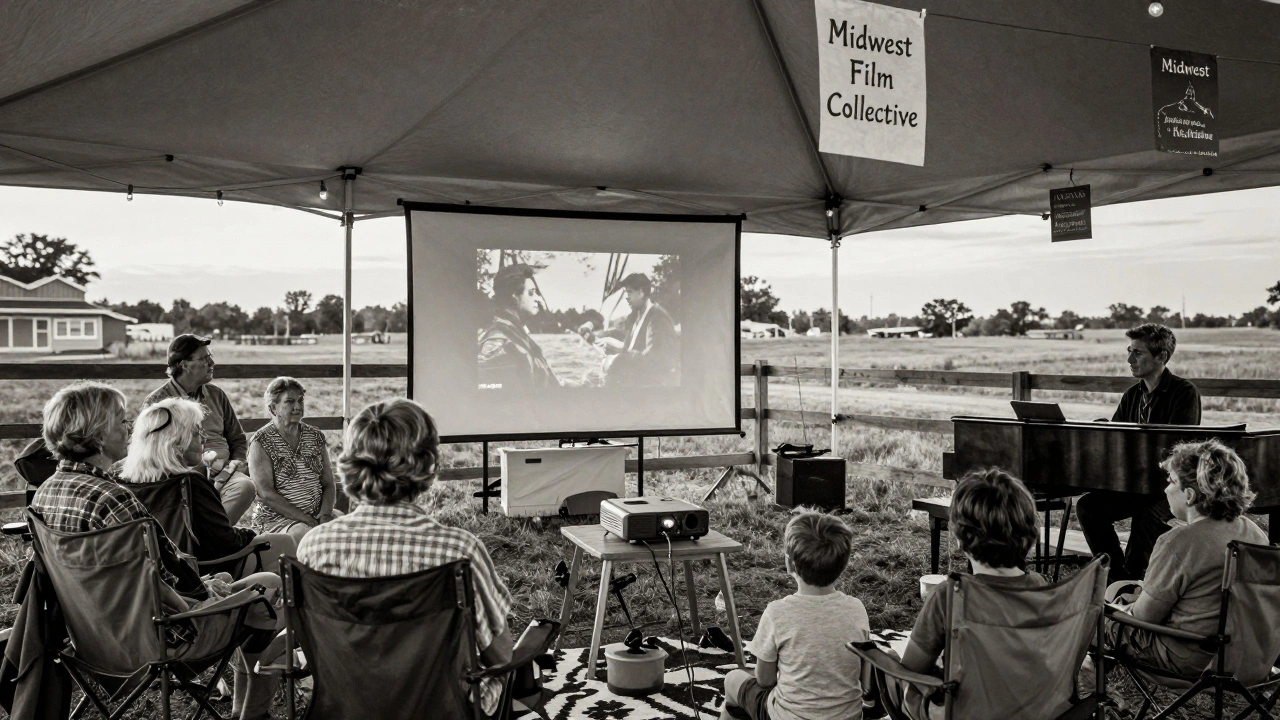
In rural Iowa, the Midwest Film Collective received a $15,000 grant to tour 12 small towns with a mobile projector. They showed restored silent films with live piano accompaniment. Over 5,000 people attended in three months. Many had never seen a film on a big screen before.
These aren’t charity cases. They’re cultural infrastructure. A 2024 study by the University of Wisconsin found that every $1 in grant funding to an art-house cinema generated $4.70 in local economic activity-from coffee shops to parking to local advertising.

What Makes a Strong Grant Application?
Getting funded isn’t easy. Applications are competitive. Here’s what works:
- Clear mission alignment - Don’t just say “we show indie films.” Explain how your programming addresses a specific need: preserving regional cinema history, engaging seniors, or supporting BIPOC filmmakers.
- Measurable outcomes - “We’ll host 12 educational events” is better than “we’ll do more outreach.” Include numbers: attendance goals, participation rates, surveys.
- Partnerships - Teams with local schools, libraries, or museums get higher scores. One grant applicant in Philadelphia partnered with a public library to offer free film history classes. They got funded on the first try.
- Budget transparency - Show every dollar. List exact costs: projector model, film rental fees, staff hours. Grant reviewers spot fluff.
- Sustainability plan - How will you keep going after the grant ends? A 2025 rule change by the NEA now requires applicants to prove at least 30% of their annual budget comes from non-grant sources.
The Bigger Picture: Why This Matters
Art-house cinemas are more than venues. They’re archives. They’re classrooms. They’re places where a 17-year-old in Kansas can watch a 1972 Iranian film and see their own struggles reflected on screen. Without funding, these spaces disappear-and with them, entire traditions of storytelling.
When a theater closes, it’s not just a loss of seats. It’s a loss of cultural memory. The films shown here aren’t just entertainment-they’re historical documents. A restored 1950s Japanese film might be the only surviving copy of a director’s work. A documentary shot in a war zone might be the only record of a vanished community.
Grant funding isn’t about saving theaters. It’s about saving stories.
Can for-profit theaters apply for art-house grants?
No. Most major grant programs, including those from the NEA and The Film Foundation, require theaters to be registered as nonprofit organizations (501(c)(3) in the U.S.). This ensures funds go toward public education and cultural preservation, not profit. For-profit theaters can partner with nonprofits, though-like hosting a grant-funded event under a nonprofit’s umbrella.
Do grants cover film restoration costs?
Yes-but usually not directly. Most grants fund exhibition, not restoration. However, organizations like The Film Foundation and the Library of Congress have separate restoration funds. A theater can apply for a grant to screen a restored film, and then partner with a restoration lab to access the restored print. Many grants now require theaters to use restored or digitally preserved films to qualify.
Are there grants for small-town theaters?
Absolutely. The Jerome Foundation, the National Endowment for the Arts, and regional arts councils prioritize rural and underserved areas. In 2024, 42% of all art-house grants went to theaters in communities with populations under 50,000. These programs often include travel stipends for staff to attend training or film festivals.
How often are grant applications accepted?
Most major foundations accept applications once a year, typically in late winter or early spring. The NEA opens its Arts in Communities cycle in January. The Film Foundation accepts proposals in February. Smaller regional funds may have two cycles per year. Deadlines are strict-no extensions.
What’s the average grant size for art-house theaters?
It varies widely. Small local grants range from $2,000 to $10,000. Major foundations like Mellon or NEA award $25,000 to $100,000. The Film Foundation’s exhibition grants average $35,000. Most theaters apply for multiple grants to cover different needs-projection, education, accessibility-rather than one big lump sum.






Comments(8)