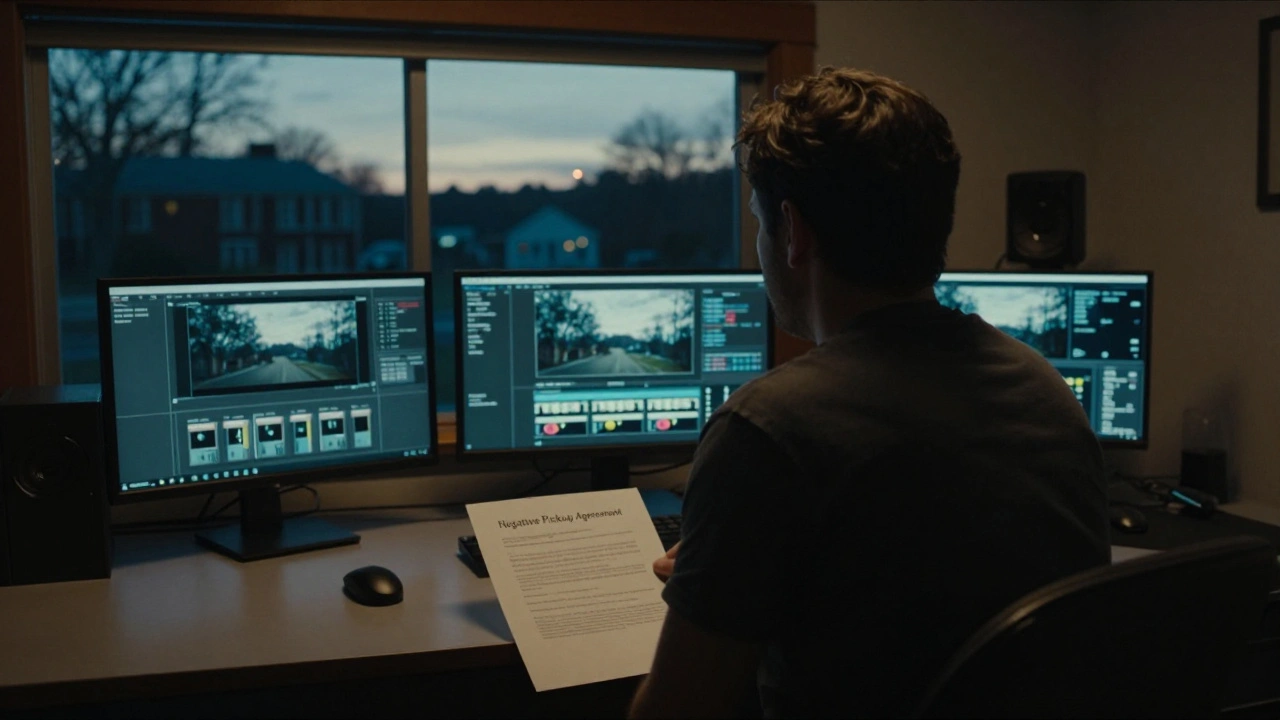
When you think about how movies get made, you probably imagine investors, studios, or crowdfunding. But there’s another way-quiet, risky, and surprisingly common-that doesn’t involve upfront cash at all. It’s called a negative pickup deal. And it’s how many independent films get made today, especially ones that wouldn’t survive under traditional funding models.
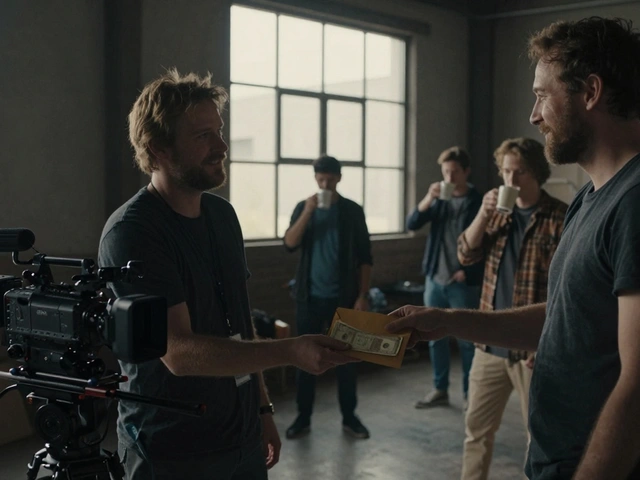
A negative pickup deal sounds like a paradox. The term ‘negative’ doesn’t mean bad-it refers to the original film negative, the physical or digital master used to make copies. A ‘pickup’ means the distributor agrees to buy the film after it’s made. So here’s how it works: a filmmaker raises just enough money to shoot and edit the movie, with no guarantee anyone will ever release it. Then, they sign a contract with a distributor who promises to buy the finished film for a set price-only if it meets certain conditions.
This isn’t charity. The distributor takes on zero financial risk upfront. They don’t pay a cent until the film is done. And they don’t even guarantee they’ll take it. The filmmaker must deliver a film that meets technical specs, runtime, and sometimes even casting requirements. If it doesn’t? The deal is off. The filmmaker is left with a movie no one will touch.
Why Do Filmmakers Take This Risk?
Because sometimes, it’s the only option. Many indie filmmakers don’t have access to banks, private equity, or studio backing. They might have a script that’s too weird, too niche, or too low-budget for traditional lenders. But they have passion, a crew, and maybe a few investors who believe in them. A negative pickup deal gives them a lifeline: a distributor’s promise to pay, if they can just finish the film.
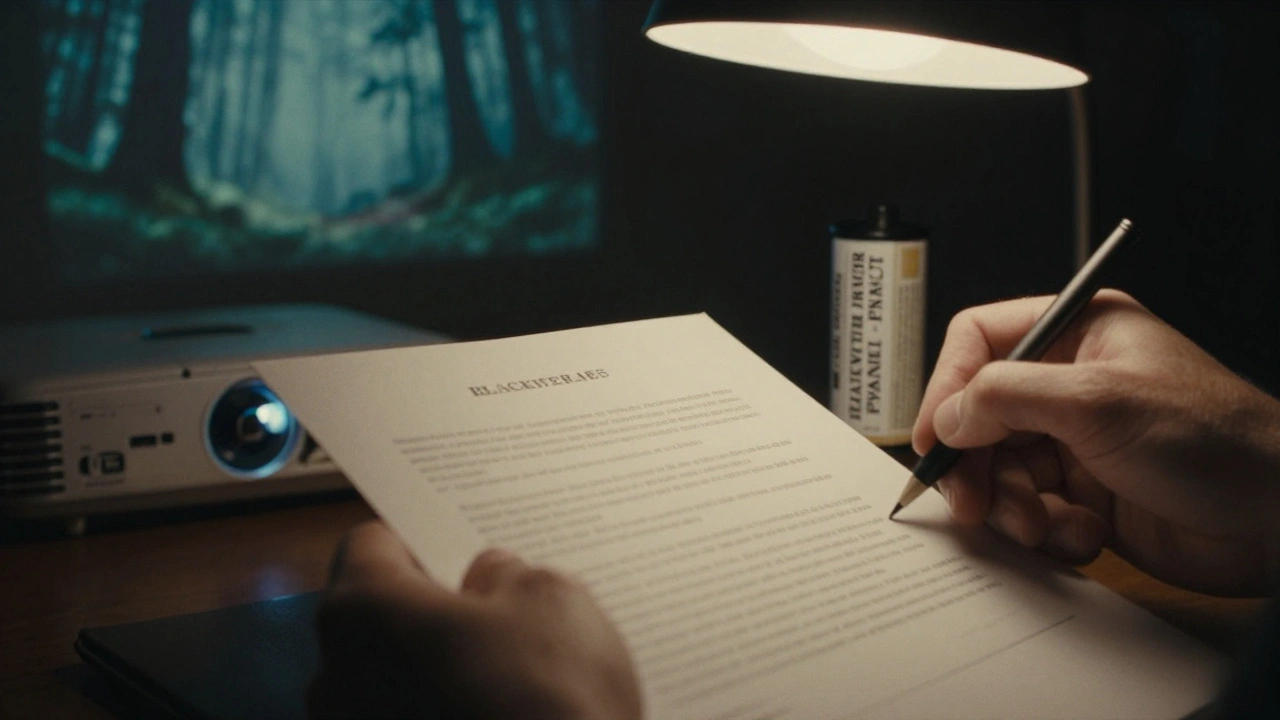
Take the 2023 film Blackwater River, a slow-burn thriller shot in rural North Carolina on a $280,000 budget. The director had no studio support. No film festival backing. But she had a distributor from a mid-tier streaming service who offered a $1.2 million negative pickup deal-$500,000 upfront on delivery, $700,000 after the film cleared VOD thresholds. She used the promise of that $1.2 million to convince her investors to fund the shoot. She didn’t get a dime before filming. She got paid only after the final cut was approved.
That’s the reality. The money isn’t there until the film exists. And that’s what makes negative pickup deals so brutal-and so essential.
How the Deal Actually Works
Let’s break it down step by step. A typical negative pickup deal has three core parts:
- The advance. This is the money the distributor pays before the film is finished. It’s usually small-between 10% and 30% of the total pickup price. It’s meant to cover post-production costs like editing, sound mixing, color grading, and music licensing.
- The delivery requirements. The distributor sets strict rules. The film must be 90 minutes long, shot in 4K, have Dolby sound, include English subtitles, and sometimes even require a specific actor or director credit. Miss one? The deal is void.
- The final payment. The rest of the money is paid after delivery and approval. Often, there’s a bonus if the film hits performance targets-like reaching 500,000 streams on a platform or securing a theatrical run in five major cities.
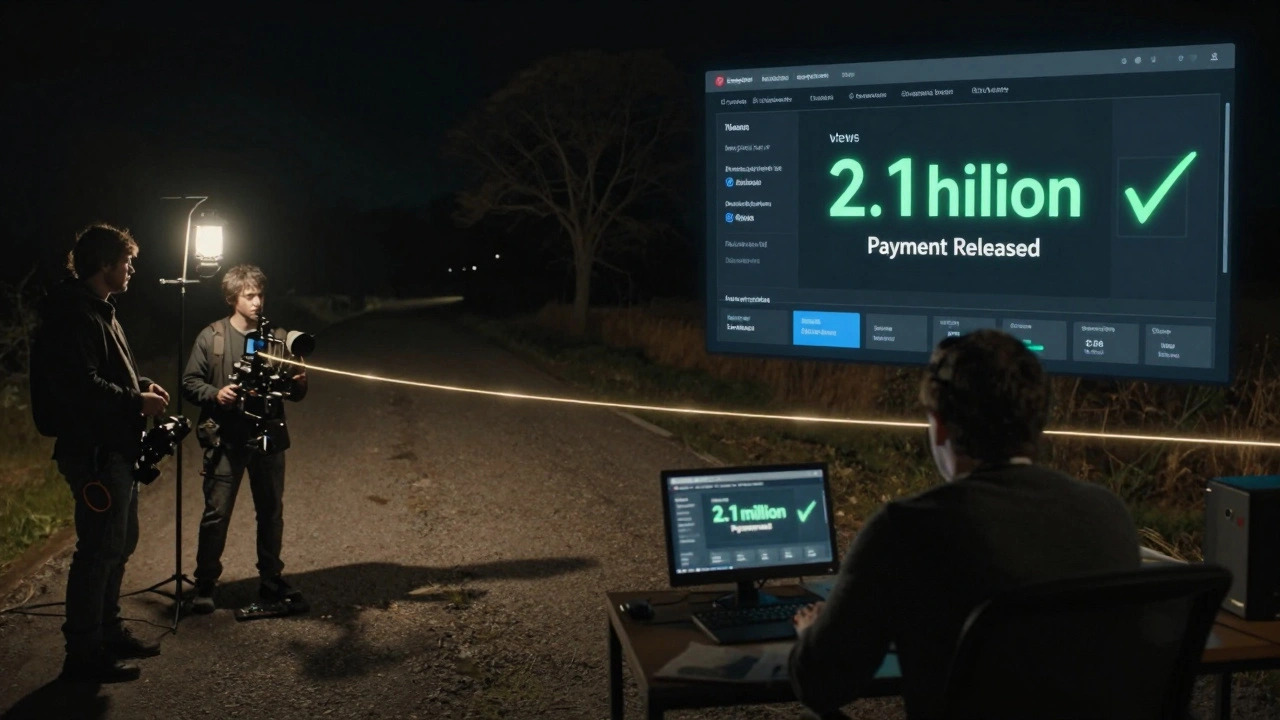
For example, in 2024, a distributor named Frontline Releasing signed a negative pickup deal for a horror film called Static. They offered $800,000 total: $150,000 upfront, $450,000 after delivery, and $200,000 if the film hit 2 million views on a major streaming service. The filmmakers had to deliver a 92-minute cut with no cuts to the ending. They did. The film got 2.1 million views. The final payment came through six weeks later.
These deals are common in the U.S. indie scene. According to a 2025 survey by the Independent Film & Television Alliance, 37% of U.S.-produced films under $1 million used negative pickup deals as their primary financing source. That’s nearly four in ten.
Who Offers These Deals?
Not every distributor does this. It’s mostly mid-sized companies that operate between big studios and tiny indie labels. These are the firms that buy films from festivals, license them to streaming services, and sell them internationally. They don’t have the budget to finance films outright, but they have the pipelines to get them seen.
Some well-known names in this space include XYZ Distribution, Grasshopper Film, and Neon-though Neon now mostly uses upfront financing. The real players are the ones you’ve never heard of: regional distributors who specialize in niche genres-true crime documentaries, foreign language dramas, or regional comedies.
International distributors also use negative pickup deals heavily. In Canada, for instance, the Canadian Media Fund often partners with distributors to guarantee a pickup if the film meets Canadian content rules. In the UK, the BFI (British Film Institute) sometimes backs negative pickup deals as part of its tax credit program.
The Hidden Costs
There’s a reason these deals are called ‘negative’ pickup. The filmmaker bears nearly all the risk. If the film flops in post-production, if the editor quits, if the music rights fall through, the distributor walks away. The filmmaker is stuck with a finished product that can’t be sold.
And here’s the worst part: many filmmakers don’t realize how little control they have. Once the deal is signed, the distributor owns the final say on edits, title, marketing, and even release date. A director might spend two years making a film, only to have the distributor change the ending, cut 12 minutes, and retitle it Horror: The Sequel to make it look like a franchise.
In 2023, a documentary filmmaker from Oregon signed a negative pickup deal with a distributor who promised a theatrical release. When the film was delivered, the distributor quietly dumped it on a streaming platform with no promotion. The filmmaker sued for breach of contract-but the contract had no clause about marketing spend. He lost.
That’s why lawyers and producers always say: read the fine print. Always.
When It Works
Despite the risks, negative pickup deals have launched some of the most memorable indie films of the last decade. Whiplash (2014) started as a short film that was later expanded into a feature under a negative pickup deal with Sony Pictures Classics. The Lighthouse (2019) was financed through a similar arrangement with A24. Both films had tiny budgets and no studio backing-until the distributors saw the final cut.
What made those deals work? Two things: quality and timing. The filmmakers delivered something the distributor couldn’t ignore. And the market was ready for it.
Today, with streaming services hungry for content, negative pickup deals are more viable than ever. Platforms like Amazon Prime Video, Apple TV+, and Tubi are signing more of these deals than ever before. They don’t want to pay upfront. They want to pay only when they’re sure the film will draw viewers.
For filmmakers, this means opportunity-but also pressure. You can’t make a half-baked film and expect to get paid. You have to make something undeniable.
Alternatives to Negative Pickup
Not every filmmaker should go this route. Here are three alternatives:
- Pre-sales: Selling distribution rights in advance, often at film markets like Cannes or AFM. This gives you cash before filming but requires a strong sales agent.
- Equity financing: Raising money from investors who own a percentage of the film. Riskier for investors, but gives filmmakers more creative control.
- Grants and tax credits: Government-funded programs, like the U.S. Film Tax Credit or Canada’s CMTF, can cover 30-40% of production costs. These are competitive but don’t require repayment.
Negative pickup deals aren’t the best option for everyone. But for those with a tight budget, a strong script, and the discipline to deliver, they can be the only path forward.
What Filmmakers Need to Know Before Signing
If you’re considering a negative pickup deal, here’s what you absolutely need:
- A lawyer who specializes in film contracts. Don’t use a general attorney. Film contracts have layers most people don’t understand.
- A clear budget with a 15% buffer. You’ll need extra money for reshoots, delays, or legal issues. Most filmmakers run out of cash before they finish.
- A test screening. Show your rough cut to 10-20 target viewers. If they don’t get it, the distributor won’t either.
- A backup plan. What if the distributor says no? Can you self-release? Sell to another buyer? Have a plan B before you sign.
The film industry doesn’t hand out checks. It waits to see if you can deliver. Negative pickup deals are a test. And if you pass, you might just make something unforgettable.
Are negative pickup deals legal?
Yes, they’re fully legal and commonly used in the U.S., Canada, the UK, and Australia. They’re binding contracts that outline payment terms, delivery requirements, and ownership rights. However, they’re often one-sided in favor of the distributor, which is why legal review is essential.
Can a filmmaker walk away from a negative pickup deal?
Technically, yes-but it’s risky. If the filmmaker refuses to deliver the film, they may forfeit any advance money and could face legal action for breach of contract. Most filmmakers complete the film because they’ve already spent the advance and have no other funding.
Do distributors ever pay more than the agreed amount?
Rarely. The deal is fixed unless there’s a bonus clause tied to performance, like streaming numbers or festival awards. Even then, the extra money is optional, not guaranteed. Most distributors stick strictly to the contract.
How long does it take to get paid after delivery?
It varies. Simple deliveries can be paid within 30 days. Complex ones-especially those requiring certification, subtitles, or legal clearances-can take 60 to 90 days. Some contracts include penalties for late payment, but enforcement is rare without legal action.
Is a negative pickup deal the same as a distribution deal?
No. A distribution deal usually means the distributor already owns or has paid for the film. A negative pickup deal means the distributor agrees to buy it after it’s made. The key difference is timing: payment happens after production, not before.




Comments(10)