
For years, Hollywood told us that diversity in film casting was a dream, not a goal. But something changed. Not because studios woke up one morning with a conscience, but because audiences stopped buying the old scripts - literally. In 2023, films with lead actors from underrepresented racial or ethnic groups outperformed box office projections by an average of 32%, according to UCLA’s Hollywood Diversity Report. That’s not luck. That’s demand.
What Diversity in Film Casting Actually Means Today
Diversity isn’t just about putting a Black actor in a role once reserved for white actors. It’s about who gets to write the story, who directs it, who casts it, and who gets paid equally for the same work. In 2025, the most meaningful progress isn’t in the number of non-white leads - it’s in the shift from tokenism to normalization.
Take Barbie (2023). It didn’t just cast a Black actress as a supporting character - it centered a Latina director, a South Asian producer, and a multiracial cast where race wasn’t the plot. The film made $1.4 billion. That’s the new math: inclusion doesn’t limit appeal - it expands it.
Look at Minari (2020). A Korean-American family in rural Arkansas. No white savior. No tragic backstory. Just a quiet, human story. It got six Oscar nominations and won Best Supporting Actor for Youn Yuh-jung - the first Asian actress to win in that category since 1957. That’s not an outlier. It’s a blueprint.
The Numbers Don’t Lie - But They Don’t Tell the Whole Story
Let’s look at the data. In 2015, only 12% of speaking roles in top-grossing films went to Black, Latino, Asian, or Indigenous actors. By 2024, that number jumped to 34%. Progress? Yes. Enough? No.
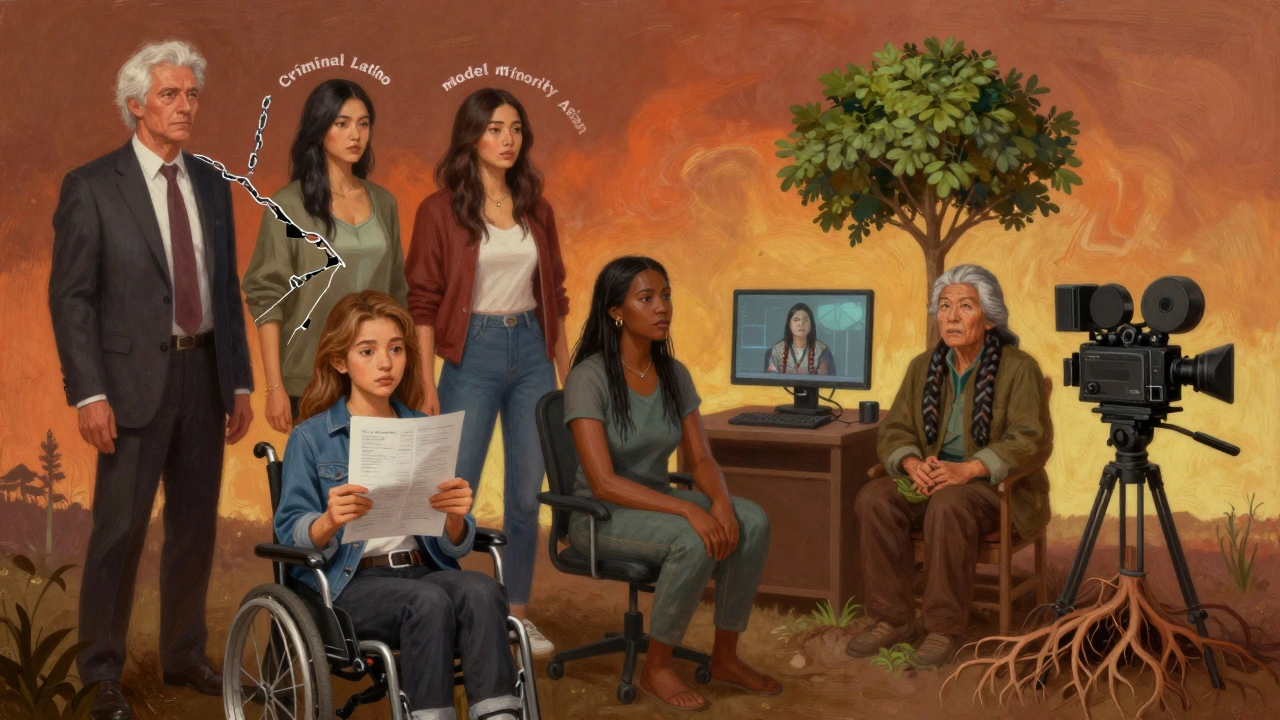
Why? Because representation isn’t evenly distributed. Asian actors made up 7% of roles in 2024 - up from 3% in 2015 - but 80% of those were in comedies or action films with stereotypical roles. Latino actors saw a rise from 5% to 9%, but most were cast as criminals, maids, or immigrants in distress. Indigenous actors? Still under 1%. And disabled actors? Less than 2% of all roles.
Gender adds another layer. Women made up 44% of speaking roles in 2024 - a record high. But 68% of those roles were under 35 years old. Older women? They’re still invisible unless they’re playing the villainous mother or the wise grandma.
And let’s not forget behind the camera. In 2024, only 18% of directors of top 100 films were women. Only 8% were Black. Only 3% were Latino. Without diversity in hiring, casting stays performative.
Who’s Driving the Change?
It’s not the studios. It’s the creatives.
Actors like Viola Davis, John Cho, and Awkwafina don’t just show up - they demand change. Davis launched the Annenberg Inclusion Initiative’s annual report. Cho co-founded the Asian American Writers’ Workshop. Awkwafina turned down roles that reduced her heritage to a punchline.
Producers like Ava DuVernay and Ryan Coogler built their own pipelines. DuVernay’s ARRAY not only distributes films by people of color - it trains them. Coogler’s Proximity Media hires crew members from underserved communities, not just actors. These aren’t side projects. They’re infrastructure.
Streaming platforms? They’re the wild card. Netflix, Hulu, and Apple TV+ don’t need theaters to turn a profit. They can afford to take risks. Never Have I Ever, Reservation Dogs, Never Have I Ever - all shows built by writers who grew up in the communities they portray. No consultants. No apologies. Just truth.
Where the System Still Breaks Down
Here’s the uncomfortable truth: diversity is often a checkbox, not a culture.
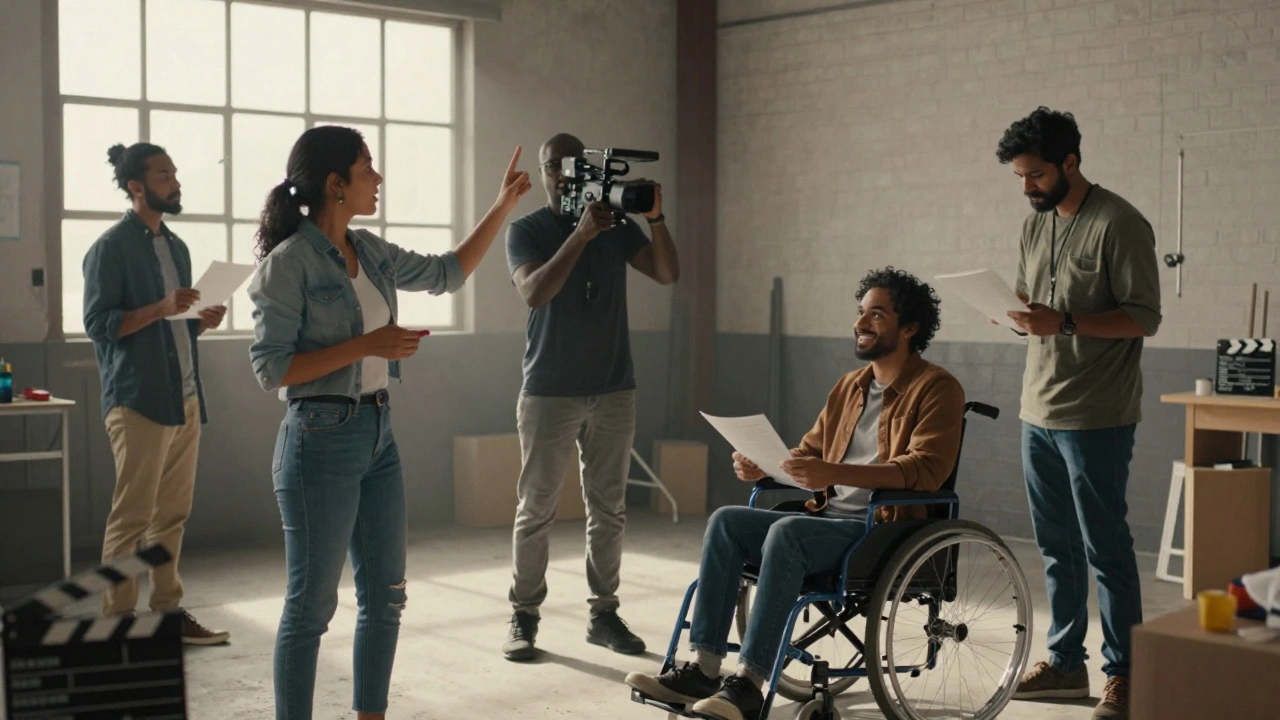
Actors of color still get offered roles based on ethnicity, not talent. A Black actor might be called in for a “streetwise” character but not for the CEO. An Asian actor might land a tech genius role but never the romantic lead. These aren’t accidents. They’re patterns.
And then there’s pay. In 2024, a study by the Writers Guild of America found that white male leads earned 37% more on average than non-white leads in the same film. Even when they had equal screen time. Even when they were the box office draw.
Union rules help - SAG-AFTRA now requires diversity in casting calls for union productions - but enforcement is weak. Many indie films still operate outside union rules. And casting directors? Most still rely on the same old networks. They call the same 15 actors they’ve always called. It’s not bias - it’s habit.
What’s Working: Real Examples, Not Just Buzzwords
Let’s look at what’s changing for real.
- Everything Everywhere All At Once - a film with an all-Asian cast, directed by a Vietnamese-American duo, written by a Chinese-American writer. It won seven Oscars. It didn’t need a white co-star to sell tickets.
- The Bear - a show about a Chicago restaurant. Half the main cast are Latino. The chef is a queer woman of color. The show never explains their identities. They just exist.
- Heartstopper - a Netflix series about queer teens. The lead actors are openly gay and bisexual in real life. The show was cast from theater schools, not Hollywood auditions.
These aren’t exceptions. They’re proof that when you stop trying to make diversity palatable to old audiences, you attract new ones.
The Next Frontier: Disability, Gender Identity, and Age
Diversity isn’t just race. It’s body, ability, gender, and age.
In 2024, only 1.8% of characters in top films had a disability - even though 26% of U.S. adults live with one. And most of those roles were played by non-disabled actors. That’s not inclusion. That’s appropriation.
Shows like Special and Speechless proved that casting disabled actors isn’t charity - it’s better storytelling. When Ryan O’Connell, who has cerebral palsy, played himself in Special, the authenticity changed everything.
Trans and non-binary actors are breaking in, too. Laverne Cox, Elliot Page, and Indya Moore aren’t just actors - they’re producers and advocates. But they’re still rare. Only 3% of speaking roles in 2024 went to openly trans or non-binary performers.
And age? The average lead actor in a 2024 blockbuster was 34. The average lead actress? 31. Meanwhile, 40% of the U.S. population is over 50. Where are they? In the background. In the parking lot. In the credits.
What You Can Do - Even If You’re Not in Hollywood
You don’t need a camera to push for change.
- Watch films with diverse casts and tell people about them. Word of mouth still moves the needle.
- Support indie films on streaming platforms. They’re where the real innovation happens.
- Follow casting directors on Instagram. Many now post open calls for underrepresented actors. Share them.
- Call out lazy casting. If a movie about a Mexican family has no Latino actors, say something.
- Don’t just cheer for diversity - demand equity. Ask: Who’s writing this? Who’s producing it? Who’s getting paid?
Change doesn’t come from one Oscar speech. It comes from thousands of people choosing differently - every time they press play.
Is diversity in film casting just a trend?
No. It’s a market shift. Films with diverse casts consistently outperform projections. Audiences aren’t just tolerating diversity - they’re seeking it. Studios are responding because they’re making more money. This isn’t virtue signaling. It’s business.
Why do so many diverse roles still go to white actors?
Because casting directors still rely on outdated networks and fear that audiences won’t connect with non-white leads. But data proves that wrong. When Black Panther came out, white audiences flocked to see a Black superhero. The problem isn’t audience resistance - it’s industry inertia.
Are quotas the answer to diversity in casting?
Quotas aren’t the goal - equity is. Instead of forcing numbers, the industry needs to build pipelines: training programs, mentorship, and open casting calls that reach beyond Hollywood’s usual circles. SAG-AFTRA’s new inclusion rider policy helps, but it’s only as strong as the studios that enforce it.
How do I know if a film is truly inclusive or just checking boxes?
Look beyond the lead. Who’s the writer? The director? The cinematographer? If the entire creative team is homogenous, the diversity is likely surface-level. True inclusion means diverse voices shaping the story from start to finish - not just appearing in front of the camera.
What’s the biggest barrier to progress right now?
Old power structures. Most studio executives, casting directors, and producers are still from the same demographic: white, male, and over 50. They hire who they know. Until that changes, progress will be slow - even when the numbers look good.




Comments(7)