Every year, around this time, documentary filmmakers hold their breath. Not because they’re waiting for box office numbers or streaming stats, but because the Academy Awards are about to announce their documentary shortlist. It’s a quiet moment, but one that can change careers. A single nomination can turn a grassroots film into a national conversation, lift a small production company into the spotlight, and give a subject - maybe a forgotten community, a hidden injustice, or an unsung hero - a global platform.
Back in 2025, the documentary When the Dust Settles won the Oscar for Best Documentary Feature. It wasn’t the most expensive film in the race. It didn’t have A-list narrators. What it had was raw access, three years of filming in a single Appalachian town, and a story that refused to look away. That film’s win didn’t just honor the filmmakers - it forced the industry to ask: What makes a documentary worthy of the Academy’s highest recognition?
How the Documentary Oscar Race Actually Works
The process isn’t what most people think. It’s not about popularity. It’s not about who has the biggest PR team. It starts with eligibility. To qualify, a documentary must have a theatrical run in Los Angeles for at least seven consecutive days, with at least one screening per day. That’s it. No minimum box office. No streaming exclusivity rules. Just access to a theater.
After that, the Documentary Branch of the Academy - made up of around 300 active members who’ve worked in documentary filmmaking - watches every eligible film. They don’t vote based on trailers or press kits. They watch the full films, often in small screening rooms, sometimes late at night. Then they submit ballots ranking their top choices. The top 15 films make the shortlist. From there, the final five are chosen by a smaller committee.
There’s no public voting. No fan campaigns. No Twitter trends that sway results. It’s a closed, professional process - and that’s why so many great documentaries never make it. A film about climate change in the Arctic might be visually stunning, but if it doesn’t connect emotionally to the voters - if it feels detached, academic, or overly technical - it gets passed over. The Academy doesn’t reward facts. It rewards feeling.
What the Voters Are Looking For
Over the last decade, the winning documentaries have shared a few clear traits. First, they’re deeply human. 20 Days in Mariupol (2024 winner) didn’t win because it showed war footage. It won because you could see the fear in a mother’s eyes as she buried her child. The camera didn’t just record events - it held space for grief.
Second, they have structure. A great documentary isn’t just a collection of interviews. It has a beginning, a middle, and an end. Even if the story is messy, the film itself must be tightly built. Navalny (2023 winner) followed a man chasing justice while being poisoned, surveilled, and imprisoned. The film’s pacing was like a thriller. That’s not accidental. The best doc filmmakers think like storytellers, not journalists.
Third, they’re timely - but not just because of current events. They’re timely because they tap into something deeper. A film about a local school board fight in 2025 might seem small, but if it reveals how democracy is being eroded in real time, it becomes urgent. The Academy responds to truth that echoes beyond the screen.
Why Some Great Docs Get Left Out
Every year, there are documentaries that critics call masterpieces - and they don’t even make the shortlist. Why? One major reason: access. If you can’t get the subjects to open up, if you can’t film in restricted spaces, if your subject is too afraid to speak, your film won’t have the emotional weight voters need. The best docs aren’t made in studios. They’re made in homes, in hospitals, in protest lines, in the backseats of cars.
Another reason: distribution. If a film only screens at festivals and never gets a theatrical release - even a small one - it’s invisible to Academy voters. Many filmmakers assume streaming is enough. It’s not. The Academy still values the theatrical experience. A film that plays in a theater in L.A. for a week has a shot. A film that only shows on Netflix or Hulu? It’s almost certainly out.
And then there’s the silent killer: tone. Too many documentaries try too hard to be profound. They use slow fades, heavy music, and voiceovers that sound like poetry readings. But voters are tired of that. They want authenticity. They want silence. They want the sound of a refrigerator humming while someone talks about losing their job. That’s more powerful than any orchestral swell.
The Hidden Players in the Race
Behind every nominated documentary is a team most people never see. There’s the legal team that clears archival footage. The music supervisor who finds the right song - not the famous one, but the one that fits the silence. The editor who cuts 200 hours of footage into 90 minutes without losing the soul of the story.
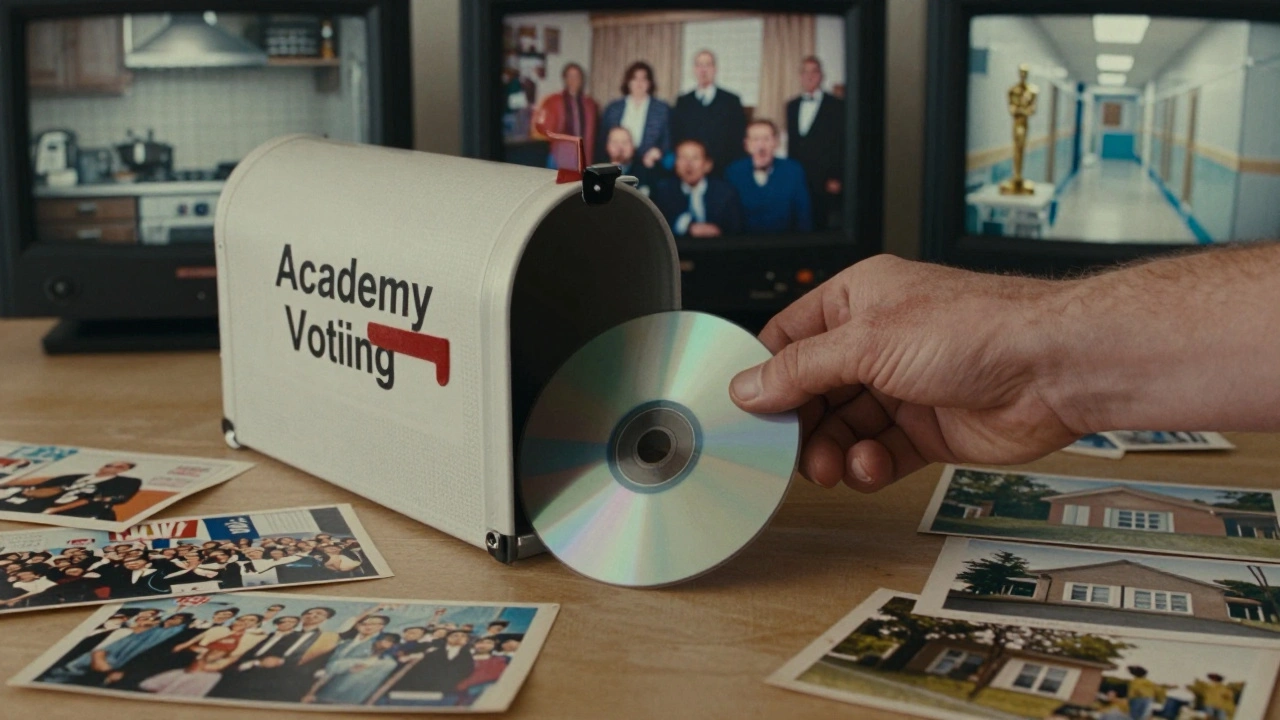
And then there are the distributors. Companies like Netflix, HBO, and smaller players like Oscilloscope Laboratories or Kino Lorber don’t just release films - they campaign. They host private screenings for Academy members. They send physical DVDs (yes, still) with personalized notes. They pay for billboards in L.A. and send out postcards to voters’ homes. It’s expensive. A serious campaign can cost $200,000 or more. That’s why most docs never make it past the festival circuit.
But here’s the twist: sometimes, the smallest films win. In 2022, Summer of Soul won the Oscar. It was made for under $1 million. The team didn’t have a PR firm. They didn’t have a studio backing them. They had a treasure trove of lost concert footage and a director who refused to let the story be forgotten. That film won because it felt like a gift - not a product.
What This Means for Filmmakers in 2026
If you’re making a documentary right now, here’s what you need to know: The Academy isn’t looking for perfect films. It’s looking for honest ones. It doesn’t care if your camera is shaky. It cares if your story is true. If you’re filming something no one else is, if you’re spending years with people who’ve been ignored, if you’re willing to sit in silence when the moment demands it - you have a shot.
Don’t chase trends. Don’t try to make something that looks like last year’s winner. The voters have seen it all. They know when you’re copying. They can smell a formula from five miles away.
Instead, ask yourself: What story am I telling that no one else will? Who will care about this in five years? And are you ready to fight for it - not just with your camera, but with your time, your money, and your patience?
The next great documentary might be sitting on someone’s hard drive right now. It might be filmed on a phone. It might have no budget. But if it has truth in every frame - and someone brave enough to show it - it will find its way to the Oscars.
Do documentary films need a theatrical release to qualify for the Oscars?
Yes. To be eligible for the Academy Awards, a documentary must have a qualifying theatrical run in Los Angeles for at least seven consecutive days, with at least one screening per day. Streaming-only releases don’t count. Even if a film is available on Netflix or Hulu, it still needs that physical theater run to be considered.
Who votes on the documentary Oscar nominees?
Only members of the Documentary Branch of the Academy vote. These are professionals who have worked in documentary filmmaking - directors, producers, editors, cinematographers - and have been invited to join based on their credits. The general public doesn’t vote. There are no fan votes or online polls. The process is entirely internal and professional.
Can a documentary win an Oscar without a big marketing budget?
Absolutely. While big studios spend hundreds of thousands on campaigns, smaller films like Summer of Soul (2021) and 20 Days in Mariupol (2024) won with minimal budgets. What matters most is the film’s emotional power and authenticity. If the story is strong enough, voters will notice - even without billboards or postcards.
Why do some critically acclaimed documentaries never get nominated?
Many factors can block a film: lack of theatrical release, poor pacing, emotional distance, or simply not connecting with the voters on a human level. Even the best-made documentaries can be overlooked if they feel too academic, too detached, or too similar to past winners. The Academy rewards stories that move people - not just ones that inform them.
Is there a bias toward certain topics in documentary Oscar voting?
There’s no official bias, but history shows a pattern. Films about war, civil rights, political corruption, and environmental crises often get attention. But the real deciding factor isn’t the subject - it’s the storytelling. A quiet film about a single person overcoming hardship can win just as easily as a big political exposé - if it’s told with heart, structure, and truth.




Comments(9)