Spending $200 million on a movie that only a handful of people watch isn't just a bad day at the office; for a streaming service, it's a systemic crisis. For years, the industry operated on a 'growth at all costs' mentality, throwing money at A-list directors and massive star salaries to lure subscribers. But the era of the blank check is over. We've seen high-profile flops and abandoned projects that prove that a huge budget doesn't guarantee a hit, and more importantly, that the traditional movie-making playbook doesn't always work when the goal is streaming strategy and long-term subscriber retention.
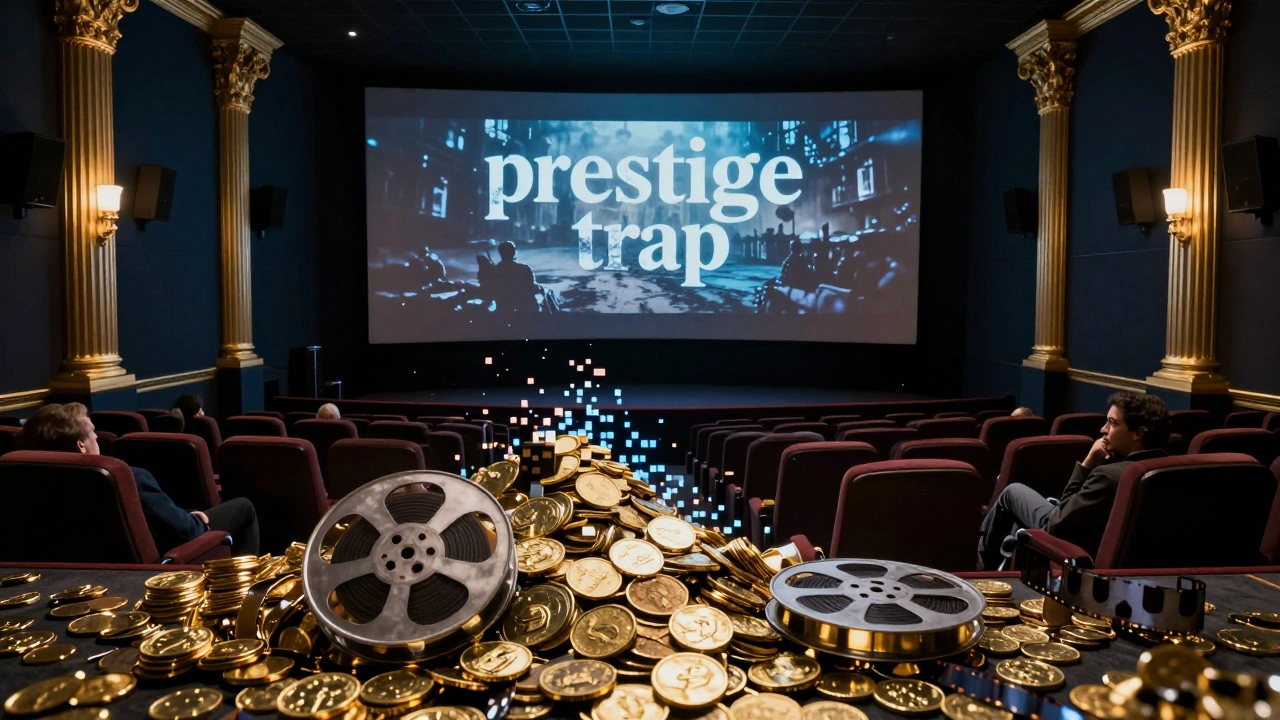
The Content Bubble and the 'Prestige' Trap
In the early 2020s, platforms like Netflix is a global subscription-based streaming service that pioneered the binge-watching model and Disney+ is a streaming platform owned by the Walt Disney Company focusing on family and franchise content raced to build "prestige" libraries. They believed that if they bought enough Oscar-winning directors, the prestige would naturally translate into monthly subscriptions. This led to the "prestige trap," where films were produced for the critics rather than the actual user base.
Take the case of high-budget historical epics or niche sci-fi projects that cost upwards of $150 million but failed to move the needle on new sign-ups. The problem was a lack of alignment between production costs and the actual value those films provided to the average viewer. When a movie costs as much as a blockbuster but only appeals to a tiny fraction of the audience, the cost-per-subscriber acquisition becomes unsustainable. Platforms eventually realized that a hit reality show often does more for growth than a three-hour slow-burn drama.
Algorithm vs. Art: The Data Misfire
Many platforms tried to let Recommendation Algorithms is automated systems that use data filtering to suggest content based on user behavior drive their greenlighting process. They looked at what people were watching and assumed that more of the same would always work. This led to a wave of generic, "algorithm-friendly" films that felt like they were written by a machine. These movies had the right components-a popular lead, a trending setting, a familiar plot-but lacked a soul, leading to high initial click-through rates but abysmal completion rates.
The a-ha moment came when data showed that viewers were dropping off mid-way through these "safe" bets. It turned out that users crave authenticity and surprise, not a mirrored version of everything they've already seen. The mismatch between "what the data says people like" and "what people actually enjoy watching for two hours" created a gap that only human curation and bold creative risks could fill.
| Model | Primary Goal | Risk Factor | Outcome Metric |
|---|---|---|---|
| Growth-First | Rapid User Acquisition | High Burn Rate | Total Sign-ups |
| Prestige-First | Industry Awards/Brand | Low Mass Appeal | Critical Acclaim |
| Sustainability-First | Churn Reduction | Moderate Growth | LTV (Lifetime Value) |

The Franchise Fatigue and Over-Saturation
Disney+ and HBO Max is a streaming service that combines premium cable content with a broader library of films and series leaned heavily into Intellectual Property is creative work, such as a character or story, that is legally recognized as belonging to a company. They assumed that if a brand worked in theaters, it would work infinitely on a screen. However, the transition from a "special event" movie to "just another drop on Tuesday" diluted the brand value. When you release five spin-offs of the same universe in two years, the audience stops feeling the urgency to watch.
We saw this play out with various superhero and fantasy expansions. The fatigue wasn't just about the genre; it was about the volume. Platforms learned that over-saturating a franchise actually leads to a decline in engagement. The lesson here is that scarcity creates demand. By flooding the zone, they turned their most valuable assets into background noise.

The Pivot to Hybrid Monetization
The biggest realization from these failures was that the SVOD is Subscription Video on Demand, a business model where users pay a recurring fee for unlimited access to content model alone couldn't support a movie studio's overhead. For years, the industry pretended that the monthly fee covered the cost of $200 million movies. When the math didn't add up, they pivoted. This gave birth to the AVOD is Advertising Video on Demand, a model where content is free or cheaper in exchange for viewing ads tiers and the return of theatrical windows.
Platforms realized that some films are better suited for a limited theatrical run to generate a massive marketing spike and direct revenue, while others are built for the long tail of a streaming library. Trying to force every film into the "streaming only" bucket was a fundamental error in distribution strategy. Now, we see a more nuanced approach where theatrical releases act as a funnel for the streaming platform, rather than the platform trying to replace the theater entirely.
Budget Discipline and the New Greenlight Process
Gone are the days of the "star vehicle" where a single actor's name could justify a $100 million budget. Today, platforms are moving toward a more disciplined approach to Content Spend is the total capital allocated toward the production and licensing of media assets. This involves tighter budget caps, a preference for mid-budget films that have a higher probability of success, and a focus on "sticky" content-shows and movies that keep people coming back every week rather than a one-time view.
They are now focusing on the "middle"-films that cost $20 million to $50 million but have a clear target audience. This reduces the impact of a single flop. If a $200 million movie fails, it can wreck a quarterly report. If three $30 million movies underperform, it's a manageable loss. This shift toward risk diversification is the direct result of the massive misfires of the previous decade.
Why did so many high-budget streaming movies fail?
Many platforms ignored the cost-to-value ratio, spending theatrical-level budgets on content that didn't drive new subscriptions or retain existing ones. They relied too heavily on "prestige" and star power rather than understanding the specific viewing habits of streaming audiences, who often prefer serialized content or high-concept, mid-budget films over long, slow epics.
What is the difference between SVOD and AVOD?
SVOD (Subscription Video on Demand) requires a recurring monthly fee for access, while AVOD (Advertising Video on Demand) provides content for free or at a lower cost, supported by commercial interruptions. Many platforms are now using a hybrid model to diversify their revenue streams.
How do platforms measure if a movie is a "success"?
Unlike theaters, which use box office numbers, streamers look at completion rates (how many people finished the film), acquisition (how many new users joined to watch it), and churn reduction (did this film prevent people from canceling their subscription?).
Does the "theatrical window" still matter for streaming?
Yes. Platforms have learned that a theatrical release creates a cultural moment and prestige that makes a film more attractive when it eventually hits the streaming service. It also provides an immediate revenue stream to offset production costs.
What is "franchise fatigue"?
Franchise fatigue happens when a platform releases too much content based on the same intellectual property in a short window, making the audience feel overwhelmed or bored, which eventually leads to a decline in viewership for the main brand.