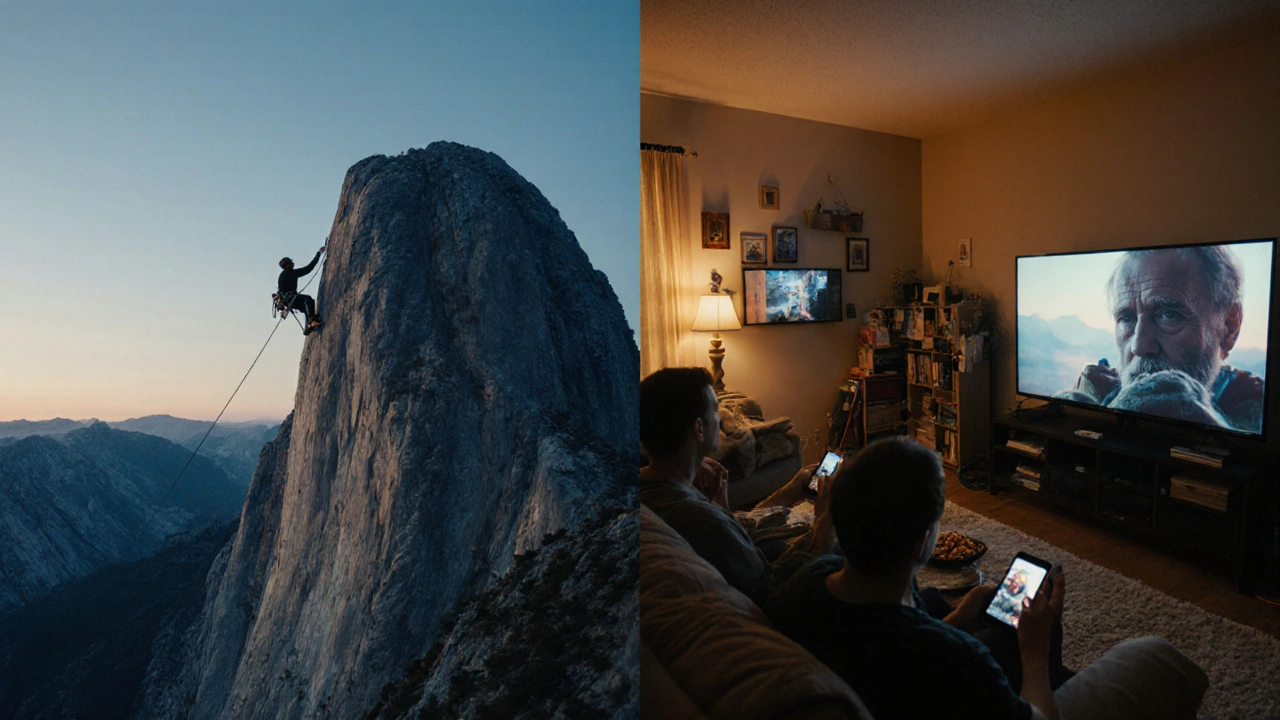
Back in 2010, if you wanted to watch a documentary, you had two choices: catch it on PBS at 10 p.m. or rent a DVD from Blockbuster. Today, you can scroll through hundreds of documentaries on your phone while waiting for your coffee. But here’s the real question: does a six-part streaming series really tell a better story than a 90-minute feature-length documentary? The answer isn’t about length-it’s about purpose.
Why Streaming Series Took Over
Streaming platforms didn’t just make documentaries easier to find-they changed how stories are built. Series like The Last Dance on Netflix or Making a Murderer on Netflix didn’t just report facts. They turned real life into binge-worthy drama. Each episode ends with a cliffhanger. Each chapter reveals a new twist. That’s not accidental. It’s engineered for retention.
Platforms need you to watch all episodes in one sitting. That means pacing is slower. Background details are stretched out. You get interviews with five different lawyers, not one. You see the same courtroom footage replayed from three angles. It feels richer, but it’s also longer. And that’s the trade-off: depth versus focus.
Take Wild Wild Country. It’s six hours long. You learn about the Rajneesh movement, the Oregon commune, the FBI raid, and the cult’s media strategy-all in detail. But if you watched a feature-length version, you’d lose the emotional buildup. The slow reveal of the poisoning plot? That’s what makes you keep watching. Feature films can’t do that. They don’t have the time.
What Feature-Length Documentaries Still Do Better
Not every story needs six episodes. Some stories are sharp. They cut deep in under two hours. 13th by Ava DuVernay is 100 minutes. It traces the link between slavery, mass incarceration, and the 13th Amendment. No filler. No side plots. Every minute pulls you tighter into the argument.
Feature documentaries thrive on clarity. They have one thesis. One emotional arc. One ending. Free Solo doesn’t waste time on Alex Honnold’s childhood. It shows you a man climbing El Capitan without ropes-and makes you feel every second of fear. That’s impossible to replicate in a series. A six-part version would have broken the tension. You’d have needed interviews with his mom, his therapist, his climbing partners, and his dog. And then you’d lose the spell.
Feature-length docs also move faster. They use music, editing, and rhythm to build momentum. Man on Wire uses silence, slow motion, and jazz to make a tightrope walk feel like a heist movie. Try doing that over eight hours. You’d exhaust the viewer. Or worse-you’d make the feat feel ordinary.
How Story Structure Changes
Think of a feature documentary like a novel. It has a beginning, middle, and end. A streaming series is like a TV season. It has arcs. Subplots. Flashbacks. Revelations spread across episodes.
Take Our Planet on Netflix. Each episode focuses on a different biome-tundra, coral reefs, rainforests. That works because nature doesn’t have one single story. It has many. A feature film trying to cover all of them would feel rushed. But if you’re telling the story of one person-like a whistleblower, a refugee, or a convicted killer-a series can unravel their life piece by piece. A feature film would flatten them.
Here’s the rule: If your story has multiple perspectives, evolving evidence, or a long timeline, go series. If your story is a single, powerful moment-like a climb, a trial, or a protest-go feature.

Production Differences That Matter
Streaming series often cost more. The Tinder Swindler took two years to film. It used hidden cameras, interviews across three countries, and dozens of reenactments. A feature doc like Food, Inc. was made for under $1 million. It used existing footage, interviews, and simple graphics. The budget difference isn’t just about length-it’s about access.
Series get exclusive interviews because they promise more airtime. Subjects agree to talk for hours, knowing their full story will be told. Feature docs need to capture everything in a few days. That’s why you often see the same people in both formats: the same activist, the same scientist, the same ex-spouse. But in a series, they get to speak longer. In a feature, they get to speak louder.
Editing is another big difference. Series editors have weeks to find the perfect moment. Feature editors have days. That’s why The Act of Killing feels so raw-it was cut from 400 hours of footage in under three months. A series version would have smoothed out the chaos. And maybe lost its power.
What Viewers Actually Want
People don’t watch documentaries because they want to learn. They watch because they want to feel. A 2024 study by the International Documentary Association found that 68% of viewers chose a series because they wanted to “get lost in the story.” Only 22% said they wanted to “understand an issue deeply.”
That’s why Don’t F**k With Cats went viral. It wasn’t the most accurate documentary. It wasn’t the most polished. It was the most addictive. Each episode ended with a new clue. Each new suspect felt more disturbing than the last. Viewers didn’t stop watching because they cared about animal rights. They kept watching because they needed to know what happened next.
Feature films win when they make you cry, not when they make you think. My Octopus Teacher didn’t explain marine biology. It showed a man grieving and finding peace with an octopus. No interviews. No charts. Just 90 minutes of silence, water, and wonder.

Which One Should You Make?
If you’re a filmmaker deciding between formats, ask yourself:
- Does my story have multiple sides that unfold over time? → Go series.
- Is there one moment that defines everything? → Go feature.
- Do I need to show how a system changed over 20 years? → Go series.
- Do I need to capture a single, unforgettable experience? → Go feature.
- Can I tell it in 90 minutes without losing the emotion? → Go feature.
- Do I have access to people who will talk for hours, over months? → Go series.
There’s no right answer. But there’s a smarter one. Don’t pick the format because it’s trendy. Pick it because it serves the truth of the story.
The Future Is Both
The line between series and features is blurring. Netflix now releases “limited documentary series” that feel like films-Crime Scene: The Vanishing at the Cecil Hotel is six hours, but it’s edited like a thriller. Meanwhile, theaters are showing 120-minute documentaries with the same production value as Netflix originals.
What’s changing isn’t the format. It’s attention. People have shorter attention spans-but they’re also willing to spend hours on a story that pulls them in. The best documentaries, whether short or long, don’t ask you to watch. They make you need to watch.
So whether you’re watching a single film or a six-part series, ask yourself: does this story deserve my time? If the answer is yes, then the format doesn’t matter. The story does.
Are streaming documentary series more accurate than feature-length documentaries?
Accuracy isn’t determined by length. A six-part series can include more context, but it can also stretch facts to fill time. A feature doc might cut corners to keep the pace, but it can also focus tightly on verified facts. What matters is the filmmaker’s process-sources, interviews, fact-checking-not the number of episodes.
Why do streaming platforms prefer documentary series?
Streaming platforms want viewers to stay subscribed. A six-episode series keeps you engaged for weeks. A 90-minute film? You watch it, then you’re done. Series drive binge-watching, increase watch time, and boost retention metrics-key numbers platforms use to decide what to promote.
Can a feature-length documentary be as gripping as a series?
Absolutely. Films like 13th, Free Solo, and Man on Wire have kept audiences on the edge of their seats without needing multiple episodes. It’s not about length-it’s about tension, pacing, and emotional stakes. A great feature film can feel more intense than a whole season.
Do documentary series cost more to produce?
Usually, yes. Longer runtime means more filming days, more interviews, more travel, and more editing hours. A feature doc might be made for $500,000. A high-end series like The Tinder Swindler cost over $3 million. But there are exceptions-some series use archival footage or rely on volunteers to cut costs.
Should I watch both formats for the same topic?
If the topic matters to you, yes. A series gives you depth and context. A feature gives you emotional impact. Watching both is like reading a novel and then watching its movie adaptation-you get different layers of meaning. For example, watch The Vietnam War (series) and then Hearts and Minds (feature) to see two very different takes on the same war.


Comments(9)