
Who Really Goes to the Movies These Days?
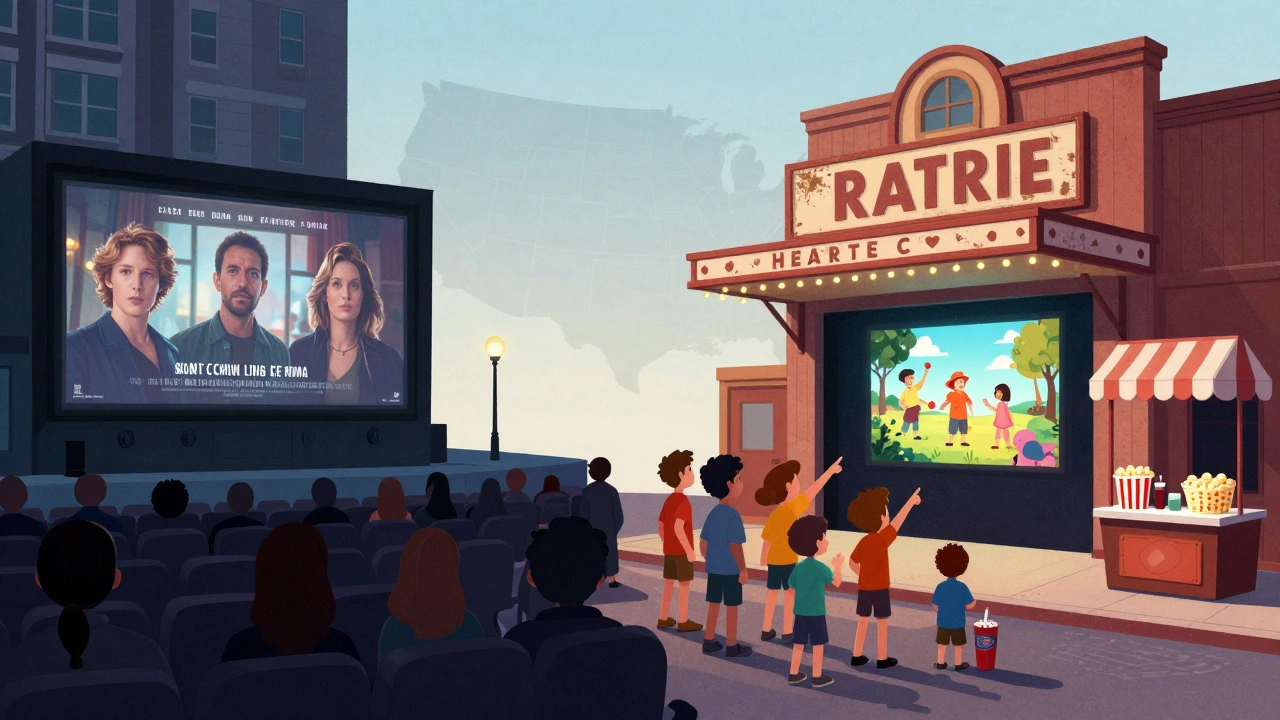
It’s not just about how good a movie is anymore. The box office is shaped by who shows up - and that’s changing fast. A blockbuster with $100 million in opening weekend sales might look like a win, but if it’s driven by teenagers and young adults under 25, it might not have staying power. Meanwhile, a quieter drama with strong support from viewers over 50 could earn less upfront but outlast it at the box office over weeks. The numbers don’t lie: different groups of people go to different kinds of movies, and studios are starting to plan around that.
Age Matters More Than You Think
If you’re under 25, you’re more likely to see a superhero movie, a horror film, or a teen comedy. That’s not because you’re the biggest moviegoing group - you’re not. People aged 25 to 44 still make up the largest share of ticket buyers, but they’re not the ones driving the biggest openings. It’s the 18-24 crowd that shows up on opening night, often in groups, buying tickets in bulk, and streaming the trailers on TikTok. They’re the reason movies like John Wick: Chapter 4 opened with $80 million in 2023, even though the average viewer was 28.
But here’s the catch: that same group doesn’t come back for sequels unless the movie feels like an event. Meanwhile, viewers aged 45 to 64 are the ones who keep movies alive. They’re the reason Barbie made $1.4 billion - not because teens flocked to it, but because moms, dads, and grandparents took their kids and then went back themselves. A 2024 study by the Motion Picture Association found that audiences over 45 accounted for 43% of total ticket sales in 2023, up from 36% in 2019.
Gender Still Shapes What Gets Seen
Men still go to movies more often than women - but not in the way you’d expect. In 2023, men made up 53% of all ticket buyers, but they were heavily concentrated in action, sci-fi, and horror. Women, on the other hand, made up 57% of the audience for romantic comedies and 62% for animated family films. And here’s the real shift: women are now the primary drivers of success for films that blend genres. Oppenheimer had a nearly 50/50 gender split, but women were 60% of the audience for the 7:00 p.m. screenings, which were the most profitable. Studios used that data to extend the run in theaters, knowing that women were bringing friends and family back for repeat viewings.
It’s not just about the movie’s genre. It’s about how it’s marketed. A film with a female lead that’s pitched as ‘emotional’ or ‘thought-provoking’ often underperforms with men. But if it’s sold as ‘epic’ or ‘historical,’ men show up. The Marvels had a marketing campaign that leaned too hard into ‘girl power’ and lost male viewers. Wonder Woman 1984 did better because it sold the action first, the emotion second.
Where You Live Changes What You Watch
City dwellers and rural audiences don’t watch the same movies. Urban theaters in places like New York, Los Angeles, and Chicago are more likely to screen foreign films, indie dramas, and documentaries. In contrast, suburban and rural theaters play more mainstream action, comedies, and family films. The difference isn’t just taste - it’s access. A 2023 report from the National Association of Theatre Owners showed that 72% of rural counties have only one or two theaters, and those theaters book what sells consistently: Marvel movies, animated features, and holiday comedies.
Even within cities, income plays a role. In high-income neighborhoods, people are more likely to see a film like Past Lives or The Holdovers on a Thursday night. In lower-income areas, families wait for matinees, discounts, or bundled deals with popcorn. Studios now track theater-by-theater performance data to adjust pricing and showtimes. A $12 ticket might kill a film in a wealthy ZIP code, but in a working-class area, a $7 matinee can turn a $5 million budget into a $20 million hit.

What People Pay Says More Than What They Watch
It’s not just about who shows up - it’s about what they’re willing to spend. People over 50 spend more per visit than any other group. They’re more likely to buy premium formats: IMAX, 3D, Dolby Cinema. They also buy more concessions. A 2024 survey found that viewers aged 55+ spent an average of $14.50 on snacks per trip, compared to $9.20 for those under 25. That’s why theaters are pushing luxury seating and food delivery to seats - not just for comfort, but for profit.
Younger audiences? They’re price-sensitive. Many skip theaters entirely unless it’s a must-see event. That’s why studios now release some films on streaming the same day as theaters - but only if they’re targeting Gen Z. Films like The Marvels and Haunted Mansion got same-day streaming because the studio knew the core audience wouldn’t pay full price. Meanwhile, Mission: Impossible - Dead Reckoning Part One stayed in theaters for months because the audience was older, less likely to stream, and willing to pay for the experience.
Why the Same Movie Can Be a Hit or a Flop
Two movies can look identical on paper - same director, same cast, same budget - but one crushes the box office and the other dies. Why? Demographics. Take The Marvels and Shazam! Fury of the Gods. Both were superhero films with female leads, released in 2023. The Marvels opened with $100 million less than expected, but held steady because women 25-44 kept showing up. Shazam! Fury of the Gods collapsed after the first weekend. Why? Its marketing targeted teens, but the movie’s tone felt too childish for that group. Adults didn’t find it compelling enough to return. The audience didn’t match the message.
It’s not about bad movies. It’s about mismatched expectations. If you make a movie for 30-year-old women but market it to 16-year-old boys, you’ll lose. Studios are finally learning this. They’re using data from past releases to build audience profiles before a single frame is shot. They know that if a film has a 45-year-old female lead, the core audience will be women 35-54, and they’ll adjust the trailer, the posters, and the release date accordingly.
What’s Next for Moviegoers?
The future of the box office isn’t about bigger explosions or flashier CGI. It’s about understanding the people in the seats. The biggest growth area isn’t Gen Z - it’s the 50+ crowd. They’re the fastest-growing demographic of moviegoers. They have more disposable income, fewer distractions, and a desire for stories that reflect their lives. Studios are starting to make more films for them: The Good Life, Still Life, The Last Letter - all low-budget, high-emotion films that made $50 million+ with minimal marketing.
Meanwhile, younger audiences are drifting away from theaters. They don’t hate movies - they hate paying $18 for a ticket and sitting through 15 minutes of ads. The answer isn’t to make more superhero films. It’s to make the theater experience worth the cost. That means fewer trailers, better sound, more comfort, and films that speak to real life - not just fantasy.
What You Can Learn From This
If you’re a movie fan, you already know which films you’ll go to. But if you’re trying to understand why some movies succeed and others don’t, look past the reviews. Look at the crowd. Who’s sitting in the front row? Who’s buying the popcorn? Who’s staying for the credits? That’s who the studio was betting on. And if you’re not in that group, you might not like the movie - not because it’s bad, but because it wasn’t made for you.
What Studios Are Doing Differently Now
Five years ago, studios used to guess who would like a movie. Now, they use data. They track:
- Which ZIP codes bought the most tickets for similar films
- How many women over 40 watched the trailer on YouTube
- What age group engaged most with the TikTok campaign
- How often people searched for the cast’s other movies
They’re not just making movies anymore - they’re building audience profiles. And they’re adjusting the release date, the marketing, even the runtime based on who’s likely to show up.
Why This Matters for You
You don’t need to be a studio executive to use this. If you’re planning a movie night with friends, know this: the group you invite will shape the movie you pick. If your group is mostly people over 40, don’t pick a horror flick with jump scares - pick a drama with a strong story. If your group is mostly teens, don’t pick a slow-burn indie film - pick something with a beat you can dance to.
The box office isn’t magic. It’s math. And the math is simple: people go to movies that feel like they were made for them. The rest? They’ll wait for streaming.
Do older audiences really drive more box office revenue than younger ones?
Yes. While younger audiences drive opening weekend numbers, viewers over 45 spend more per ticket and return more often. In 2023, they accounted for 43% of total ticket sales - up from 36% in 2019 - and spent nearly $15 per visit on concessions alone. They’re the reason mid-budget dramas and sequels stay in theaters for months.
Why do some movies flop even with big stars?
Because the audience doesn’t match the marketing. A film with a big-name actor might be pitched to teens, but if the story appeals to people over 40, that group won’t show up. Studios now track audience profiles before release - if the core viewers aren’t the ones being targeted, the movie fails, no matter the cast.
Are women really the key to box office success?
Not always - but they’re the most consistent. Women make up the majority of audiences for family films, rom-coms, and dramas. They’re also more likely to bring friends and see a movie multiple times. Films like Barbie and Oppenheimer succeeded because women showed up, brought others, and kept coming back.
Why do rural theaters show different movies than city ones?
Rural theaters have fewer screens and need reliable hits. They play family films, action movies, and comedies that appeal to broad audiences. Urban theaters can afford to show indie films, foreign language movies, and documentaries because they have more customers and higher foot traffic.
Should I avoid theaters if I’m under 25?
No - but be smart. If you’re looking for value, go to matinees, use discount apps, or wait for special events like free screenings. Theaters are making the experience more expensive for everyone, but they’re still the best way to see big films like Indiana Jones or Twisters the way they were meant to be seen.



Comments(8)