Women directors in Hollywood and beyond are still making significantly less than their male counterparts-even when they’re helming the same type of films, with similar budgets and box office results. This isn’t a glitch. It’s a system. And it’s been this way for decades.
How Big Is the Pay Gap?
In 2023, the Center for the Study of the Screen Industry at UCLA found that female directors earned an average of $1.2 million less per project than male directors across major studio films. That’s not a rounding error. That’s the difference between being able to afford a second home and barely covering production insurance.
Even when you control for budget size, genre, and box office performance, the gap doesn’t disappear. A 2024 study by the Directors Guild of America analyzed 1,200 films released between 2018 and 2023. Women directors made an average of $1.8 million per film. Men made $3.1 million. That’s a 42% gap. And it’s wider in blockbuster films. For movies with budgets over $100 million, the gap jumps to nearly 50%.
It’s not just about the big studios. Independent films aren’t any fairer. A 2025 survey by Film Independent found that women directors in indie productions earned 38% less on average than men-even when they were the sole writer and producer.
It’s Not About Experience or Credentials
Some still argue that women earn less because they’re less experienced. That’s not true. The data doesn’t back it up.
Kathryn Bigelow won an Oscar for The Hurt Locker in 2010. She’s directed five major studio films since then. Her average pay per film? $2.3 million. Christopher Nolan, who also directed five studio films in the same period, averaged $6.7 million. Both have similar critical acclaim. Both have similar box office traction. But Nolan made nearly three times more.
Same goes for Ava DuVernay. She directed Selma, A Wrinkle in Time, and When They See Us. She’s won Emmys, been nominated for Golden Globes, and has a track record that rivals most male directors in Hollywood. Yet her pay per project hovers around $2 million. Male directors with comparable résumés-like Jon Favreau or Justin Lin-command $4 million to $5 million.
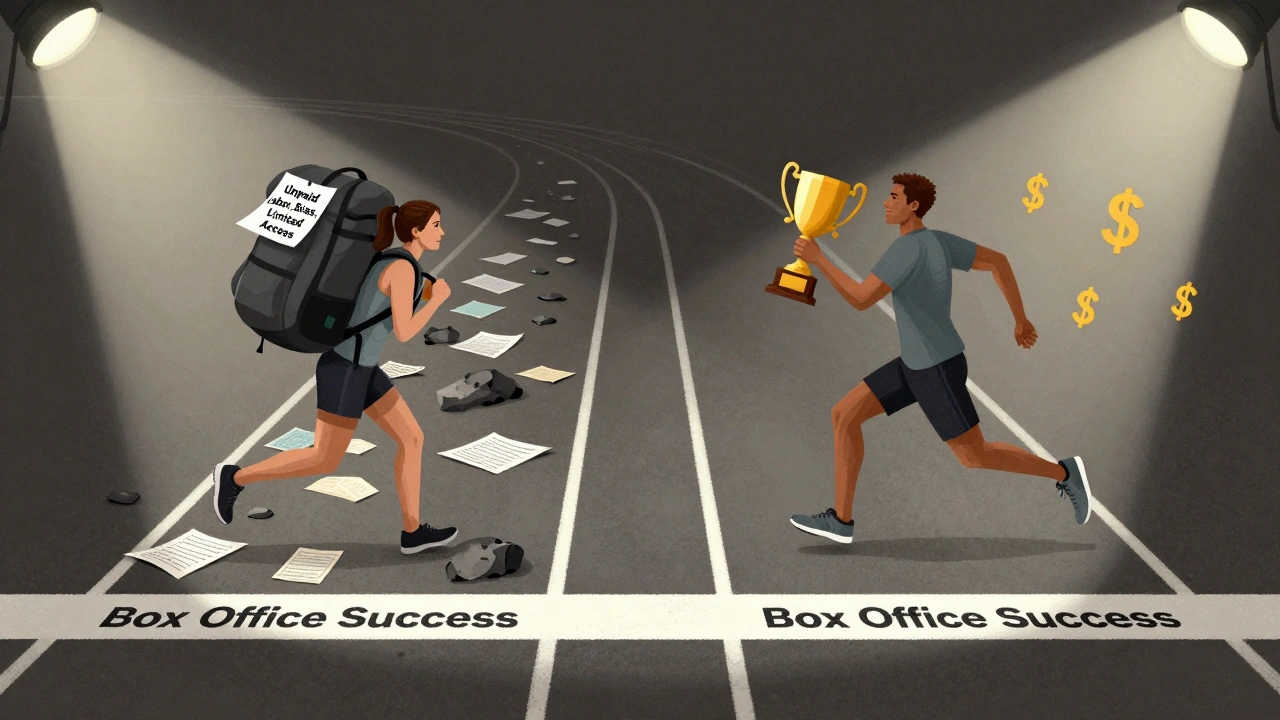
Women directors aren’t starting from behind. They’re running the same race with a heavier backpack.
Who Controls the Money?
The pay gap isn’t accidental. It’s structural. And it starts at the top.
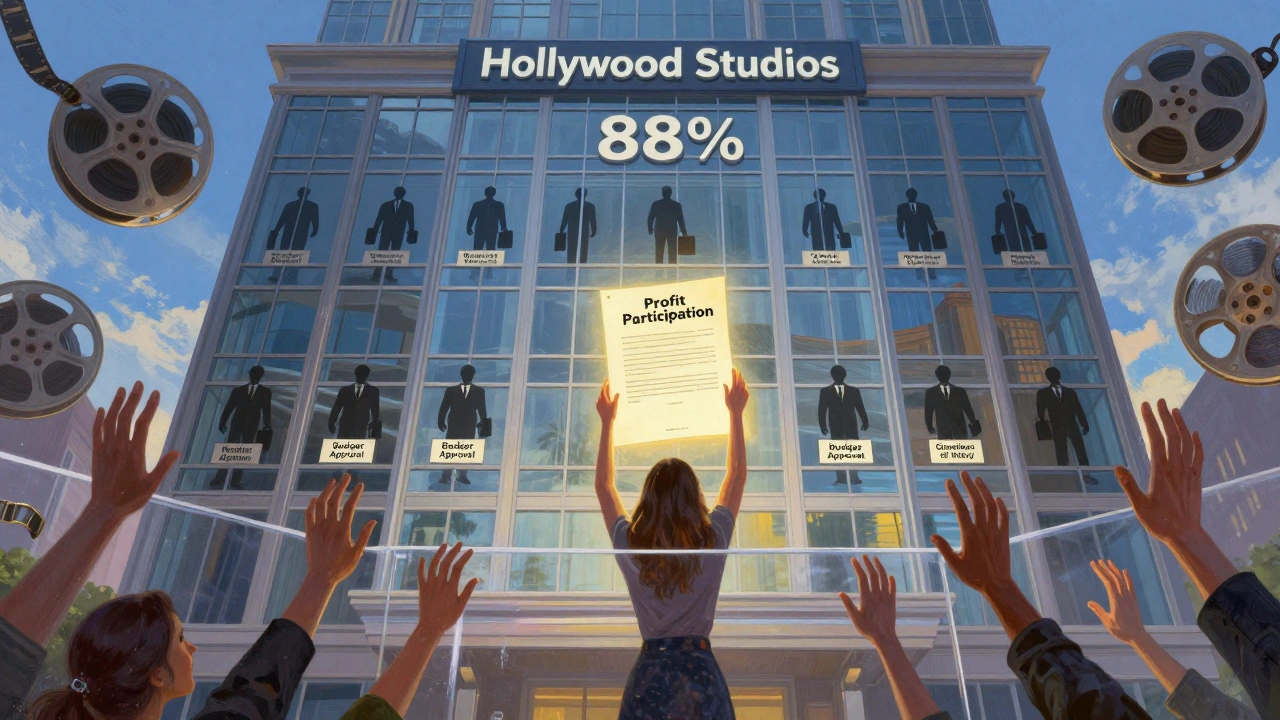
According to the 2024 Hollywood Reporter’s Executive Diversity Report, 83% of studio heads, 79% of production company CEOs, and 88% of film financiers are men. These are the people who approve budgets, negotiate deals, and ultimately decide who gets hired-and how much they get paid.
When the decision-makers are mostly men, they tend to hire people they know, trust, or feel comfortable with. That’s not always bias in the overt sense. It’s often unconscious. A male producer might say, “I worked with this guy on my first film-he’s reliable.” And that guy gets the next job. The woman director, even if she’s more qualified, doesn’t get the call.
There’s also a perception problem. Investors still believe male directors are “safer bets” for big returns. A 2023 study from the University of Southern California showed that films directed by women consistently outperformed projections by 12% on average. But studios still gave them smaller budgets and lower upfront pay because they assumed they’d underperform.
How the System Keeps Women Out
The pay gap isn’t just about salary. It’s about access.
Women directors rarely get first-shot opportunities on big-budget films. Studios want to “test” them on lower-budget projects first. But those smaller projects pay less and don’t build the track record needed to land the next big gig. It’s a catch-22.
And when women do get hired, they’re often assigned to genres studios consider “less valuable”-romantic comedies, family films, or dramas. Meanwhile, male directors are funneled into action, sci-fi, and superhero franchises-where the pay is highest and the residuals are massive.
Even the contracts are different. Male directors often get a percentage of box office gross. Female directors? They get a flat fee. That means when a film becomes a hit, the male director gets richer. The woman director doesn’t.
Take Wonder Woman (2017). Patty Jenkins earned a flat $1 million for directing it. When it grossed over $800 million, she got nothing extra. James Gunn made $2 million for directing Guardians of the Galaxy (2014), and he got 5% of the box office. He made over $100 million from that film alone.
What’s Changing?
There are signs of progress-but they’re slow and uneven.
Netflix, Amazon, and Apple have started publishing pay equity reports. In 2024, Amazon Studios said it had closed the gender pay gap for directors on its original films. They did it by auditing contracts, mandating equal pay scales for similar roles, and requiring diversity in hiring panels.
Some independent production companies are following suit. A group of 12 indie studios formed the Directing Equity Initiative in 2023. They now use standardized pay scales based on budget size, not gender. Women directors on their projects now earn the same as men for the same role.
And audiences are pushing back. Films like Barbie and Oppenheimer proved that audiences don’t care who directs them-they care if the movie is good. That’s slowly shifting the narrative. Studios are starting to realize that talent doesn’t come with a gender label.
What You Can Do
Change doesn’t come from waiting. It comes from action.
- Watch films directed by women. Box office numbers speak louder than petitions.
- Support indie films by women through crowdfunding or theater releases.
- Ask your local theater what films they’re screening. If they’re not showing enough women-directed work, ask why.
- Follow women directors on social media. Amplify their work. Tag studios when you see a great film they made.
- If you work in the industry, push for transparent pay structures. Ask: “What’s the salary range for this role? Is it the same for men and women?”
It’s not about guilt. It’s about fairness. Women directors aren’t asking for handouts. They’re asking for the same shot.
It’s Not Just About Money
The pay gap isn’t just a number. It’s a message. It tells women: your vision isn’t worth as much. Your voice doesn’t matter as much. Your story isn’t as important.
When women directors are underpaid, fewer get hired. When fewer get hired, fewer get experience. When fewer get experience, fewer get big projects. And the cycle continues.
But when a woman director gets paid fairly, she hires more women crew members. She mentors young female assistants. She becomes the role model someone else sees on set and thinks, “I can do that too.”
That’s the ripple effect. Fair pay doesn’t just fix a salary. It changes a whole industry.
Why do women directors earn less than men in film?
Women directors earn less because of systemic bias in hiring, unequal contract terms, and a lack of access to high-budget projects. Even with equal experience and success, they’re often paid less due to unconscious bias among decision-makers and industry norms that favor male directors for blockbuster roles.
Is the gender pay gap in film getting better?
Slowly. Streaming platforms like Netflix and Amazon have started closing the gap on their original films by enforcing pay equity policies. Independent studios are adopting standardized pay scales. But in major studio films, progress is still minimal. The gap remains wide, especially for blockbusters.
Do women directors make less because they choose lower-budget films?
No. Women are often steered toward lower-budget or “female-focused” genres because studios assume they’re not suited for action or sci-fi. When they do direct big films, they still earn less than men. For example, Patty Jenkins earned $1 million for directing Wonder Woman, while male directors of similar hits earned millions more plus profit participation.
Are women directors less experienced than men?
No. Women directors like Kathryn Bigelow, Ava DuVernay, and Greta Gerwig have decades of experience and critical acclaim. The issue isn’t experience-it’s opportunity. Studios don’t give them the same chances to prove themselves on high-budget projects.
What’s the difference between flat pay and profit participation?
Flat pay means a director gets one fixed amount, no matter how much the film earns. Profit participation means they get a percentage of the film’s gross revenue. Male directors are far more likely to get profit participation, which can add tens of millions to their earnings. Women are often locked into flat fees, even on blockbuster hits.





Comments(6)