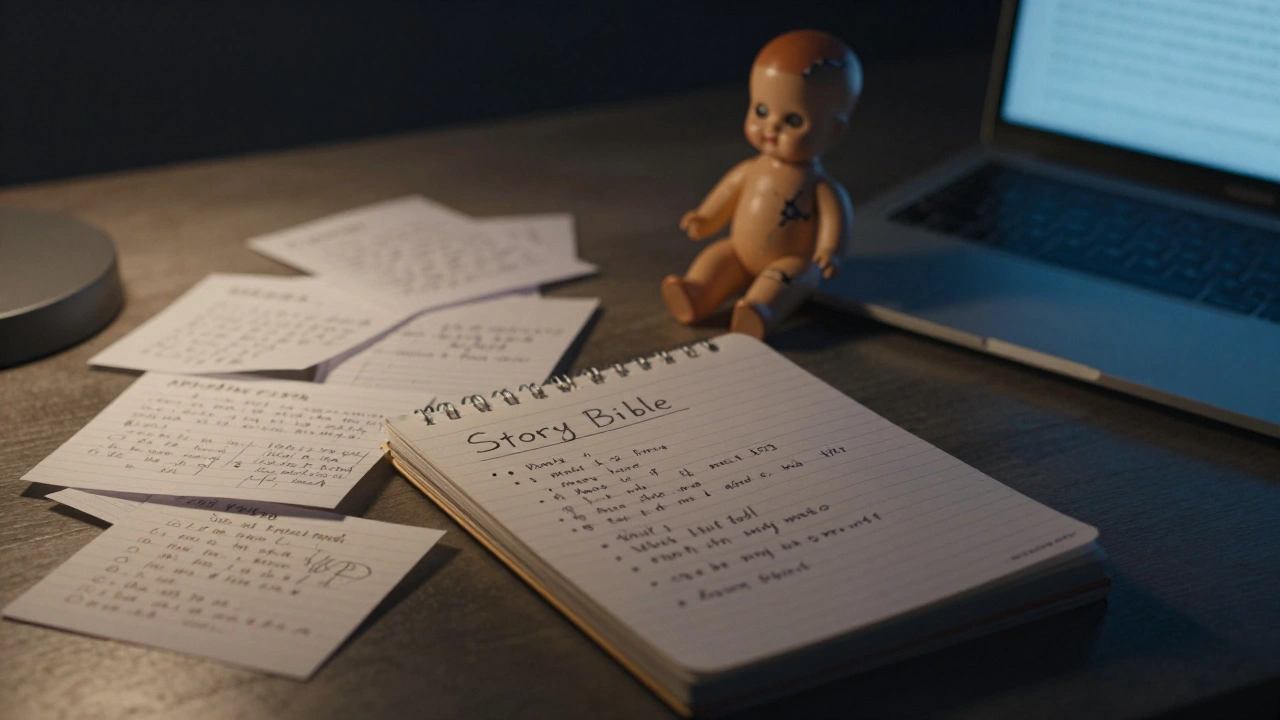
Most screenwriters jump straight into writing scenes. They craft dialogue, build characters, and chase that first draft like it’s the finish line. But the best films - the ones that stick with audiences for years - didn’t start with a script. They started with a story bible.
A story bible isn’t a fancy document. It’s not a 100-page novel. It’s a living, breathing blueprint that holds everything about your film’s world before you write a single line of dialogue. Think of it as the foundation of a house. You don’t start laying bricks before you know how many rooms you need, where the windows go, or what the roof will look like. The same goes for your movie.
What Exactly Is a Story Bible?
A story bible is a centralized reference guide that defines every core element of your film’s universe. It answers the questions no one asks until halfway through production: Why does this character hate the ocean? What happened in the war that changed the city’s laws? How does magic work here - and what are the costs?
It includes:
- Character backgrounds, motivations, and arcs
- World rules: physics, technology, magic, social systems
- Timeline of key events before, during, and after the story
- Location details: geography, culture, architecture
- Themes and emotional throughlines
- Symbolism, recurring imagery, and visual motifs
It’s not meant to be read by audiences. It’s meant to keep you, your writers, and your directors aligned. When a producer says, “Can we make the villain more sympathetic?” - you don’t guess. You open the story bible and see the childhood trauma that shaped them. It’s your anchor.
Why Skip This and You’ll Regret It
Let’s say you write a thriller about a detective hunting a serial killer who leaves behind origami cranes. You nail the first act. The second act gets messy. Why? Because you never asked: Why cranes? Why not butterflies? You didn’t tie it to the killer’s mother, who taught him origami before she died in a fire. That’s not just backstory - it’s the emotional engine of the whole film.
Without a story bible, you’re writing blind. Scenes feel disconnected. Plot holes show up like potholes on a road you didn’t map. Characters act out of convenience, not logic. And when you hit page 70 and realize the third act doesn’t make sense? You’ve wasted months.
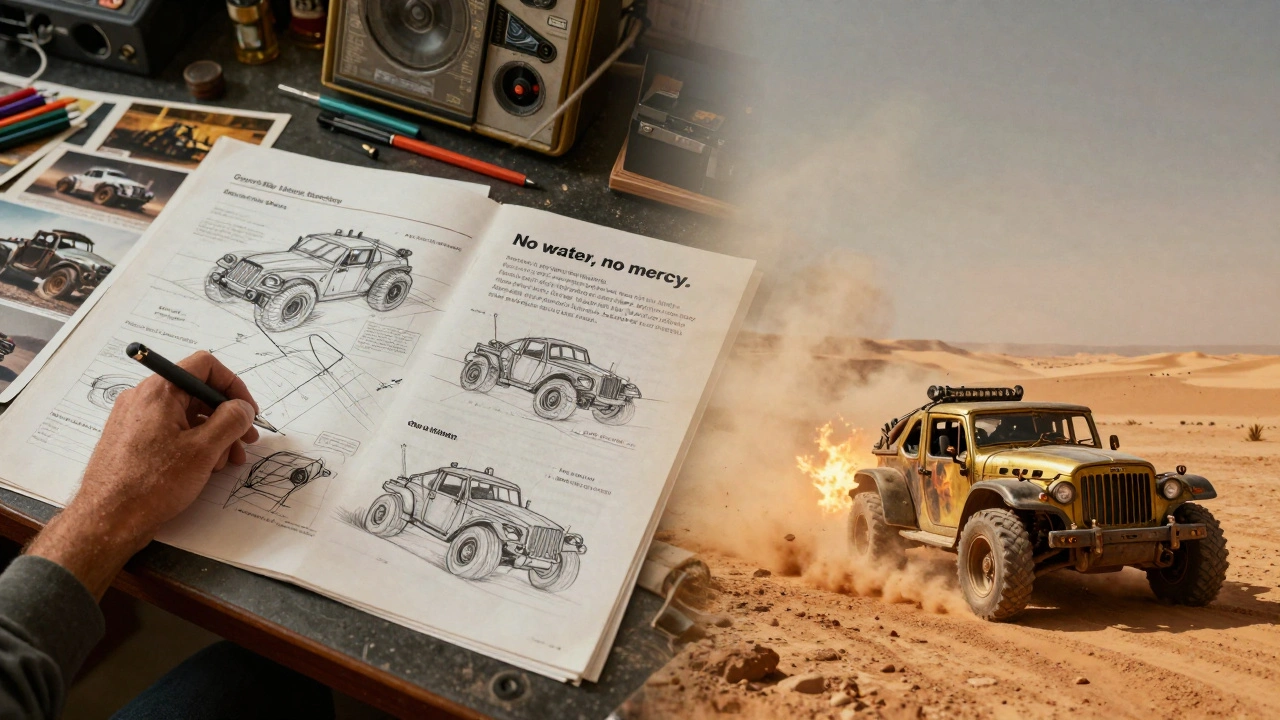
Compare that to Mad Max: Fury Road. George Miller didn’t start shooting until he had a 100-page story bible - including maps, vehicle designs, faction histories, and even the backstory of Furiosa’s arm tattoo. That’s why every frame feels intentional. Every choice has weight.
How to Build a Story Bible (Step by Step)
You don’t need to be a novelist. You don’t need fancy software. Start simple. Here’s how:
- Define the core question - What is this story really about? Not the plot. The theme. Is it about redemption? Identity? The cost of silence? Write it in one sentence. This becomes your North Star.
- Map the characters - For each major character, answer: What do they want? What do they fear? What’s their breaking point? What’s one memory that changed them? Don’t skip the minor ones. The barista who gives the hero coffee might be the key to the third act twist.
- Build the world - What does this world look, sound, and smell like? Is it a dystopian city where all light is rationed? A small town where everyone knows your secrets - and your sins? Describe it like you’re walking through it. Include rules: What’s forbidden? What’s sacred? What breaks the system?
- Timeline the past - What happened five years ago? Ten? A hundred? Even if your story starts today, the past is still active. A war, a betrayal, a lost child - these aren’t backstory. They’re pressure points that explode in your plot.
- Link symbols and motifs - What image keeps coming back? A broken clock? A red coat? A song? Write down where it appears and why. These aren’t decorations. They’re emotional punctuation.
- Write the “before” and “after” - What does the world look like before the story starts? What does it look like after? The difference is your film’s true arc.
Keep it lean. One page per character. Two pages for the world. Half a page for each motif. You’re not writing a book. You’re building a toolkit.
Real Example: A Horror Film Story Bible
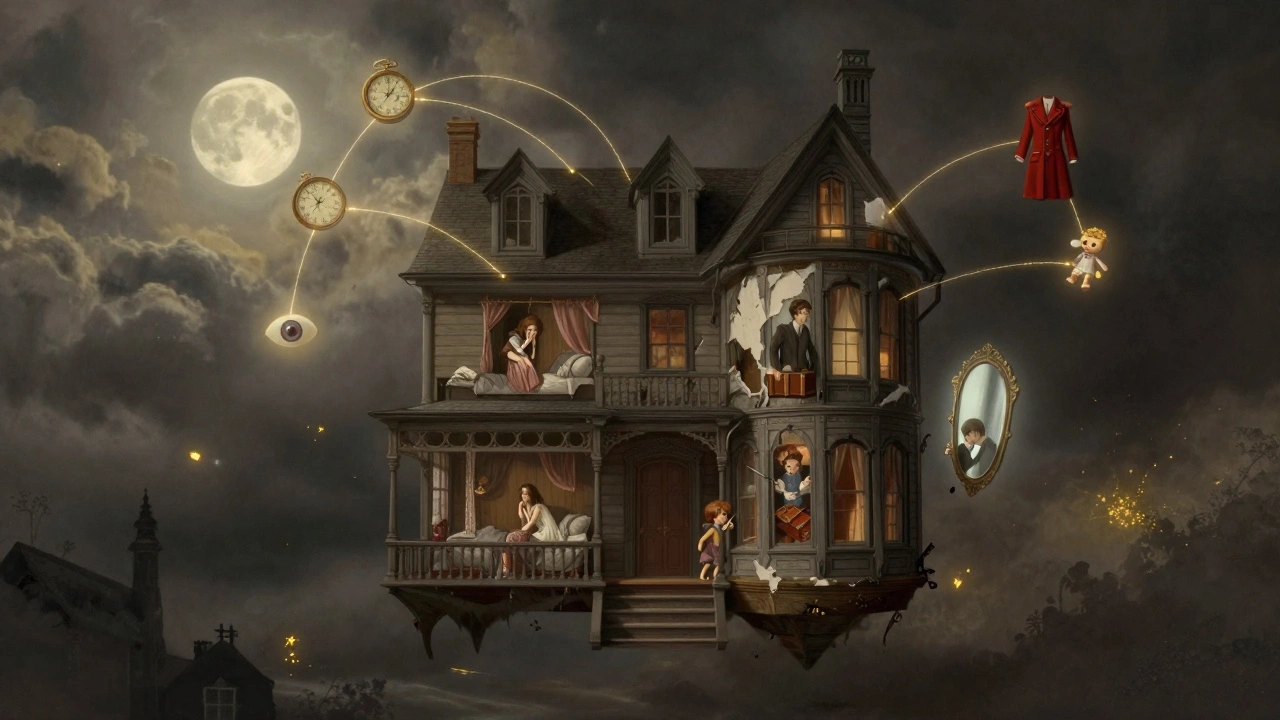
Imagine a horror film called The Whispering House. The story: a family moves into an old Victorian home, only to hear a voice that repeats their deepest regrets.
Here’s what the story bible includes:
- Core theme: Guilt that never sleeps
- Character: The mother - She lost her daughter in a car accident she caused while distracted by a text. She never told anyone. She blames herself. The voice speaks in her daughter’s voice - but only when she’s alone.
- World rule: The house doesn’t create the voice. It amplifies guilt. The louder the secret, the clearer the whisper. The voice can’t harm - but it can drive you mad.
- Timeline: The house was built in 1892 by a man who buried his wife alive after she cheated on him. He never spoke again. The house absorbed his guilt. Each new owner adds theirs.
- Motif: A cracked porcelain doll found in the attic. It’s missing one eye. The voice says, “I’m still watching.”
- Before/After: Before: family is fractured but functional. After: the father leaves. The mother disappears into the attic. The son is the only one left - and he hears the voice too.
Now, when you write the scene where the mother finally screams, “I’m sorry!” - the audience doesn’t just feel the moment. They feel the weight of 30 years of silence. Because you built it. You didn’t guess.
When to Stop Building
You can keep adding details forever. But you don’t need to. Stop when:
- You can explain every character’s choice without hesitation
- You know what happens if a character breaks a rule
- You can describe the world’s logic to someone who’s never heard the story
- Your gut says: “I know what happens next” - not “I hope this works”
That’s when you close the bible. Open the script.
Common Mistakes to Avoid
Most people mess this up. Here’s what goes wrong:
- Overloading it - You write 50 pages of lore. No one will use it. Keep it lean. Use bullet points. One idea per line.
- Ignoring consequences - You say magic exists. But you never define the cost. Every power must have a price. Always.
- Leaving gaps - If your villain has a motive, write it. Don’t assume you’ll remember it later. You won’t.
- Writing it too early - Don’t build the bible before you know the core idea. Start with the theme. Then build out.
- Not revisiting it - Your story bible isn’t set in stone. When you write the script, you’ll find new layers. Update it. Keep it alive.
Why This Changes Everything
Writing a script without a story bible is like painting a portrait without a sketch. You might get lucky. But you’ll never get consistent. You’ll never get powerful.
The story bible is where your film becomes more than a sequence of scenes. It becomes a living world. A place with history, pain, rhythm, and meaning.
When you know your world this deeply, the dialogue writes itself. The scenes breathe. The twists land because they’re earned, not invented.
And when you finally sit down to write? You won’t be scared. You’ll be ready.
Do I need a story bible if I’m writing a short film?
Yes - especially for shorts. Short films have less time to explain, so every detail must count. A story bible ensures your 10-minute film feels like a complete world, not a sketch. Even if it’s just three pages, it’s the difference between a good short and a memorable one.
Can I use a story bible for TV series too?
Absolutely. In fact, TV shows live and die by their story bibles. Think of shows like Stranger Things or The Last of Us. Their bibles include timelines spanning decades, character backstories, rules for supernatural elements, and even how the world changes across seasons. Without it, continuity falls apart.
What’s the difference between a story bible and an outline?
An outline maps plot points: Act 1, Act 2, twist at 45 minutes. A story bible explains why those things happen. It’s the “why” behind the “what.” You need both. The outline is the roadmap. The bible is the landscape.
Should I share my story bible with my director or producer?
Only if they ask. The story bible is your tool - not a marketing document. But if you’re working with a team, sharing key parts (character arcs, world rules, themes) helps everyone stay aligned. Don’t share the whole thing unless you’re ready for notes. Focus on what matters to their job.
What tools do I use to build a story bible?
Start with a notebook or Google Doc. No need for fancy software. Later, you can use Notion, Obsidian, or Scrivener if you like organizing with tags and links. But the tool doesn’t matter. What matters is that you write it down, keep it simple, and refer to it every time you write a scene.




Comments(8)