Key Takeaways
- Establish a clean Chain of Title from day one to ensure you own all assets.
- Distinguish between different types of licenses: exclusive, non-exclusive, and time-limited.
- Understand the difference between territorial rights and platform rights (SVOD, TV, Theatrical).
- Always secure "all media, now known or hereafter devised" clauses in your contracts.
- Keep a centralized Rights Bible to track every permission and expiration date.
The Foundation: Building Your Chain of Title
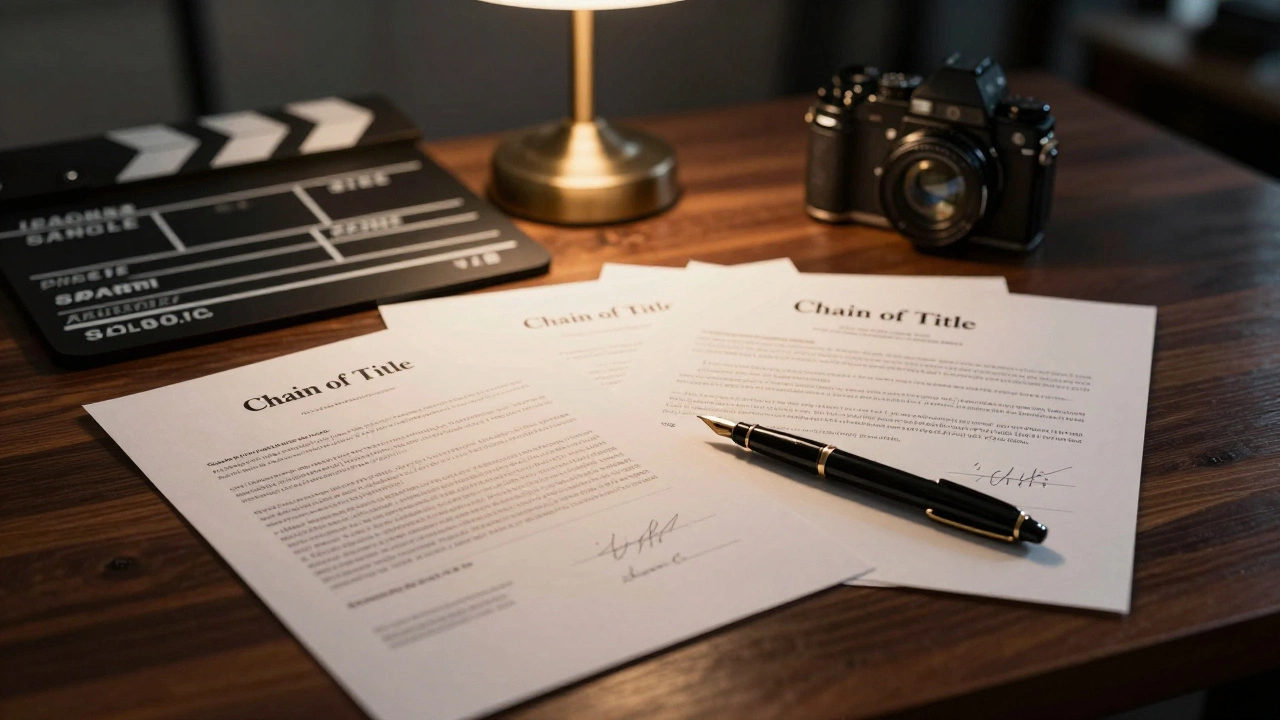
Before you even think about a licensing deal, you need a Chain of Title is the series of legal documents that prove the ownership of a film's intellectual property from the original creator to the current owner. Think of it as a family tree for your movie. If you bought a script from a writer, the contract is the link. If you hired a composer, their work-for-hire agreement is the next link. If one link is missing, the chain is broken.
To keep this clean, you need to collect specific documents for every person who contributes. This includes Work-for-Hire Agreements, which ensure that the production company-not the individual contractor-owns the output. Without this, a disgruntled VFX artist could technically claim ownership of the visual effects in your climax, preventing you from selling the film to a streamer like Netflix.
Don't forget about the "boring" stuff. Location releases are vital. If you filmed in a quirky cafe and the owner suddenly decides they don't like the movie's tone, they can't stop the film from airing if you have a signed location agreement. But if you don't? You're looking at a potential lawsuit or an expensive settlement just to get the film released.
Understanding Licensing Types and Terms
When it comes to rights management for indie films, you aren't usually selling the movie outright; you're licensing it. Licensing is essentially renting out the right to show your movie for a specific period of time under specific conditions.
The first big decision is whether to grant an Exclusive License or a Non-Exclusive License. An exclusive license means the distributor is the only one who can show the film in a certain region. This is what most major distributors want because it gives them a monopoly on the product. A non-exclusive license allows you to sell the same rights to multiple people-for example, letting three different niche streaming sites host your documentary.
You also have to worry about the "Grant of Rights." This is the section of the contract where you list exactly what the buyer can do. Are they allowed to make a sequel? Can they cut the movie for a shorter TV slot? If you aren't specific, you might find your 90-minute art house film chopped into a 45-minute episode of a random cable channel without your consent.
| Term | What it means | Best for... | Risk Level |
|---|---|---|---|
| Exclusive | Only one distributor has the rights. | Major platforms, Theatrical runs. | High (less flexibility). |
| Non-Exclusive | Multiple distributors can have the rights. | Niche sites, Educational use. | Low (more freedom). |
| Perpetual | The rights last forever. | Selling the IP completely. | Very High (no way back). |
| Term-Limited | Rights expire after X years. | Standard SVOD deals. | Medium (allows renegotiation). |

Slicing the Pie: Territories and Platforms
One of the biggest mistakes indie filmmakers make is selling "World, All Media" rights too early. When you do that, you're giving away the whole pie. Instead, you should slice the rights. This allows you to make more money by selling to different players in different markets.
First, look at Territorial Rights. You can sell the North American rights to one company and the European rights to another. If your film is a romantic comedy set in Italy, the Italian market might be willing to pay a premium that a US distributor wouldn't. By splitting territories, you maximize your revenue streams.
Then, there are the platforms. In the industry, we call these "windows." You have:
- Theatrical: The traditional cinema release.
- SVOD (Subscription Video on Demand): Platforms like Hulu or Disney+.
- TVOD (Transactional Video on Demand): Renting or buying on iTunes or Amazon.
- AVOD (Ad-supported Video on Demand): Free sites like Tubi or Pluto TV.
- Linear TV: Traditional broadcast or cable channels.
A smart strategy is to hold onto your AVOD rights while selling a limited SVOD window. This ensures that after the "hype" period of a subscription deal, the movie can still generate passive income through ads for years to come.
The Music Minefield: Sync and Master Rights
Nothing kills a distribution deal faster than a music clearance issue. If you used a song by a famous artist without a license, the distributor will likely tell you to replace the music or pay a massive fee. To avoid this, you need to understand the two halves of a song: the Sync License and the Master License.
The Sync (synchronization) license covers the composition-the lyrics and the melody. This is usually owned by a music publisher. The Master license covers the actual recording-the specific version of the song you hear. This is usually owned by a record label. You need both to legally use a song in your film. If you only get the sync license, you can't use the original recording; you'd have to record a cover version of the song yourself.
For most indies, the best move is to hire a composer and sign a comprehensive Music Composer Agreement. This ensures the music is created specifically for the film and that you own the copyright (or have a broad license) from the start. If you insist on using a hit song, budget for it early. Don't assume the artist will "do it for the love of cinema." Usually, they won't.
Practical Steps for Your Rights Bible
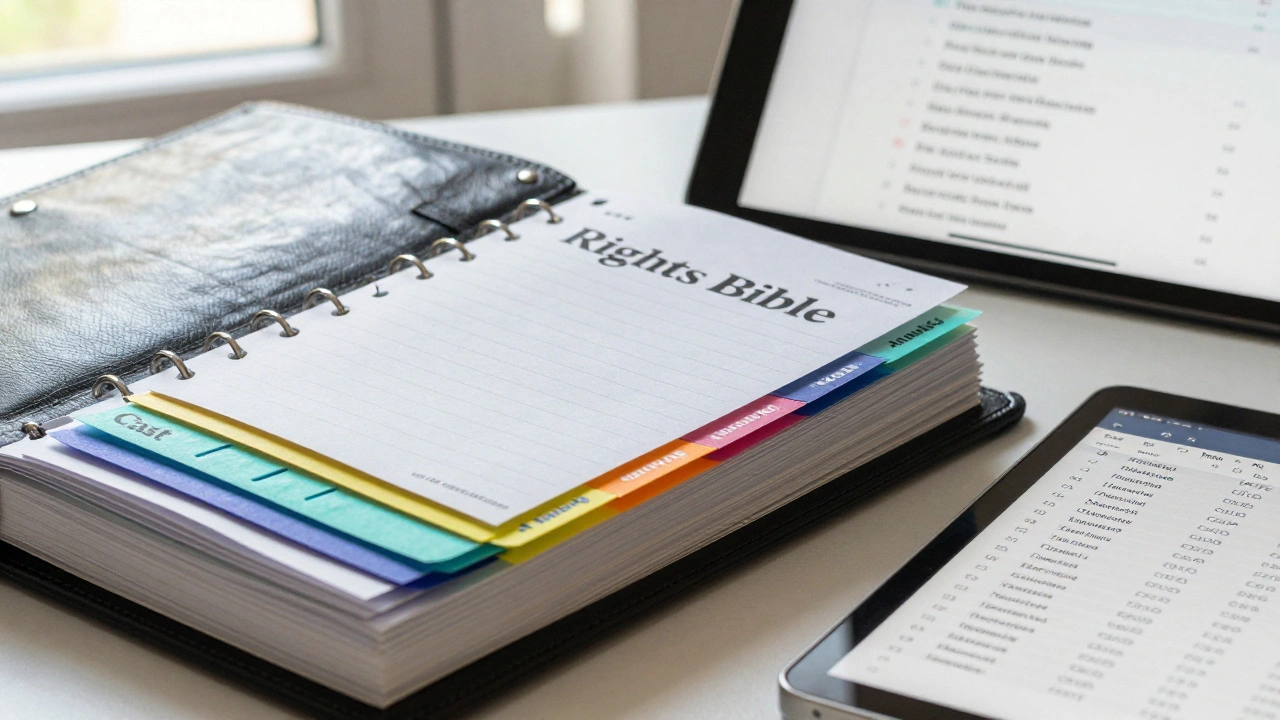
You shouldn't be hunting through emails for a signed release form the day before your premiere. You need a "Rights Bible"-a centralized folder (physical or digital) that contains every single legal document associated with the film. A professional distributor will ask for a "Delivery Schedule," and if your Bible isn't ready, you look like an amateur.
Your Rights Bible should be organized by category:
- Cast & Crew: All signed contracts, payroll records, and release forms.
- Talent: Actor agreements including "buy-outs" for their image rights.
- Locations: Signed permits and property releases for every spot filmed.
- Music: Sync and master licenses for every song, plus the composer's contract.
- Stock Footage: Licenses for any archival clips or B-roll you bought online.
Pro tip: Use a digital naming convention. Instead of "Scan001.pdf," name your files "Release_JohnDoe_Actor.pdf." It sounds tedious, but when a lawyer is auditing your chain of title, they will appreciate the organization, and it will make the due diligence process much smoother.
Common Pitfalls and How to Avoid Them
One common trap is the "Deferred Payment" agreement. Many indie filmmakers promise crew members a piece of the backend profits if the movie sells. While this helps get the movie made, it creates a messy cap table. Ensure these agreements are clearly written and that the "trigger" for payment (e.g., when the producer has recouped the initial investment) is specific. If it's vague, you'll end up in a dispute over who gets paid first.
Another issue is the "Moral Rights" clause. In some countries, creators have a right to protect the integrity of their work, even after they've sold the copyright. To avoid this, include a "Waiver of Moral Rights" in your contracts. This prevents a writer from suing you if you decide to change the ending of the movie during the final edit to make it more commercially viable.
Finally, be careful with "all-in" deals. Some distributors will offer a large sum of money upfront but take every single right you have for the next 20 years. Unless the money is life-changing, try to negotiate a shorter term (say, 5 to 7 years). This allows the rights to "revert" back to you, giving you the chance to resell the film to a new platform once the old deal expires.
What happens if I forgot to get a release from an actor?
You need to track them down and get a retroactive release signed immediately. If they refuse, you have two choices: pay them a settlement to sign or edit them out of the film. A distributor will not accept the film without a signed release for every face appearing on screen.
Can I use "Fair Use" to avoid paying for music or clips?
Fair Use is a legal defense used in court, not a permission slip. In the world of commercial indie films, Fair Use is extremely risky. Distributors generally require a "clear' title," meaning you have explicit written permission for everything. Relying on Fair Use often makes a film unmarketable to professional buyers.
What is a "Recoupment Schedule" in a licensing deal?
It is the order in which money is paid out. Usually, the distributor takes their marketing and distribution expenses off the top first. Then, they pay back any advances given to the producer. Only after these costs are "recouped" does the profit get split between the producer and the investors.
Do I need a lawyer to handle my rights management?
While you can use templates for basic releases, you absolutely should have an entertainment lawyer review your distribution and licensing agreements. A single missing word in a grant of rights can cost you thousands of dollars in future royalties.
What is the difference between copyright and a license?
Copyright is the actual ownership of the work (the "title deed"). A license is a permission slip to use that work. When you license your film, you still own the copyright, but you are giving someone else the legal right to show it for a set time.
Next Steps for Filmmakers
If you are currently in post-production, your first move is to conduct a "Rights Audit." Go through every single scene and list every piece of music, every piece of art on the wall, and every person on screen. Cross-reference this list with your signed releases. If there is a gap, fix it now while you still have a good relationship with your crew and cast.
For those ready to distribute, create a "Rights Sheet." This is a one-page summary that tells a distributor exactly what is available: which territories are open, which platforms are free, and for how long. This makes you look professional and speeds up the negotiation process. Remember, the goal is to keep as much control as possible while letting the experts handle the reach.






Comments(6)