Every great screenplay starts with an idea. But ideas alone don’t protect you. If you’ve spent months writing a script, developing characters, or shooting your first film, you need to know how to lock it down legally. Without proper copyright protection, someone else could steal your story, sell it, or pass it off as their own - and you’d have almost no recourse. This isn’t speculation. It happens. All the time.
What Copyright Actually Protects (and What It Doesn’t)
Copyright law doesn’t protect ideas, themes, or general plot concepts. You can’t copyright the idea of a time-traveling detective or a high school where monsters live under the bleachers. What you can protect is the specific expression of that idea - the exact words on the page, the dialogue, the scene structure, the character arcs as written. That’s why your screenplay, once typed out and fixed in a tangible form, is automatically protected under U.S. law. But automatic protection isn’t enough.
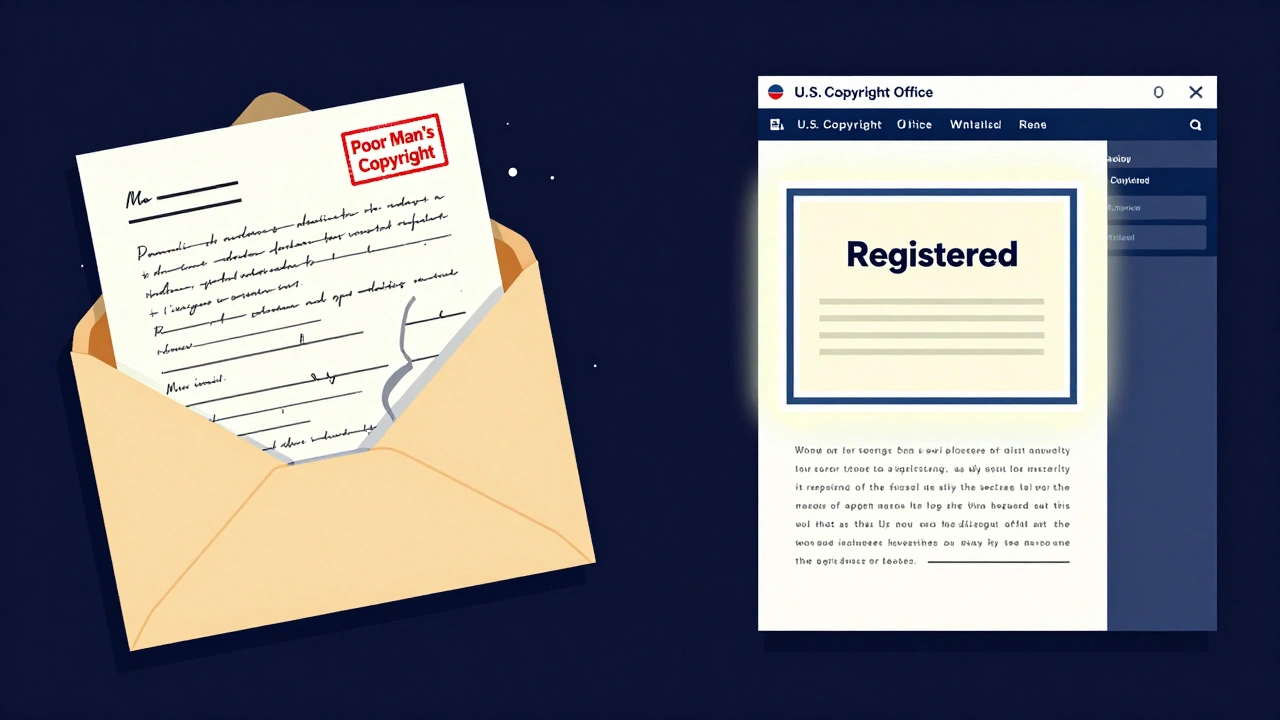
The difference between automatic protection and registered copyright is like having a key to your house versus having a police report on file if someone breaks in. With just automatic protection, proving ownership in court gets messy. With registration, you have a public record, a certificate, and the legal right to sue for statutory damages - up to $150,000 per work if the infringement is willful.
How to Register Your Screenplay or Film
The U.S. Copyright Office handles registrations through its online portal. You don’t need a lawyer to file, but you do need to be precise. Here’s how it works:
- Prepare your final draft. Make sure it’s the version you want protected. Revisions after registration require new filings.
- Create an account on the copyright.gov website. Use your real name and legal address.
- Choose the correct category: literary works for screenplays, motion pictures for finished films.
- Upload your file. The system accepts PDFs, DOCX, or MP4s (for films). No password-protected files.
- Pay the fee. As of 2026, it’s $45 for a single author, same claimant, and not for hire. Higher fees apply for multiple authors or corporate ownership.
- Wait. Processing takes 3-9 months, but your protection starts the day you file.
Pro tip: If you’re submitting a screenplay, include a title page with your name, contact info, and the words "Copyrighted Screenplay". It doesn’t add legal weight, but it signals professionalism - and deters opportunists.
Why Registration Matters More for Films Than Screenplays
Screenplays are often rewritten, rewritten again, and rewritten once more before production. That’s why many writers register their script at multiple stages: first draft, revised draft, shooting script. Each version gets its own registration number. It’s expensive, but it’s insurance.
For finished films, registration is non-negotiable. A film isn’t just the script - it’s the edited footage, the sound design, the score, the visual effects. All of it is protected under one copyright, but only if you register the final cut. If you don’t, and someone uploads your movie to a pirate site before you’ve filed, you can’t claim statutory damages. You’re stuck with actual damages - which, for an indie film, often means $0.
What Happens If Someone Steals Your Work?
Let’s say you find your screenplay on a script-sharing site, or your film on a torrent. Here’s what to do:
- Take screenshots or record the infringing content. Timestamps matter.
- Send a DMCA takedown notice to the platform. Most sites (YouTube, Vimeo, etc.) have a form. Include your registration number if you have one.
- Don’t contact the infringer directly. That can hurt your case.
- If the infringement is commercial - like a studio releasing a copycat film - consult an entertainment lawyer. You may be able to file a lawsuit for infringement.
Real example: In 2023, a writer in Austin, Texas registered her script titled "Echoes of the River". Three years later, a Netflix series with nearly identical plot beats and character names aired. Because she had registered her script before the show went into production, she settled for $1.2 million. Without registration? Nothing.
Common Mistakes Writers Make
Even smart people mess this up. Here are the top three:
- Believing mailing yourself a copy works. The "poor man’s copyright" - sending your script to yourself via certified mail - has zero legal standing. Courts ignore it.
- Waiting until production starts. The moment you share your script with a producer, director, or actor, you’re at risk. Register before you send it out.
- Assuming your production company owns it. If you wrote it independently and didn’t sign a work-for-hire agreement, you own it. But if you signed anything vague - like "all rights assigned" - you may have given it away. Always read the fine print.
Protecting Your Film After Release
Once your film is out, copyright doesn’t stop there. You need to monitor it. Use tools like Google Alerts for your film’s title, or services like Pixsy or Distrify that scan the web for unauthorized uploads. Set up YouTube Content ID if you’re distributing digitally - it automatically flags copies and lets you monetize or block them.
Also, watermark your digital copies. Not the flashy kind - the invisible kind. Most professional distributors embed metadata with your name and registration number. If someone redistributes it, you can trace it back.
International Protection
The U.S. is part of the Berne Convention, which means your copyright is recognized in 180+ countries. You don’t need to register elsewhere. But if you plan to distribute in the EU or Asia, consider local registrations anyway. In countries like China or India, local registration helps in enforcement. It’s not required, but it’s a tactical advantage.
What You Should Do Today
Here’s your action plan:
- If you have a finished screenplay - register it now.
- If you’re in pre-production - register your shooting script before you shoot.
- If you just wrapped filming - register the final cut within 30 days.
- If you’re working with a studio or producer - get a written agreement that says you retain copyright unless you sign otherwise.
Don’t wait for a lawsuit to teach you this lesson. The cost of registration is less than a month’s rent. The cost of losing your work? Priceless.
Do I need to register my screenplay if I’m only sharing it with agents?
Yes. Even if you trust your agent, third parties can leak or copy your work. Registration gives you legal leverage. Most reputable agencies require proof of registration before accepting scripts.
Can I copyright a film idea before writing the script?
No. Copyright only protects fixed expression - written words, recorded footage. An idea, even if detailed in a notebook, isn’t protected. You must write the script or shoot the film first.
How long does copyright last for a screenplay or film?
In the U.S., copyright lasts for the life of the author plus 70 years. If it’s a work-for-hire (like a studio script), it lasts 95 years from publication or 120 years from creation, whichever comes first.
What if someone makes a similar film but doesn’t copy my script?
That’s legal. Copyright doesn’t protect ideas, genres, or tropes. Two films can have the same premise - like "a man saves the world from aliens" - without infringing. Only if they copy your specific dialogue, structure, or scenes does it become a problem.
Can I register multiple screenplays in one application?
Yes, if they’re part of a collection - like a TV pilot and two spec scripts from the same writer. The Copyright Office calls this a "group registration." It costs $65 instead of $45 per script. But you can’t mix different authors or unrelated works.
Protecting your work isn’t about being paranoid. It’s about being smart. In an industry where stories are traded like currency, your script is your asset. Treat it like one.





Comments(9)