You've probably walked out of a movie theater feeling moved by a shot, but stopped to wonder why. Was it the dialogue? The acting? Often, it's the image itself. Movies aren't just stories told through actors; they are moving paintings. Cinema relies heavily on Visual Arts. When you watch a film, you're seeing centuries of artistic history played out on a screen.
This connection isn't accidental. From the earliest days of silent films to modern blockbusters, directors have looked to painters, sculptors, and architects for inspiration. They borrow composition rules from canvases and light manipulation techniques from photographers. Understanding this bridge helps you see films differently. You stop watching for plot points and start analyzing the craft. Let's break down how gallery masters became the hidden hands behind your favorite movies.
The Silent Era: Painting Before Dialogue
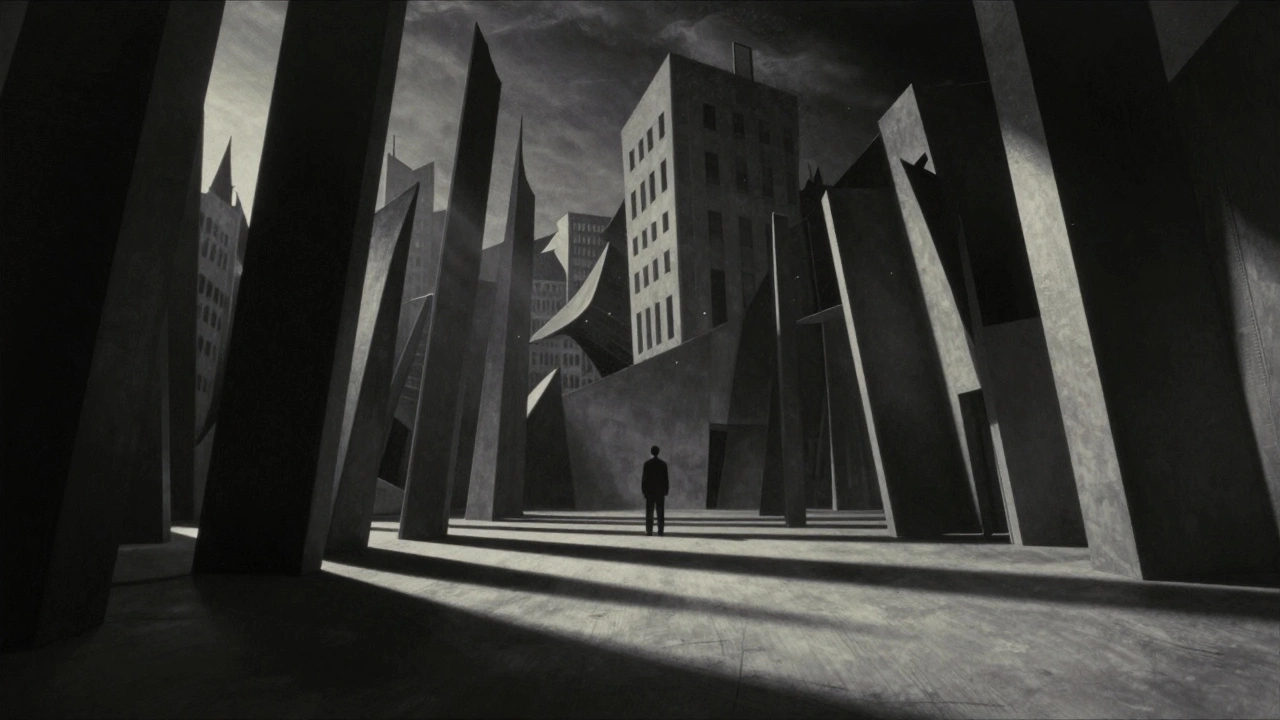
When sound wasn't an option, visuals did all the heavy lifting. In the 1920s and 30s, filmmakers didn't just mimic reality; they stylized it like illustrations. Take German Expressionism. This movement took the jagged, distorted shapes found in Expressionist paintings and put them into sets. Films like Metropolis look less like cities and more like nightmares drawn by Francisco Goya.
Walter Ruttmann, a director of the period, worked alongside artists who treated the screen as a stage for light and shadow. They rejected realism. Instead, they used deep blacks and harsh contrasts to show inner turmoil. This approach taught the industry something crucial: lighting isn't just about visibility; it's about emotion. That lesson stuck. Even today, when a detective flicks a switch in a dark room to reveal a clue, that trick comes straight from the Expressionist playbook used in silent horror films.
Color Theory: From Palette to Screen
Before digital color grading existed, filmmakers had to paint their colors carefully during production. Some of the most iconic uses of color came directly from famous painterly styles. Consider Jean-Luc Godard. His work was often compared to Pop Art because of his sudden, jarring shifts in tone. But before him, Soviet filmmaker Dziga Vertov experimented with primary colors to signify political ideology, similar to how Piet Mondrian used grids and blocks of red, blue, and yellow.
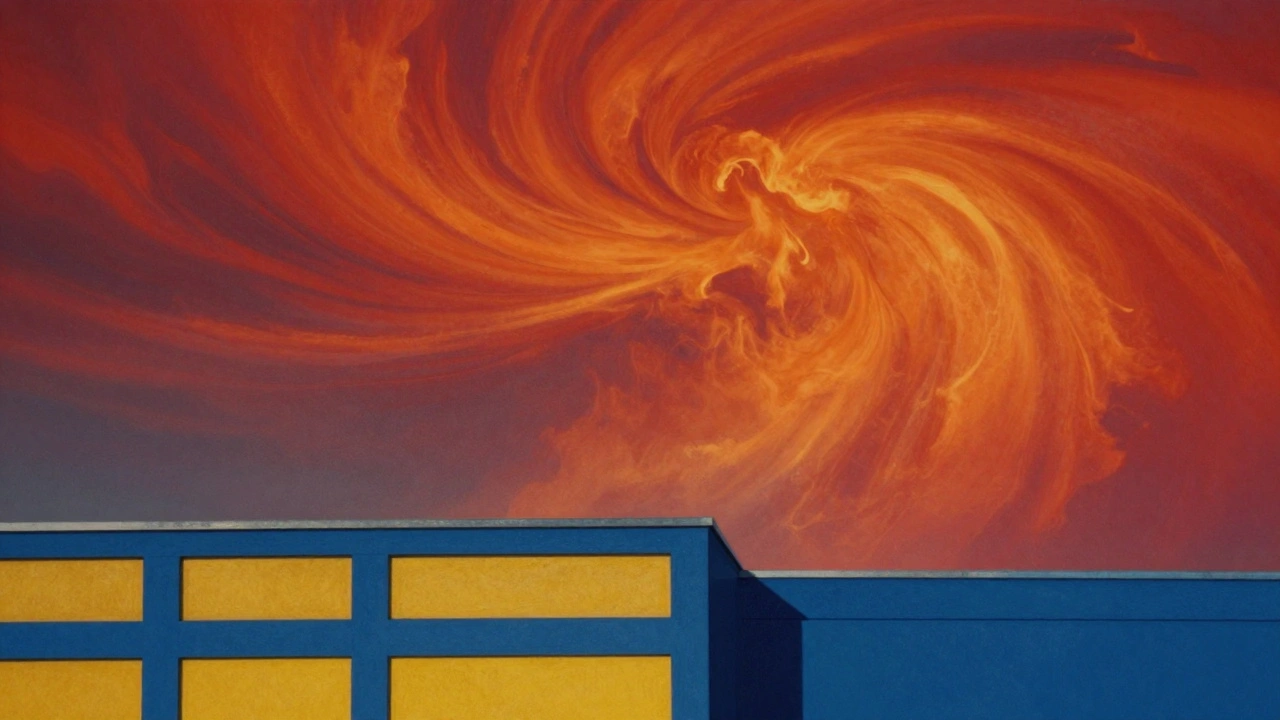
In the 1950s, technicolor processes allowed for saturation levels that felt unnatural but stunning. This era birthed the aesthetic known as the "Hitchcock Red." Alfred Hitchcock famously used a specific shade of vermilion to signal danger or obsession. He borrowed this direct association from how artists use warm tones to draw the eye. If you look at Edvard Munch's The Scream, the sky isn't grey; it's swirling orange and red. That same anxiety-inducing palette appears in countless thrillers designed to make your stomach drop.
| Art Movement | Key Artist | Film Example | Application |
|---|---|---|---|
| Expressionism | Francis Bacon | The Shining | Distorted perspectives |
| Pop Art | Andy Warhol | Birdman | Continuous camera movement |
| Surrealism | Salvador Dalí | Un Chien Andalou | Dream logic imagery |
| Photorealism | Richard Estes | The Matrix | Hyper-real reflection textures |
Sculpture and Space: Production Design
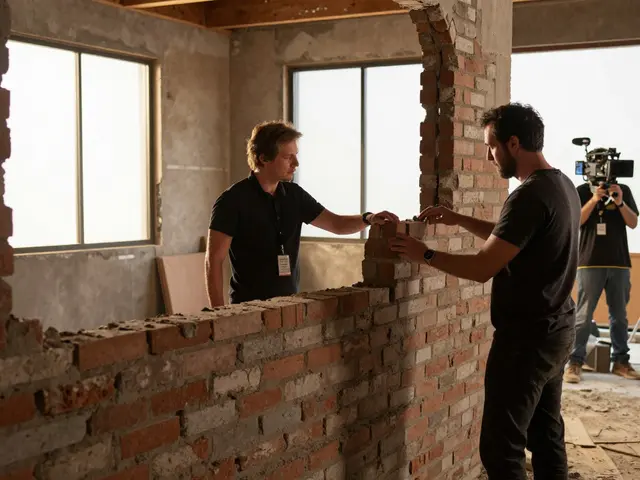
Cinematographers control the camera, but Production Designers build the world. These professionals act more like sculptors than painters. They deal with volume, texture, and how light hits physical matter. When Wes Anderson builds the facade of the Grand Budapest Hotel, he isn't just choosing furniture. He is curating a symmetrical environment that mimics the precision of a diorama.
This approach to space changes how audiences feel. A crowded, cluttered set creates chaos, much like Cubist paintings fracture space to overwhelm the viewer. Conversely, a minimalist set, inspired by modernist architecture, isolates characters. Think of Andrei Tarkovsky. His films feature long takes where dust particles float in shafts of light, resembling watercolor washes. The physical sets were constructed to hold specific textures that caught light in a certain way, proving that material choice dictates mood.
In the 2020s, we see a resurgence of tactile environments. With CGI dominating screens, real-world craftsmanship stands out. Production designers are now collaborating with digital artists to blend physical maquettes with virtual extensions. This hybrid workflow means a prop built in clay might eventually become a 3D asset scanned and rendered in software. The origin remains rooted in the handcrafted object.
Direct Collaboration: When Painters Directed
Sometimes the line blurs completely because the artist picks up the camera. Francis Ford Coppola and Alejandro Jodorowsky come to mind, but there are others. Salvador Dalí co-wrote a screenplay that turned into Luis Buñuel's masterpiece. The dream sequences in Buñuel's work are impossible geometry, pulled straight from Dalí's own subconscious sketches.
More recently, some contemporary painters have ventured into short films or music videos. They bring a unique sense of timing. Because they think in still images, they understand how to freeze a moment for maximum impact. This results in movies that pause more intentionally. A director thinking like a photographer will hold a frame longer, letting the audience study the details before the action resumes.

Matte Painting and the Digital Shift
Long before computers, studios hired concept artists to paint backgrounds. John Alvin is the perfect example here. His paintings defined the look of Hollywood sci-fi in the 80s. When you see the neon-soaked streets in Blade Runner, that isn't just a street corner; it's a painting by Alvin translated onto celluloid. He combined noir shadows with cyberpunk aesthetics to create a city that never actually existed.
Now, in 2026, the process has digitized. Matte painters are often 3D modelers. However, the fundamental goal hasn't changed. They are creating an atmosphere. Whether using acrylics on plexiglass or photogrammetry in Unity engine, the job is to establish a believable world. The transition from traditional oil to digital brushes hasn't broken the lineage of influence. It has just expanded the toolbox.
Why This Connection Still Matters
Why bother studying art history to understand movies? Because style drives substance. Visual language speaks faster than dialogue. A wide shot can tell you a character is small and insignificant without saying a word. An upward angle makes someone look heroic. These are techniques developed by Renaissance painters who understood how the human eye perceives hierarchy and depth.
If you ignore the artistic roots of filmmaking, you miss half the story. Every time a director frames a scene, they are making choices about balance, tension, and rhythm learned from generations of visual creators. By recognizing these patterns, you appreciate the medium on a deeper level. It turns passive viewing into active discovery.
The next time you sit down for a screening, look at the edges of the frame. Notice how the shadows fall. Ask yourself if it feels like a photograph or a painting. Most likely, it feels like both. That duality is what makes cinema so powerful.
Did all early filmmakers come from an art background?
Not all of them, but many influential ones did. Directors like Charlie Chaplin studied mime and performance, while others like Orson Welles were deeply influenced by theatrical staging and visual storytelling traditions rather than pure painting.
How does modern CGI affect the influence of traditional visual artists?
CGI has shifted the skillset from physical brushwork to digital rendering, but the principles of color theory, composition, and lighting remain the same. Traditional art training is still required for concept art roles in big production houses.
Which art movement had the biggest impact on horror films?
German Expressionism is the biggest influencer. Its focus on distorted perspectives and high-contrast lighting created the blueprint for how monsters and suspense are visualized in genre cinema.
Can contemporary art styles be seen in streaming shows?
Yes, shows like Euphoria utilize bold colors and unconventional framing reminiscent of abstract expressionism. Streaming platforms have allowed for greater stylistic experimentation compared to network television norms.
Are there specific courses for learning this crossover?
Many film schools offer "Auteur Cinema" or "Visual History" modules that analyze the intersection of classical art and film. Film studies departments often require art history credits for a broader understanding of visual literacy.