Why Acting Matters More Than You Think in Film Reviews
Most people talk about plot twists, special effects, or the soundtrack when they review a movie. But the heart of any great film? It’s the acting. A stunning visual can grab your attention, but it’s the actor’s subtle shift in expression, the pause before a line, the way they hold their hands - those are the moments that stick with you long after the credits roll. If you’re writing a film review and you skip analyzing the performance, you’re missing the soul of the movie.
Think about acting like the engine of a car. You can have the prettiest body, the fanciest wheels, the loudest stereo - but if the engine doesn’t run, the whole thing is just a statue. Same with film. Great direction, lighting, and script mean nothing if the actors don’t sell it.
What Makes a Performance Real?
People often say an actor was "convincing," but what does that actually mean? Realism in acting isn’t about mimicking how someone talks in real life. It’s about truth in emotion. You know it when you see it: when you forget you’re watching a performance and just feel like you’re watching a person live through something.
Take Viola Davis in Doubt. Her character doesn’t shout or cry dramatically. She sits still. Her eyes narrow. Her voice drops. You feel her fear, her doubt, her moral weight - all without a single big gesture. That’s not just good acting. That’s precision.
Contrast that with a performance where the actor is clearly trying too hard - over-enunciating, forcing tears, or using the same facial expression for every emotional beat. That’s not realism. That’s acting as a show. And audiences notice. They don’t always know why they feel off, but they do.
How to Break Down a Performance: Five Key Questions
Don’t just say "the acting was great." That’s lazy. Instead, ask yourself these five questions before you write your review:
- Did the actor disappear into the role? Could you recognize them as the person they played - not as the actor playing them? If you’re thinking, "Oh, that’s Tom Hardy," you’ve got a problem.
- Was the emotional arc believable? Did the character change in a way that felt earned? Did their motivations shift logically? A character who goes from coward to hero in five minutes without buildup feels fake.
- How did they use silence? The best actors know that what they don’t say matters more than what they do. Listen for pauses, breaths, glances. Those are often the most revealing moments.
- Did they react authentically to others? Acting isn’t just delivering lines. It’s listening. If an actor looks at their scene partner like they’re waiting for their turn to speak, the chemistry dies.
- Was the physicality consistent? Body language tells stories. A nervous person fidgets. A powerful one owns space. If the actor’s posture, walk, or gestures don’t match the character’s history, it breaks immersion.
Use these as your checklist. They’re not rules - they’re lenses. You don’t need to answer all five in every review, but if you’re unsure why a performance works or doesn’t, these will guide you.
Common Mistakes in Acting Critiques
Even seasoned reviewers mess this up. Here are the three most common traps:
- Confusing intensity with depth. A loud, screaming performance isn’t better than a quiet one. Daniel Day-Lewis’s quiet rage in There Will Be Blood is more terrifying than any monologue.
- Ignoring supporting actors. The lead gets all the attention, but sometimes the best work comes from the background. Look at the neighbor in Manchester by the Sea who says three lines but carries the weight of grief in every glance.
- Letting personal bias cloud judgment. You don’t like the actor? That’s fine. But did they do the job the script asked for? Judge the performance, not the person.
And don’t fall for the "I could’ve done better" trap. That’s not critique - that’s ego. Your job isn’t to act. It’s to analyze.
Comparing Performances Across Films
One of the most useful skills in film reviewing is comparing performances - not just to say who’s better, but to understand how different styles serve different stories.
| Actor | Film | Style | Effect | Why It Worked |
|---|---|---|---|---|
| Paul Giamatti | The Holdovers | Deadpan, restrained | Emotional undercurrent | His quiet frustration made the humor land harder |
| Emma Stone | Poor Things | Physical, exaggerated | Chaotic energy | Her body language sold the character’s childlike discovery |
| Robert De Niro | Killers of the Flower Moon | Understated menace | Creeping dread | He didn’t need to raise his voice - his stillness was terrifying |
| Timothée Chalamet | Wonka | Playful, musical | Whimsical charm | He treated the role like a stage musical - and it fit the tone perfectly |
Notice how each actor adapted their approach to the film’s tone. That’s the key. You don’t judge acting in a vacuum. You judge it against the story it’s trying to tell.
What Makes a Performance Oscar-Worthy?
There’s no formula, but award-winning performances usually share one thing: they change how you see the actor - and sometimes, how you see the world.
When Cate Blanchett played Katharine Hepburn in The Aviator, she didn’t imitate her. She captured the rhythm of her speech, the way she held her head, the arrogance in her silence. You didn’t feel like you were watching Cate Blanchett pretending to be Hepburn. You felt like you were watching Hepburn.
That’s the gold standard. It’s not about transformation for the sake of it. It’s about making the invisible visible - the inner life of a character you’ve never met, in a time you’ve never lived.
That’s why awards matter. Not because they’re perfect, but because they reflect a consensus: this performance didn’t just entertain. It revealed something true.

How to Write a Performance-Centered Review
Here’s how to structure your review around acting:
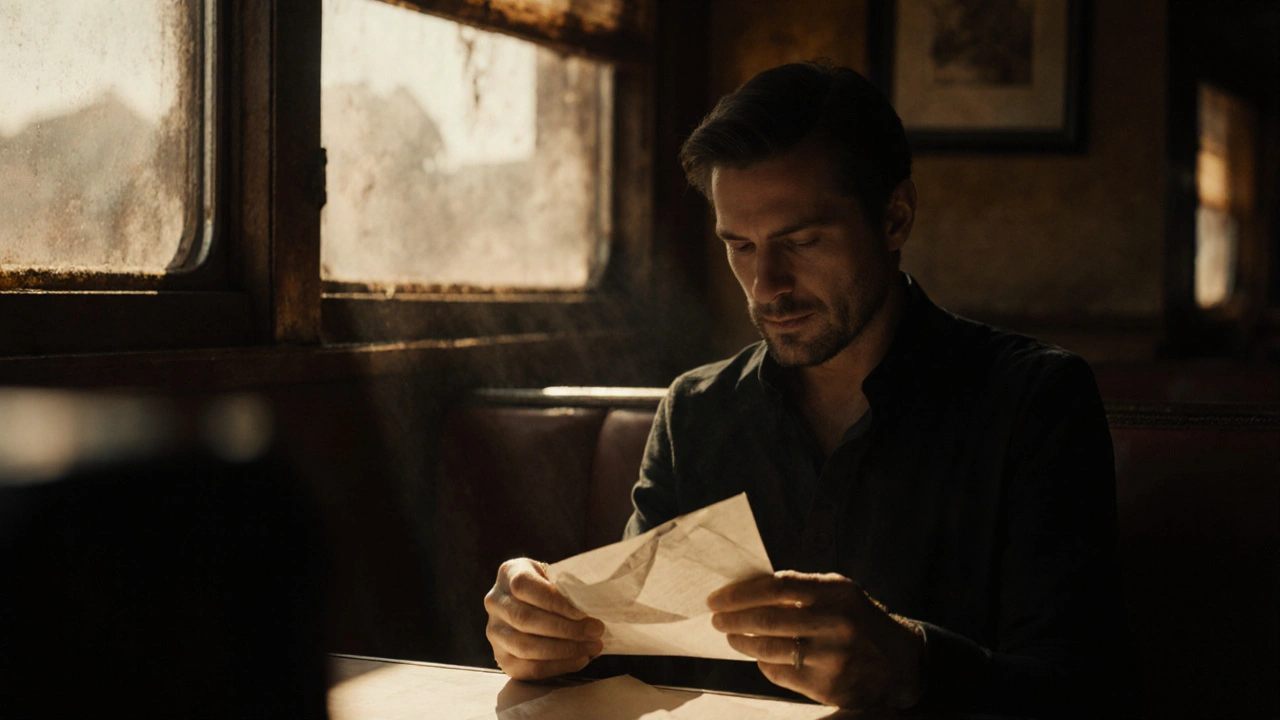
- Start with the actor’s role. Don’t just say "the lead was great." Say: "The actor playing a grieving father in a small-town diner brings a quiet dignity that anchors the entire film."
- Give one specific moment. "In the scene where he opens the letter, his hand trembles - not dramatically, but just enough to make you hold your breath. He doesn’t cry. He doesn’t speak. He just looks at the paper for twelve seconds. That’s all it took."
- Connect it to the story. "That moment doesn’t just show grief - it shows how grief becomes a habit. The whole film is built on that silence."
- Compare if needed. "Unlike the over-the-top performance in last year’s similar film, this one trusts the audience to feel the pain without being told."
- End with impact. "By the end, you don’t remember the plot. You remember the way he looked at the empty chair. And that’s what makes this performance unforgettable."
That’s it. No jargon. No fluff. Just clear, specific, honest observation.
Final Thought: Acting Is the Last Honest Thing in Movies
Special effects can be faked. Scripts can be rewritten. Directors can be replaced. But a real performance? That’s raw. It’s human. It’s the one thing a film can’t fake.
When you write a film review, you’re not just talking about a movie. You’re talking about a person who stood in front of a camera, opened up, and let you see something real. That’s not just art. It’s courage.
So next time you watch a film, don’t just watch the story. Watch the person telling it. And if you write about it - make sure you’re writing about the truth they gave you, not just what you wanted to see.
How do you critique acting without being too subjective?
Subjectivity is part of it, but you ground your opinion in observable details. Instead of saying "I didn’t like it," point to what you saw: "The actor’s voice didn’t change across emotional scenes," or "Their eye contact with other characters felt rehearsed, not spontaneous." These are measurable behaviors, not feelings.
Can a bad script ruin a good performance?
Yes, but not always. A weak script can limit an actor’s tools, but great actors find ways to elevate material. Look at the performances in Knives Out - the dialogue is clever but not deep, yet the actors give their characters emotional weight that isn’t on the page. The script sets the stage; the actor builds the house.
Do voice actors get the same level of critique as on-screen actors?
Absolutely. Voice acting requires the same emotional precision - just without body language. Think of the way Mark Hamill voiced the Joker: every laugh, every hiss, every pause carried menace. You don’t need to see the face to feel the character. A great voice performance is just as visible - if not more so - than a physical one.
What’s the difference between a performance and an impression?
An impression copies. A performance transforms. An impression of Clint Eastwood sounds like him. A performance as Clint Eastwood makes you forget you’re watching an imitation - you believe you’re watching the character. The best actors don’t mimic; they inhabit.
Is it fair to judge a young actor’s performance the same as a veteran’s?
Yes - but with context. A 16-year-old carrying a dramatic lead role deserves the same level of scrutiny as a seasoned actor. But you also consider their experience. Did they exceed expectations? Did they hold their own against seasoned co-stars? That’s the real question, not whether they’re "perfect."
Next Steps: Practice Your Critique
Grab a film you’ve seen recently. Watch it once for the story. Watch it again - this time, mute the sound. Just watch the actors. What do their hands do? How do they move through space? What do their eyes say when they’re not speaking?
Then write three sentences about one moment. No fluff. Just what you saw and why it mattered. That’s the start of a real performance critique. You don’t need to be a critic. You just need to pay attention.







Comments(10)