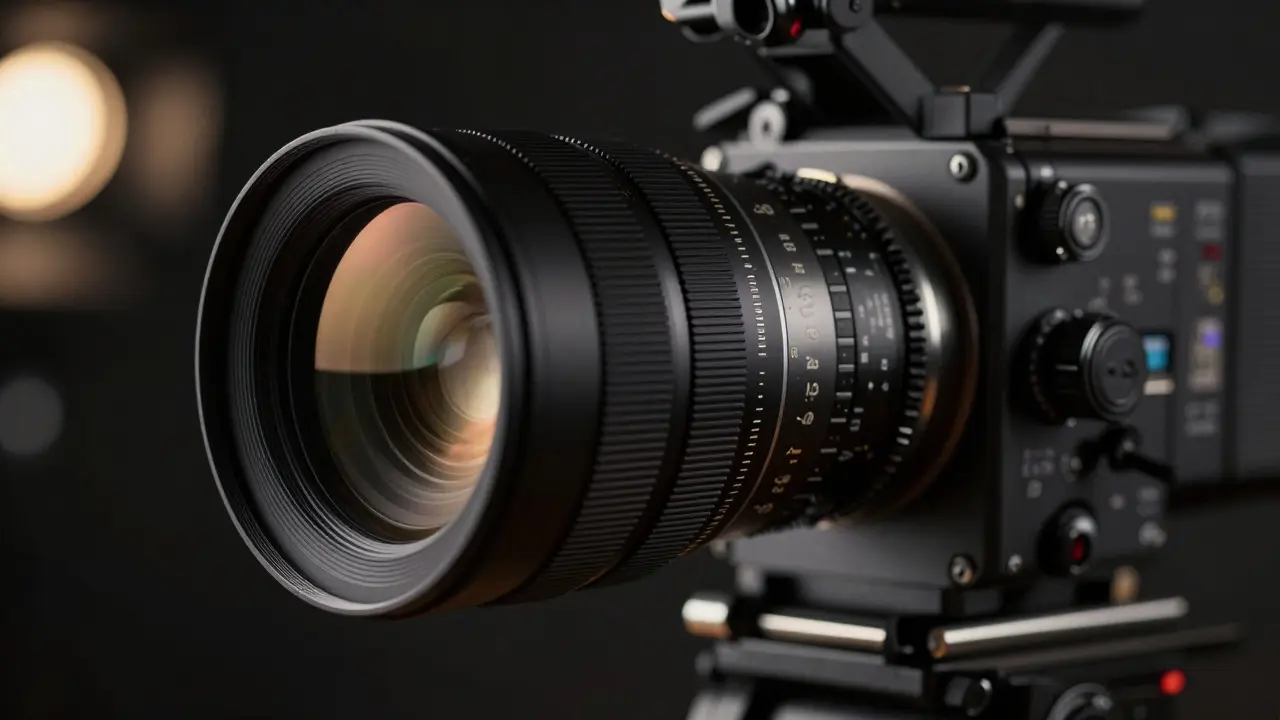
There is a distinct hum in the air when you switch from a standard Spherical Lens to an Anamorphic Lens. It’s not just about the look; it’s about how light interacts with the sensor and how your audience perceives depth. For many directors and cinematographers, choosing between these two formats feels like picking between a reliable sedan and a vintage sports car. One gets you there safely and predictably. The other demands respect but rewards you with a character that digital sensors often struggle to replicate naturally.
If you are planning a shoot in 2026, the debate isn't just aesthetic anymore. It involves file sizes, post-production workflows, and the specific texture of the image you want to sell. This guide breaks down the technical realities, the visual signatures, and the practical trade-offs of using spherical versus anamorphic glass. We will look at why some productions stick strictly to one format while others mix them, and what that means for your budget and timeline.
The Core Difference: How Light Hits the Sensor
To understand the choice, you have to understand the geometry. A Spherical Lens projects a circular image onto the camera sensor. This is the standard way most photography and video cameras work. The image circle covers the sensor uniformly, providing consistent sharpness across the frame unless vignetting occurs.
An Anamorphic Lens, however, squeezes the horizontal dimension of the image. Think of it as compressing a wide scene into a narrower space on the sensor. When you play back the footage, you unsqueeze it (de-squeeze) to reveal the original aspect ratio, typically 2.39:1 or 2.00:1. This process creates unique optical artifacts that spherical lenses simply do not produce. The most famous of these are horizontal flares and oval bokeh. These aren't bugs; they are features that give anamorphic images their cinematic weight.
| Feature | Spherical Lenses | Anamorphic Lenses |
|---|---|---|
| Image Shape | Circular projection | Elliptical/Squeezed projection |
| Aspect Ratio | Natively supports 16:9, 4:3, etc. | Requires de-squeeze for widescreen (2.39:1) |
| Bokeh Shape | Round circles | Oval/Elliptical shapes |
| Flare Characteristics | Vertical or soft blobs | Horizontal streaks (anamorphic flare) |
| Depth of Field | Standard falloff | Perceived deeper due to squeeze |
| File Size Impact | Standard resolution | Higher pixel density horizontally |
Visual Signatures: What You Actually See
When you watch a film shot on anamorphic glass, you notice the "breathing" of the image. As focus shifts, the horizontal lines can appear to move slightly more than vertical ones. This is called breathing, and while it can be distracting if excessive, it adds a organic quality that static digital sensors sometimes lack. In contrast, modern spherical lenses, especially those designed for high-end cinema cameras like ARRI Alexa or Sony Venice, offer extremely stable focus breathing profiles.
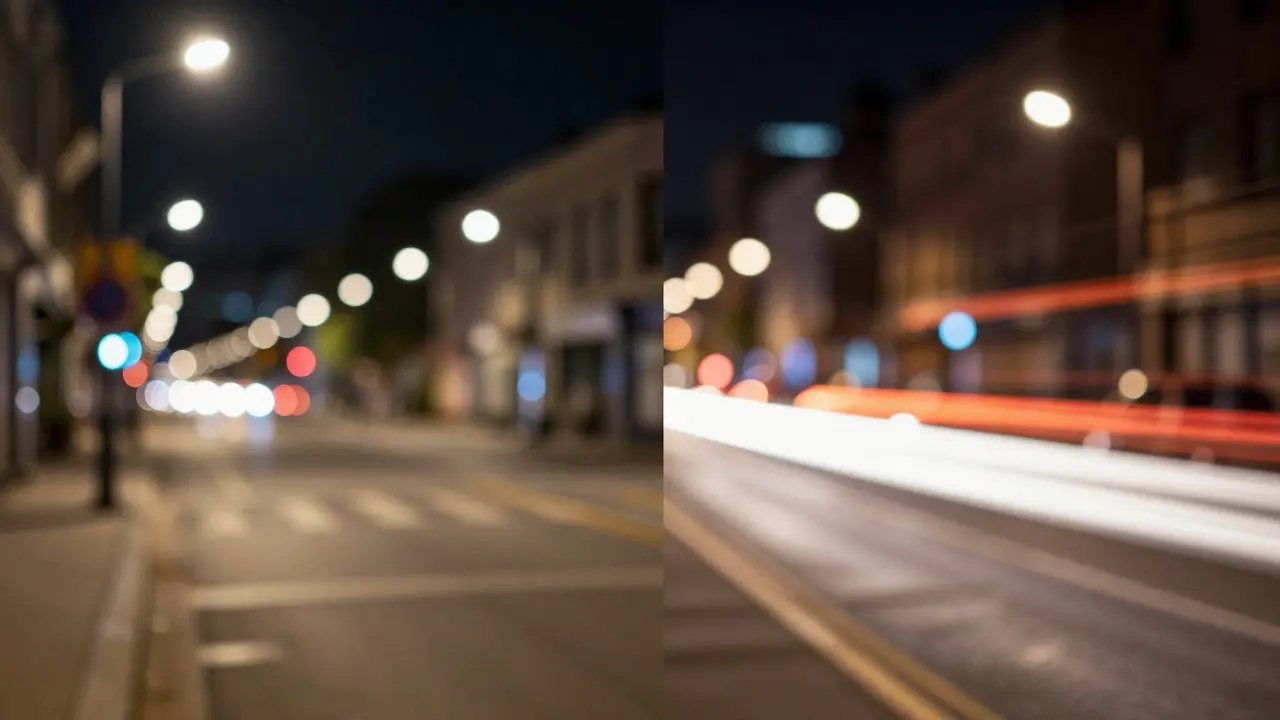
The bokeh difference is immediate. In a spherical shot, out-of-focus highlights are perfect circles. In an anamorphic shot, they stretch into ovals. This stretching happens because the lens squeezes the horizontal axis. If you have a street lamp in the background, a spherical lens renders it as a round dot. An anamorphic lens turns it into a pill shape. This subtle detail helps the viewer's brain interpret depth differently. The oval shapes suggest a wider field of view than the sensor physically captured, creating a sense of expansiveness.
Then there are the flares. Anamorphic flares are horizontal streaks of light that cut across the frame. They are caused by the cylindrical elements inside the lens interacting with bright light sources. Spherical flares tend to be softer, blob-like, or vertical depending on the aperture blade design. Many directors use anamorphic flares intentionally to add drama to sunsets or city lights. However, controlling them is harder. A single stray light source can ruin a carefully composed shot if the flare stretches too far. Spherical lenses offer more predictable flare behavior, which is why they remain popular for commercial work where consistency is key.
Technical Workflows and Post-Production Challenges
Choosing anamorphic isn't just a creative decision; it's a logistical one. Because anamorphic lenses squeeze the image, you need to capture more horizontal pixels to maintain detail. This means you often have to shoot at higher resolutions or use larger sensors to avoid losing quality during the de-squeeze process. For example, shooting on a full-frame sensor with an anamorphic lens might require capturing 8K footage to get a clean 4K deliverable after de-squeezing. This increases storage costs and processing power requirements significantly.
In post-production, you must apply a de-squeeze effect. This is usually done in software like DaVinci Resolve or Adobe Premiere Pro. The process is straightforward, but it introduces potential artifacts if not handled correctly. Edge sharpening issues can occur because the horizontal pixels are stretched vertically. Colorists also note that anamorphic images can have different color rendering characteristics due to the additional glass elements. Spherical workflows are simpler. You shoot, you edit, you grade. There is no mathematical transformation required to restore the image geometry. This simplicity translates to faster turnaround times, which matters in tight production schedules.
Another technical consideration is chromatic aberration. Anamorphic lenses, particularly older models, are prone to purple fringing around high-contrast edges. This is because the cylindrical elements separate colors differently than spherical elements. Modern anamorphic lenses have improved this, but it remains a factor. Spherical lenses generally handle color separation better, offering cleaner edges without heavy post-production correction. If your project relies on sharp text or fine details, spherical might be the safer bet.
Budget Implications: Cost of Glass vs. Cost of Time
Lens rental prices vary widely, but anamorphic sets are typically more expensive than equivalent spherical sets. This is partly due to lower production volumes and the complexity of manufacturing cylindrical optics. A high-end anamorphic set from manufacturers like Cooke, Atlas, or Kowa can cost 20-30% more per day than a comparable spherical set from Zeiss or Canon. However, the total cost of ownership includes more than just the daily rate.
Consider the time spent in post. If you choose anamorphic, your editor and colorist need to account for the de-squeeze workflow. This adds hours to the grading process. Additionally, VFX artists may need to match plates with anamorphic distortion, which complicates compositing tasks. Spherical shots are easier to integrate with CGI elements because the geometry is uniform. For productions with heavy visual effects, the savings in post-production time often outweigh the initial cost difference of the lenses.
On the other hand, if you are shooting a narrative feature with minimal VFX, the aesthetic value of anamorphic might justify the extra expense. The unique look can help market the film, signaling a certain level of craftsmanship to audiences. Streaming platforms like Netflix and Amazon Prime Video have embraced anamorphic looks in recent years, suggesting that the demand for this style is growing. Still, it depends on the genre. Action films often prefer spherical for its stability and clarity. Drama and romance films lean toward anamorphic for its emotional texture and depth.
Hybrid Approaches: Mixing Formats in One Production
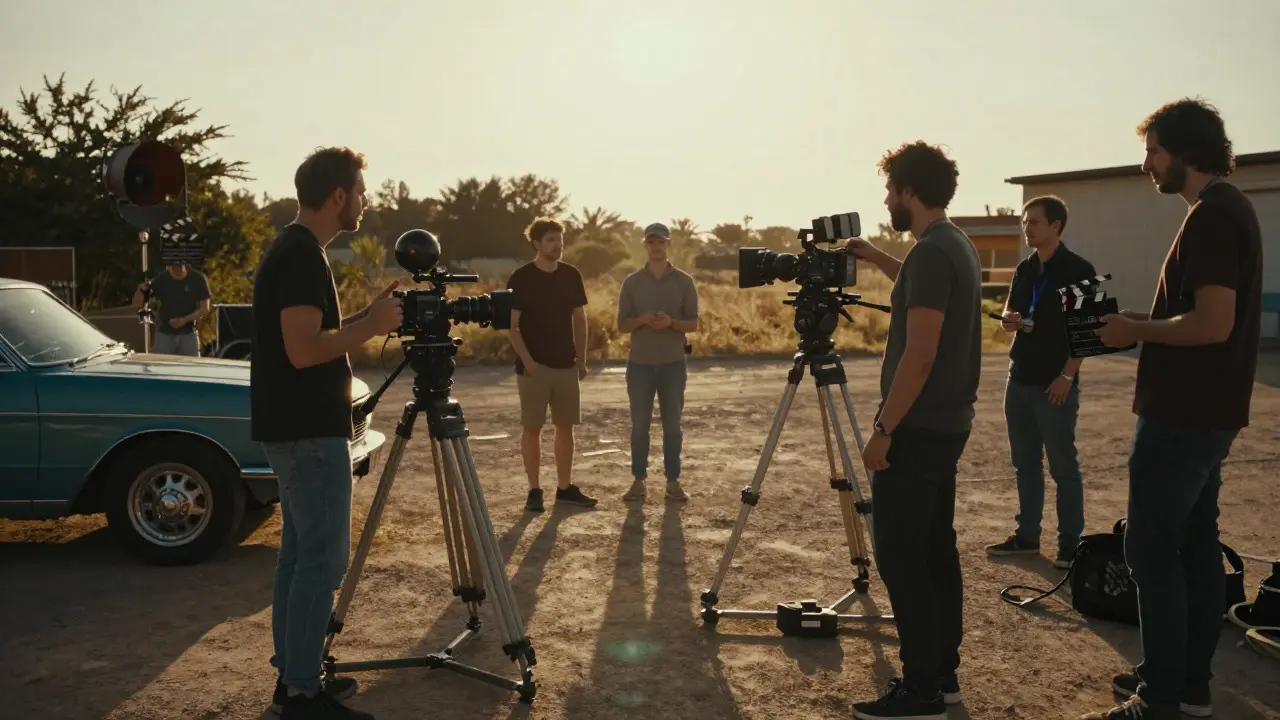
You don't have to pick one side forever. Many modern productions mix spherical and anamorphic lenses within the same film. This technique allows directors to shift the visual tone based on the scene. For instance, you might use anamorphic lenses for intimate indoor scenes to create a claustrophobic yet deep feel, and switch to spherical lenses for fast-paced action sequences where clarity and speed are paramount.
This hybrid approach requires careful planning. Your director of photography needs to ensure that the transition between formats doesn't feel jarring. Matching the color science and contrast curves between the two types of glass is crucial. Some cinematographers shoot test frames with both lens types under identical lighting conditions to create a reference chart for the colorist. This ensures that when you cut from an anamorphic shot to a spherical one, the change in look feels intentional rather than accidental.
Camera settings also play a role. Aperture choices affect the amount of anamorphic flare and bokeh size. Shooting wide open (e.g., f/1.4) maximizes the oval bokeh and horizontal flares. Stopping down (e.g., f/5.6) reduces these effects, making the image look more similar to a spherical shot. By adjusting the aperture, you can control how "anamorphic" the image appears, giving you flexibility within a single setup.
Choosing the Right Tool for Your Story
So, how do you decide? Start with your story. Ask yourself: Does my narrative benefit from a sense of vastness and emotional depth? If yes, anamorphic might be the right choice. Do I need maximum clarity, stability, and ease of post-production? Then spherical is likely your best friend. Consider your audience. If you are targeting cinephiles who appreciate traditional filmmaking aesthetics, anamorphic signals that commitment. If you are creating content for social media or commercial clients who prioritize efficiency, spherical keeps things simple.
Test before you commit. Rent both types of lenses for a day and shoot the same scene with each. Compare the results side-by-side. Look at the bokeh, the flares, and the overall mood. Talk to your colorist early. Ask them about their experience with de-squeezing and matching color between formats. Their input can save you headaches later. Remember, there is no wrong answer. Both spherical and anamorphic lenses are powerful tools. The key is understanding what each brings to the table and aligning that with your creative vision.
Ultimately, the choice between spherical and anamorphic lenses is about storytelling. It’s about how you want the audience to feel when they watch your film. Whether you choose the predictable precision of spherical glass or the dramatic flair of anamorphic optics, make sure it serves the story. The technology is there to support your vision, not dictate it. Choose wisely, test thoroughly, and let the image speak for itself.
Can you use anamorphic lenses on any cinema camera?
Most modern cinema cameras can use anamorphic lenses, but sensor size matters. Full-frame sensors capture more of the anamorphic image circle, allowing for higher resolution after de-squeezing. Super 35 sensors work well too, but you may lose some edge detail. Check the manufacturer's compatibility list to ensure the lens mount and image circle match your camera body.
What is the main advantage of spherical lenses over anamorphic?
Spherical lenses offer simpler post-production workflows and more predictable optical performance. They do not require de-squeezing, which saves time and reduces the risk of artifacts. They also provide sharper edges and less chromatic aberration, making them ideal for commercial work and VFX-heavy productions.
Do anamorphic lenses always create horizontal flares?
Not always. While horizontal flares are a signature trait, their intensity depends on the light source, aperture setting, and specific lens model. Some modern anamorphic lenses are designed to minimize flares for cleaner images. You can control flare strength by stopping down the aperture or positioning lights carefully.
Is anamorphic worth the extra cost for indie films?
It depends on the genre and target audience. If your film aims for a festival circuit or has a strong visual identity, anamorphic can add prestige. However, for low-budget projects with tight deadlines, spherical lenses may be more practical. Consider renting a small anamorphic set for key scenes only, mixing it with spherical for the rest, to balance cost and aesthetics.
How does anamorphic affect depth of field perception?
Anamorphic lenses create a perceived increase in depth of field because the horizontal squeeze compresses the background elements. This makes backgrounds appear sharper and more detailed relative to the foreground. It’s an optical illusion created by the de-squeeze process, but it effectively gives the image a three-dimensional quality that spherical lenses achieve differently through focal length and aperture.





Comments(7)