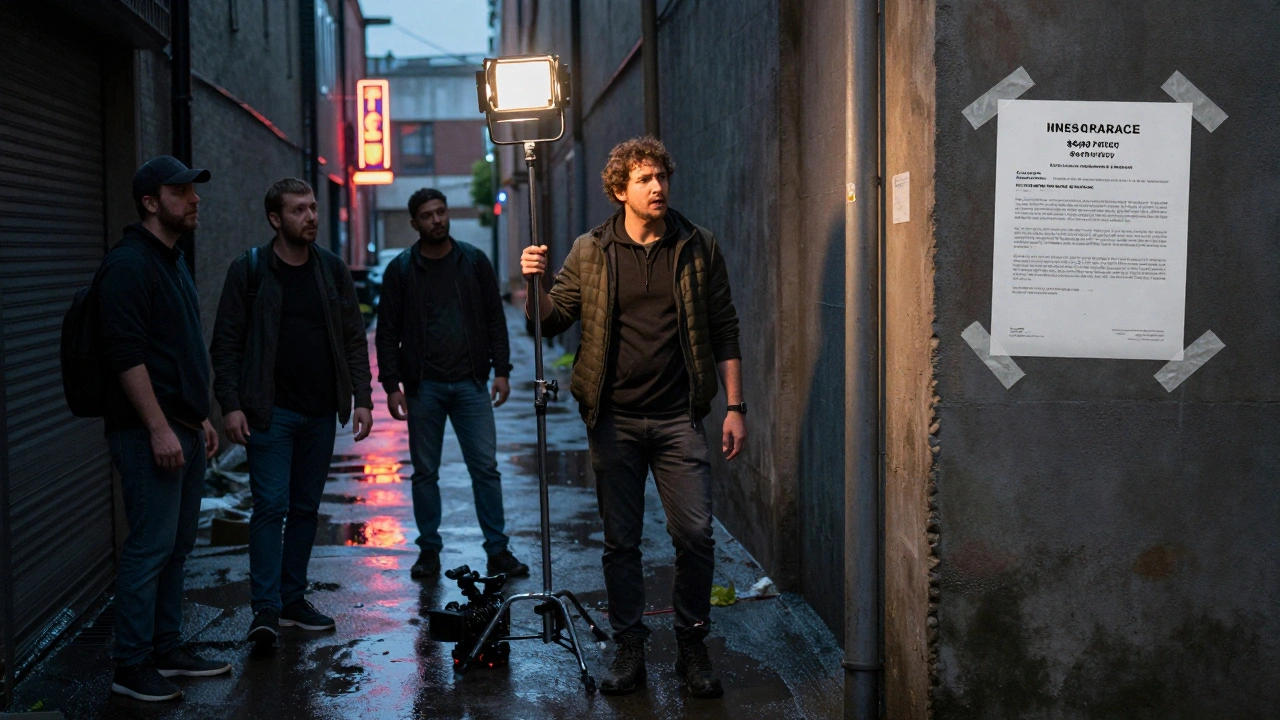
Making an independent film on a tight budget is already a high-wire act. You’re juggling cast availability, location permits, weather delays, and equipment breakdowns-all while scraping together every last dollar. But there’s one thing most first-time filmmakers forget until it’s too late: production insurance. It’s not a luxury. It’s the safety net that keeps your project from collapsing when something goes wrong.
What Happens When Things Go Wrong?
Imagine this: you’ve spent weeks scouting a downtown alley for your key scene. You’ve got your actors lined up, the camera rented, the crew on standby. Then, during setup, a crew member slips on wet pavement and breaks their wrist. The actor they were working with has a panic attack and quits. The location owner demands $5,000 for "emotional distress." Your insurance didn’t cover it. Now you’re out $12,000 in equipment deposits, two weeks of lost time, and your lead actor is gone. That’s not a hypothetical. It happened to a filmmaker in Portland last year. Their $40,000 feature stalled for six months. They lost their distributor. They had to re-cast the entire film from scratch. The only reason they didn’t lose everything? A $700 insurance policy that covered cast and crew injury, location damage, and talent cancellation. Independent films don’t have studio backing. No deep pockets. No legal teams. One accident, one missed deadline, one broken lens, and your entire project can vanish.What Insurance Do You Actually Need?
You don’t need every policy under the sun. You need the ones that protect what matters most. Here’s what most indie filmmakers actually use:- Cast and Crew Insurance - Covers medical bills if someone gets hurt on set. Most policies include liability for third parties too. Basic coverage starts around $150 for a 10-day shoot.
- Equipment Insurance - Protects cameras, lights, sound gear. If your RED camera falls off a dolly, this pays for repair or replacement. Rates vary by gear value-$5,000 in gear costs about $100 for 30 days.
- Location Insurance - Required by most venues, even public parks. Covers property damage, noise complaints, or injuries on their land. Often bundled with general liability.
- Errors & Omissions (E&O) - Not for production. This kicks in after you finish. Protects you from lawsuits over copyright, defamation, or unauthorized use of music or footage. Crucial if you plan to screen or sell your film.
- Talent Cancellation Insurance - If your lead actor gets sick, injured, or pulled into another project, this covers the cost to delay or reshoot. Often overlooked, but critical for films with one lead actor.
How to Get Coverage Without Breaking the Bank
Most people think insurance is expensive. For indie films, it’s the opposite. You can get full coverage for under $1,000 if you know where to look. Start with Producers Alliance a nonprofit that offers discounted insurance packages for independent filmmakers in the U.S.. They work with insurers like Entertainment Insurance Services a specialist provider for film and TV production and Entertainment Partners a long-standing provider offering scalable policies for low-budget films. These companies understand indie budgets. They don’t charge for extras you don’t need. Here’s how to cut costs without cutting protection:- Bundle your policies - Most providers offer a "package deal" that includes cast, equipment, and location coverage. You’ll save 20-30% compared to buying them separately.
- Shorten the policy term - Don’t buy 90 days if your shoot is 12 days. Insurers charge per day. A 10-day policy costs less than half of a 30-day one.
- Use your own gear - If you own your camera and lights, you can exclude them from equipment insurance. Just make sure you have liability coverage for third-party gear.
- Get quotes early - Waiting until the day before shooting means you pay more. Insurers charge rush fees. Get quotes two weeks ahead.
- Ask about payment plans - Many insurers let you pay in two installments. That’s $500 now, $500 after shooting.
What Most Indie Filmmakers Get Wrong
Here are the three biggest mistakes I’ve seen over 15 years of working with indie filmmakers:- Thinking "I’m just a small crew" means I don’t need it - Even a two-person team needs coverage. One slip, one broken light, one angry neighbor with a camera, and you’re liable.
- Believing your personal homeowners or renters insurance covers production - It doesn’t. Homeowners policies exclude commercial activity. If you’re shooting on your porch, that’s still a commercial use. You’re on your own if something goes wrong.
- Waiting until the last minute - Some insurers require 48-hour notice. Others need signed location releases before issuing coverage. If you’re scrambling the night before, you’ll pay more-or get denied.
Real Example: A $600 Policy That Saved a Film
In 2024, a filmmaker in Asheville shot a 7-day short film with a budget of $8,500. They used a borrowed RED camera, rented lighting, and shot in public parks and a friend’s house. They bought a bundled policy from Producers Alliance for $600: $250 for cast and crew, $200 for equipment, $150 for location. On day three, a gust of wind knocked over a light stand. It hit the rented camera, cracking the sensor. The repair cost $3,200. The insurance paid it in full. The filmmaker finished on time. The film screened at 12 festivals. It won Best Short at a regional festival. The filmmaker used the prize money to pay off the insurance. That’s the difference insurance makes.What Happens If You Skip It?
You might think, "I’ll just risk it." But the risks aren’t just financial. They’re personal. Without insurance:- You’re personally liable for injuries.
- You could lose your car, your savings, even your home if someone sues you.
- You won’t be able to screen your film at festivals-most require proof of E&O insurance.
- Distributors won’t touch your film without proof you’re covered.
- Your crew won’t show up. No one wants to work on an uninsured set.
Quick Checklist Before You Shoot
Before you roll camera, make sure you’ve done this:- Got a policy that covers your exact shoot dates
- Verified your equipment is listed (or excluded) correctly
- Confirmed your locations are named in the policy
- Printed and signed a certificate of insurance for each location
- Shared a copy with your cast and crew
- Kept the policy number and claims line on your phone
Frequently Asked Questions
Do I need insurance if I’m only shooting for one day?
Yes. Even a single-day shoot carries risk. A crew member could trip, a camera could fall, or a location owner could claim damage. Most insurers offer daily policies starting at $50. It’s cheaper than paying for one accident out of pocket.
Can I use my friend’s insurance if they’re the producer?
No. Insurance policies are tied to the named insured. If your friend is the producer and you’re not listed, you’re not covered. Even if you’re the director or DP, you’re personally liable if something goes wrong. Always get your own policy or be added as an additional insured.
What if I’m using a smartphone to shoot?
You still need insurance. Even if you’re using your phone, you’re likely using external mics, lights, or tripods. Those are equipment. You’re also still responsible for location damage and crew safety. A basic policy for under $100 covers all that.
Is Errors & Omissions insurance really necessary for a short film?
If you plan to enter festivals, submit to platforms like Vimeo On Demand, or sell your film, yes. E&O protects you from copyright claims, unauthorized use of music, or defamation. Most festivals require it. A $300 policy for a 10-minute film is a small price to pay for distribution eligibility.
Can I get insurance if I’m not a U.S. citizen?
Yes. Many insurers offer policies to non-residents filming in the U.S. You’ll need a U.S. mailing address and a valid visa or permit for filming. Some providers require a U.S.-based producer to co-sign. Producers Alliance and Entertainment Partners both work with international filmmakers.
Next Steps
If you’re planning a shoot this month:- Make a list of your gear and its estimated value
- Write down your shoot dates and locations
- Visit Producers Alliance’s website and get a quote
- Call them. They’ll walk you through the options in under 15 minutes
- Buy it before you start shooting




Comments(6)