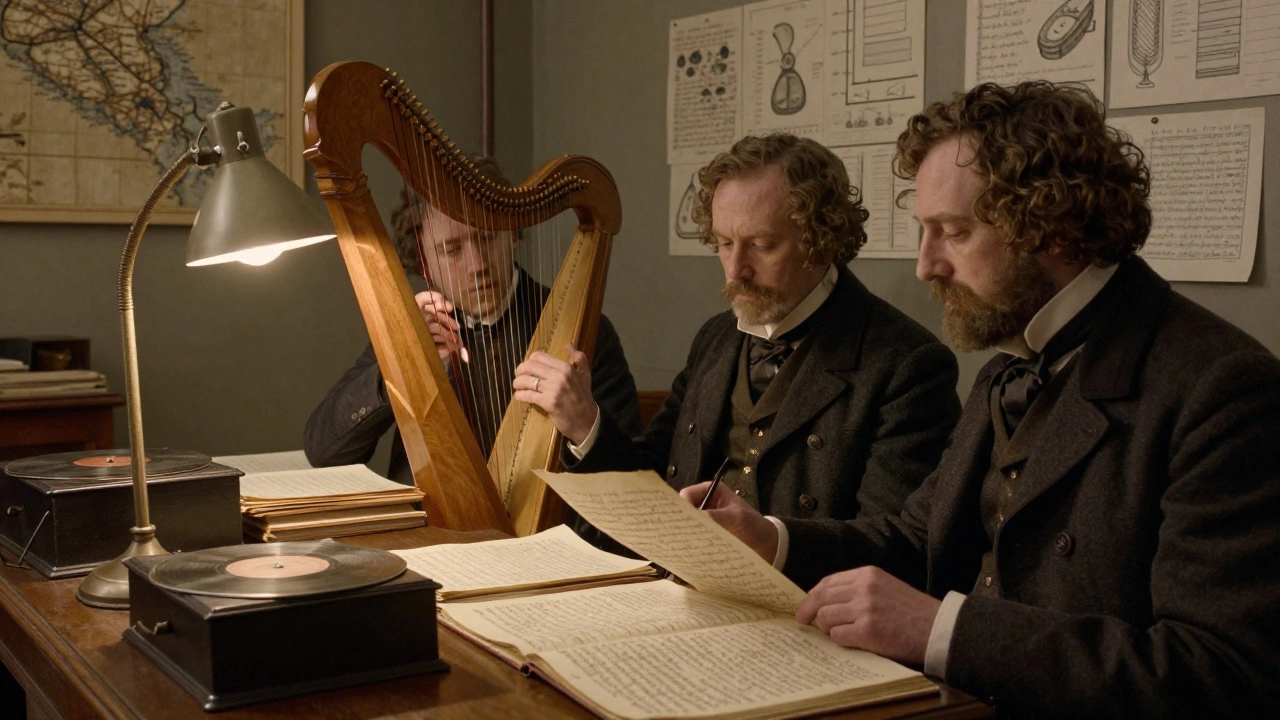
When you watch a scene in a period film where a character hums a tune while walking through a 1920s jazz club, or when a violinist plays a folk melody during a 17th-century village fair, that’s not just background noise. That’s source music-music that exists within the world of the film, played by characters or heard from a radio, a street performer, or a church organ. Unlike the orchestral score that guides your emotions from outside the story, source music is part of the setting. And getting it right takes more than picking a catchy old song. It takes deep research, cultural understanding, and sometimes, detective work.
What Exactly Is Source Music?
Source music, also called diegetic music, is any sound that the characters in the film can hear. A character turning on a radio, a band playing at a wedding, or a soldier whistling a tune while marching-all of these are source music. In period films, this kind of music doesn’t just set the mood. It anchors the audience in a specific time and place. If you’re watching a film set in 1812 Russia and hear a modern pop song, it breaks the illusion. But if you hear a correctly arranged folk dance from that era, it makes the world feel real.
Think of The Favourite (2018), set in early 18th-century England. The film uses harpsichord pieces by Handel, but not just because they’re famous. Handel was alive then, his music was performed in royal courts, and his style matched the social hierarchy shown in the film. The filmmakers didn’t just pick Baroque music-they picked the right kind of Baroque music, played on period instruments, in the right acoustic spaces.
Why Authenticity Matters More Than You Think
It’s easy to assume that audiences won’t notice if a period film uses a slightly wrong song. But they do. And not because they’re experts-they just feel it. A mismatched sound creates a subtle unease. You might not know why, but your brain says, “That doesn’t belong here.”
Take Amadeus (1984). The film uses Mozart’s actual compositions, but not just as background. The music is woven into the plot. When Salieri hears Mozart’s music for the first time, the audience hears it too-through his ears. The emotional impact comes from knowing this is the real sound of Mozart’s time, not a modern reinterpretation. That authenticity makes the scene unforgettable.
On the flip side, Outlander (TV series, 2014-present) faced backlash when a character played a modern guitar in a 1743 Scottish highland scene. Fans noticed immediately. The producers had to revise later episodes. That’s the power of source music: it’s not just about accuracy. It’s about trust.
How Do Filmmakers Find the Right Music?
It’s not enough to search YouTube for “old songs.” Researchers dig into archives, libraries, and even private collections. They work with music historians, ethnomusicologists, and instrument restorers. Here’s how the process usually works:
- Time period first: What instruments were common? What genres were popular? A 1940s American farm wouldn’t have a sitar, but it might have a fiddle or a harmonica.
- Location matters: A 19th-century Irish tavern used different tunes than a French café. Regional folk traditions vary wildly.
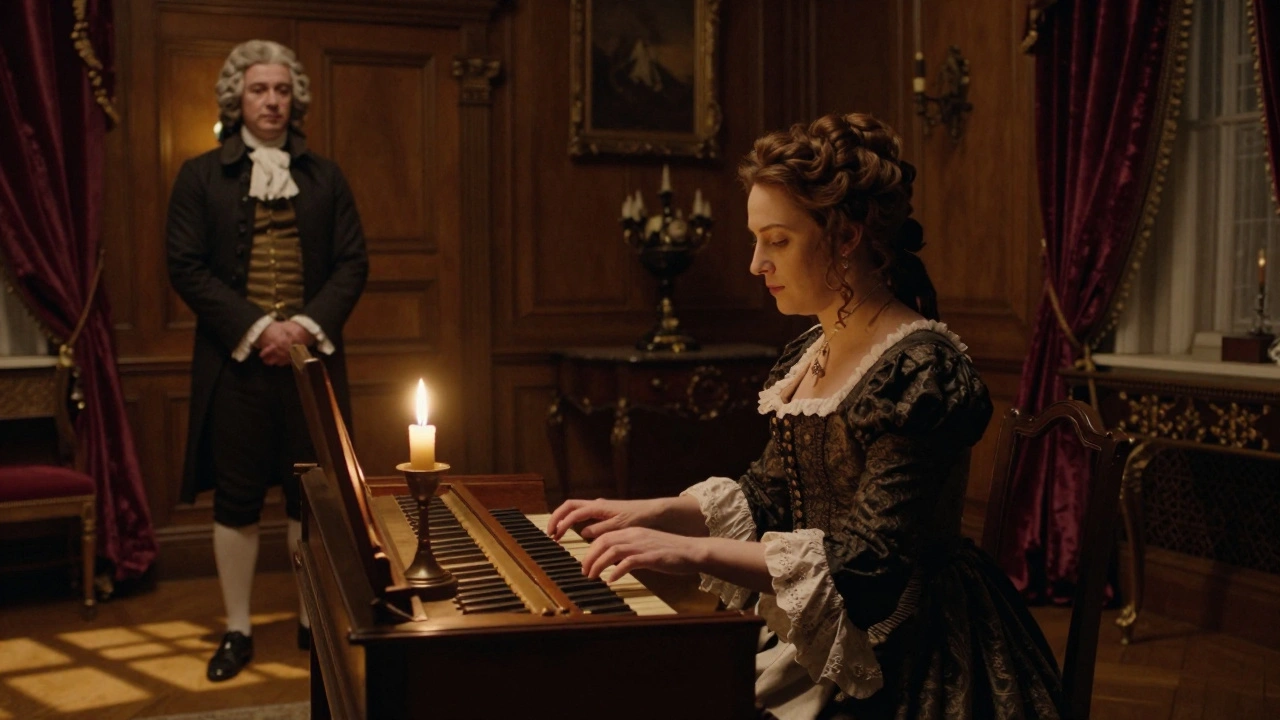
- Class and context: Who’s playing? A noblewoman might play a harp; a servant might hum a work song. The music reflects social status.
- Surviving recordings: For the 20th century, original 78 rpm records, wax cylinders, and radio broadcasts are gold. The British Library and the Library of Congress have digitized thousands of these.
- Reconstruction: For earlier centuries, scholars reconstruct music from sheet music, diaries, and instrument designs. A 16th-century lute might be built using 1580s measurements, then played with period technique.
For The Last Kingdom (2015-2020), set in 9th-century England, the team worked with the Early Music Ensemble of Oxford. They used reconstructed Norse and Anglo-Saxon instruments like the lyre and the rebec. They didn’t just play old tunes-they recreated how those instruments sounded in a stone hall, with wooden bows and gut strings.
When Authenticity Isn’t Possible
Not every film can afford a team of music archaeologists. Sometimes, the original music is lost. Sometimes, the audience expects a familiar sound-even if it’s historically inaccurate.
Take Braveheart (1995). The bagpipes used in the battle scenes are Scottish, but the melodies are modern compositions. There’s no evidence that bagpipes were used in 13th-century warfare the way they’re shown. Yet, audiences connected with the sound. The filmmakers chose emotional impact over accuracy.
That’s a valid choice-but it’s a choice. Some films, like Barry Lyndon (1975), go all-in on authenticity. Director Stanley Kubrick used only music from the 18th century, even if it meant the score was quiet and sparse. Critics called it “cold.” But history buffs praised it as one of the most accurate period films ever made.
The truth? There’s no single rule. It depends on the film’s goal. Is it trying to educate? Then accuracy wins. Is it trying to move you? Then emotion might come first.
The Hidden Work Behind the Scenes
Behind every great period film’s source music is a team that spends months, sometimes years, tracking down forgotten tunes. One researcher for The Crown spent six months listening to BBC radio archives from the 1950s to find the exact version of “God Save the Queen” played during Princess Elizabeth’s coronation. Another team for Mad Men (2007-2015) collected over 300 original 1960s singles to ensure every jukebox song matched the episode’s year.
These aren’t just music supervisors. They’re historians. They check patent records to confirm when a certain instrument was manufactured. They read diaries to find out what songs soldiers sang in trenches. They compare sheet music from different publishers to find the most likely version performed in a specific town.
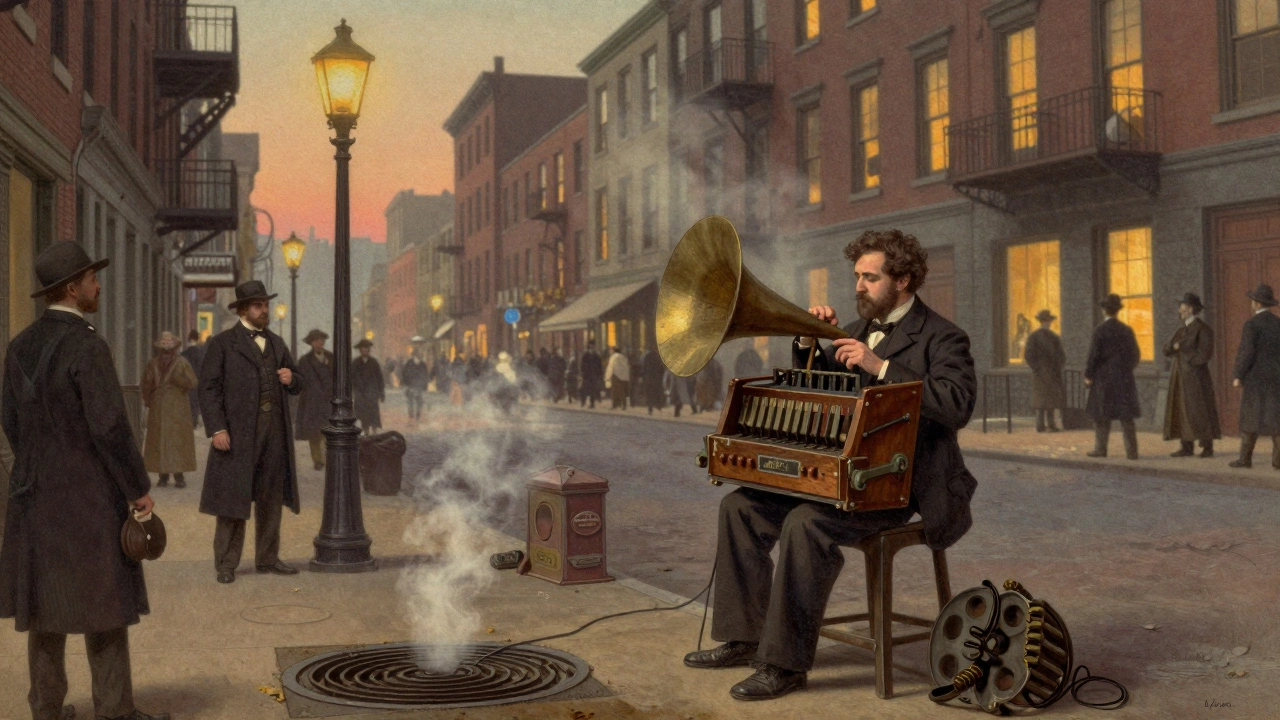
For The Alienist (2018), set in 1896 New York, the team found a recording of a street organ from 1892. They used that as the basis for a scene where a street performer plays outside a tenement. The tune wasn’t famous-but it was real. And that made all the difference.
What Happens When You Get It Wrong?
Bad source music doesn’t just distract-it misrepresents. A film that uses a 1950s rock song in a 1920s speakeasy doesn’t just annoy purists. It erases the actual cultural sounds of that time. Jazz, blues, and ragtime were the real music of the Roaring Twenties. Replacing them with Elvis-style rock is not just inaccurate-it’s culturally flattening.
There’s also the risk of cultural appropriation. Using Native American chants in a Western film without understanding their sacred context, or borrowing African rhythms without crediting their origins, can cause real harm. Authenticity isn’t just about dates and instruments. It’s about respect.
That’s why many modern productions now consult descendant communities. For The Last of the Mohicans (1992), the filmmakers worked with Mohawk elders to ensure the drum patterns and vocal chants were culturally appropriate. That level of collaboration doesn’t just make the film better-it makes it ethical.
How to Spot Good Source Music
You don’t need to be a music scholar to notice when source music is done right. Here’s what to listen for:
- Instrumentation: Does the instrument exist in that time and place? A piano in 1700s rural France? Unlikely. A lute? More plausible.
- Performance style: Is the music played with vibrato? With a bow? With a specific rhythm? These details matter.
- Context: Who’s playing? Why? Is it a celebration? A funeral? A protest? The music should match the emotion.
- Repetition: Real music isn’t always perfect. If a character plays the same tune twice, does it sound slightly different? That’s human.
When source music feels natural-when you forget it’s music at all-you know the filmmakers did their job.
Final Thought: The Sound of History
Period films don’t just show us how people dressed or spoke. They show us how they listened. The songs they sang, the tunes they danced to, the melodies that filled their homes-these are part of their identity. Source music is one of the quietest, most powerful tools filmmakers have to bring history to life.
It’s not about nostalgia. It’s about truth. And when done right, it doesn’t just entertain-it connects us to a world we’ll never live in, but can still hear.
What’s the difference between source music and a film score?
Source music is heard by characters in the film-it comes from a source within the story, like a radio, a band, or a character singing. A film score is background music added by the filmmakers to guide emotions, and the characters can’t hear it. For example, if a character plays a violin in a scene, that’s source music. If the strings swell as the hero rides into battle, that’s the score.
Can source music be modern if the film is historical?
Yes, but it’s rare and intentional. Some films, like Pride & Prejudice (2005), use modern indie songs to create emotional resonance, even if they’re not historically accurate. These choices are usually explained as artistic license. But most period films avoid this because it breaks immersion. When it’s done, it’s usually for a specific reason-like highlighting timelessness or irony.
How do filmmakers find music from centuries ago?
They use archives like the British Library, the Library of Congress, and university collections. Many 18th- and 19th-century sheet music copies survive. Researchers also study instrument designs, diaries, and church records. For pre-recording eras, they reconstruct music from notation and build replicas of old instruments to hear how they actually sounded.
Is source music more important than the score in period films?
It’s not a competition-they serve different roles. The score shapes emotion; source music builds world. But for authenticity, source music is more critical. If the source music feels fake, the whole world feels fake. The score can be more flexible, but source music anchors the setting. That’s why teams spend more time researching source music.
What’s the most common mistake in period film music?
Using music from the wrong century. A 1920s film using 1940s swing music is a classic error. Another is using instruments that didn’t exist yet-like a modern electric guitar in a Civil War scene. Also, assuming all folk music from a region is the same. Irish, Scottish, and Welsh tunes from the same era can be completely different.




Comments(10)