Quick Takeaways for Cinephiles
- ScreenX expands the field of view by using three projections, including the side walls.
- Composition shifts from a central focus to a spatial experience, requiring new rules for negative space.
- Editing must be carefully timed to prevent "visual noise" or distracting jumps in peripheral vision.
- Panoramic formats prioritize environmental storytelling over tight, character-driven close-ups.
What exactly is ScreenX?
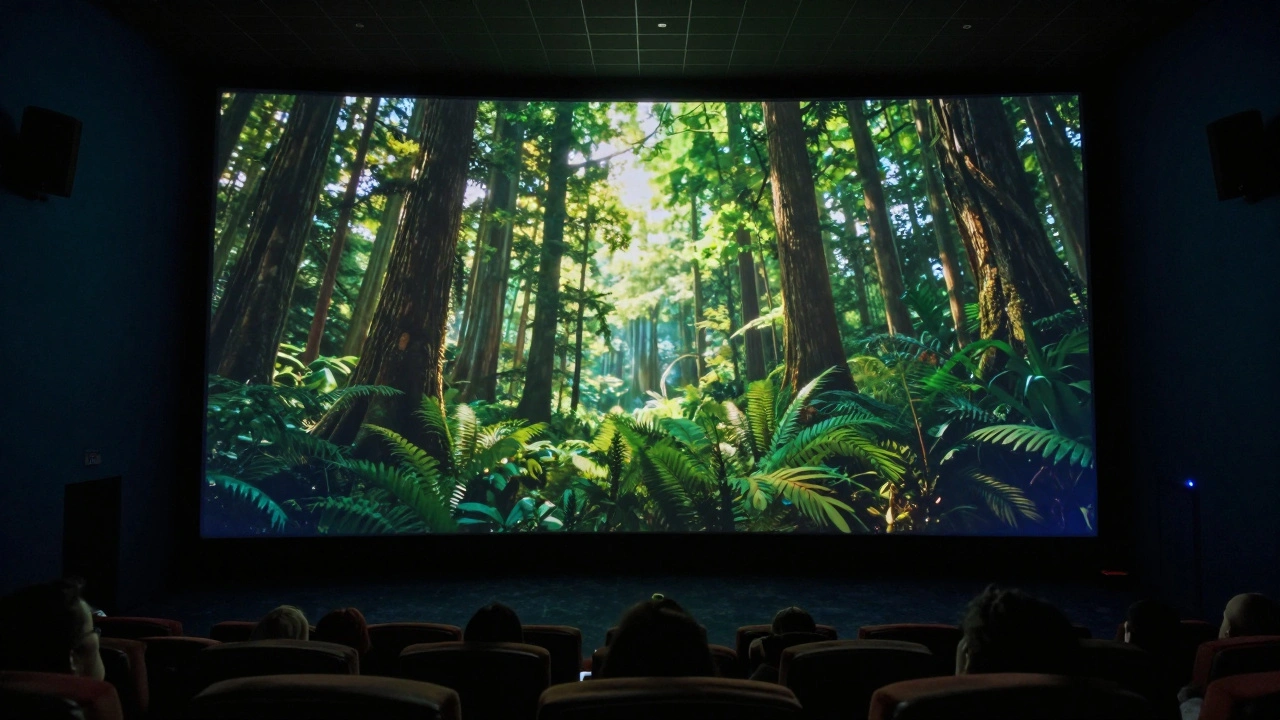
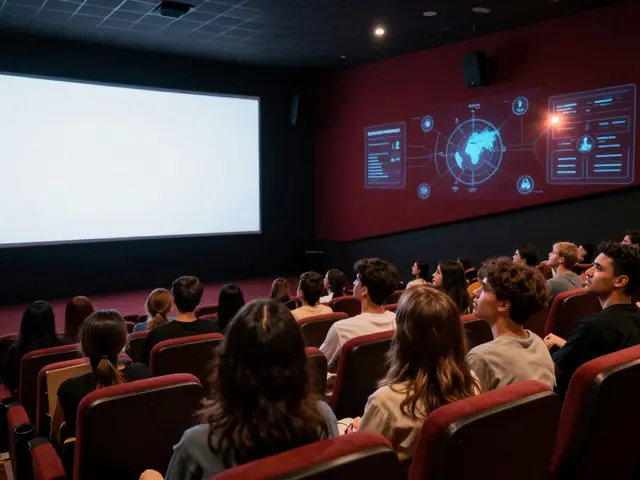
To get this right, we have to start with the tech. ScreenX is a multi-projection cinema format that expands the screen beyond the front wall to include the left and right walls of the theater. Unlike a 360-degree dome, it's a 270-degree experience. It uses three separate projectors: one for the main screen and two for the sides. The magic happens when the film transitions from a standard 2.39:1 aspect ratio to a full panoramic view, effectively pulling the audience into the scene.
This is a huge leap from Panoramic Projection, which usually refers to wide-angle images or curved screens designed to mimic the human eye's natural field of view. While a standard IMAX screen is massive and immersive, ScreenX actually breaks the boundary of the "window" and turns the room itself into the display. It’s the difference between looking at a painting of a forest and actually standing in the middle of the woods.
The Death of the Traditional Frame
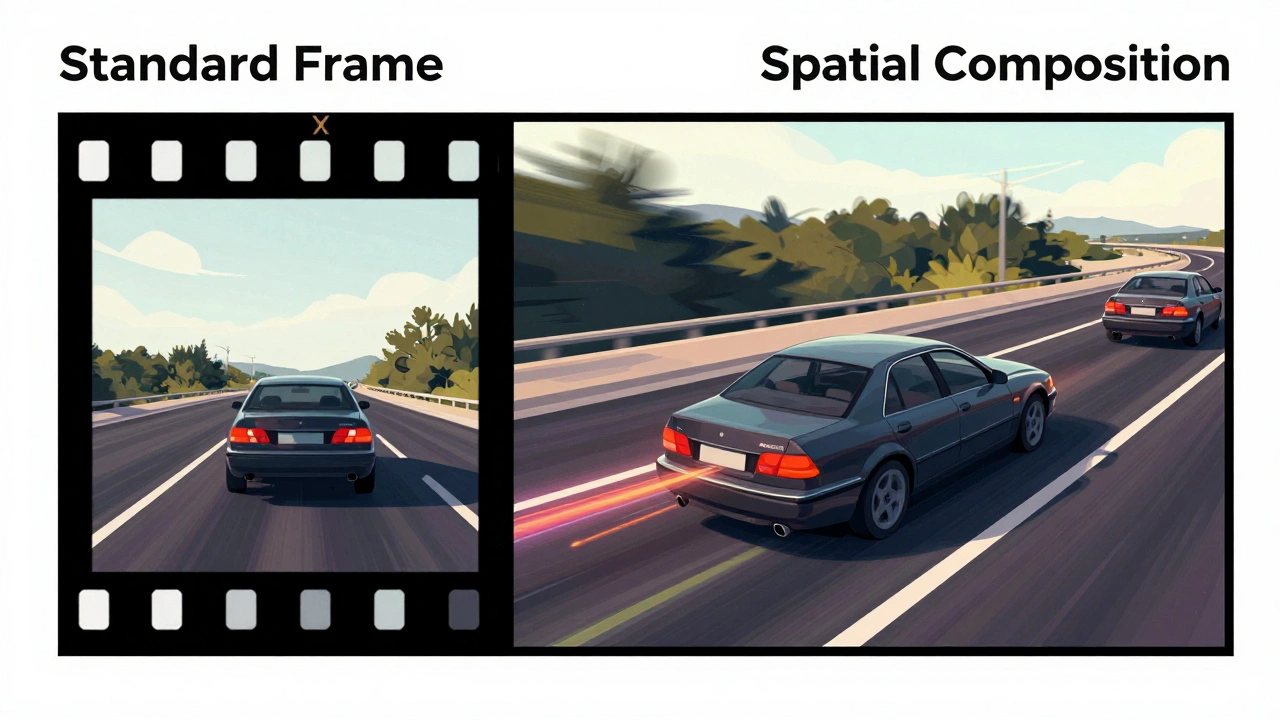
In a normal movie, the director controls exactly what you see by cropping the world. If they want you to feel claustrophobic, they use a tight close-up. If they want you to feel small, they use a wide shot. But in a 270-degree environment, the film composition changes because the audience's peripheral vision is now active. You can't just "crop" the world anymore.
Directors now have to deal with "spatial composition." Instead of just thinking about the X and Y axes (left-right, up-down), they have to think about the Z-axis (depth) and the wrap-around effect. If a car chases a target across the screen, the action doesn't just disappear off the right edge; it continues onto the right wall. This means the editor has to maintain a consistent sense of direction. If a character exits right on the main screen but appears on the left side wall, the viewer's brain will glitch, and the immersion is broken.
Think about a scene in a crowded city. In a standard format, the background is just a backdrop. In ScreenX, the city becomes an entity. The side screens can be used to display ambient movement-people walking by, traffic flowing-while the main screen keeps the focus on the dialogue. This creates a layering effect where the periphery provides context and the center provides the story.
The Editing Puzzle: Avoiding Visual Noise
Editing for multi-screen formats is a tightrope walk. In a standard film, a "hard cut" is a tool to move time or place. In a panoramic format, a sudden change on the side walls can feel like a flashbang grenade going off in your peripheral vision. Because humans are evolutionary wired to notice movement in their periphery (it's how our ancestors spotted predators), any sudden jump in the side projections can be incredibly distracting.
To fix this, editors use "soft transitions." Instead of a sharp cut, they might bleed a color or a movement from the center screen out to the sides. There is also the challenge of synchronization. The Frame Rate must be perfectly aligned across all three projectors. If the side walls are even a few milliseconds off from the main screen, the audience will experience motion sickness-a phenomenon similar to what happens in poorly optimized VR environments.
| Feature | Standard (2D/3D) | ScreenX (270°) |
|---|---|---|
| Focus Point | Centralized/Fixed | Distributed/Peripheral |
| Negative Space | Used for balance | Used for world-building |
| Cutting Style | Jump cuts common | Fluid, sweeping transitions |
| Audience Role | Observer (Voyeur) | Participant (Inside the scene) |
Environmental Storytelling and the 'Breathe' Effect
One of the coolest things about these formats is the ability to let a scene "breathe." In traditional filmmaking, a wide shot often feels static. In a panoramic setup, the side screens can be used to simulate a 360-degree atmosphere. For example, in a sci-fi movie, while the characters are arguing in the center, the side walls could show the slow rotation of a space station or the drifting of asteroids. This doesn't distract from the plot; it reinforces the setting without needing a dedicated "establishing shot."
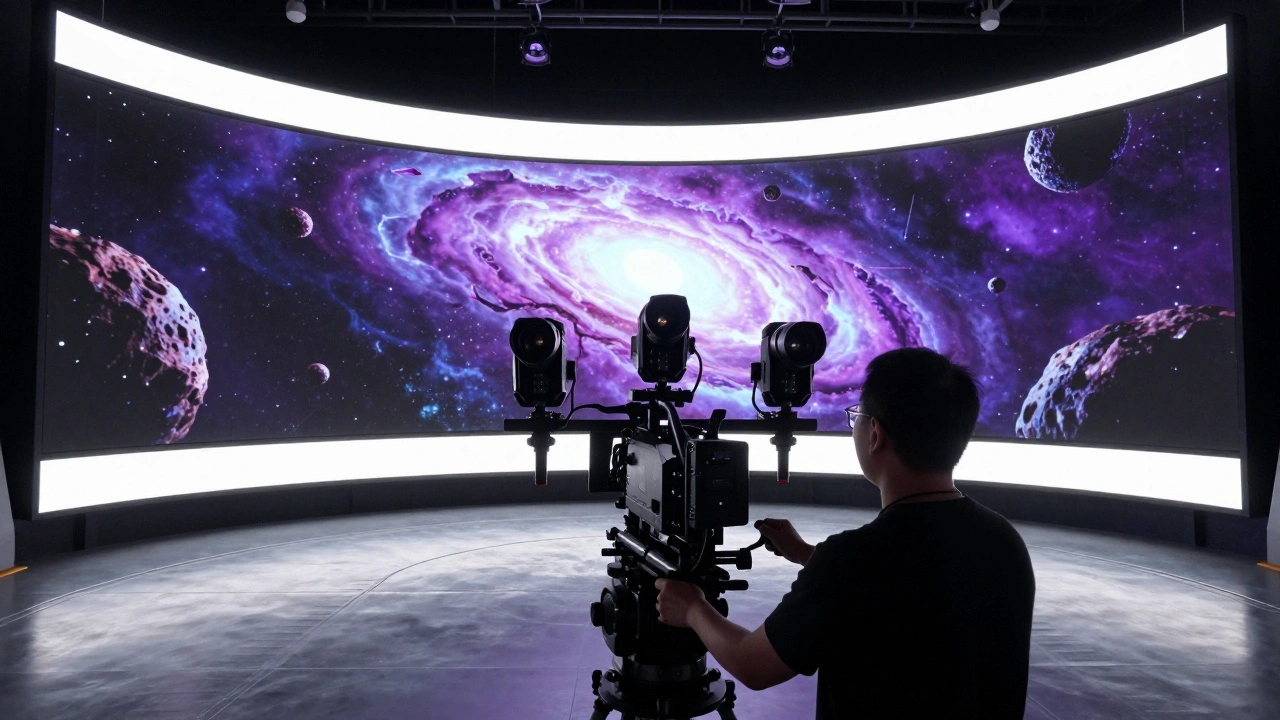
This requires a shift in how Cinematography is handled. To achieve this, some productions use Multi-Camera Rigs that capture three simultaneous angles. Others use CGI to extend the edges of a shot, painting in a digital world that stretches beyond the original lens. The goal is to make the transition from the center to the side feel seamless, rather than like three separate monitors taped together.
The Psychological Impact on the Viewer
Why do this? Because our brains process visual information differently when it fills our field of view. When you see an image that covers your periphery, your brain stops treating it as a "movie" and starts treating it as a "place." This triggers a higher level of emotional response. A horror movie using ScreenX can make you feel trapped because the darkness isn't just in front of you-it's beside you. An action sequence feels faster because the motion spans a wider physical area of your vision.
However, there is a risk of "sensory overload." If a director puts too much action on the side walls, the audience will struggle to know where to look. The human eye can only focus on one point at a time. If the main plot is happening in the center but a giant explosion is happening on the right wall, the viewer will likely miss a key line of dialogue. The trick is to use the sides for *complementary* information, not *competing* information.
Practical Implementation: The Workflow
Creating a ScreenX film isn't as simple as just stretching the image. It involves a specific pipeline:
- Planning: The director marks "panoramic moments" in the script-scenes where the world needs to expand.
- Capture: Using specialized wide-angle lenses or triple-camera setups to gather raw data for all three screens.
- Stitching: In post-production, the three feeds are aligned so the horizon line remains perfectly straight across the room.
- Sizing: The editor decides when the film stays in the center (to maintain intimacy) and when it "bursts" into the sides (to create scale).
Does ScreenX use 3D glasses?
Not necessarily. ScreenX is a projection format, not a depth format. While it can be combined with 3D technology, the multi-screen effect works perfectly in 2D because it relies on physical scale and peripheral vision rather than optical illusions of depth.
Will this replace traditional cinema screens?
Unlikely. Most films are designed for a specific emotional rhythm that works best in a traditional frame. ScreenX is a specialized tool for specific types of scenes-like vistas, battlefields, or high-speed chases-rather than a total replacement for the standard cinema experience.
How does it differ from IMAX?
IMAX focuses on massive scale, extreme resolution, and a slightly curved screen that fills most of your vision. ScreenX goes further by literally using the side walls of the room, expanding the image to a 270-degree wrap-around, which is physically impossible for a single IMAX screen to do.
Can any movie be converted to ScreenX?
Technically, yes, but it often looks poor if not planned. To make it look natural, studios use "extension" techniques-using CGI or mirrored footage to fill the side walls. However, the best results come from movies filmed specifically for the format.
Does it cause motion sickness?
If edited poorly, yes. Because the side screens stimulate the peripheral vision, any discrepancy between the movement on screen and the viewer's stationary position can cause nausea. This is why strict synchronization and smooth transitions are required.
What's Next for the Audience?
If you're a filmmaker or a student of cinema, the best way to understand this is to look at how it changes the "gaze." We are moving away from the era of the director telling us exactly what to look at, and moving toward an era where the director creates an environment and lets our eyes wander. This is a fundamental shift in the psychology of viewing.
For those who find this interesting, the next step is to explore the world of Virtual Production. Technologies like the Volume (used in The Mandalorian) use similar logic-wrapping the actors in a screen to create a seamless environment. The leap from a 270-degree cinema to a fully immersive, real-time digital world is smaller than you think.



Comments(8)