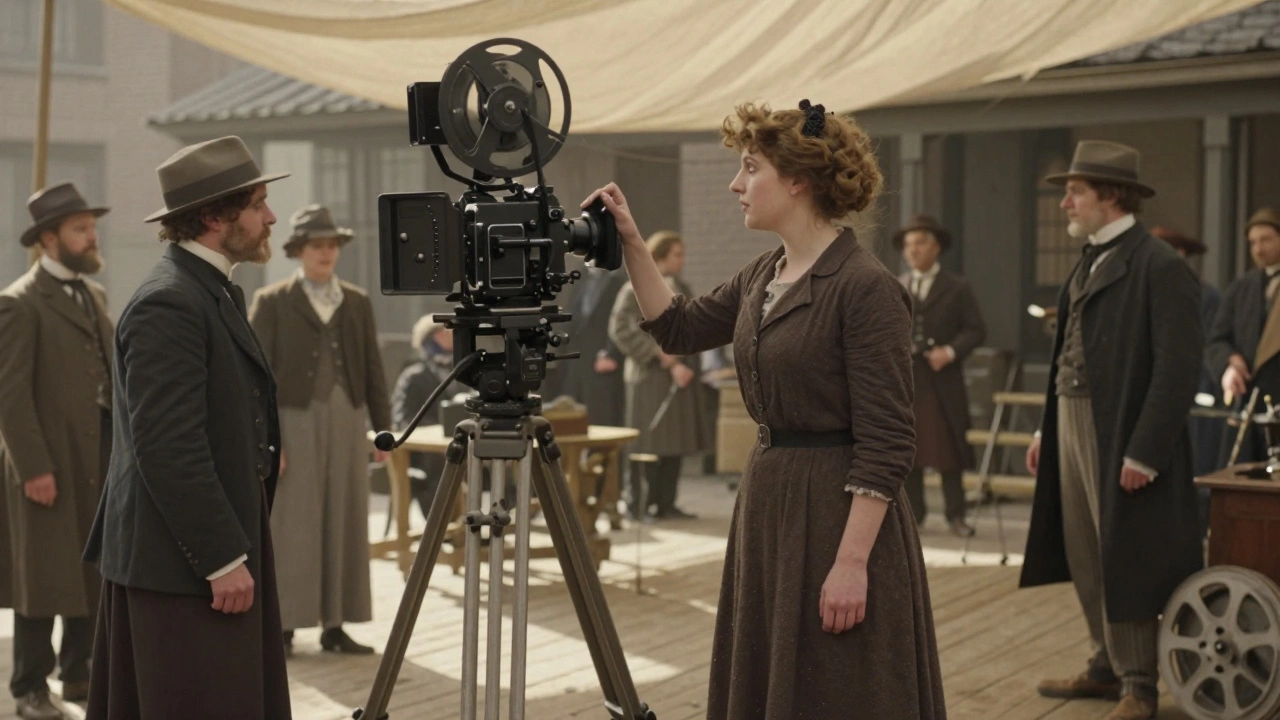
Women have been behind the camera since the very first days of cinema-long before most people realized they were there. In 1895, Alice Guy-Blaché directed what’s widely considered the first narrative film, La Fée aux Choux. She wasn’t an exception. She was one of hundreds. By 1912, nearly half of all American film studios had women in key creative roles. Then, something changed.
The Silent Era: Women Ran the Show
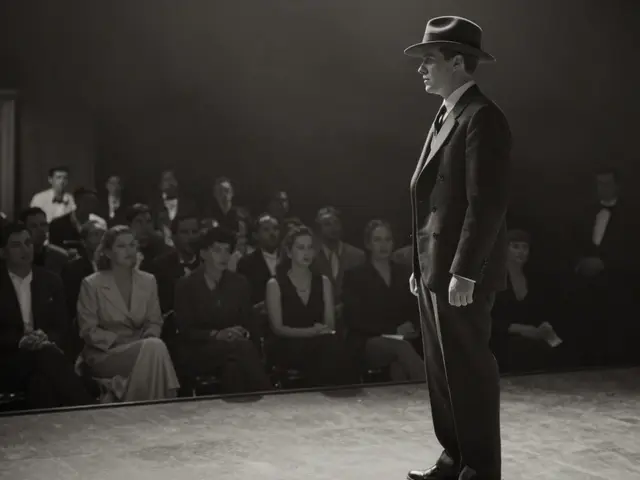
In the silent film era, women didn’t just act-they wrote, produced, directed, and owned studios. Lois Weber, one of the most successful directors of the 1910s and 1920s, made over 130 films. She tackled controversial topics like birth control, capital punishment, and poverty. Her 1916 film Where Are My Children? was one of the highest-grossing films of its time. She didn’t need permission. She built her own studio.
Edith Head, who later became a legendary costume designer, started as a sketch artist for silent films. Mary Pickford, known as "America’s Sweetheart," didn’t just act-she co-founded United Artists with Charlie Chaplin, D.W. Griffith, and Douglas Fairbanks. She controlled her own distribution, her pay, and her image. That kind of power was rare for any woman in any industry back then.
Women directed comedies, westerns, dramas, and even horror films. They were studio heads, editors, and screenwriters. The industry didn’t yet have rigid hierarchies. Talent mattered more than gender. But that changed when Hollywood became a big business.
The Studio System: Pushed Out of the Frame
By the 1930s, the studio system had taken over. Studios wanted control, consistency, and profit. They also wanted to conform to traditional gender roles. Women who had once led productions were quietly moved into lower-status roles. Directing? That became a man’s job. Writing? Only if it was romantic comedy. Producing? Only if they were married to a studio executive.
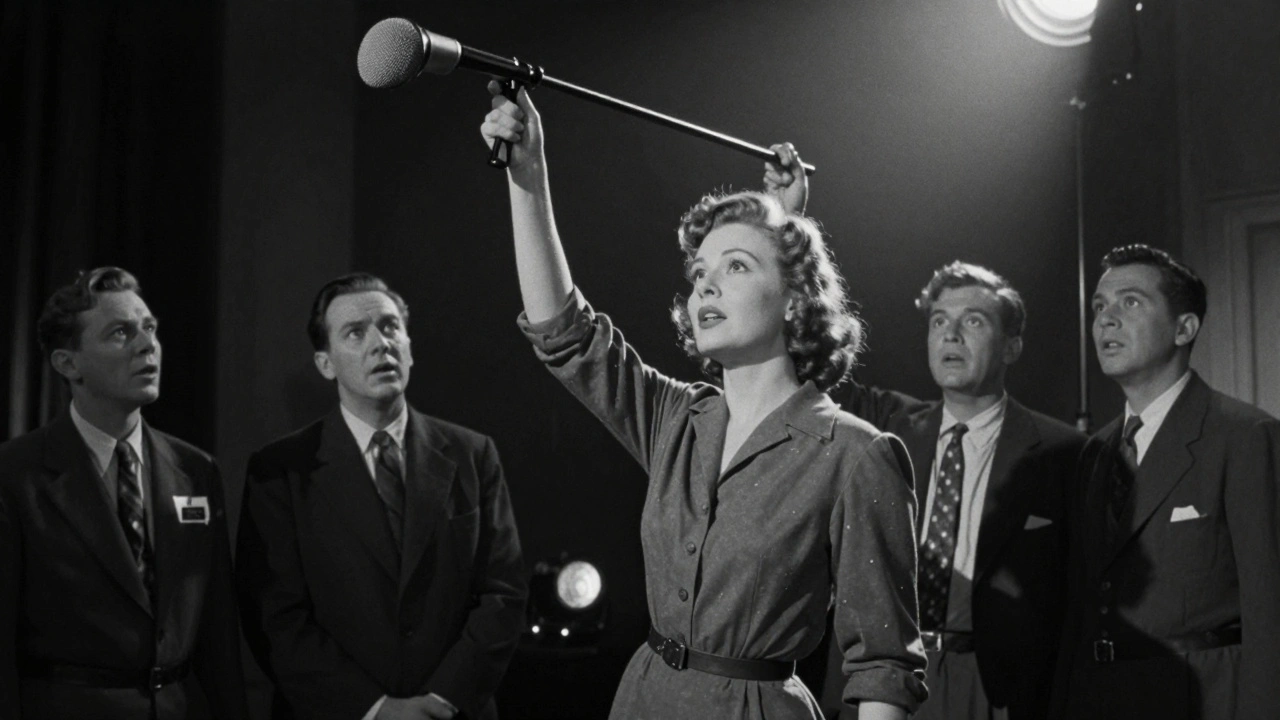
By 1940, less than 5% of credited directors in Hollywood were women. The few who held on-like Dorothy Arzner, who directed 17 films between 1927 and 1943-faced constant resistance. Arzner was the only woman directing in Hollywood for over a decade. She famously invented the boom mic to avoid having male crew members block her shots. She worked around the system because the system didn’t want her in it.
Women were still writing scripts-often anonymously. Many screenplays from the 1940s and 50s were written by women under male pseudonyms. The Academy didn’t even start recognizing female screenwriters until the 1950s, and even then, it was rare.
The 1970s and 80s: Breaking Through the Glass Ceiling
The feminist movement of the 1970s brought new energy. Independent filmmaking began to rise, and with it, women started reclaiming space. Barbara Loden made Wanda in 1970-a raw, personal film about a woman drifting through life. It was shot on a shoestring budget, but it won critical acclaim at Cannes. Loden wrote, directed, and starred in it. She had no studio backing. She made it happen anyway.
In the 1980s, Agnès Varda, a French filmmaker, continued to push boundaries with films like Cleo from 5 to 7. In the U.S., Penny Marshall broke ground with Big in 1988, becoming the first woman to direct a film that grossed over $100 million. That same year, Kathryn Bigelow directed Blue Steel, a gritty action film that proved women could handle the genre.
But awards and box office success didn’t mean equal access. In 1987, only 4% of U.S. feature films had female directors. The numbers hadn’t budged much since the 1940s.
The 1990s to 2010s: Slow Gains, Big Barriers
The 1990s saw more women entering film schools, but Hollywood’s gatekeepers stayed the same. Directors like Jane Campion made waves with The Piano in 1993-she became the first woman to win the Palme d’Or at Cannes. But even that didn’t open doors. In 2000, only 7% of top-grossing films had female directors.
Women of color faced even steeper barriers. Julie Dash’s Daughters of the Dust (1991) was the first feature film by a Black woman to get a wide theatrical release. It took 25 years for another Black woman, Ava DuVernay, to direct a film with a $100 million budget-A Wrinkle in Time in 2018.
By 2013, the #TimesUp movement hadn’t started yet, but the numbers were starting to stir outrage. A study by the Center for the Study of Women in Television and Film found that women made up just 12% of directors, writers, producers, editors, and cinematographers in the top 250 films. That’s not progress-that’s stagnation.
Today: More Visibility, Still Not Equality
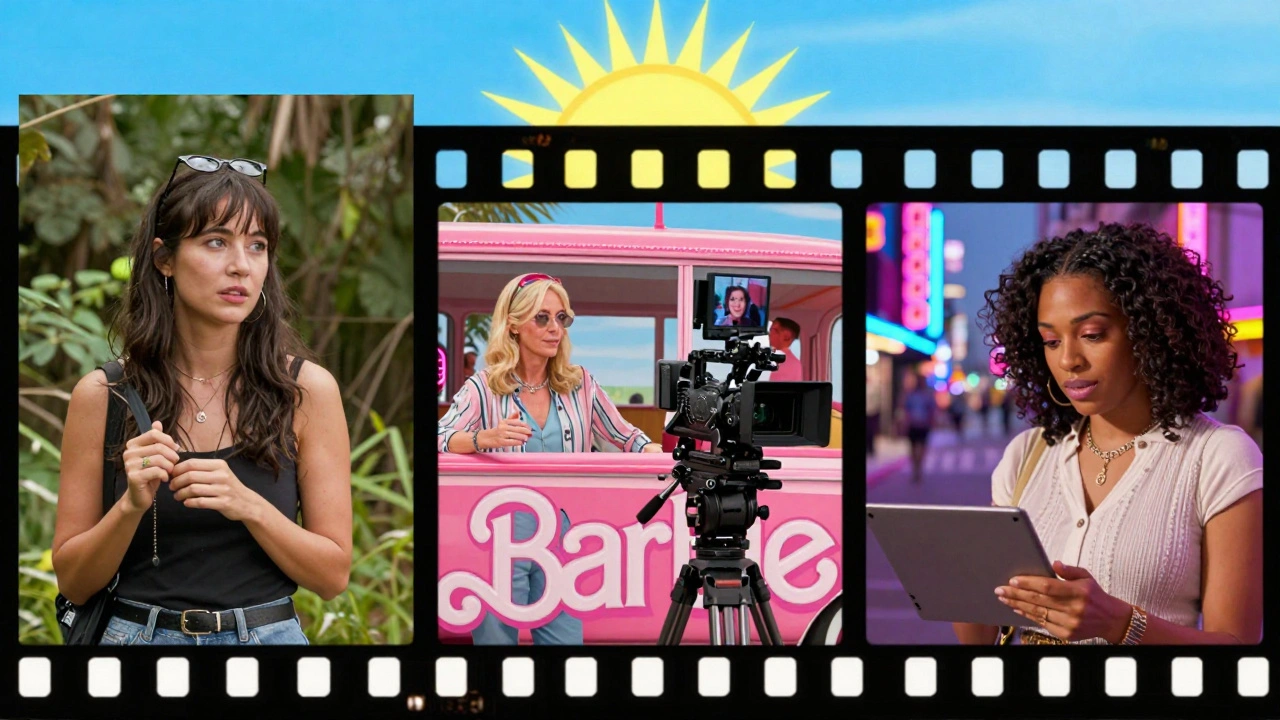
By 2025, the numbers are slowly improving-but not because Hollywood changed its mind. They changed because audiences demanded it. Chloé Zhao won the Oscar for Best Director in 2021 for Nomadland, becoming the second woman and first woman of color to do so. Emerald Fennell won Best Original Screenplay in 2021 for Promising Young Woman. Greta Gerwig directed Little Women in 2019 and Barbie in 2023-the latter became the highest-grossing film ever directed by a woman.
Streaming platforms gave new voices a chance. Issa Rae’s Insecure and Phoebe Waller-Bridge’s Fleabag proved that stories led by women could dominate global audiences. Women now make up nearly 30% of directors on streaming series, according to a 2024 report from UCLA’s Hollywood Diversity Report.
But behind the scenes, the imbalance remains. In 2024, women directed only 19% of the top 100 domestic films. Only 11% of cinematographers were women. And for women of color? Just 4% of directing jobs went to them.
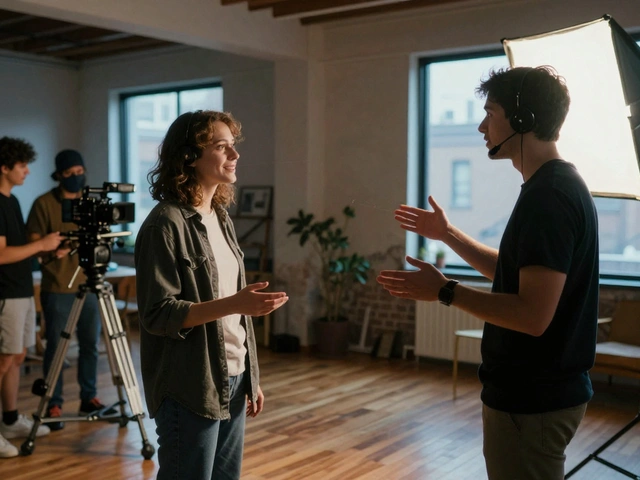
What’s different now is that women aren’t waiting for permission. They’re making films on iPhones. Crowdfunding on Kickstarter. Posting on TikTok. Launching their own studios. The tools are cheaper. The audience is global. The old gatekeepers can’t hold them out forever.
Who’s Making History Now?
Today’s women filmmakers aren’t just following in the footsteps of pioneers-they’re rewriting the map.
- Sofia Coppola continues to craft intimate, visually stunning stories that challenge traditional narratives of femininity.
- Rebecca Hall directed Passing in 2021, a haunting adaptation of Nella Larsen’s novel, shot in black and white, exploring race and identity in 1920s New York.
- Justine Triet won the Palme d’Or in 2023 for Anatomy of a Fall, a legal drama that turned courtroom tension into psychological art.
- Isabel Sandoval, a trans Filipina filmmaker, made Lingua Franca in 2019, the first feature directed by a trans woman of color to premiere at Venice.
- Janicza Bravo brought dark comedy to mainstream audiences with Zola in 2020, based on a viral Twitter thread.
These aren’t outliers. They’re part of a growing wave. Women are now leading genre films, documentaries, sci-fi, horror, and even superhero projects. They’re not asking to be included-they’re redefining what cinema can be.
What’s Still Missing?
Visibility doesn’t equal equity. Women still earn less than men in every key role. A 2023 study by the University of Southern California found that female directors earned 37% less than their male counterparts on films with the same budget. Women of color earned even less.
Access to funding remains a major hurdle. Venture capital for films directed by women still makes up less than 15% of total film investment. Studios still greenlight projects based on past performance-and past performance was stacked against women.
And yet, the momentum is real. Film festivals now have gender parity quotas. New funding initiatives like the Sundance Institute’s Women at Sundance program have helped over 300 women-directed films get made since 2010. Organizations like Women in Film and the Geena Davis Institute are pushing for data-driven change.
The Legacy Is Still Being Written
Women didn’t just appear in cinema-they built it. Then they were erased. Now they’re rebuilding it, one frame at a time. The silent films of Alice Guy-Blaché, the bold dramas of Dorothy Arzner, the indie grit of Barbara Loden, the global hits of Greta Gerwig-they’re all part of the same story.
The history of women in cinema isn’t a footnote. It’s the backbone. And it’s not over. Every young woman picking up a camera today is adding a new chapter. The question isn’t whether they belong. It’s whether the industry will finally stop pretending they ever didn’t.


Comments(11)