
What Makes a Great Arthouse Film Distributor?
Arthouse cinema doesn’t play by the same rules as blockbusters. It doesn’t need 50 million opening weekends. It thrives on word-of-mouth, festival buzz, and loyal audiences who seek meaning over spectacle. But even the most powerful indie film can vanish without the right distributor. The best international distributors for arthouse cinema don’t just push films into theaters-they build careers, cultivate communities, and turn niche stories into cultural moments.
These companies understand timing. They know when to release a slow-burn Romanian drama in New York so it rides the wave of a Cannes win. They know which film festivals matter for which regions. And they don’t just buy rights-they invest in marketing that speaks to the kind of viewers who read The Criterion Collection newsletters and attend midnight screenings of Polish experimental films.
Janus Films: The Legacy Keeper
Janus Films has been shaping how American audiences experience global cinema since 1956. Founded by Cyrus Harvey and Michael Simmons, it brought Ingmar Bergman, Federico Fellini, and Akira Kurosawa to U.S. theaters long before streaming made them accessible. Today, Janus still leads in restoring and re-releasing classic arthouse titles, but it also distributes contemporary work like Parasite (before its Oscar run) and Triangle of Sadness.
Its partnership with The Criterion Collection means most of its releases come with extensive bonus features, essays, and physical media editions that collectors seek. Janus doesn’t chase volume. It focuses on quality, releasing around 15-20 new titles a year, all carefully selected. If a film is picked up by Janus, it’s already been vetted by critics, programmers, and cinephiles.
Curzon Artificial Eye: The UK’s Cultural Bridge
Based in London, Curzon Artificial Eye has been the go-to distributor for British and European arthouse films for over 40 years. It doesn’t just distribute-it curates. The company works closely with the British Film Institute and major festivals like BFI London and Rotterdam to identify films with staying power.
Recent successes include EO (Poland, 2022), which earned an Oscar nomination for Best International Feature, and Close (Belgium, 2022), which won the Grand Prix at Cannes. Curzon’s strength lies in its ability to blend theatrical runs with digital platforms. Its VOD service, Curzon Home Cinema, offers curated collections that mirror its cinema programs, making it a trusted source for UK audiences looking for non-Hollywood storytelling.
Zeitgeist Films: The American Indie Anchor
Founded in 1980, Zeitgeist Films has spent decades championing American and international independent films that most studios ignore. It’s the distributor behind The Spirit of the Beehive (Spain, 1973), Man Bites Dog (Belgium, 1992), and Shoplifters (Japan, 2018)-films that were too raw, too quiet, or too strange for mainstream release.
What sets Zeitgeist apart is its hands-on approach. The team often travels with directors to Q&As, organizes campus screenings, and partners with museums and universities to build academic interest. Their releases rarely open in more than 50 theaters, but they often run for months in cities like Chicago, Portland, and Seattle. For filmmakers from Eastern Europe, Southeast Asia, or Latin America, getting a deal with Zeitgeist means your film will be seen by the right people-not just the biggest crowds.

Strand Releasing: The Festival Favorite
Strand Releasing, based in Los Angeles, has a reputation for spotting films before they blow up. It was one of the first to pick up The Wailing (South Korea, 2016), Portrait of a Lady on Fire (France, 2019), and Drive My Car (Japan, 2021). All three went on to earn Oscar nominations.
Strand doesn’t wait for awards. It attends over 30 festivals a year, from Sundance to Locarno, and makes decisions based on audience reactions, not just jury prizes. Its distribution model is lean: small theatrical releases, targeted digital campaigns, and strong relationships with streaming platforms like MUBI and Kanopy. The company also runs its own film series in LA and New York, keeping the community engaged year-round.
MUBI: The Streaming Powerhouse
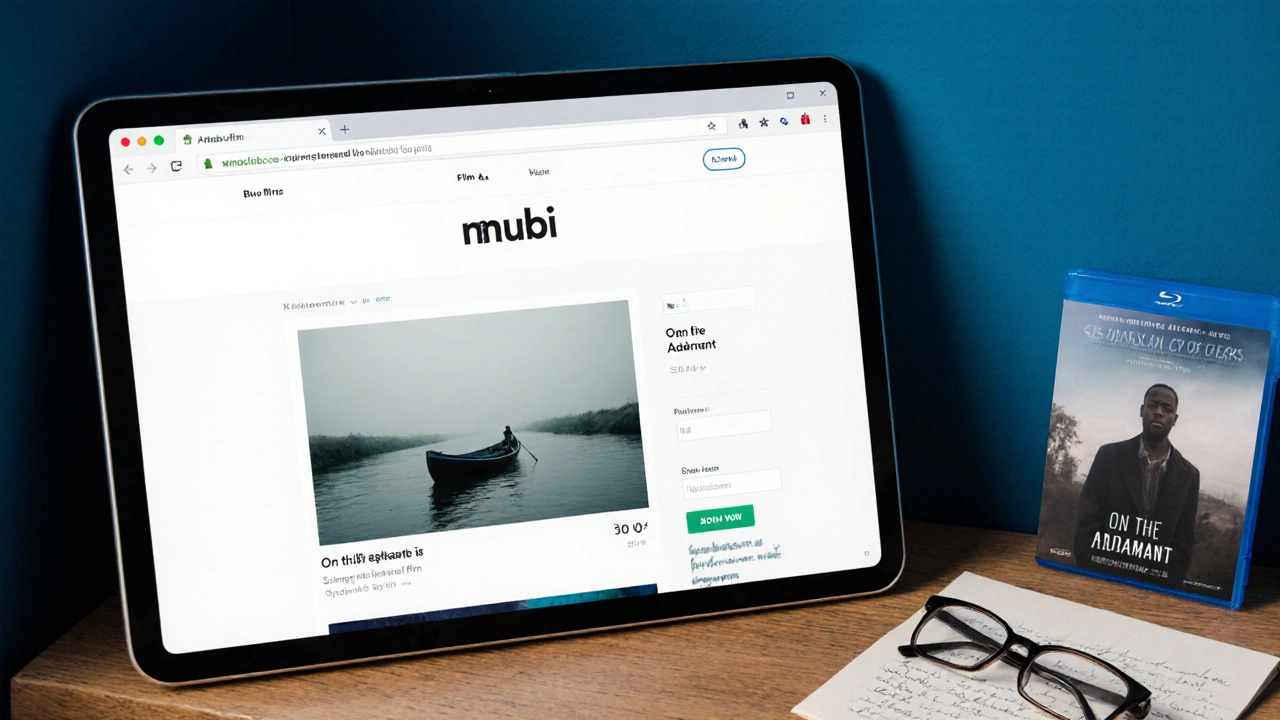
MUBI isn’t just a streaming service-it’s a global arthouse distributor with a curated, rotating library. Launched in 2007, it now operates in over 190 countries and has acquired exclusive rights to more than 1,000 international films since 2018. Unlike Netflix or Amazon, MUBI doesn’t offer a vast catalog. It shows one film a day, handpicked by its team of curators, with a 30-day window before rotating it out.
Its distribution arm, MUBI Pictures, has released over 40 films theatrically in North America and Europe. Titles like After Yang (2021), EO (2022), and On the Adamant (2023) received limited but impactful runs in cities like New York, Toronto, and Berlin. MUBI’s strength is its ability to combine digital reach with physical presence. It partners with independent theaters to host exclusive premieres, often with filmmaker Q&As streamed live to subscribers.
Why These Distributors Work When Others Don’t
Most major studios avoid arthouse films because they’re too risky. They don’t make enough money to justify marketing budgets. But the distributors above don’t measure success by box office totals. They track engagement: how many people watched a film twice, how many wrote reviews on Letterboxd, how many university film classes added it to their syllabi.
They also understand that arthouse audiences don’t want trailers that scream “BUY NOW.” They want context-director interviews, behind-the-scenes footage, essays on the cultural roots of the story. That’s why these companies invest in packaging, not just promotion. A Janus Blu-ray isn’t just a movie-it’s a keepsake.
What Filmmakers Should Look For
If you’re an independent filmmaker with an arthouse film, don’t just chase the biggest offer. Ask: Does this distributor have a track record with films like mine? Have they released something from my region before? Do they work with festivals I care about?
Check their past releases. If your film is a quiet family drama from Georgia, and they’ve only distributed action thrillers from Brazil, it’s probably not the right fit. Look for distributors who’ve released films with similar pacing, tone, or cultural themes. Talk to other filmmakers they’ve worked with. Ask how long the theatrical run lasted. Did they help with press? Did they send out physical screening copies?
The right distributor won’t just release your film-they’ll help it live beyond its premiere.
How Distribution Has Changed Since 2020
Before the pandemic, arthouse films relied heavily on theatrical runs. Now, digital is just as important-if not more. But streaming isn’t a replacement. It’s a partner. The best distributors now use a hybrid model: a 2-4 week theatrical window, followed by a curated digital release on their own platforms or partners like MUBI, Kanopy, or Apple TV+.
Film festivals still matter, but they’re no longer the only gatekeepers. Platforms like FilmFreeway and Withoutabox make it easier to submit, but getting noticed means more than just winning a prize. It means having a distributor who can turn a festival buzz into sustained visibility.
Also, global demand has shifted. There’s more interest than ever in African, Southeast Asian, and Middle Eastern cinema. Distributors like MUBI and Strand have expanded their teams to include regional specialists who can identify films that resonate beyond Western audiences.
What Doesn’t Work
Many filmmakers make the mistake of signing with a distributor that promises “global reach” but has no real presence outside the U.S. or Europe. Others choose companies that bundle their film into a generic “indie pack” with 20 other titles and no marketing support.
Watch out for distributors that require you to pay for marketing or guarantee a certain number of screens. Legitimate arthouse distributors invest their own money. If they’re asking you to cover costs, they’re not confident in your film.
Also, avoid distributors who don’t offer subtitles in multiple languages. If your film is in Arabic, Bengali, or Quechua, and they can’t provide high-quality subtitles in English, French, Spanish, and German, you’re limiting your audience before you even start.
Final Thoughts: It’s About Legacy, Not Just Revenue
Arthouse cinema survives because a handful of distributors refuse to treat films as products. They treat them as cultural artifacts. The films they release become part of film history. A student in Mexico City watches a Polish film from 2019 and writes a thesis on it. A cinephile in Tokyo buys a Criterion edition of a Senegalese documentary. That’s the real win.
The best distributors don’t just move tickets. They move minds. And for filmmakers who want their work to last longer than a festival run, that’s the only metric that matters.
What makes a film distributor "arthouse"?
An arthouse distributor specializes in films that prioritize artistic expression over commercial appeal. These films often have slower pacing, complex themes, non-traditional storytelling, and are made outside the mainstream studio system. Arthouse distributors focus on film festivals, critical acclaim, and niche audiences rather than box office numbers. They also invest in high-quality restorations, curated programming, and educational outreach.
Do arthouse distributors only release films in theaters?
No. While theatrical releases are still important for prestige and awards eligibility, most top arthouse distributors now use a hybrid model. They typically launch a film in select theaters for 2-6 weeks, then release it digitally through their own platforms (like MUBI or Curzon Home Cinema) or partner services like Apple TV+, Kanopy, or Criterion Channel. Digital access helps sustain visibility long after the theatrical run ends.
How do I get my film picked up by one of these distributors?
Start by submitting your film to major international festivals like Cannes, Berlinale, Sundance, Locarno, or Toronto. Distributors scout these events closely. Make sure your film has strong subtitles in English and at least one other major language. Build a press kit with director statements, stills, and a clear logline. Reach out to distributors directly after a festival premiere-many have submission guidelines on their websites. Don’t just send a link; include a thoughtful note explaining why your film fits their catalog.
Are there distributors for non-Western arthouse films?
Yes. Distributors like MUBI, Strand Releasing, and Zeugma (France) actively seek films from Africa, Asia, Latin America, and the Middle East. In recent years, there’s been growing demand for stories from regions like Senegal, Indonesia, and Colombia. Look for distributors who’ve released films from your region before-this shows they understand the cultural context and have the right audience connections.
What’s the difference between a distributor and a sales agent?
A sales agent represents your film to buyers (distributors, broadcasters, streaming platforms) around the world but doesn’t handle marketing or release logistics. A distributor actually acquires the rights and releases the film in a specific territory-they manage theatrical runs, digital platforms, subtitles, marketing, and sometimes even physical media. Most filmmakers work with a sales agent first, then sign with a distributor for key markets like North America or the UK.






Comments(8)