Think about the last time a movie made you feel something without a single word being spoken. No dramatic music. No voiceover. Just stillness. That’s not an accident. It’s a choice - one that some of the most powerful films in history have made on purpose.
Silence in cinema isn’t empty. It’s packed. Minimalism isn’t boring. It’s deliberate. When filmmakers strip away dialogue, music, and flashy editing, they don’t remove emotion - they amplify it. The quiet moments are often the ones we remember longest.
What Silence Actually Does to the Viewer
Most movies rely on sound to guide us: a swell of strings tells us when to feel sad, a sudden drumbeat signals danger. But when those cues vanish, something strange happens. Your brain starts filling in the gaps. You lean in. You hold your breath. You start reading faces, hands, shadows - things you’d normally ignore.
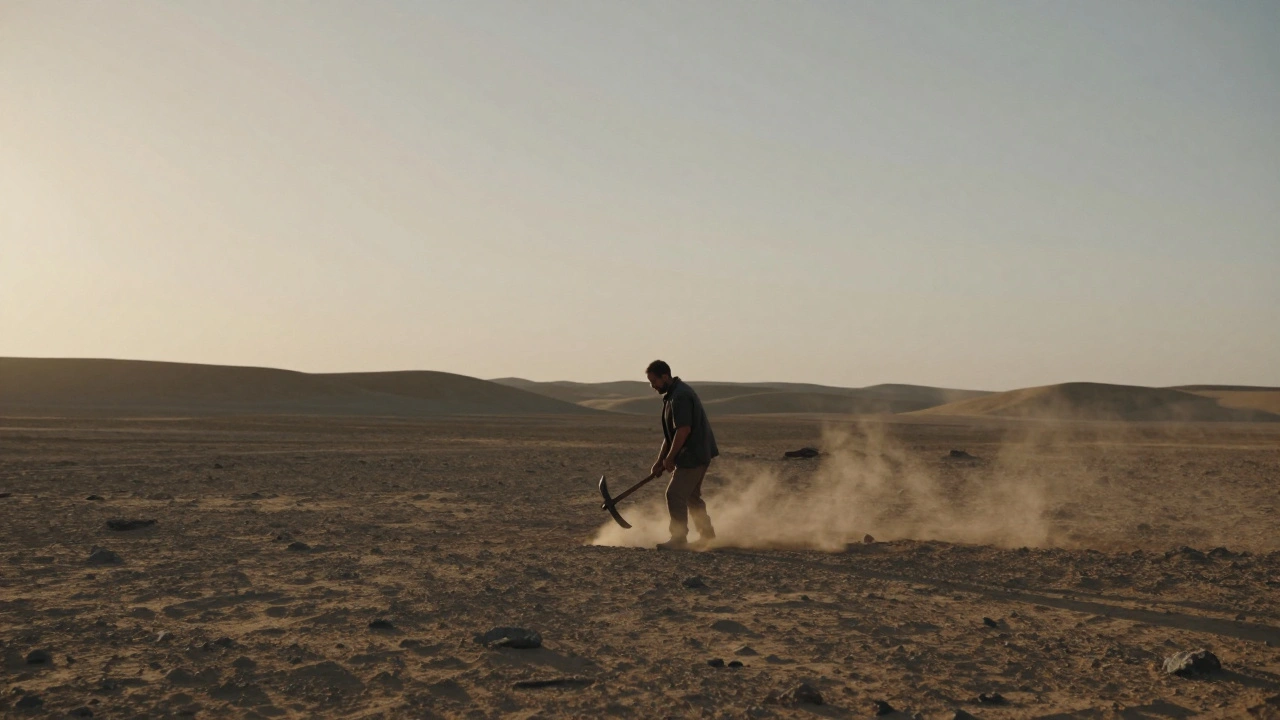
Take the opening scene of There Will Be Blood a 2007 American epic drama film directed by Paul Thomas Anderson. For nearly ten minutes, there’s no dialogue. Just the clink of pickaxes, the groan of wooden supports, and the wind in the desert. We don’t hear Daniel Plainview’s thoughts. We don’t need to. His silence tells us everything: obsession, loneliness, the cost of greed. The silence doesn’t just frame the scene - it becomes the character.
Studies in cognitive psychology show that when sensory input drops, our attention sharpens. A 2021 experiment at the University of California found viewers remembered emotional moments from silent sequences 40% better than those with heavy scoring. That’s not magic. It’s how human perception works. Less noise = more meaning.
Minimalism as a Narrative Tool
Minimalism in film doesn’t mean less story. It means fewer distractions from the story. Think of it like a haiku - the power isn’t in how many words you use, but in how much you leave unsaid.
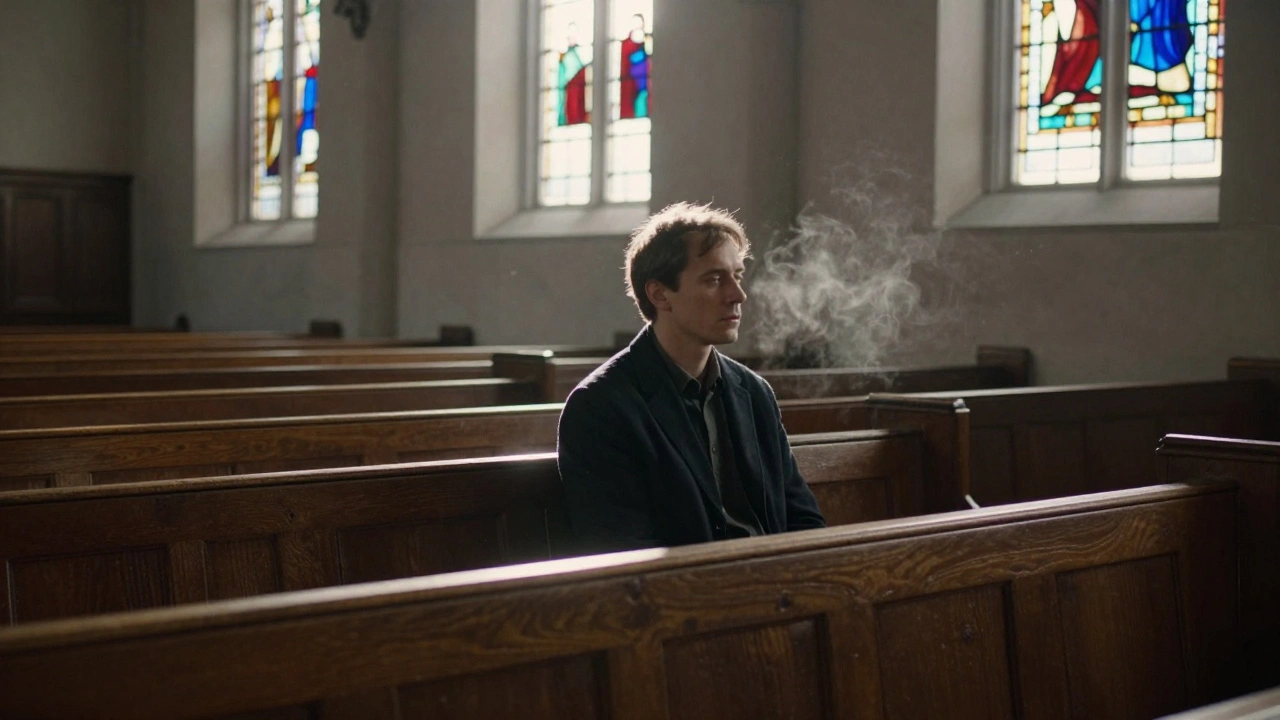
Winter Light a 1963 Swedish drama film directed by Ingmar Bergman is built on silence. A pastor struggles with faith. The camera lingers on his face as he sits alone in an empty church. No music. No cutaways. Just his eyes, the cold light through stained glass, and the sound of his breathing. We don’t get a monologue about doubt. We get a man who can’t speak his pain - and that’s more heartbreaking than any speech.
Compare that to a typical Hollywood film where every emotion is spelled out with a swelling score and a close-up tear. The difference isn’t just style - it’s trust. Minimalist films trust the audience to feel without being told how.
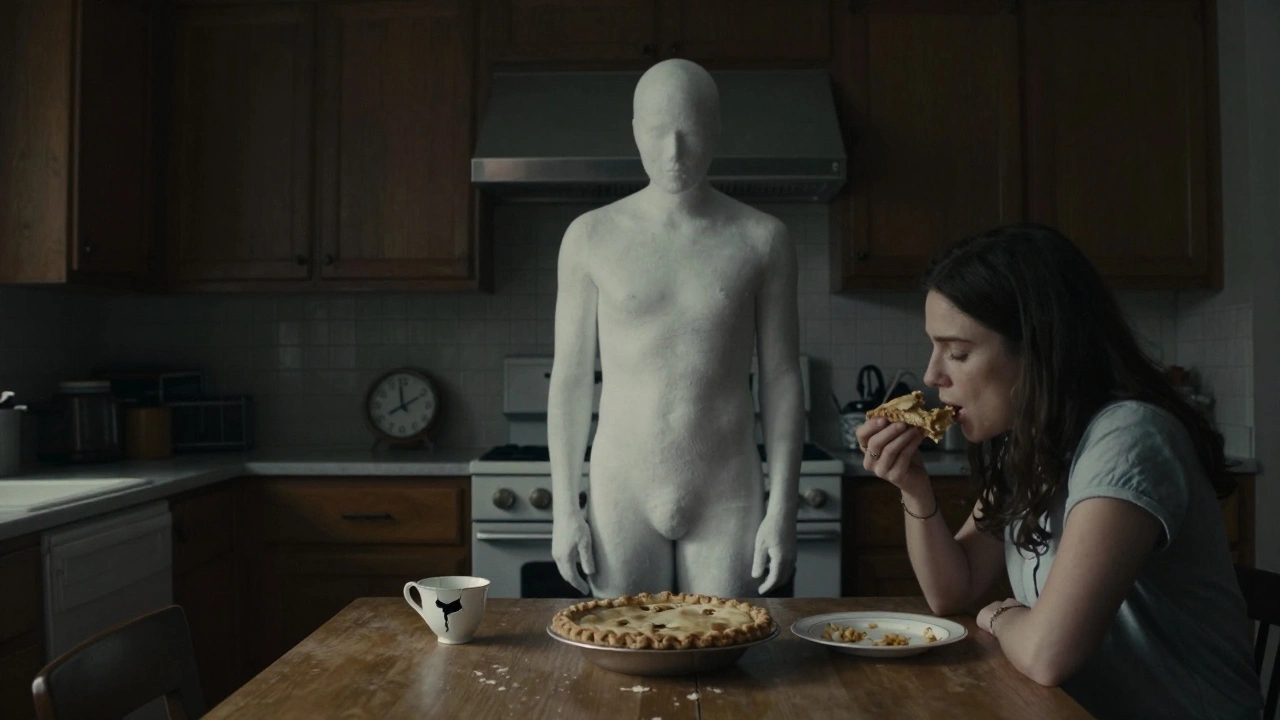
Another example: A Ghost Story a 2017 American supernatural drama film directed by David Lowery. The lead character wears a white sheet with two holes for eyes. He doesn’t speak. He just stands. In one scene, he stands in a kitchen for over five minutes while his widow eats a pie. No explanation. No flashbacks. Just time passing. And somehow, that’s the most devastating moment in the entire film.
The Tools of Restraint
How do filmmakers pull this off? It’s not just about cutting dialogue. It’s about mastering the opposite of what most films do.
- Long takes - Holding a shot without cutting forces the viewer to sit with the moment. No escape. No distraction.
- Fixed framing - Keeping the camera still removes the illusion of movement. It turns space into a container for emotion.
- Diegetic sound only - Only using sounds that exist in the scene (footsteps, wind, a ticking clock) makes silence feel heavier.
- Empty frames - Leaving half the screen blank isn’t lazy. It’s a way to show absence, longing, or isolation.
- Delayed reactions - Letting a character sit still after something shocking happens lets the audience feel the shock first.
These aren’t tricks. They’re techniques that require discipline. Most directors are trained to move, cut, and cue. Minimalist directors are trained to wait.
Why This Matters Now
In 2026, we’re surrounded by noise. Algorithms push the next video before we finish the last. TikTok clips last six seconds. Podcasts speed up to 1.5x. We’ve forgotten how to sit with stillness.
That’s why films like The Lighthouse a 2019 American psychological horror film directed by Robert Eggers or Shoplifters a 2018 Japanese drama film directed by Hirokazu Kore-eda feel so radical. They don’t chase attention. They demand presence.
When Shoplifters ends with a silent shot of a child staring at a police car, we don’t need to hear her cry. We’ve already felt it. The silence doesn’t hide the pain - it makes it unavoidable.
What You Miss When You Ignore Quiet
There’s a myth that quiet films are slow or boring. But slow isn’t the same as still. Stillness invites reflection. It creates space for the viewer to become part of the story.
Think about how often you’ve walked out of a movie feeling manipulated - because the music told you when to cry, the lighting told you who to hate, the editing told you how fast to feel. Minimalist films don’t manipulate. They invite.
They ask: What are you feeling right now? Why? What are you not saying?
That’s the real power of restraint. It doesn’t just tell a story. It turns the audience into co-authors.
When Silence Fails
Not every quiet scene works. Some films use silence because they don’t know how to write dialogue. Some use minimalism because they’re afraid of emotion.
The difference? Intention. A good silent scene has weight. A bad one has emptiness. You can tell by the details. In a strong scene, every object on screen matters. A cracked teacup. A flickering bulb. A coat left on a chair. These aren’t set dressing - they’re emotional anchors.
When silence feels forced, you notice. When it feels earned, you feel it in your chest.
Where to Start
If you want to understand this style, watch these five films - and watch them without subtitles or distractions:
- Stalker a 1979 Soviet science fiction film directed by Andrei Tarkovsky - A journey into a mysterious zone. Dialogue is sparse. Atmosphere is everything.
- The Spirit of the Beehive a 1973 Spanish film directed by Víctor Erice - A child’s quiet encounter with fear and imagination after seeing Frankenstein.
- Leviathan a 2014 American documentary about fishing, directed by Lucien Castaing-Taylor and Véréna Paravel - No narration. Just the sound of the sea, engines, and breathing.
- Paterson a 2016 American drama film directed by Jim Jarmusch - A bus driver writes poetry. Nothing much happens. Everything matters.
- Coherence a 2013 American science fiction thriller directed by James Ward Byrkit - A dinner party during a cosmic anomaly. The silence between lines is where the terror lives.
Watch them once for the story. Watch them again for the quiet.
Why This Isn’t Just a Style - It’s a Philosophy
Restraint in cinema isn’t about aesthetics. It’s about truth. Real life doesn’t come with a soundtrack. We don’t always say what we feel. We don’t always know why we’re sad. We sit. We stare. We hold our breath.
Minimalist films mirror that. They don’t explain. They reflect. And in doing so, they give us something rare: the chance to feel without being told how.
That’s why silence in film lasts longer than explosions. Because it doesn’t shout. It whispers - and we have to get quiet to hear it.
Why do some films use silence instead of dialogue?
Silence replaces dialogue when filmmakers want to deepen emotion, create tension, or force the viewer to engage more actively. Instead of telling you how a character feels, silence lets you feel it yourself - through body language, environment, and timing. It’s not about what’s missing - it’s about what’s amplified.
Is minimalism in film the same as slow cinema?
Minimalism and slow cinema overlap but aren’t the same. Minimalism focuses on reducing elements - fewer words, less music, simpler framing. Slow cinema emphasizes duration - long takes, real-time pacing, and extended scenes. A film can be minimal without being slow (like The Lighthouse), or slow without being minimal (like Stalker). But they often work together.
Can silence make a film feel boring?
Yes - if it’s used for the wrong reasons. Silence works when it’s intentional, not accidental. If a scene drags because the script isn’t strong, it’ll feel empty. But if silence is used to build atmosphere, highlight emotion, or let the audience reflect - it becomes powerful. The difference is in the details: what’s in the frame, how long it lasts, and how the sound design supports it.
Do audiences today still respond to quiet films?
More than ever. In a world of constant stimulation, quiet films offer something rare: space to breathe. Films like Shoplifters and A Ghost Story have found cult followings because they don’t compete with noise - they stand apart from it. Streaming platforms now feature curated silent or slow cinema sections. Viewers aren’t avoiding quiet - they’re seeking it.
Are there modern filmmakers known for this style?
Yes. Directors like Kelly Reichardt (First Cow), Hong Sang-soo (The Woman Who Ran), and Jia Zhangke (Still Life) build entire films around restraint. Even mainstream directors like Denis Villeneuve (Arrival) and Yorgos Lanthimos (The Favourite) use silence strategically. It’s not a niche - it’s a growing language in modern cinema.
Final Thought
The most powerful moments in cinema aren’t the ones that scream. They’re the ones that don’t say anything at all. And sometimes, that’s the loudest thing of all.


Comments(10)