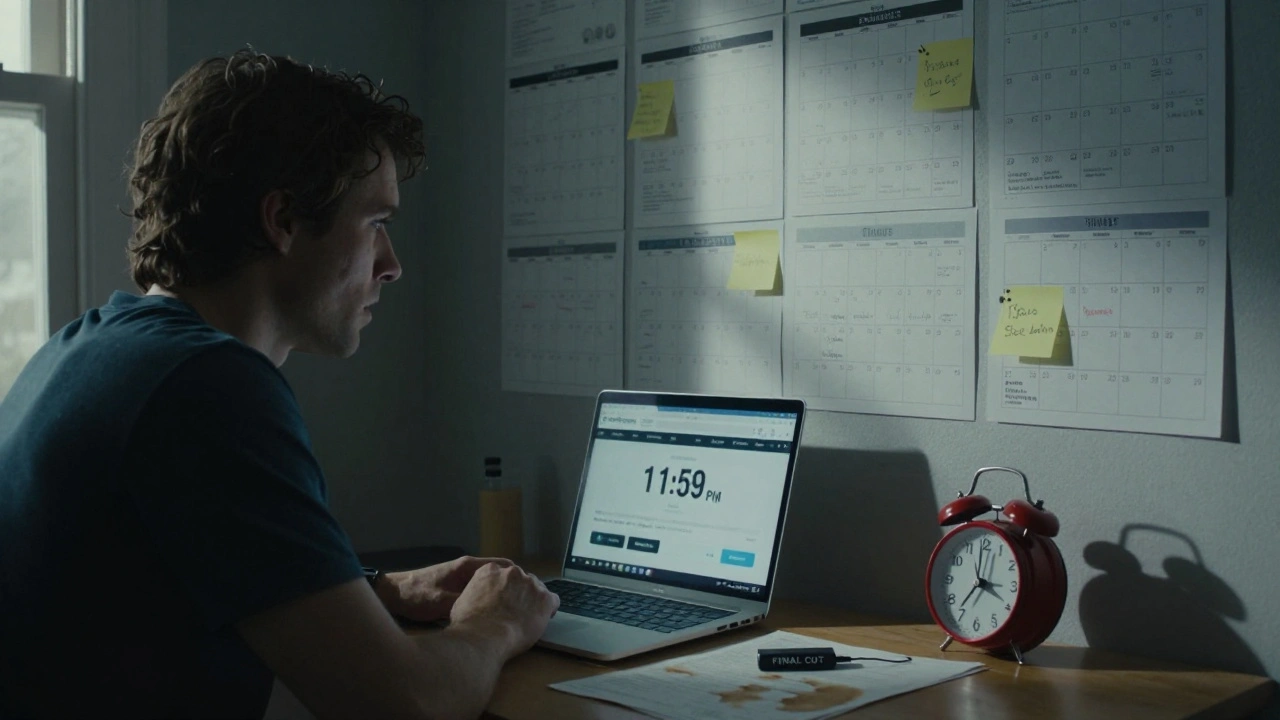
Getting your film into a festival isn’t just about making something great-it’s about timing. Miss a deadline by a day, and your movie sits on the shelf while others get screened. Festival calendars don’t wait. They move fast, and the window to submit is often narrower than you think. If you’re an indie filmmaker, distributor, or even a student with a short, this is the no-fluff guide to lining up your release with the right deadlines.
Why Deadlines Matter More Than You Think
Every major film festival has a strict submission window. Sundance, TIFF, Cannes, SXSW-they all lock their doors months before the event. Late entries? They’re not reviewed. Not even considered. It’s not about being unfair; it’s about logistics. Programming teams need time to screen hundreds, sometimes thousands, of films. They organize viewings, schedule Q&As, book venues, and coordinate press. If you submit on the last day, you’re not just late-you’re throwing away your shot.
Take the 2025 Sundance Film Festival. Submission deadlines were:
- Early Deadline: August 1, 2024
- Regular Deadline: September 5, 2024
- Final Deadline: October 1, 2024
The festival ran in January 2025. That’s five months between the final deadline and the event. Most filmmakers assume they have until December. They don’t. The window closes in October. And if you’re submitting to multiple festivals, you can’t just wait for one to pass before starting another. Overlap is the norm, not the exception.
How to Build Your Own Submission Calendar
You don’t need a fancy tool. Start simple: a spreadsheet or even a printed calendar. List every festival you’re targeting. Then, for each one, write down:
- Submission deadline (early, regular, final)
- Festival dates
- Submission fee
- Format requirements (DCP, ProRes, MP4, etc.)
- Special notes (e.g., “must have US premiere,” “no online premieres allowed”)
Here’s what a real 2025 calendar looked like for a short film team in Asheville:
| Festival | Deadline | Festival Dates | Fee | Key Requirement |
|---|---|---|---|---|
| Sundance | October 1, 2024 | January 16-26, 2025 | $65 | World Premiere |
| SXSW | November 15, 2024 | March 8-16, 2025 | $55 | US Premiere |
| Tribeca | December 1, 2024 | June 4-15, 2025 | $60 | Not required |
| Slamdance | October 15, 2024 | January 24-30, 2025 | $45 | Indie focus |
| Cannes (Shorts) | February 15, 2025 | May 13-24, 2025 | $40 | Must be under 15 mins |
Notice something? Cannes’ deadline is in February 2025-after Sundance and SXSW. That’s intentional. Many filmmakers use early festivals as proof of quality to boost submissions later. A selection from Slamdance? That helps you stand out at Cannes. A premiere at Sundance? That opens doors everywhere else.
Timing Is Everything: The Domino Effect
You can’t submit to all festivals at once. There’s a sequence. Start with the ones that require premieres. Then move to those that accept non-premiere work. Here’s how top indie teams do it:
- Target festivals that demand world or North American premieres first (Sundance, Slamdance, TIFF, Berlin). These are competitive but offer the biggest exposure.
- Submit to regional festivals next (like Asheville’s own FilmFest). They’re less competitive, help build buzz, and often have lower fees.
- Use feedback from early submissions to tweak your trailer, poster, or logline before hitting bigger ones.
- Save international festivals (Cannes, Rotterdam, Locarno) for later. They often have later deadlines and can benefit from earlier buzz.
One filmmaker from North Carolina submitted to Slamdance in October 2024. Got accepted. Used that in her email pitch to Cannes. Got in. Her short screened in May. That’s the domino effect.

What Happens If You Miss a Deadline?
Some festivals offer late submissions-but they’re rare, expensive, and not guaranteed. Most won’t even consider them. And if you’re submitting through platforms like FilmFreeway or Withoutabox, the system locks automatically. No exceptions.
Here’s what to do instead:
- Set calendar alerts 30 days before each deadline.
- Build a 7-day buffer. Submit 7 days before the deadline. You never know when the site crashes, your upload fails, or your credit card declines.
- Keep your files ready. Have your DCP, MP4, trailer, and press kit prepped and stored in the cloud. Don’t wait until the last minute to render your video.
- Use a checklist. Download the official submission checklist from each festival’s website. Verify every box.
One team missed Sundance’s deadline because their final export failed during upload. They didn’t realize the file was corrupted until it was too late. They had to wait a year.
How to Stay Updated
Festival dates change. Sometimes last minute. Don’t rely on a single source. Cross-check:
- FilmFreeway - Tracks deadlines across 2,000+ festivals. Sends email alerts.
- Festival Focus - Publishes annual calendar updates in December.
- Festival websites - Always check the official site. Third-party sites can be outdated.
- Industry newsletters - Like IndieWire or Screen Daily - they publish deadline roundups every January.
For 2026, the major festivals already announced their dates. Sundance will be January 15-25, 2026. SXSW is March 10-18. Cannes is May 12-23. Mark those now. Your 2026 calendar starts today.
Common Mistakes Filmmakers Make
Here’s what goes wrong-and how to avoid it:
- Waiting for "perfect" - Your film will never be perfect. Submit when it’s polished, not when it’s flawless.
- Ignoring format rules - Some festivals require DCP. Others want H.264 MP4. Get it wrong? Rejection.
- Over-submitting - Applying to 30 festivals doesn’t increase your odds. It drains your budget. Pick 5-8 strategic ones.
- Forgetting premiere status - If you posted it on YouTube or Vimeo, you’re disqualified from many top festivals.
- Not tracking fees - Submission fees add up fast. $65 here, $50 there. A dozen festivals? That’s $800+.
One filmmaker spent $1,200 on submissions in 2024. Got rejected everywhere. Why? She didn’t research premiere rules. Her film had already streamed online. No festival would touch it.
What to Do After You Submit
Submission isn’t the end. It’s the beginning.
- Track your submissions. Use a simple spreadsheet: Festival, Date Submitted, Status, Response Date.
- Set reminders for when responses are due. Most festivals reply 2-4 months after the deadline.
- Prepare for rejection. Most films get rejected. That’s normal. Learn from feedback if it’s offered.
- When accepted? Celebrate. Then immediately start preparing your press kit, screening copy, and travel plans if needed.
Don’t ghost your film after submission. Stay engaged. Follow festival social media. Comment on their posts. Build relationships. It helps.
What happens if I submit after the deadline?
Almost always, nothing. Festivals shut down submissions automatically. A few offer late entries for double the fee-but they’re rare and don’t guarantee review. Don’t count on it. Always submit early.
Can I submit the same film to multiple festivals?
Yes, but with rules. Most top festivals require world or regional premieres. If you’ve already screened it at one, you can’t submit to another that requires the same. Always check each festival’s premiere policy. Some, like Tribeca, allow non-premiere entries.
How far in advance should I start planning?
Start 6-8 months before your first deadline. For festivals with August-October deadlines, begin planning in January. That gives you time to edit, render, format, and test your files. Don’t wait until December.
Are there free film festivals?
Yes, but they’re usually smaller, local, or niche. Many charge $10-$30 to cover costs. Major festivals like Sundance and Cannes charge because they receive thousands of entries and need to cover screening logistics. Don’t assume free means better. Focus on fit, not cost.
Do I need a premiere to get into a festival?
For top-tier festivals like Sundance, TIFF, or Cannes, yes-especially for features. Shorts are more flexible. But if you’ve posted your film online, you’re likely disqualified from premiere-only festivals. Always check the rules before uploading.
Film festivals don’t run on luck. They run on preparation. The difference between a film that gets seen and one that gets buried is often just a calendar. Mark the dates. Set the alerts. Submit early. And don’t let timing be the reason your movie never finds its audience.







Comments(10)