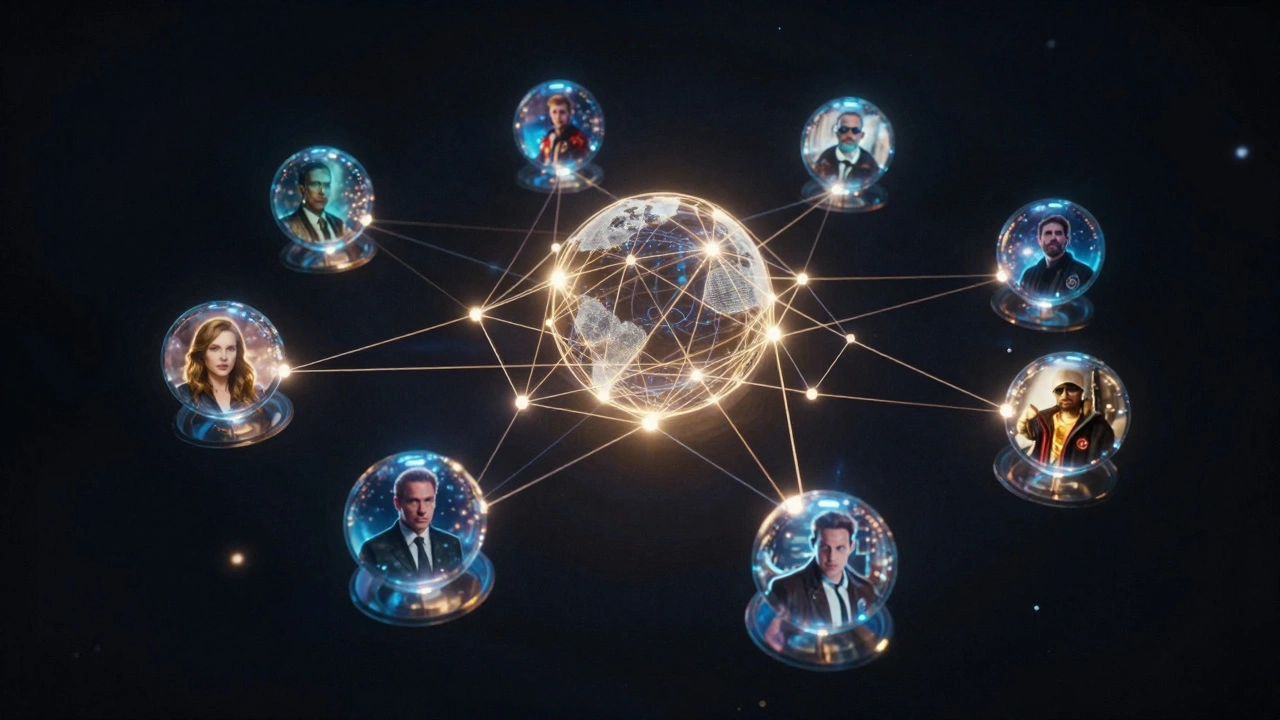
Have you ever wondered why every superhero movie seems to connect to the next one? Or why a villain from a decade-old film suddenly shows up in a new blockbuster? This isn't accidental. It is a calculated strategy known as managing a shared universe. For major studios like Disney, Warner Bros., and Sony, this approach has become the primary way to keep audiences engaged across multiple franchises.
The concept of a shared universe is no longer just a comic book trope. It is now the backbone of modern entertainment economics. When done right, it creates a loyal fanbase that watches every release, regardless of the genre or lead actor. When done poorly, it leads to confusing plots, audience fatigue, and massive financial losses. Understanding how these massive interconnected worlds are built, maintained, and sometimes broken is key to understanding the current state of Hollywood.
The Anatomy of a Shared Universe
A shared universe is a fictional setting where multiple distinct storylines exist simultaneously. Unlike standalone films, characters and events in one story can directly impact another. The most famous example is the Marvel Cinematic Universe (MCU), which began with Iron Man is the 2008 film that launched the MCU by establishing a connected narrative structure. That single movie set up a post-credits scene teasing the Avengers, effectively telling audiences that this was not an isolated event but part of a larger plan.
To manage this complexity, studios rely on a central creative authority. In the case of Marvel, this role was filled by Kevin Feige, who serves as the head of Marvel Studios. His job is to ensure continuity. Continuity means that if a character breaks their arm in one movie, they should have a cast in the next appearance unless there is a logical explanation for its healing. This attention to detail builds trust with the audience. Fans feel smart when they catch references, and they feel invested when small details matter.
However, maintaining continuity is incredibly difficult. You are dealing with dozens of writers, directors, and actors, all working on different schedules. A writer might forget that a planet was destroyed in a previous film. An actor might be unavailable due to contract disputes. These logistical nightmares require rigorous planning tools and strict editorial oversight.
The Role of Showrunners and Writers' Rooms
In traditional filmmaking, the director is usually the final boss. In a shared universe, the power shifts to the "showrunner" or studio head. Think of it less like directing a play and more like producing a long-running television series. The showrunner oversees the entire arc, often spanning ten years or more.
This requires a specialized team known as a writers' room or creative committee. These teams map out story beats years in advance. They create bibles-detailed documents that outline character histories, technological limits, and magical rules. For instance, in the Star Wars universe, there are specific rules about how the Force works. If a new script violates those rules without justification, it gets flagged. This process ensures that the internal logic of the world remains consistent, even as new creators join the project.
The challenge here is balancing creative freedom with corporate mandates. Directors want to tell their own unique stories. Studios want to protect the brand. Finding that middle ground is where most conflicts arise. A director might want to kill off a popular character for dramatic effect, but the studio might refuse because that character is scheduled to star in a spin-off series later that year.
Financial Strategy: Why Studios Do It
Let's talk money. Shared universes are expensive to build, but they are even more expensive to ignore. The primary benefit is risk mitigation. By connecting franchises, studios can cross-promote products. A toy line featuring characters from three different movies sells better than a toy line for just one. Merchandising deals with companies like Hasbro and Lego are often structured around these crossovers.
Furthermore, shared universes drive subscription growth. Streaming platforms like Disney+ and Max use exclusive content from these universes to retain subscribers. If you want to understand the backstory of a character in a new movie, you might need to watch a TV series available only on that platform. This creates a "walled garden" where consumers are locked into a specific ecosystem.
| Universe | Primary Owner | Launch Year | Key Strategy | Current Status |
|---|---|---|---|---|
| Marvel Cinematic Universe | Disney/Marvel Studios | 2008 | Centralized creative control via Kevin Feige | Dominant market leader |
| DC Extended Universe | Warner Bros./DC Studios | 2013 | Director-driven, evolving under James Gunn | Rebooting/Restructuring |
| Star Wars Saga | Disney/Lucasfilm | 1977 (films), 2015 (new era) | Expanded media across film, TV, books | High volume output, mixed reception |
| Sony Spider-Man Universe | Sony Pictures | 2018 | Spin-offs from main IP, collaborative deals | Growing steadily |

The Risk of Fatigue and Over-Saturation
There is a limit to how much content audiences can consume. This is known as franchise fatigue. When too many movies and shows come out at once, viewers start to tune out. They feel overwhelmed by the amount of homework required to understand each new release. This happened noticeably in the mid-2020s, where box office returns for some major superhero films dipped below expectations.
Studios respond to this by slowing down the release schedule or rebooting the timeline. A reboot allows them to reset the continuity, letting new audiences jump in without needing to know what happened twenty years ago. However, reboots carry their own risks. Long-time fans may feel alienated if their favorite versions of characters are erased or replaced.
Another risk is quality dilution. To fill the calendar, studios might greenlight projects that don't have strong stories. This leads to filler content that feels unnecessary. Audiences are smart; they can tell when a crossover exists solely to sell tickets rather than to advance the plot. When this happens, trust erodes, and the value of the shared universe diminishes.
Crossover Events: The Super Bowl of Cinema
The pinnacle of shared universe management is the crossover event. This is a film or series episode where characters from different franchises interact. The first Avengers movie was the ultimate proof of concept. It brought together Iron Man, Captain America, Thor, and Hulk, proving that separate narratives could converge into a single, satisfying climax.
These events serve multiple purposes. First, they reward loyal fans who have followed every step of the journey. Second, they introduce lesser-known characters to a wider audience. If a minor character shines during a big battle, they might get their own spin-off. Third, they generate massive marketing buzz. Trailers for crossover events often break viewship records online.
However, crossovers are logistically brutal. Coordinating schedules for A-list actors is a nightmare. Negotiating contracts becomes complex when multiple unions and agencies are involved. Plus, the script must balance screen time so that no major character feels sidelined. One misstep can lead to fan backlash on social media, which can impact opening weekend numbers.
Legal and Rights Complications
Behind the scenes, legal battles often dictate what is possible in a shared universe. Film rights to characters are frequently split among different companies. For decades, Spider-Man was owned by Sony Pictures, while the rest of the Marvel characters were controlled by Marvel Studios (now Disney). This meant Spider-Man couldn't appear in Avengers movies until a complex licensing deal was struck.
These deals are temporary and subject to renegotiation. If one party decides not to renew, the shared universe is fractured. Characters might disappear from future projects, leaving plot holes. Studios must constantly monitor these expirations and plan contingencies. Sometimes, they create alternate versions of characters to bypass rights issues, though this can confuse audiences further.
Union regulations also play a role. Actors' guilds have rules about residuals and approval processes. When a character appears in a cameo, the actor must agree to the terms. If an actor refuses to participate in a crossover, the studio has to rewrite the scene or find a replacement, which can affect continuity.
The Future of Interconnected Storytelling
As we move through 2026, the model is evolving. Audiences are demanding more diverse stories and higher quality writing. The era of quantity over quality is ending. Studios are shifting towards smaller, tighter trilogies rather than endless sprawling sagas. This allows for deeper character development and stronger emotional payoffs.
Technology is also changing the game. Virtual production techniques, like those used in The Mandalorian, allow for faster and cheaper filming. This makes it easier to maintain visual consistency across different projects shot at different times. Artificial intelligence is beginning to assist in script analysis, helping writers identify continuity errors before they reach the screen.
Ultimately, the success of a shared universe depends on respect for the audience. Fans want to be entertained, not tested. They want stories that stand on their own while rewarding those who look closer. When studios prioritize storytelling over merchandising opportunities, the magic happens. When they prioritize the spreadsheet, the magic fades.
What is the difference between a franchise and a shared universe?
A franchise is a series of related works, such as James Bond or Fast & Furious, where each installment is largely self-contained. A shared universe, like the MCU, features multiple distinct franchises (Iron Man, Thor, etc.) that share the same fictional reality and interact with each other. In a shared universe, events in one story directly affect others.
Who is responsible for keeping continuity in a shared universe?
Continuity is typically managed by a central producer or "showrunner," such as Kevin Feige at Marvel Studios. They oversee a team of writers and editors who maintain detailed "bibles" outlining character histories, timelines, and world rules to ensure consistency across all projects.
Why do studios struggle with shared universes?
Studios struggle due to logistical complexity, including coordinating actor schedules, managing conflicting creative visions, and navigating fragmented intellectual property rights. Additionally, audience fatigue can set in if too much content is released too quickly, leading to declining interest and box office returns.
Can a shared universe survive without constant crossovers?
Yes, and many experts argue it should. While crossovers provide major marketing boosts, individual stories need to stand on their own merit. Over-reliance on crossovers can alienate casual viewers who don't want to watch ten hours of content to understand one movie. Successful universes balance standalone quality with interconnected rewards.
How do legal rights affect shared universe planning?
Legal rights can severely limit planning. If different companies own the film rights to different characters, they cannot easily appear together. Studios must negotiate complex licensing deals, which are often temporary. This can force abrupt changes to long-term plans if a contract expires or negotiations fail.