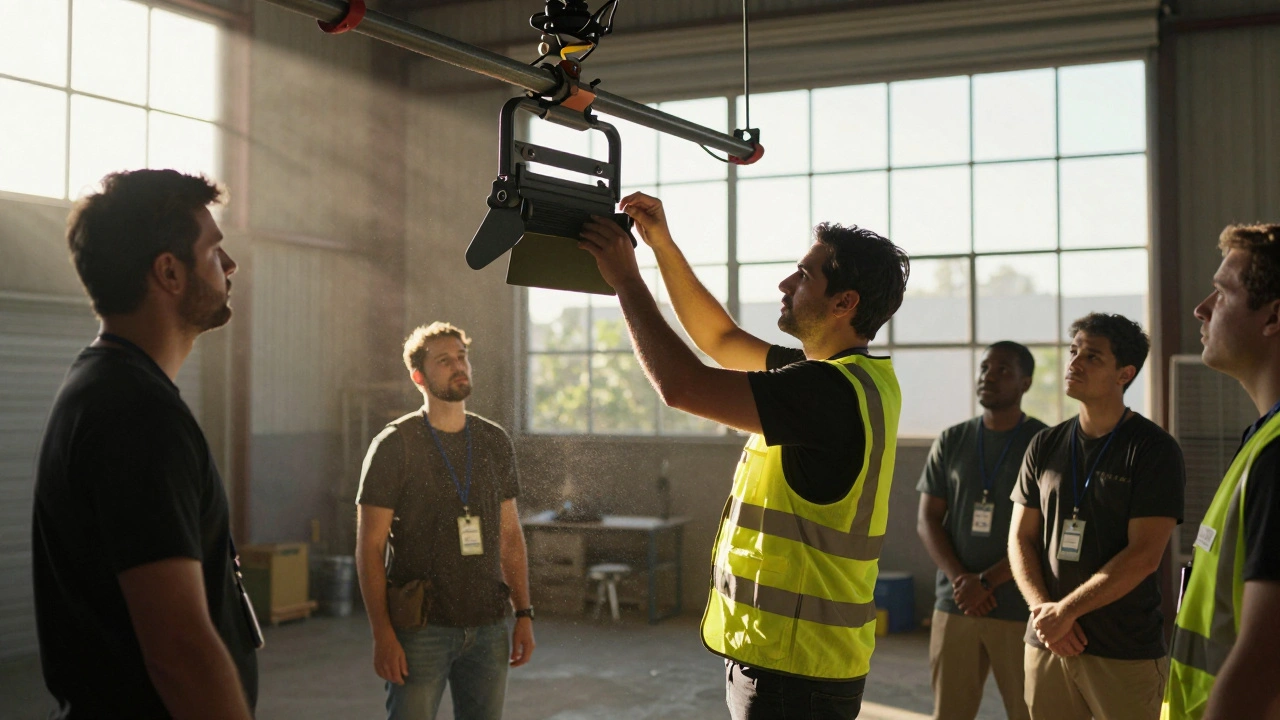
On a film set, the cameras roll, the lights shine, and the drama unfolds-but behind the scenes, a quiet but vital system works to keep everyone alive and unharmed. It’s not just about hitting marks or getting the perfect take. It’s about making sure no one gets crushed by a falling rig, burned by a hot light, or injured by a poorly secured stunt. Film set safety isn’t optional. It’s the backbone of every production, and it’s more complex than most people realize.
Who’s Responsible for Film Set Safety?
Every major film or TV production has a dedicated safety team. At the top is the Set Safety Officer a certified professional trained in occupational safety standards specific to film production. This person isn’t an afterthought-they’re hired before pre-production even begins. They inspect locations, review stunt plans, audit equipment, and have the authority to shut down a shoot if something’s unsafe. No director, producer, or studio executive can override their call.
Beneath them are Rigger Crew specialists who install and secure lighting rigs, scaffolding, and hanging equipment, Stunt Coordinators who design and oversee all physical action sequences, and Fire Safety Technicians trained to handle pyrotechnics and flame effects without risking burns or structural damage. Each role has its own certification, training program, and legal liability. This isn’t a volunteer job. It’s a regulated profession.
The Hidden Dangers on Set
Most people think of explosions or car crashes when they imagine film set dangers. But the real risks are quieter-and more common.
- Electrical hazards: Film sets use massive amounts of power. A single lighting rig can draw 20,000 watts. If a cable is frayed or improperly grounded, it can electrocute someone. In 2024, a crew member in Georgia suffered second-degree burns after touching a faulty dimmer pack.
- Falling objects: Lights, cameras, and even props are suspended overhead. A loose clamp or a snapped cable can drop 50 pounds of gear from 20 feet. That’s enough to kill. In 2023, a camera crane in Toronto dropped 80 pounds of equipment onto a soundstage floor-missing a technician by 18 inches.
- Confined spaces: Many scenes are shot in tight locations-basements, attics, narrow alleyways. Poor ventilation, heat buildup, or blocked exits can lead to heatstroke or panic. In 2025, a Netflix series halted production for three days after three crew members passed out inside a sealed warehouse used as a set.
- Repetitive strain: Camera operators hold heavy gear for hours. Sound mixers bend over microphones all day. These injuries don’t make headlines, but they end careers. Over 40% of crew members report chronic back or shoulder pain by their fifth year on set.
These aren’t rare accidents. They’re preventable. And they happen more often than you think.
How Safety Is Built Into Every Shot
Safety doesn’t start the day before filming. It starts in the script.
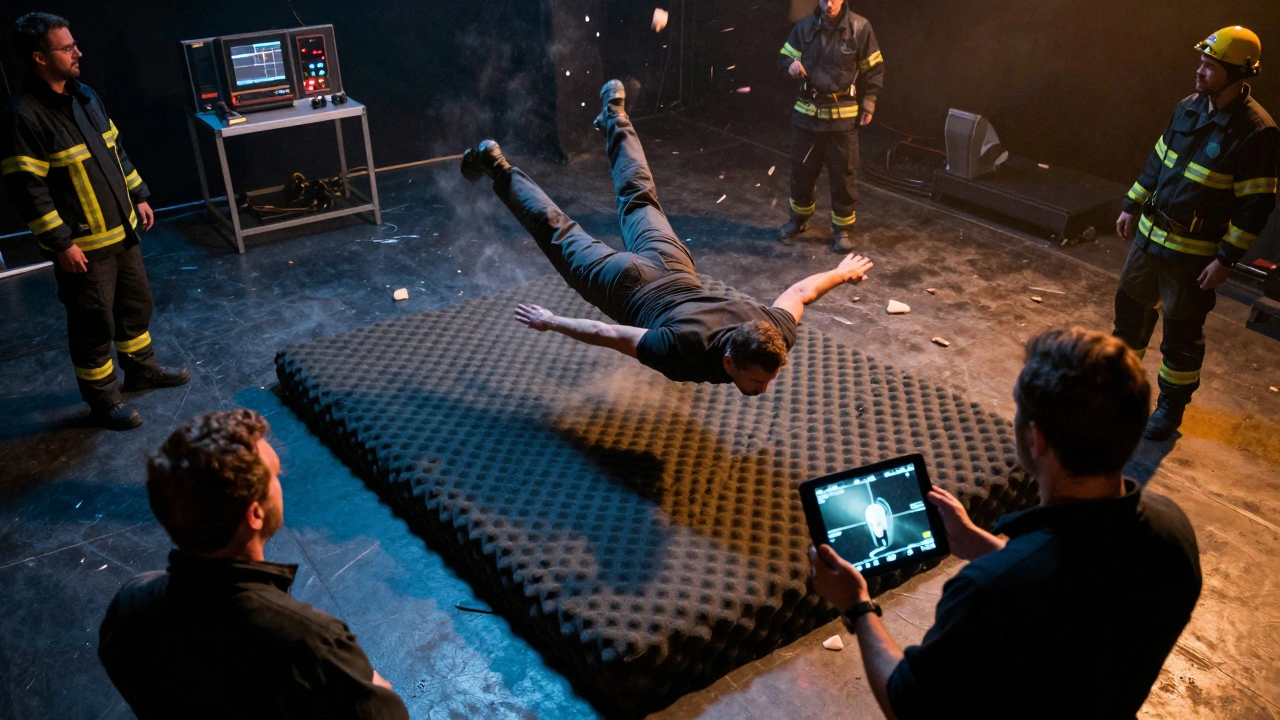
Before a scene is approved, the safety team reviews every action. If a character is supposed to jump from a second-story window, the stunt team doesn’t just pick a stunt double. They calculate drop height, pad thickness, landing angle, and emergency response time. They test it with dummies. They simulate it with motion capture. They document every variable.
Every piece of equipment gets tagged. Lights have serial numbers. Cables are color-coded. Rigs are inspected daily. A simple checklist might include:
- Are all rigging points rated for 3x the load?
- Are all electrical connections double-checked by two certified electricians?
- Is there a clear evacuation route from every set area?
- Are all actors briefed on emergency signals?
- Is medical personnel on standby during stunts?
These aren’t suggestions. They’re requirements under the International Film Safety Standards (IFSS) a global framework adopted by 47 countries since 2022. Violating them can mean fines, lawsuits, or even criminal charges.
Technology Is Changing Safety
Modern sets use tools that didn’t exist a decade ago.
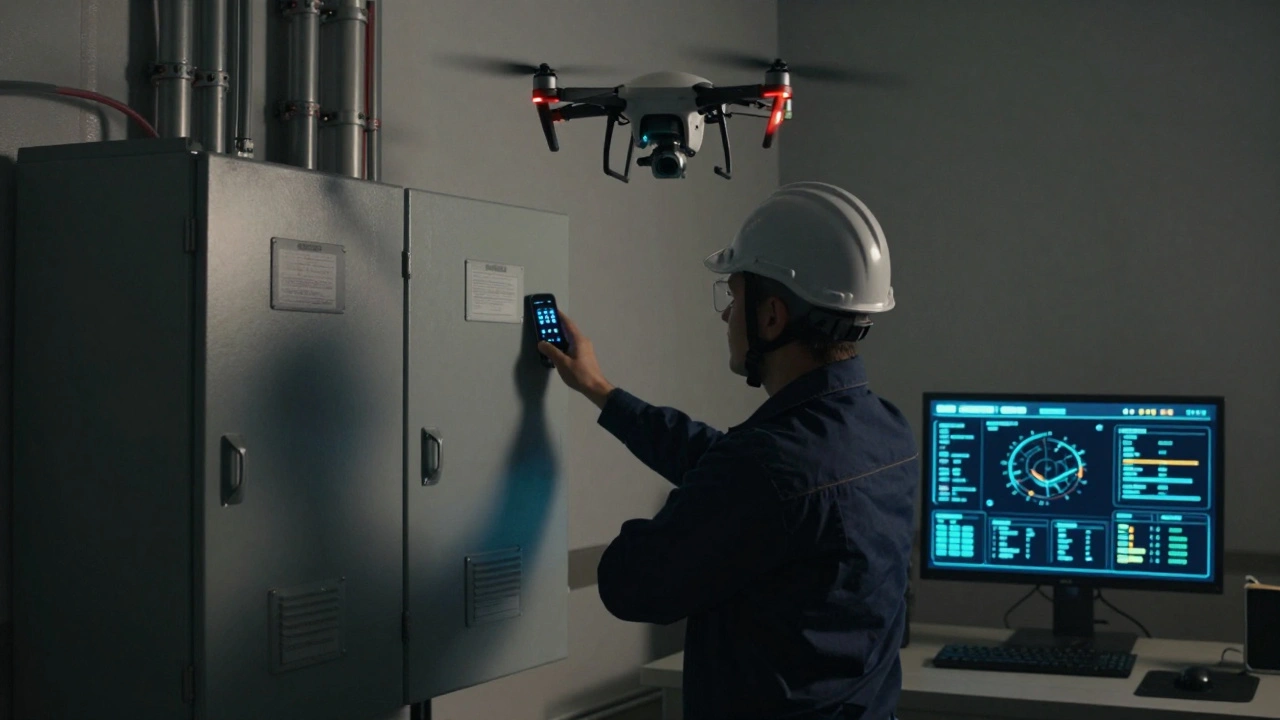
Smart helmets now track crew members’ vital signs. If someone’s heart rate spikes or body temperature rises too high, the system alerts the safety officer. Drones inspect high rigs before anyone climbs. Virtual reality lets stunt teams rehearse complex sequences without physical risk. Even lighting rigs now have sensors that detect overheating and shut down automatically.
One major studio in Vancouver started using AI-powered risk prediction software in 2024. It scans past incident reports, weather data, crew fatigue levels, and equipment age to forecast where accidents are likely. The result? A 62% drop in minor injuries and zero major incidents in the first year.
What Happens When Safety Is Ignored?
There are horror stories. The 2014 shooting of Midnight Rider left one crew member dead after a train hit the set. The 2021 death of cinematographer Halyna Hutchins on the set of Rust led to criminal charges against the director and armorer. These weren’t accidents. They were failures of process.
When safety is cut to save time or money, the cost is human. A single injury can cost a production over $250,000 in delays, insurance, and legal fees. But the real price is paid by the people who show up to work every day-not knowing if they’ll go home.
Today, unions like the International Alliance of Theatrical Stage Employees (IATSE) the union representing over 150,000 film and TV crew members demand mandatory safety training, mandatory rest periods, and independent safety audits. Studios that refuse are losing talent. Crew members are walking away from productions that don’t meet basic safety standards.
What Actors and Crew Can Do
You don’t need to be a safety officer to help keep the set safe.
- If a rig looks unstable-speak up. No one will blame you for asking, “Is this secure?”
- Always wear your hard hat and steel-toe boots. Even if it’s “just a quick shot.”
- Know your emergency exits. Every set has them. Find them before the first take.
- Report fatigue. If you’re dizzy, nauseous, or too tired to focus, say so. You’re not weak-you’re protecting everyone.
- Ask for a safety briefing before every new location. It’s your right.
Safety isn’t someone else’s job. It’s everyone’s responsibility. And when it works right, no one notices. That’s the point.
Who is legally responsible for film set safety?
The Set Safety Officer holds primary legal responsibility. They are hired by the production and report directly to the producer, but they operate independently. No one-not even the director-can override their safety decisions. In the U.S., OSHA regulations apply to film sets, and in the EU, the EU Film Safety Directive mandates certified safety personnel on all professional shoots. Failure to comply can lead to fines, production shutdowns, or criminal prosecution.
Are actors required to do their own stunts?
No. While some actors choose to perform their own stunts, it’s never mandatory. Stunt performers are trained professionals with years of experience and specialized equipment. Most major studios require stunt doubles for anything beyond simple falls or runs. Insurance policies often prohibit actors from performing high-risk actions without approval from the stunt coordinator and safety officer.
How often are film sets inspected for safety?
Every day. Before filming begins, the safety officer conducts a full inspection of the set, equipment, and exits. After any major change-like moving a light rig or adding a new prop-a re-inspection is required. Monthly audits are done by third-party auditors, and unannounced inspections happen during production. Studios with a history of violations are subject to weekly checks.
What happens if a crew member reports a safety issue?
Reporting a safety concern is protected under labor law in over 40 countries. The safety officer must investigate the issue within 24 hours. If the problem is confirmed, work stops until it’s fixed. Retaliation against anyone who reports a hazard is illegal and can lead to lawsuits or union action. Most productions now use anonymous reporting apps so crew members can speak up without fear.
Is film set safety different for TV vs. movies?
The standards are the same, but the scale differs. TV productions often move faster, with tighter schedules, which increases pressure. But safety protocols are legally identical. A single-camera TV drama on Netflix follows the same rules as a $200 million film. The difference is in enforcement: larger productions usually have full-time safety teams, while smaller TV shows may rely on one officer covering multiple units. That’s why many crews now push for minimum safety staffing rules, regardless of budget.
What Comes Next
The future of film set safety isn’t just about better gear-it’s about culture. More studios are now tying safety performance to bonuses. Crew members are being trained as safety ambassadors. Union contracts are adding safety clauses that go beyond minimum legal requirements.
And it’s working. In 2025, the number of serious injuries on film sets dropped to its lowest level in 15 years. It’s not because cameras got safer. It’s because people started caring more.
If you’ve ever watched a movie and wondered how they made that impossible stunt look real-now you know. The answer isn’t magic. It’s discipline. It’s training. It’s people who refuse to let a shot go forward if someone’s life is at risk.


Comments(5)