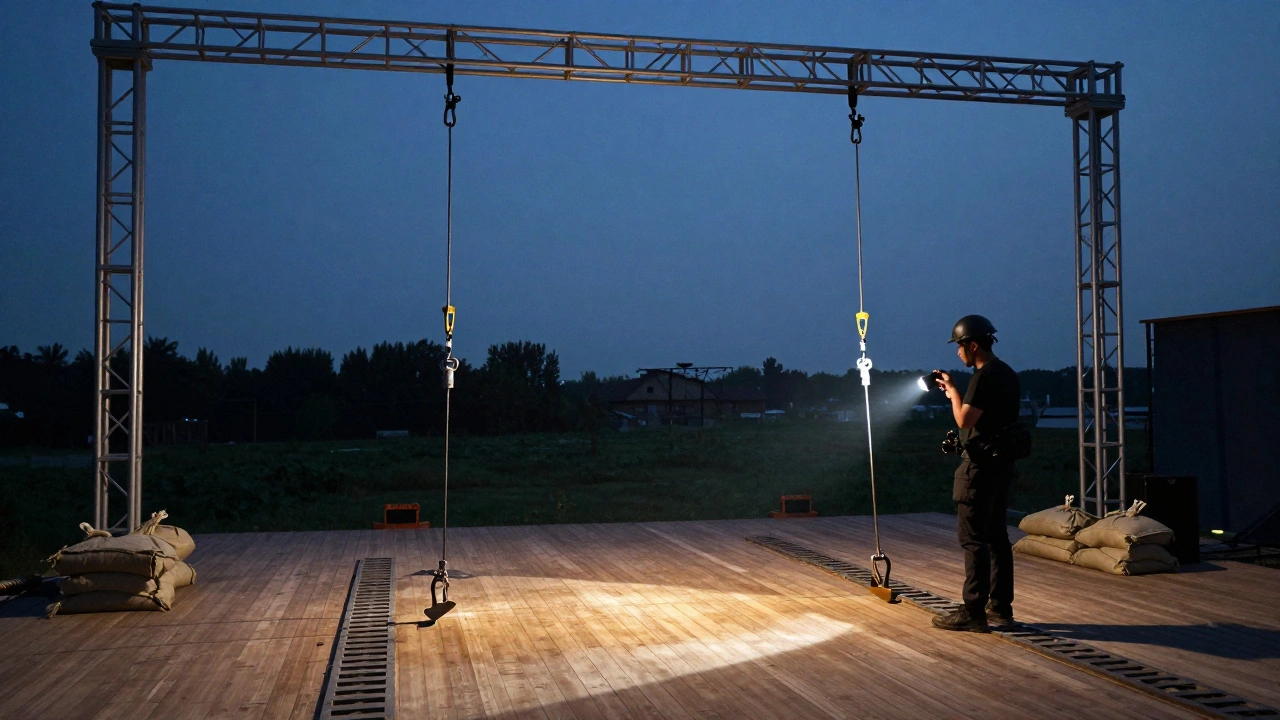
Every time a camera rolls on a movie set, dozens of people are working under hanging lights, suspended platforms, and heavy props that could crush or kill if something goes wrong. Set safety isn’t a checklist you fill out on day one-it’s the quiet, constant work that keeps everyone alive. In film production, rigging isn’t just about hanging a backdrop or mounting a light. It’s engineering under pressure, with deadlines, weather, and budget constraints. And when it fails, the consequences aren’t just ruined takes-they’re broken bones, lost lives.
What Makes Set Rigging Different From Other Rigging
Construction sites use cranes and steel beams. Theaters use fly systems with counterweights. Film sets? They’re temporary, unpredictable, and built in places no engineer ever designed for. A rigging point on a soundstage might be a bolt in a 30-year-old truss. On location, it could be a tree branch, a fire escape, or the roof of a rented warehouse. There’s no building code to follow-just physics, experience, and common sense.
Unlike theaters or industrial sites, film sets don’t have time for permits or inspections. Crews often have 12 hours to build a two-story balcony that needs to hold 500 pounds of lighting, a camera crane, and three actors. And then it’s torn down by sunrise. That’s why rigging on film sets isn’t about compliance-it’s about judgment. Every connection, every cable, every anchor point has to be treated like it’s the last one holding up the whole scene.
The Three Rules of Set Rigging
There are no official manuals that cover every scenario. But after decades of accidents and near-misses, the industry settled on three non-negotiable rules:
- Never trust a single point of attachment. If something is hanging over a person, it needs at least two independent anchor points. One fails, the other holds. This isn’t a suggestion-it’s the law on most union sets.
- Double-check everything. The grip who rigged the light didn’t do it wrong. The gaffer didn’t skip the safety check. But someone else might’ve bumped the cable. Someone else might’ve tightened the wrong bolt. Every rigging point gets inspected by two people before any actor or camera goes under it.
- Assume everything is heavier than it looks. A 50-pound lighting rig might look light. But add a 20-foot boom, a counterweight, and wind resistance, and you’re dealing with 300 pounds of momentum. If it falls, it doesn’t just drop-it swings, spins, and shatters.
These rules exist because someone died following the opposite. In 2013, a lighting rig fell on a film set in Georgia. The cause? A single bolt holding a 400-pound fixture. The bolt had been reused from a previous setup. It had been stripped. No one checked.
Common Set Hazards and How to Avoid Them
Most people think the biggest danger is falling lights. But the real killers are the things you don’t see coming.
- Overloaded trusses: Soundstage trusses are rated for specific loads. But crews often stack lights, cameras, and scaffolding on top of them without checking the weight limit. Always ask for the truss load chart. If it’s not posted, assume it’s unsafe.
- Improper cable management: A cable running across the floor isn’t just a trip hazard. If it’s under tension-like a cable pulling a camera crane-it can snap and whip back like a steel whip. Always use cable ramps, tape it down, or route it overhead.
- Unsecured props: A 100-pound stone statue might look stable. But if it’s mounted on a shaky base and someone bumps the set, it can topple. Props that weigh more than 25 pounds must be anchored to the floor or wall with at least two secure points.
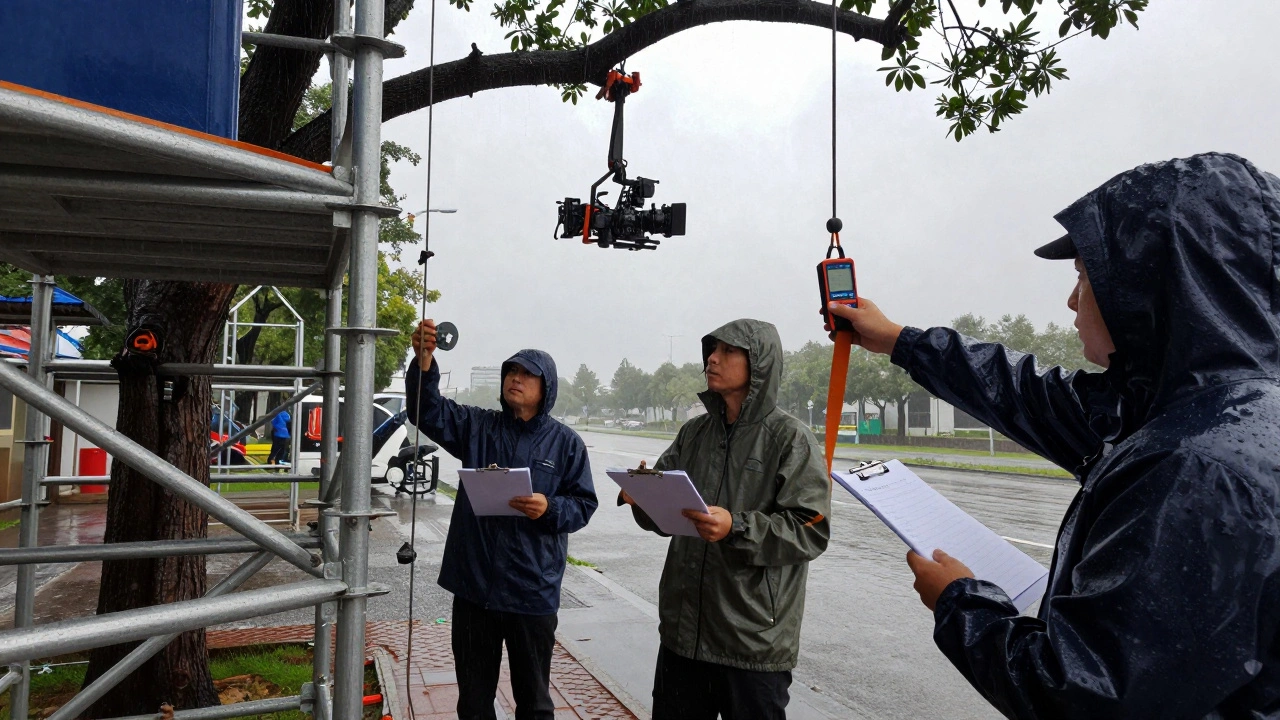
- Weather on location: Wind can turn a 10-pound flag into a 50-pound sail. Rain can make metal slick. Snow can hide unstable ground. Always reassess rigging after any weather change. Don’t assume yesterday’s setup is still safe today.
Who’s Responsible for Set Safety?
It’s not just the rigging crew’s job. It’s not just the production designer’s job. It’s everyone’s job.
The production designer chooses where the set goes. The gaffer picks the lights. The key grip decides how to hang them. The assistant director calls action. The director wants the perfect shot. And the actor? They just want to do their job safely.
On professional sets, there’s a dedicated set safety officer-a person whose only job is to watch for hazards. They don’t have to be a rigger. They just have to know what to look for. On smaller sets, that role falls to the key grip or the best boy grip. But if no one is officially responsible, someone still has to be.
And here’s the truth: if you see something unsafe and you don’t speak up, you’re part of the problem. No one gets fired for saying, “That looks risky.” But people have died for staying quiet.
Tools and Gear That Save Lives
Good rigging isn’t about fancy gear. It’s about using the right gear the right way.
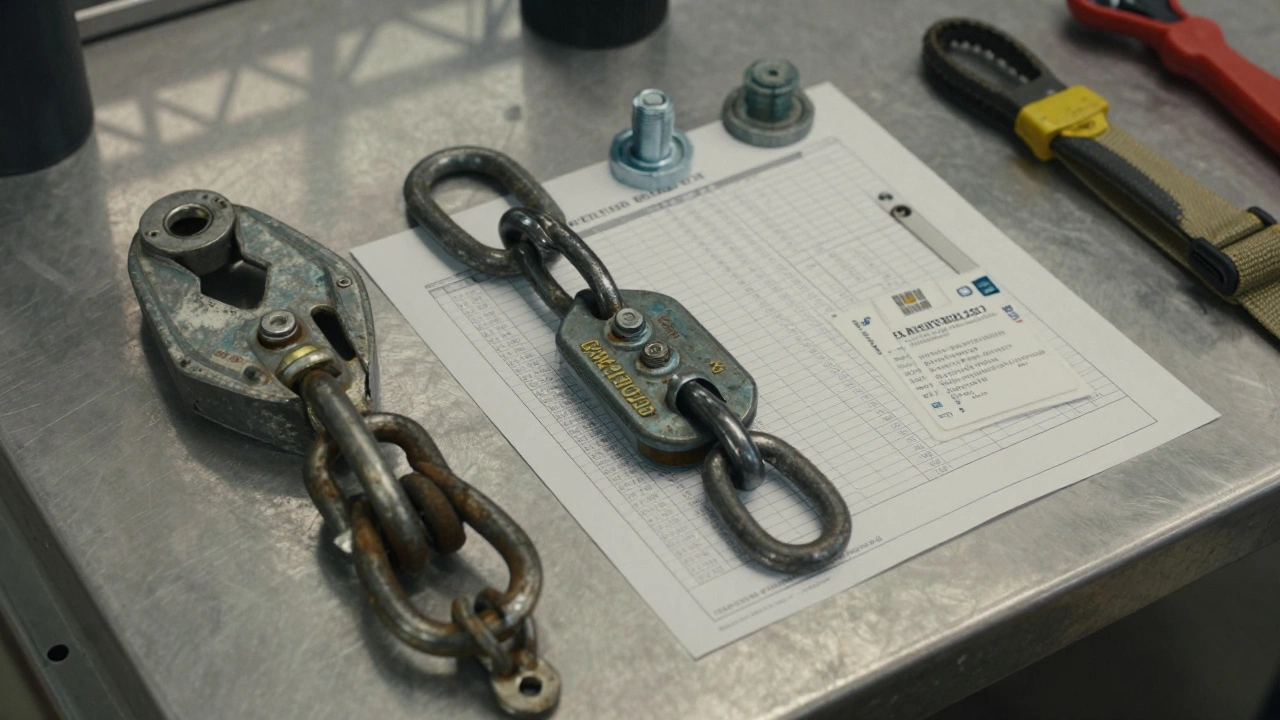
- Chain hoists and ratchet straps: Never use bungee cords or zip ties to hold anything heavy. Use rated chain hoists with safety latches. Ratchet straps should be rated for the load and inspected for fraying.
- Wire rope clips: If you’re using steel cable, make sure the clips are the right size and number. Three clips minimum, spaced properly, with the U-bolt on the live end.
- Load cells: For high-risk rigs, use digital load cells to measure actual weight. If the rig says 300 pounds but the load cell reads 380, you stop. No exceptions.
- Hard hats and safety glasses: Always. Even if you’re not under the rig. A falling tool can kill from 20 feet up.
And never, ever use hardware from a hardware store. That “heavy-duty” bolt you bought at Home Depot? It’s not rated for dynamic loads. Use only hardware certified to ANSI/ASME B30 standards-things labeled “rigging grade” or “film grade.”
What Happens When Safety Is Ignored?
In 2021, a camera crane collapsed on a low-budget horror film in Texas. The operator had rigged it to a wooden beam with unverified bolts. The beam snapped. The crane fell 15 feet onto the cinematographer. He survived, but lost his right arm.
That wasn’t an accident. It was negligence. The crew had no safety officer. The director didn’t know what a load chart was. The producer cut the safety budget to save $800.
That $800 didn’t save money. It cost the crew $1.2 million in medical bills, lawsuits, and lost production time. And it cost a person their career.
There’s no such thing as a “minor” safety violation on set. There’s only a near-miss-and a lucky one at that.
How to Build a Safe Set From Scratch
Here’s how you start right:
- Plan before you build. Sketch the rigging points. Know where the lights, cameras, and actors will be. Don’t wait until the set is up to figure out where to hang things.
- Get load charts. Ask the venue or studio for the structural load limits. If they can’t give you them, assume they’re zero.
- Use a checklist. Every rigging point gets a tag: date, name of rigger, inspector, load rating, and inspection sign-off. No tag? No go.
- Test before you shoot. Use sandbags or dummy weights to simulate the load. Watch for movement, creaking, or sagging. If it moves, it’s not safe.
- Communicate. Before every shot, the key grip calls out: “Rig is clear. All personnel clear.” Then the director says “Action.” If anyone is under a rig, you don’t shoot.
Final Thought: Safety Isn’t a Cost. It’s the Foundation.
There’s a myth that safety slows things down. But the truth? Unsafe sets slow things down more. A single accident shuts down production for weeks. Insurance premiums spike. Crews quit. Reputations crumble.
Safe sets run smoother. People work faster when they know they won’t get hurt. Creativity thrives when there’s no fear. And the best films? They’re made by teams that trust each other enough to say, “Wait. Let’s check that.”
Build your sets like lives depend on them-because they do.
Who is responsible for set safety on a film crew?
Everyone is responsible, but the key grip and assistant director are typically the frontline enforcers. On union sets, there’s a dedicated set safety officer. On smaller crews, the gaffer or production designer often takes the role. No one should assume someone else is watching. If you see a hazard, speak up-no matter your role.
Can I use regular hardware store bolts for rigging?
No. Hardware store bolts aren’t rated for dynamic loads, vibrations, or repeated stress. Film rigging requires ANSI/ASME B30-rated hardware labeled for lifting or rigging use. Using unapproved hardware is a violation on every professional set and has caused fatal accidents.
How often should rigging be inspected?
Every rigging point must be inspected by two qualified people before any actor or camera is placed beneath it. After any change to the set, weather event, or movement of equipment, the rig must be rechecked. Daily visual inspections are standard. Load tests with dummy weights are required for high-risk setups.
What’s the most common cause of rigging failures?
The most common cause is using a single point of attachment. Other top causes include reused or damaged hardware, ignoring load charts, and failing to inspect after environmental changes like wind or rain. Most failures happen because someone assumed it was safe without verifying.
Do I need a license to rig on a film set?
There’s no official government license, but most studios and unions require certification from recognized training programs like the International Alliance of Theatrical Stage Employees (IATSE) or the Motion Picture Industry Safety Training Program. Experience alone isn’t enough-proper training in load calculations, hardware ratings, and emergency procedures is expected.
If you’re building a set, remember: the best shot is the one that doesn’t hurt anyone. Safety isn’t the enemy of creativity. It’s what lets creativity happen without fear.




Comments(5)