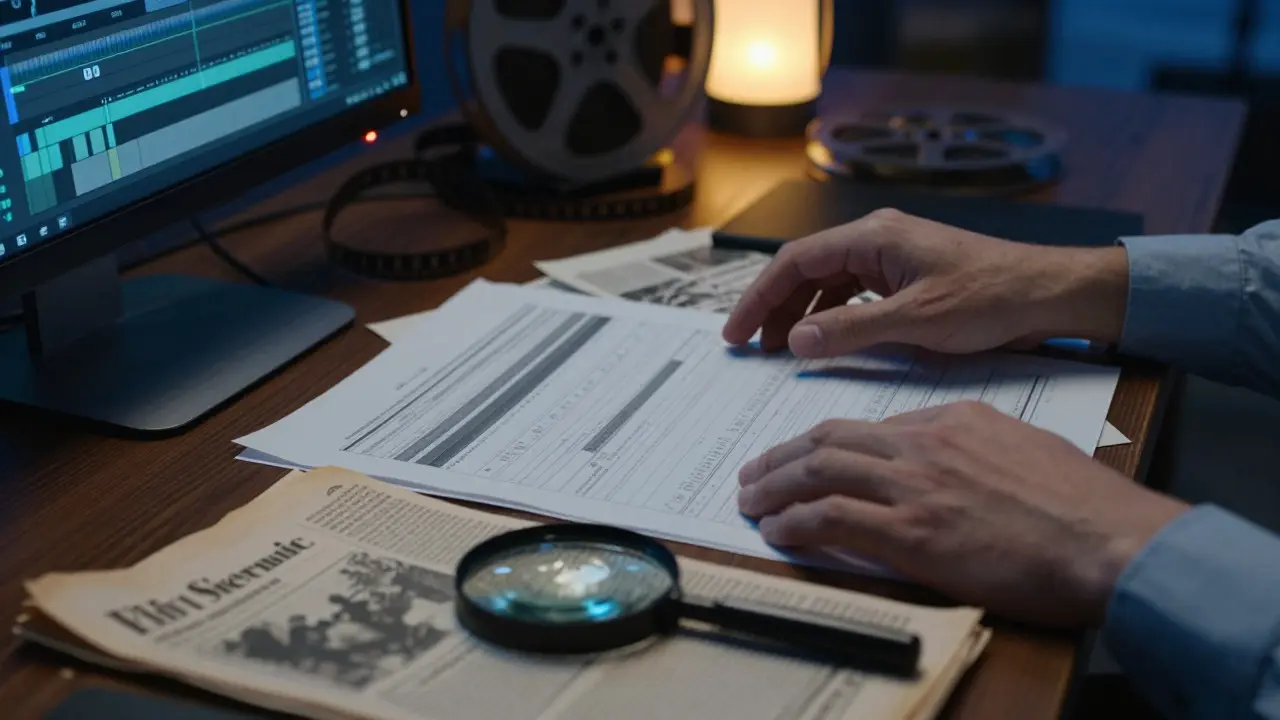
Imagine watching a gripping documentary that claims a specific political event changed the course of history. The music swells, the interviewee looks into the camera with tears in their eyes, and you believe it. But what if the date was wrong? What if the quote was taken out of context? In an era where misinformation spreads faster than facts, documentary fact-checking has become less of a niche academic exercise and more of a survival skill for both filmmakers and audiences. It is no longer enough to simply "show the truth"; you must prove it.
For creators, this means digging deeper than ever before. For viewers, it means asking harder questions. This guide breaks down the practical methods used by professionals to verify claims, trace sources, and ensure that the final cut stands up to scrutiny. Whether you are a student filmmaker or a seasoned producer, these steps will help you build a foundation of credibility that resonates with modern audiences.
Why Accuracy Matters More Than Ever
The trust gap between audiences and traditional media is widening. According to recent surveys on media literacy, nearly half of adults struggle to distinguish between opinion and fact in video content. Documentaries occupy a unique space here. They are not news reports, but they are not pure fiction either. They sit in the middle ground of non-fiction storytelling, where emotional impact can sometimes overshadow factual precision.
This creates a risk. When a documentary gets a detail wrong, it doesn't just confuse one viewer; it erodes trust in the entire genre. A single verified error can lead to retracted statements, lawsuits, or public backlash. Conversely, when a film is rigorously researched, it becomes a reference point. Think of films like Hoop Dreams or An Inconvenient Truth. Their power came not just from the story, but from the confidence that what you were seeing was real. That confidence is built through systematic verification.
The Core Pillars of Verification
Fact-checking in documentary filmmaking relies on three main pillars: primary sources, secondary corroboration, and contextual integrity. Understanding the difference between these is the first step toward accurate storytelling.
- Primary Sources: These are original materials created at the time of the event. Examples include raw footage, official government records, court transcripts, personal diaries, and direct interviews with eyewitnesses. Primary sources are the gold standard because they remove layers of interpretation.
- Secondary Sources: These are accounts based on primary sources. News articles, academic papers, and books fall into this category. They are useful for establishing context and timeline, but they should never be your only proof for a specific claim.
- Contextual Integrity: This refers to whether a fact is presented in a way that reflects its full meaning. A quote might be verbatim correct, but if you cut out the sentence before or after it, the meaning changes. Context is part of the fact.
A common mistake is relying too heavily on secondary sources. If you want to say that a building collapsed on a specific Tuesday, don't just cite a newspaper article from Wednesday. Find the police report, the insurance claim, or the structural engineer's assessment. Each layer adds weight to your argument.
Step-by-Step Process for Verifying Claims
You don't need to be a detective to check facts, but you do need a system. Here is a practical workflow that many professional editors and researchers use during post-production.
- List Every Factual Claim: Go through your script or edit and highlight every statement that presents a fact. Dates, names, statistics, locations, and quotes all count. Don't assume something is true just because it feels right.
- Categorize the Source Type: For each claim, identify where the information came from. Is it a memory? A social media post? An official document? Assign a reliability rating to each source.
- Find Independent Corroboration: Try to find at least two independent sources that confirm the same detail. If two different newspapers reported the same incident, that's good. If they both cited the same press release, that's not independent. Look for different origins.
- Check for Bias and Agenda: Ask yourself who benefits from this version of events? If a source is a corporate spokesperson, look for internal memos or whistleblower accounts to balance the perspective.
- Verify Visual Evidence: Reverse image search any archival footage or photos you plan to use. Tools like TinEye or Google Lens can help you find the original context. Did that photo actually happen where you think it did? Was it staged?
- Consult Subject Matter Experts: If your topic involves medicine, law, or science, talk to a specialist. They can spot nuances that general researchers miss. For example, a historian can tell you if a uniform worn in a clip matches the correct year.
This process takes time, but it prevents costly errors later. Catching a mistake during editing is far cheaper than correcting it after release.

Navigating Digital Archives and Open Data
The internet has made research easier, but it has also made it messier. Digital archives offer access to millions of documents, but finding the needle in the haystack requires specific skills.
Start with reputable digital repositories. Libraries of Congress, National Archives, and university digital collections often have high-quality scans of historical documents. When using open data, always download the raw dataset rather than relying on pre-made charts. This allows you to verify the calculations yourself. If a statistic says "unemployment rose by 5%," check the underlying numbers to see if that calculation holds up.
Beware of "deep fakes" and manipulated audio. While rare in serious documentaries, they are becoming more accessible. Always listen to the full audio file, not just the excerpt. Check the waveform for edits. If possible, obtain the original recording directly from the subject or a trusted archivist.
Common Pitfalls to Avoid
Even experienced filmmakers make mistakes. Here are some of the most common traps that undermine credibility.
| Error Type | Description | Prevention Strategy |
|---|---|---|
| Confirmation Bias | Searching only for evidence that supports your initial theory. | Actively seek out counter-evidence. Ask colleagues to challenge your assumptions. |
| Source Echoing | Citing multiple sources that all rely on the same original report. | Trace the lineage of the information. Identify the root source and verify it directly. |
| Outdated Data | Using statistics or laws that have since been changed or superseded. | Always note the date of the data. Clarify in the narration if the situation has evolved. |
| Visual Misrepresentation | Using stock footage that implies a connection that didn't exist. | Use lower-thirds text to clarify if footage is illustrative rather than literal. E.g., "Stock footage represents typical conditions." |
Another subtle issue is the "presentism" trap. This happens when you judge past events by today's standards without acknowledging the historical context. You aren't necessarily wrong, but you risk alienating viewers who understand the period. Acknowledge the shift in perspective to maintain objectivity.
Building a Culture of Accountability
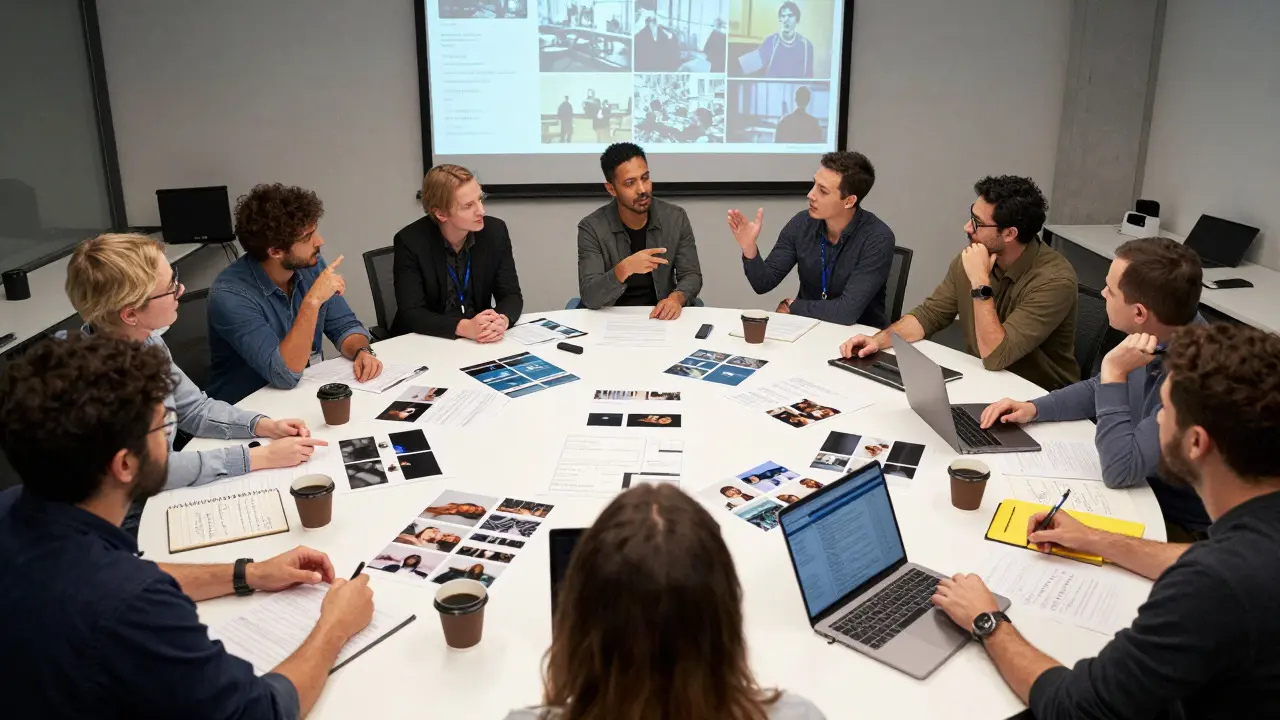
Fact-checking shouldn't be a last-minute task assigned to an intern before the deadline. It needs to be embedded in the production culture from day one. During pre-production, define your editorial standards. How much ambiguity is acceptable? Do you need double-sourcing for all major claims? Write these rules down and share them with your team.
Create a shared spreadsheet or database where every claim is logged. Include columns for the claim, the source, the URL or citation, the verification status, and the verifier's name. This creates accountability. If someone makes a claim, they own the verification. This simple tool can save hours of confusion during the edit phase.
Finally, be transparent with your audience. If a piece of information is disputed, show the dispute. If you had to guess based on available evidence, say so. Audiences respect honesty. They are far more forgiving of admitted uncertainty than they are of hidden errors.
Frequently Asked Questions
How many sources do I need to verify a claim in a documentary?
There is no fixed number, but the rule of thumb is two independent sources for significant claims. For minor details, one reliable primary source may suffice. Independence is key; if both sources cite the same origin, they count as one.
What is the difference between a primary and secondary source?
A primary source is original material created at the time of the event, such as a letter, photograph, or interview. A secondary source interprets or analyzes primary sources, such as a biography or news article. Primary sources are generally more reliable for verifying specific facts.
How do I handle conflicting information from different experts?
Present the conflict honestly. Explain why the experts disagree and what evidence supports each side. Avoid taking sides unless one view is overwhelmingly supported by data. Transparency builds trust with the audience.
Is it necessary to fact-check fictional elements in a documentary?
Yes, if you present them as fact. If you use reenactments or dramatizations, clearly label them as such. However, the underlying historical framework must still be accurate. Viewers expect the core narrative to be grounded in reality.
Where can I find reliable digital archives for research?
Start with national libraries, university digital collections, and specialized databases like JSTOR for academic papers. For visual media, check institutions like the Library of Congress or the Internet Archive. Always verify the provenance of the digitized files.



Comments(10)