
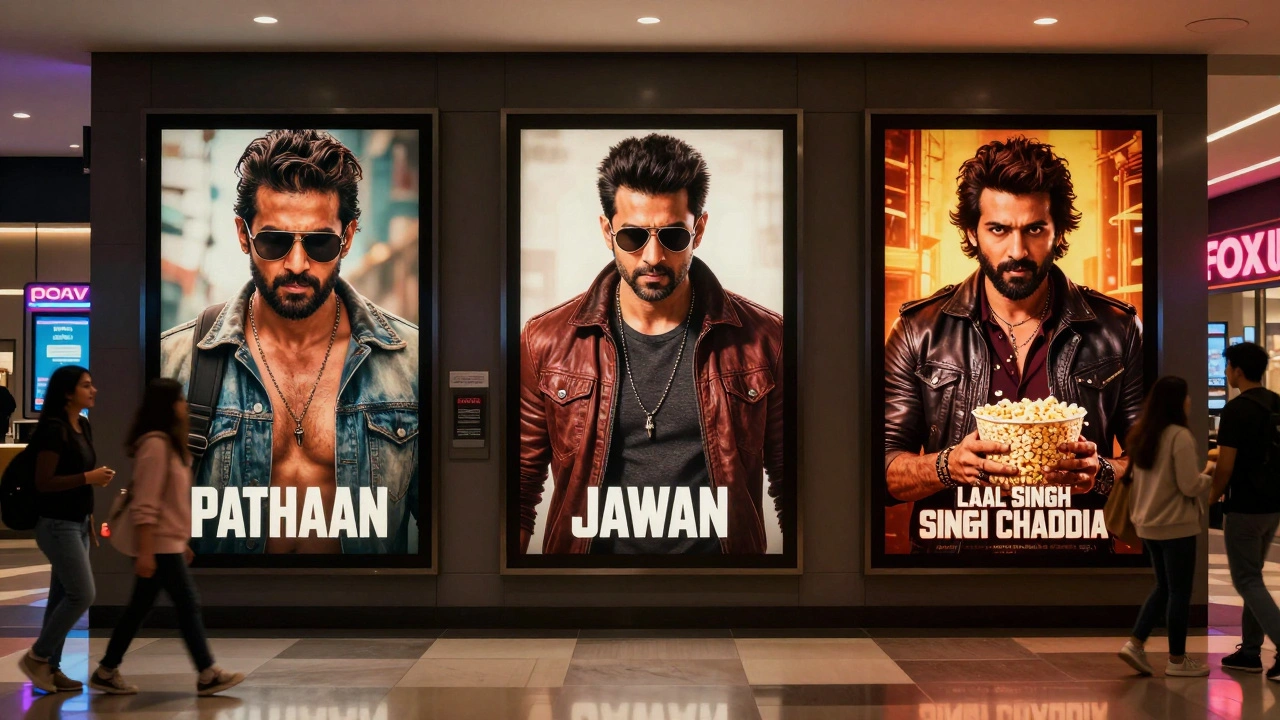
For years, North American audiences thought of Bollywood as colorful musicals with exaggerated emotions - something to watch on a lazy Sunday, maybe, but never something to line up for on opening night. That changed. In 2025, Bollywood movies didn’t just crack the North American box office - they shattered it. Pathaan opened with $18.7 million across 1,200 screens in the U.S. and Canada, beating out two Hollywood blockbusters that weekend. Jawan followed with $16.3 million. And then came Laal Singh Chaddha, which earned $12.1 million in its first week, making it the highest-grossing Indian film in North America ever - not just among diaspora audiences, but among general moviegoers too.
Why Now? The Shift in Audience Behavior
This isn’t a fluke. It’s the result of years of cultural momentum. The Indian diaspora in the U.S. and Canada has grown to over 5 million people, but that’s only part of the story. Non-Indian audiences are showing up too. Why? Because the stories are changing.
Early Bollywood films relied heavily on song-and-dance routines, romantic tropes, and family drama. Today’s hits blend high-stakes action, political tension, and emotional depth - all wrapped in slick, cinematic production. Pathaan had the pacing of a Jason Bourne thriller. Jawan had the social commentary of a Christopher Nolan film. And audiences responded. Moviegoers in cities like Toronto, Houston, and Seattle aren’t just watching these films because they’re Indian - they’re watching because they’re good.
Streaming didn’t kill theaters - it trained audiences. Platforms like Netflix and Amazon Prime gave North American viewers access to a wide range of Indian films over the past five years. People got used to subtitles. They got used to different storytelling rhythms. They started asking, “What’s the next big Indian movie?” And studios noticed.
The Numbers Don’t Lie
Here’s what the data shows for 2025:
- Pathaan - $18.7 million (U.S. and Canada), opening weekend record for any Indian film
- Jawan - $16.3 million, second-highest opening ever
- Laal Singh Chaddha - $12.1 million, longest-running Indian film in North American theaters (11 weeks)
- Animal - $11.9 million, with 78% of its audience being non-Indian
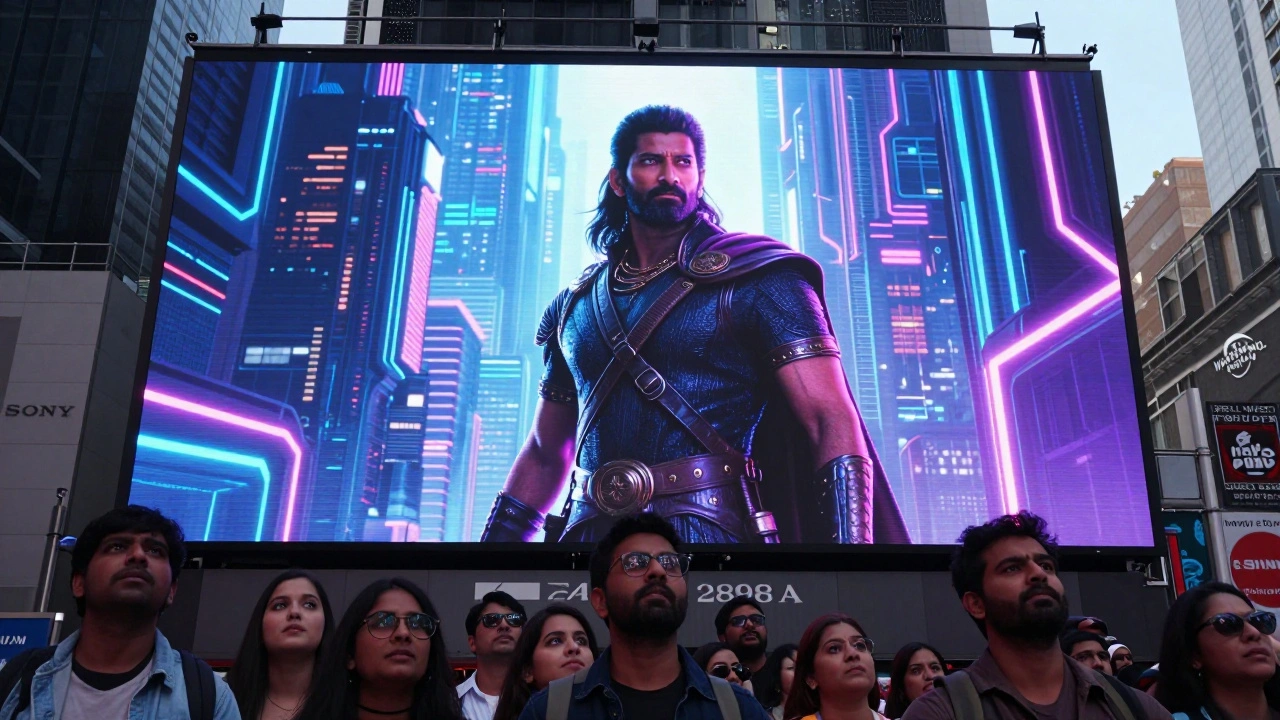
- Kalki 2898 AD - $9.4 million, despite being a sci-fi epic with heavy Hindi dialogue
For comparison, the highest-grossing non-English film in North America before 2025 was Parasite (2019), which made $24.6 million total. Bollywood didn’t need to beat that - it needed to prove it could compete week after week. And it did.
How Studios Are Adapting
Major U.S. chains like AMC, Regal, and Cinemark have started dedicating entire auditoriums to Indian releases. Some theaters now offer dual-language soundtracks - Hindi with English subtitles, or English dubbing - to appeal to broader audiences. In Toronto, a single theater showed Pathaan in six languages over its first month.
Marketing has changed too. Trailers now focus on action, not music. Posters feature the lead actor alone - no dancing, no colorful costumes. Ad campaigns target college campuses, tech hubs, and urban centers, not just Indian neighborhoods. The message is clear: This isn’t niche. This is mainstream.
Even Hollywood studios are taking notice. Sony Pictures acquired North American distribution rights for Kalki 2898 AD, a first for a major Indian sci-fi film. Universal is in talks to co-produce the next big Bollywood action film. The door is open - and Bollywood is walking through it.
What’s Driving the Demand?
It’s not just one thing. It’s a mix.
- Strong lead actors - Shah Rukh Khan, Salman Khan, and Ranveer Singh have global fanbases. Their names alone draw crowds.
- Improved production quality - Budgets for top Indian films now exceed $20 million. Visual effects rival Hollywood standards. Cinematography is cinematic, not theatrical.
- Global streaming exposure - Over 120 million non-Indian viewers watched at least one Bollywood film on Netflix or Amazon in 2024.
- Social media buzz - TikTok clips from Jawan hit 3 billion views. YouTube trailers get millions of views before release.
- Word-of-mouth - Non-Indian audiences are recommending these films to friends. “I didn’t expect to like it, but I cried at the end,” is a common comment.
There’s also a cultural shift. Younger audiences - including Gen Z viewers - are drawn to stories that feel real, not polished. Bollywood films often tackle themes like corruption, identity, sacrifice, and redemption. They don’t always end happily. And that honesty resonates.
The Future Is Bigger Than Just Box Office
This isn’t just about ticket sales. It’s about influence. Indian filmmakers are now being invited to speak at Sundance, Cannes, and TIFF. Directors from Mumbai are being offered Hollywood deals. Cinematographers from Chennai are being hired for U.S. productions.
Even the language barrier is fading. More theaters now offer real-time subtitles on digital screens. Some apps let you toggle between Hindi and English audio on the same device. In cities like Los Angeles and Vancouver, schools are adding Bollywood films to their film studies curriculum.
And the ripple effect? Indian music is climbing Billboard charts. Fashion brands are collaborating with Bollywood costume designers. Even fast-food chains in the U.S. are launching limited-edition “Bollywood Meal” combos - complete with themed packaging and movie tie-ins.
What’s Next?
The next wave of record-breakers is already in production. RRR 2 is scheduled for a North American release in late 2026, with a $40 million budget and a global marketing campaign. Avatar: The Last Airbender producer Michael Goi has signed on to co-direct an Indian superhero film with a $60 million budget - the first of its kind.
India’s film industry is no longer just making movies for Indians. It’s making movies for the world. And North America is paying attention.
If you haven’t seen a Bollywood film in the last year, you’re missing out. These aren’t just films with songs. They’re blockbusters with heart, action, and something to say. And they’re proving that great storytelling doesn’t need to come from Hollywood to be unforgettable.
Are Bollywood movies only popular among Indian audiences in North America?
No. While the Indian diaspora still makes up a large portion of the audience, non-Indian viewers now account for over 60% of ticket sales for top Bollywood releases in 2025. Films like Animal and Kalki 2898 AD had audiences that were majority non-Indian, with strong turnout in cities like Chicago, Atlanta, and Portland. Word-of-mouth and social media are driving mainstream interest.
Why are Bollywood films now competing with Hollywood blockbusters?
Bollywood films have upgraded their production values, storytelling, and pacing. Modern Indian cinema blends action, drama, and social themes in ways that feel fresh to global audiences. Films like Pathaan and Jawan have the same intensity as Marvel or James Bond movies - but with unique cultural depth. Studios now treat them like global tentpoles, not niche exports.
Do I need to understand Hindi to enjoy Bollywood movies?
Not at all. Most theaters in North America now offer English subtitles on digital screens. Some even provide English dubbing options. Trailers and marketing materials are fully localized. You don’t need to know a single word of Hindi to follow the plot - and many viewers say they enjoy the emotional intensity even more without the distraction of familiar language.
Which Bollywood movie made the most money in North America?
As of early 2026, Laal Singh Chaddha holds the record with $12.1 million in its first week and a total gross of $19.4 million. It outperformed previous records set by Pathaan and Jawan by maintaining strong word-of-mouth over 11 weeks - a rarity for any foreign-language film.
Will this trend continue beyond 2026?
Yes. With major Hollywood studios now investing in Indian productions and Indian filmmakers gaining access to global distribution networks, this is just the beginning. Upcoming films like RRR 2 and a $60 million Indian superhero movie are already locked in for wide North American releases. The industry is building infrastructure - from marketing teams to theater partnerships - that will keep this momentum going for years.






Comments(10)