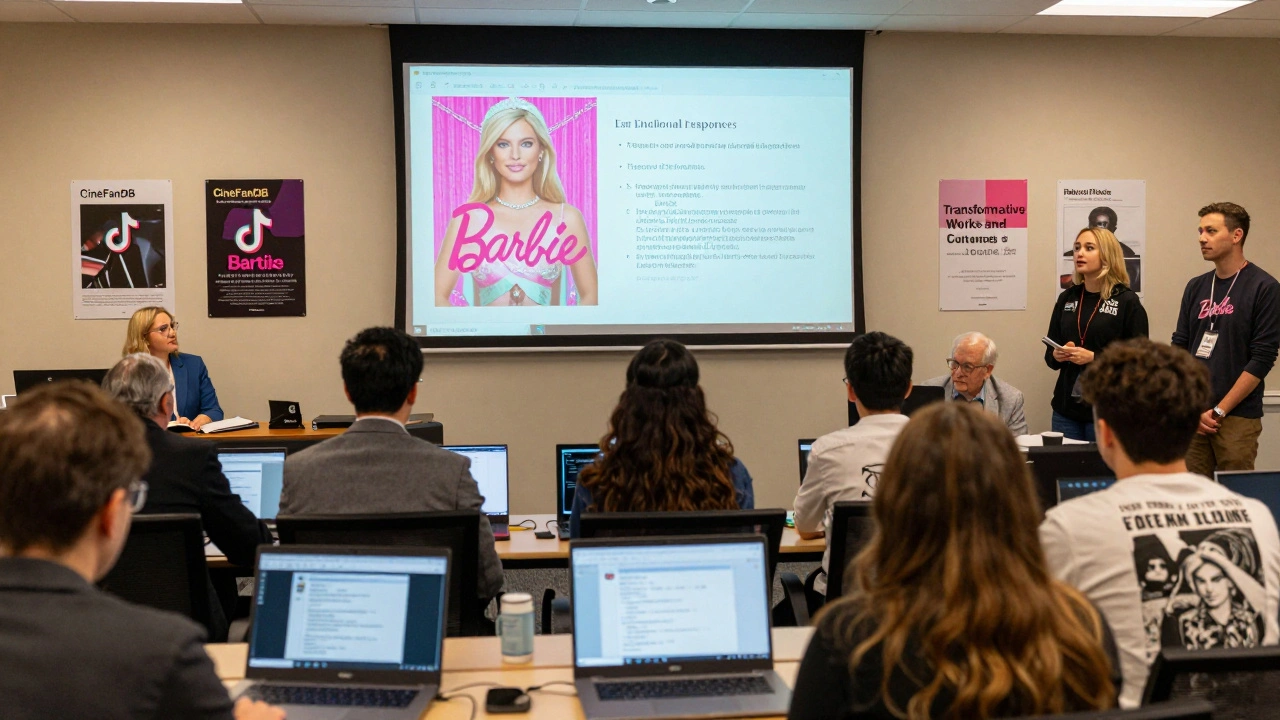
Most people think academic film conferences are stuffy events where professors argue over obscure theories while sipping bad coffee. But that’s not the whole story. In 2025, these gatherings are buzzing with fans-people who watch movies every week, run YouTube channels about cinematography, or organize midnight screenings of cult classics. They’re not just showing up to listen. They’re presenting papers, leading panels, and challenging decades-old ideas about what counts as "serious" film analysis.
Why Academic Film Conferences Are Changing
For years, film studies was locked inside university departments. The big names were theorists like Laura Mulvey and André Bazin. Their work focused on ideology, representation, and formal structure. Fan reactions? Often dismissed as "emotional" or "unacademic." But that’s shifting. Today’s conferences, like the Society for Cinema and Media Studies (SCMS) annual meeting or the International Conference on Popular Culture, are filled with attendees who’ve spent years building online archives of fan edits, writing deep-dive essays on Reddit, or creating TikTok breakdowns of Spielberg’s framing techniques.
It’s not just about inclusion-it’s about relevance. When scholars ignore how audiences actually engage with films, their research starts to feel disconnected. A 2023 study from the University of Michigan found that papers incorporating fan-created content were cited 47% more often than those that didn’t. Why? Because fans know what resonates. They track how memes shape meaning, how streaming algorithms alter viewing habits, and how global audiences reinterpret Hollywood films in ways academics never anticipated.
What Happens at These Conferences Now?
Forget the old model of one-way lectures. Modern film conferences are interactive. You’ll find panels like:
- "Fan Remediation: How TikTok Rewrote the Rules of Horror Film Analysis"
- "The Rise of the Amateur Archivist: YouTube Channels as Film Preservation Sites"
- "When Fans Correct the Canon: How Fandoms Reclaimed Representation in Star Wars"
One standout moment from the 2024 SCMS conference was a presentation by a 22-year-old college student who analyzed the emotional arc of Barbie through 300 fan-made reaction videos. She didn’t use traditional film theory. She counted pauses, tracked changes in music volume, and mapped how viewers responded to specific lines of dialogue. Her data showed that the line "I am a girl" triggered a spike in emotional responses across cultures-not because of the words themselves, but because of how they were delivered in context. That kind of insight came from someone who watches movies for fun, not for tenure.
Another trend: fan scholars are using open-source tools. They’re building public databases of fan theories, tagging them by genre, decade, and platform. One project, called "CineFanDB," now has over 12,000 entries from users in 47 countries. Academics are citing it. Journals are publishing peer-reviewed articles based on its data. This isn’t fringe work anymore-it’s becoming part of the field’s backbone.
Who’s Really Leading the Change?
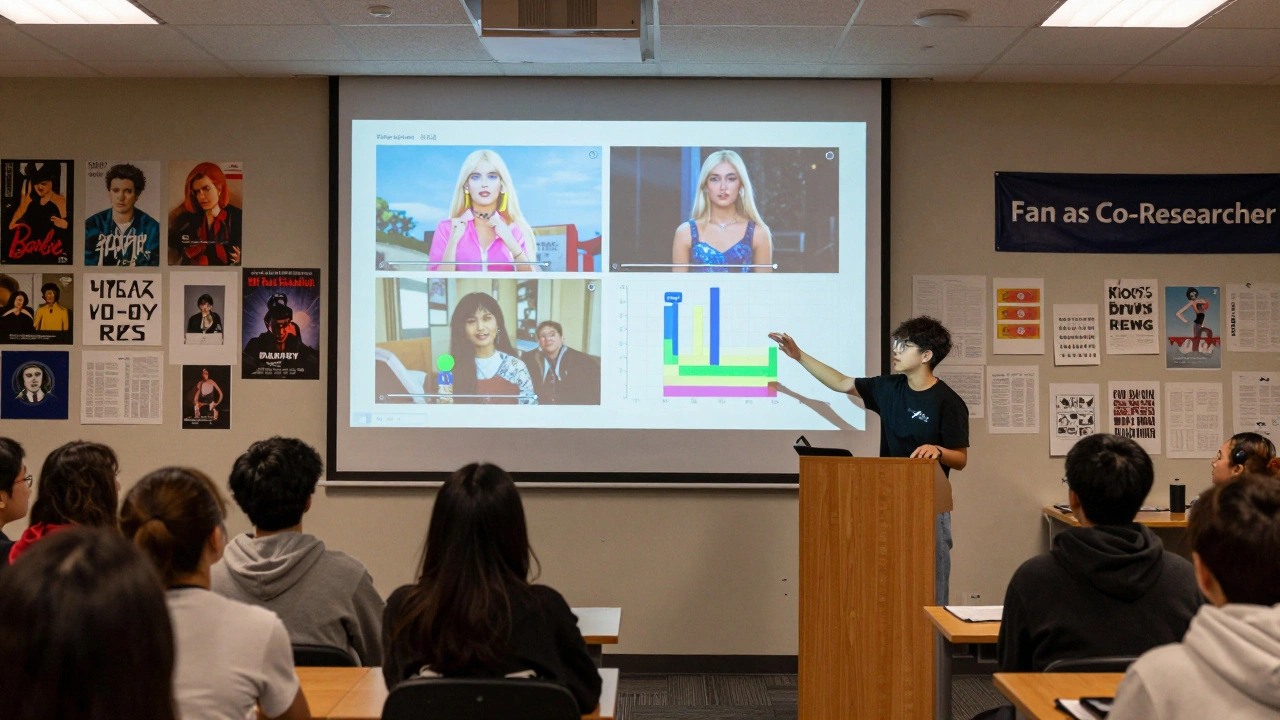
It’s not just young people. Many tenured professors are now actively inviting fans into their classrooms and conferences. At the University of Texas, Dr. Elena Ruiz started a program called "Fan as Co-Researcher." She pairs graduate students with local film bloggers to co-write papers. One collaboration resulted in a groundbreaking analysis of how Everything Everywhere All at Once was interpreted differently by Chinese-American fans versus mainstream Western reviewers. The fan contributor, a 48-year-old librarian named Mei Lin, had spent five years collecting interviews with immigrant families who watched the film together. Her notes became the core of the study.
Even journals are adapting. Journal of Film and Video now has a dedicated section called "Fan Perspectives," where submissions from non-academics are peer-reviewed using the same standards as faculty work. The criteria? Originality, evidence, clarity-not credentials.
The Tension Still Exists
Not everyone’s on board. Some senior scholars still argue that fan analysis lacks rigor. They say emotions cloud objectivity. That’s a fair concern-but it’s not unique to fandom. Academic research has its own biases: institutional prestige, funding agendas, theoretical trends. The difference? Fans don’t have a stake in maintaining the status quo. They’re not trying to get promoted. They’re trying to understand why a film moved them.
And that’s powerful. When a fan writes about how Blade Runner 2049 helped them process grief after losing a parent, that’s not just personal-it’s cultural data. It reveals how cinema functions as emotional technology. That’s something no theory book can capture alone.

How to Get Involved
You don’t need a PhD to contribute. Here’s how to start:
- Choose one film you’ve watched repeatedly and write down what you noticed-camera movements, sound design, recurring symbols.
- Compare your observations with existing academic articles. Where do they align? Where do they miss the mark?
- Submit your findings to open-access journals like Transformative Works and Cultures or Flow. Both accept submissions from non-academics.
- Attend a conference. Many offer reduced or free registration for fans. SCMS has a "First-Time Attendee Mentorship Program" that pairs newcomers with experienced presenters.
- Start a blog or social media thread. Even a simple 500-word post can spark real conversation. Some of the most cited fan essays began as Twitter threads.
There’s no gatekeeping anymore. If you’ve thought deeply about a film, you have something to say. The question isn’t whether you’re qualified-it’s whether you’re willing to share what you’ve learned.
What This Means for the Future of Film
The old divide between scholar and fan is crumbling. What’s emerging is a new kind of film culture-one where meaning isn’t dictated from above but co-created. Studios are noticing. Netflix now consults fan scholars when developing marketing campaigns for arthouse films. A24 partners with YouTube critics to design trailer teasers. Even film festivals like Sundance now include fan panels alongside director Q&As.
This isn’t just about making academia more welcoming. It’s about making film criticism more alive. When fans are part of the conversation, analysis doesn’t stay locked in journals. It spreads. It evolves. It connects.
The next time you watch a movie and feel something deep-something you can’t quite explain-don’t just rewatch it. Write it down. Share it. You’re not just a viewer. You’re part of the next chapter of film history.
Can I present at an academic film conference if I’m not a professor?
Yes. Many conferences, including SCMS and the Popular Culture Association, actively encourage submissions from fans, independent researchers, and non-academics. You don’t need a degree. You need a clear argument, evidence (like screen captures, fan edits, or audience data), and a well-written abstract. Some even offer mentorship programs to help first-time presenters prepare.
Are fan analyses taken seriously by academics?
Increasingly, yes. Studies show that papers using fan-generated content are cited more often and have greater real-world impact. Journals like Transformative Works and Cultures and Flow publish peer-reviewed work from fans. Academics are starting to treat fan insights as valuable data-not just opinions. What matters is rigor, not credentials.
What’s the difference between fan criticism and academic film theory?
Academic theory often focuses on broader systems-how power, gender, or capitalism shape film. Fan criticism tends to focus on personal, emotional, and cultural responses. But the lines are blurring. Many fan analyses now use academic frameworks (like semiotics or psychoanalysis) to explain their reactions. And academics are borrowing fan methods-like tracking audience reactions in real time-to study reception. It’s not about which is better-it’s about combining both to get a fuller picture.
Do I need to know film theory to participate?
No. Many fans start with no formal training. They notice patterns in how a film makes them feel, how it’s discussed online, or how different cultures respond to it. Those observations are valid. You can learn theory as you go. The best contributions often come from people who don’t know the rules-because they’re the ones asking why the rules exist in the first place.
How do I find film conferences that welcome fans?
Start with the Society for Cinema and Media Studies (SCMS) and the International Conference on Popular Culture. Both have open submission policies and mentorship tracks for non-academics. Follow hashtags like #FanScholar or #FilmStudies on Twitter and Mastodon-many calls for papers are posted there. Local universities also host smaller, community-focused events that are more accessible.





Comments(7)