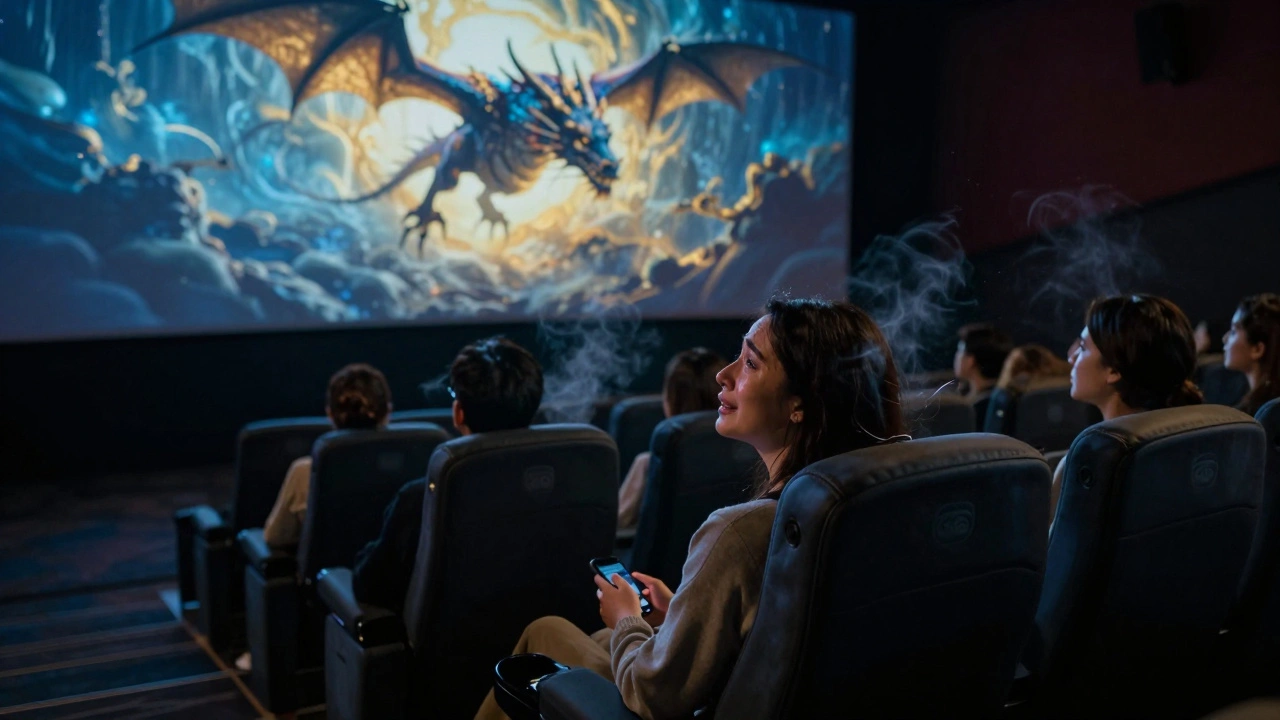
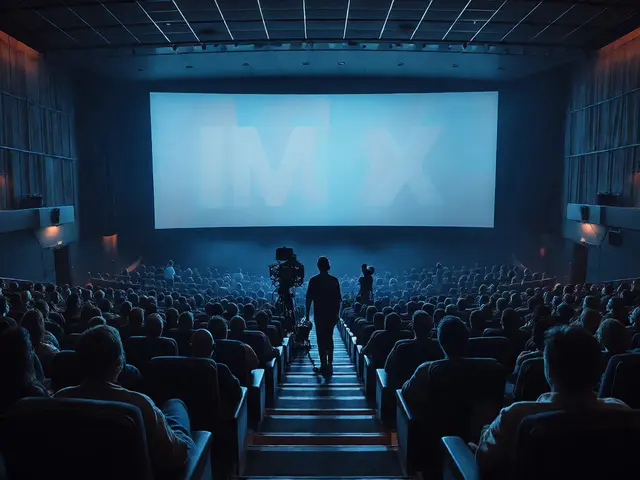
Movie theaters used to be simple: dim lights, big screen, surround sound. But now, when you walk into a theater for a new event film - something like a sensory cinema premiere of Dune: Part Two or Avatar: The Way of Water - you don’t just watch. You feel it. You smell it. You’re brushed by wind. Your seat vibrates with every explosion. This isn’t sci-fi anymore. It’s happening right now.
Why Event Films Need More Than a Screen
Event films aren’t just movies. They’re experiences. Studios spend hundreds of millions on these productions because they’re meant to be seen in theaters - not on a 55-inch TV. But streaming platforms have made home viewing better than ever. 4K HDR, Dolby Atmos, big soundbars, even smart lighting that pulses with the score. So why would anyone pay $20 for a ticket when they can watch the same film in sweatpants?
The answer? Sensory immersion. Theaters are no longer competing on screen size or sound quality. They’re competing on touch, smell, and motion. A study by the National Association of Theatre Owners in 2024 found that 68% of moviegoers aged 18-34 said they chose a theater over streaming because of ‘physical effects’ during event films. That’s not nostalgia. That’s demand.
Scent: The Forgotten Sense That Turns Watching Into Living
Think about the last time you smelled something that brought back a memory. Maybe it was pine trees after rain, or fresh bread baking. That’s what scent tech in theaters is trying to do - trigger emotion through smell.
Companies like Olfie and Scentcom have installed scent dispensers behind theater seats. For The Lord of the Rings: The War of the Rohirrim, theaters released a custom blend: damp earth, burning torches, and a hint of horse leather. For Indiana Jones and the Dial of Destiny, audiences smelled dust, old parchment, and tropical flowers during the jungle scenes. These aren’t random sprays. They’re timed down to the second, synced with the film’s score and visual cues.
It sounds weird until you experience it. One viewer in Chicago said, ‘I didn’t realize I was holding my breath until I smelled the jungle. I felt like I was there.’ That’s the goal. Not distraction. Connection.
Wind and Airflow: The Invisible Force That Tricks Your Brain
Wind doesn’t just move hair. It tells your brain something is real.
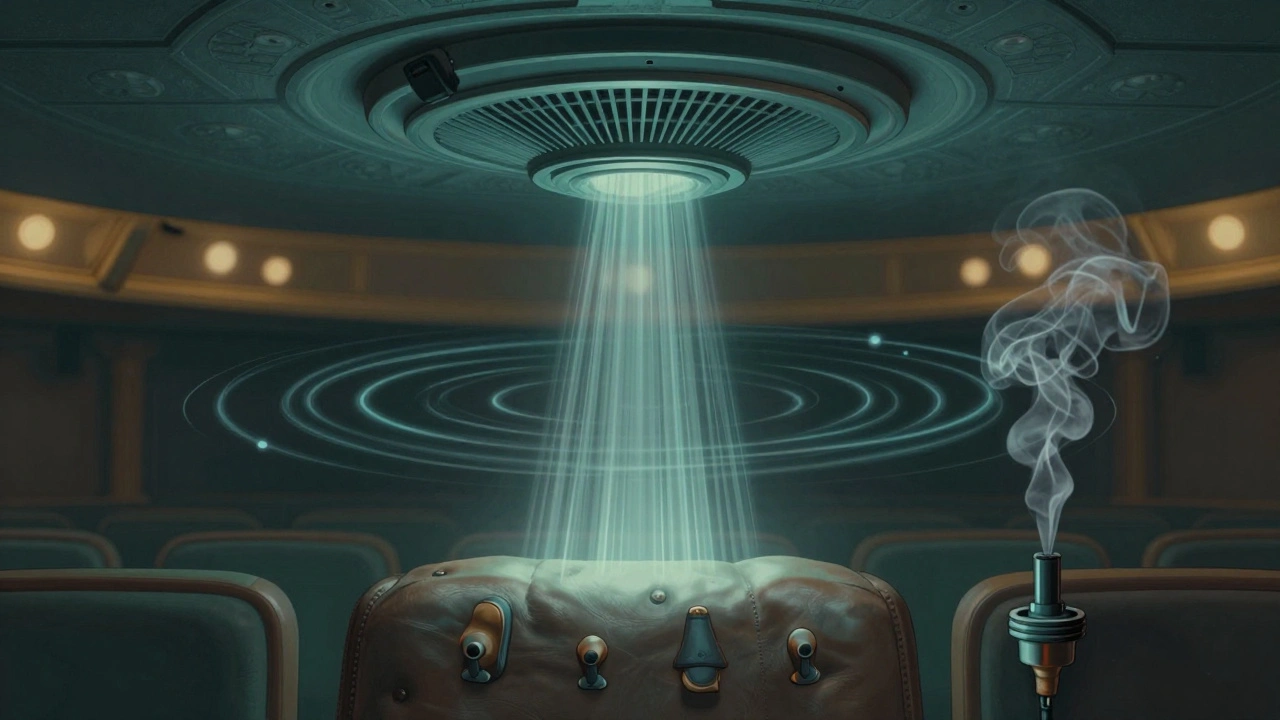
When a dragon flies overhead in How to Train Your Dragon: The Hidden World, a gentle breeze blows across your arms. When a spaceship blasts off in Star Wars: Skeleton Crew, a puff of warm air hits your face. These aren’t fans blowing randomly. They’re precision-engineered air jets, mounted in ceiling panels and under seats, controlled by AI that reads the film’s audio waveform and matches airflow intensity to on-screen motion.
Some theaters even use directional airflow - so the wind feels like it’s coming from the left when a character runs past on screen. It’s not just about motion. It’s about spatial awareness. Your brain starts believing the environment is alive because your skin is receiving the same cues your eyes are.
Haptics: The Seat That Feels Every Bullet
Most people think haptics means vibrating seats. That’s just the start.
Modern haptic seating - like the ones from Tactile Tech and Sensory Dynamics - use dozens of micro-actuators embedded in the seat back, cushion, and armrests. They don’t just shake. They simulate textures. When a character walks on gravel, you feel tiny pebbles under your thighs. When a horse gallops, you feel the rhythm of hooves in your spine. In Oppenheimer, during the Trinity test, the seat didn’t just rumble - it pulsed in three distinct waves, mimicking the shockwave’s pressure build-up, peak, and fade.
These systems are calibrated using data from motion capture and audio engineering teams. They don’t guess. They replicate. And the results are startling. In a blind test by the University of Southern California’s Media Lab, viewers couldn’t tell if they were watching a scene in a theater or a VR simulation - because their bodies were responding the same way.
Home Viewing Can’t Keep Up - Yet
Home theaters are getting better. You can buy a haptic sofa for $4,000. Scent diffusers for $300. Even wind machines that sync with your TV. But here’s the catch: they’re fragmented.
At home, you need three separate devices, three apps, three calibration steps. In a theater, it’s all built-in, tested, and synchronized by technicians before every show. There’s no setup. No lag. No mismatched timing.
Plus, theaters control the environment. No kids yelling. No doorbells. No pets jumping on the couch. The lighting is perfect. The sound is calibrated to the room. And the sensory effects? They’re designed to work together - scent, wind, and haptics - in a way no consumer product has replicated.
Even Apple’s rumored ‘Home Theater’ project, leaked in early 2025, only includes haptics and spatial audio. No scent. No airflow. It’s still just visual and auditory. Theaters are already two steps ahead.
The Real Competition Isn’t Streaming - It’s Reality
Streaming didn’t kill theaters. It forced them to evolve. Theaters aren’t trying to be better than your TV. They’re trying to be better than real life.
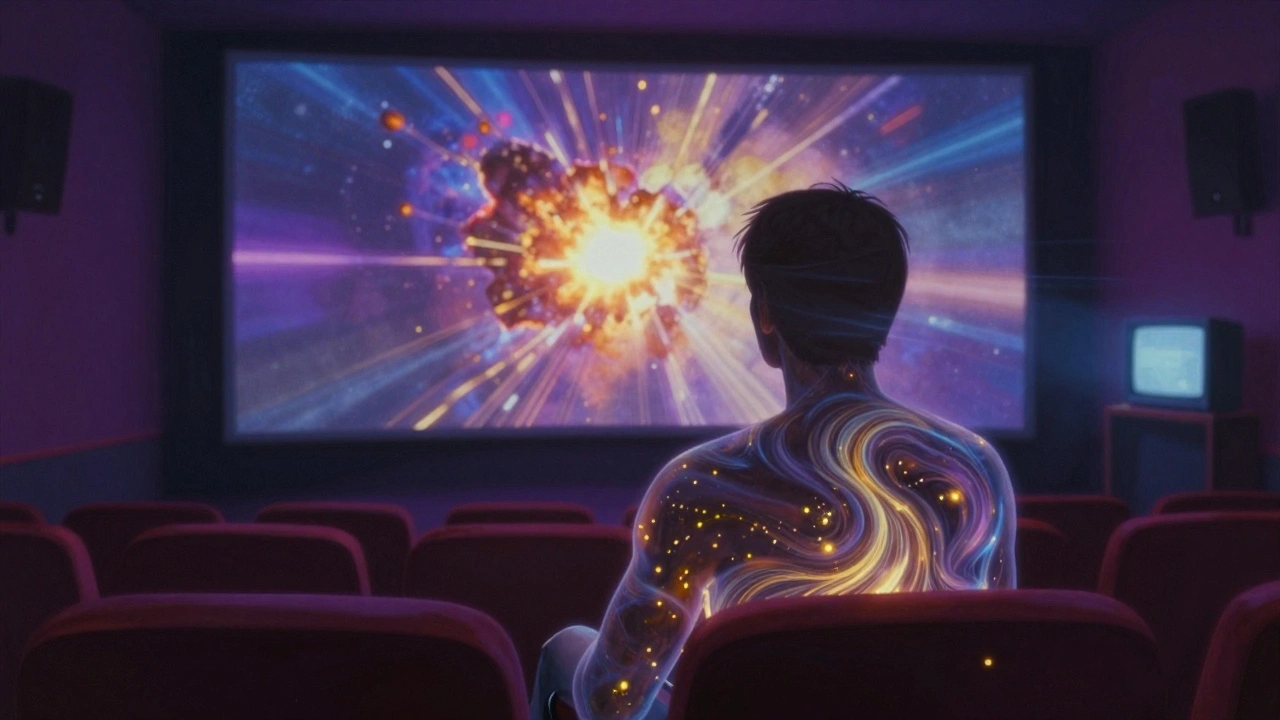
Imagine watching a scene from The Marvels where the characters jump through a dimensional rift. In your living room, you see colorful lights. In a sensory theater, you feel the rush of cold air, smell ozone like after a lightning strike, and your seat vibrates with the tearing of space - all while the lights dim and the sound drops to silence for a half-second. That’s not entertainment. That’s presence.
People aren’t paying for a movie. They’re paying for a moment they can’t get anywhere else. A moment where their body reacts before their mind catches up. That’s the future. And it’s already here.
What’s Next? Smell That Changes With Your Mood
The next leap? Personalized scent and haptics.
Early trials in select theaters in Los Angeles and Toronto are testing biometric feedback. Cameras and sensors track your heart rate and facial expressions. If you’re tense during a thriller, the system releases calming lavender. If you’re bored, it turns up the wind and adds a spicy note to the scent - to jolt your attention back.
It sounds invasive. But in a world where your phone knows your mood better than your best friend, why wouldn’t a theater adapt to you?
Some fear this is too much. That movies should stay pure. But look at live concerts. They have pyrotechnics, fog, lasers, and synchronized lighting. Why should film be any different? It’s not about gimmicks. It’s about emotion. And emotion doesn’t live on a screen. It lives in the body.
Can I buy sensory tech for my home theater?
Yes, but not as a complete system. You can buy haptic seats from brands like Tactile Tech or scent diffusers from Olfie, but they don’t sync with each other or with streaming services. Most require manual setup and don’t auto-adjust to film timing. Theater systems are integrated, calibrated, and tested - something consumer gear hasn’t matched yet.
Do all theaters use scent, wind, and haptics?
No. Only premium event film screenings in select theaters use all three. Major chains like AMC, Regal, and Cinemark offer sensory experiences in about 12% of their locations - mostly in big cities. It’s still an upgrade, not a standard. But that number is growing fast.
Are sensory effects distracting?
Only if they’re poorly designed. Bad haptics feel like a malfunctioning phone. Wrong scents smell like a chemical spray. But the best systems are subtle. They don’t shout - they whisper. A light breeze when a character walks past. A faint smell of smoke during a fire scene. The goal is immersion, not interruption.
Is sensory cinema just for blockbusters?
Right now, yes. But indie filmmakers are starting to experiment. A 2025 Sundance short film called Whisper in the Rain used scent and haptics to simulate a character’s memory of childhood storms. It didn’t have explosions - but viewers said they felt the rain in their skin. The technology isn’t limited to action films. It’s about emotional truth.
Will sensory tech replace traditional theaters?
No. Traditional theaters will still exist for casual viewing. But event films - the big releases, the cultural moments - will increasingly require sensory tech to justify the price. Theaters aren’t dying. They’re becoming more like live performances. And that’s a good thing.


Comments(9)