When you read a screenplay, the scene descriptions aren’t just background noise-they’re the invisible camera, the mood setter, the rhythm driver. Some scripts read like quick snapshots: short sentences, sharp verbs, barely a whisper of detail. Others read like poetry: rich textures, layered imagery, every object carrying weight. One isn’t better. But choosing between lean and lush scene descriptions can make or break how your script is read, pitched, and made.
What Lean Scene Description Actually Looks Like
Lean scene description strips everything down to the bone. It’s the difference between saying "The room is dark, dusty, and filled with old furniture" and "Dust swirls in a single shaft of light. A broken chair lies on its side. A single coat hangs, still damp."
Lean writing trusts the reader. It doesn’t explain. It implies. It’s common in action scripts, thrillers, and indie films where speed and tension matter. Think of the opening of Mad Max: Fury Road. No one tells you the desert is endless. You feel it because the description is just: "Dunes. Dust. A car screaming through it all."
Lean scripts use:
- Short sentences. Often one line.
- Active verbs only. No "was" or "is" unless necessary.
- No adjectives unless they carry meaning. "Cold"? Fine. "Beautifully cold"? Cut it.
- No internal monologue. No feelings. Only what the camera can see or hear.
Why does this work? Because it’s fast. A producer skimming a script can get the visual in under three seconds. A director knows exactly where to place the camera. A cinematographer doesn’t waste time wondering what "elegant" means. Lean is a tool for efficiency-and it’s the default for most studio scripts.
When Lush Scene Description Works (And When It Doesn’t)
Lush scene description is the opposite. It’s sensory. It’s emotional. It’s the kind of writing that makes you smell the rain before the character even opens the window.
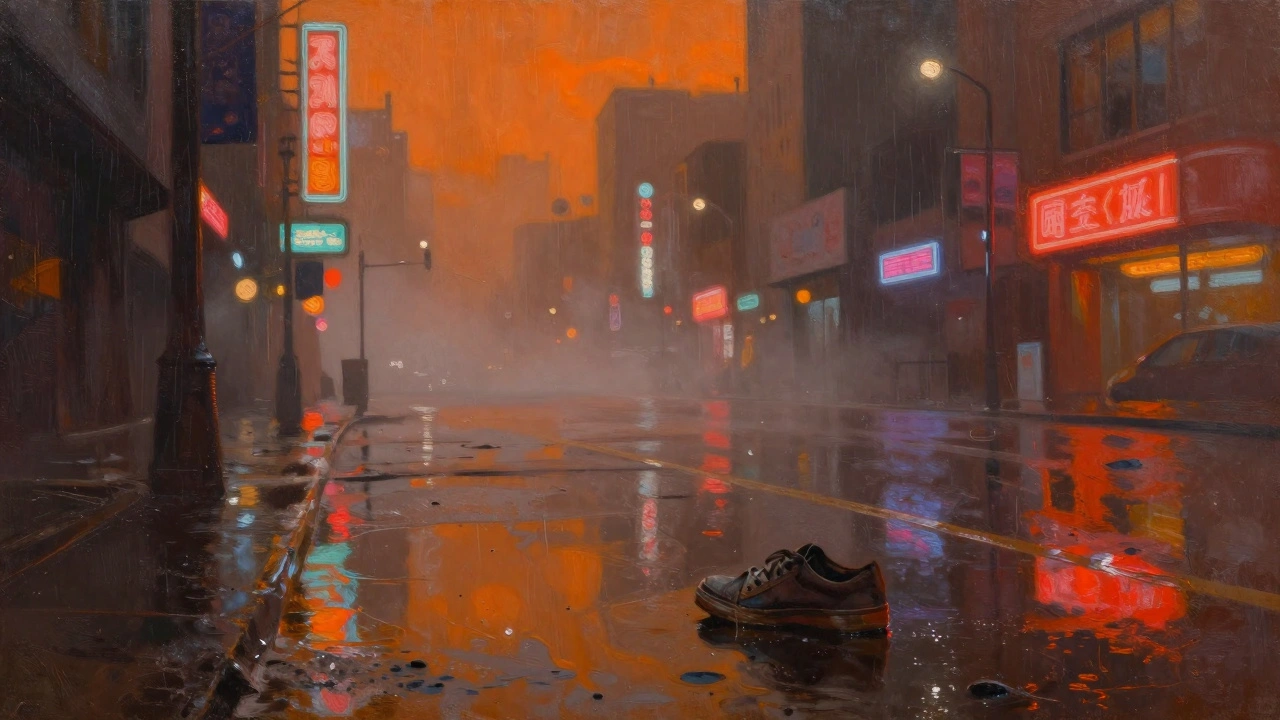
Look at the opening of Blade Runner 2049. The script doesn’t just say: "A city under gray sky." It says: "The sky bleeds orange and ash. Rain falls like static. Neon signs flicker through the mist, their reflections swallowed by puddles of oil and forgotten dreams."
Lush writing works when:
- The tone is poetic or dreamlike.
- The setting is a character itself-like the Overlook Hotel in The Shining.
- You’re writing for a director known for visual storytelling-like Denis Villeneuve or Terrence Malick.
- You’re submitting to an indie film festival where mood trumps momentum.
But here’s the catch: lush writing can kill momentum. If your action scene reads like a novel, producers will skip ahead. If every hallway has a description of "peeling wallpaper that whispers of forgotten tenants," you’re not building tension-you’re burying it.
Lush isn’t about being fancy. It’s about being intentional. Every image must pull weight. A single line like "A child’s shoe lies half-buried in the snow, still tied." can say more than three paragraphs of exposition.
Why Most New Writers Get This Wrong
Many new screenwriters think lush = better. They’ve read literary novels. They’ve watched art films. They believe more detail = more depth.
Reality? It’s the opposite.
Screenplays aren’t novels. They’re blueprints. A producer doesn’t hire you because you can write beautiful prose. They hire you because you can tell a story visually-and fast. If your script takes five minutes to read a single scene, it won’t get read twice.
On the flip side, some writers go too lean. They write: "A man walks in. He’s sad." That’s not lean. That’s lazy. Lean doesn’t mean empty. It means precise.
Instead of "He’s sad," try: "He stops at the doorway. Doesn’t move. His hand hovers over the doorknob-then drops to his side." Now you’ve shown sadness. You didn’t name it. The audience feels it.

When to Use Lean vs. Lush: A Practical Guide
You don’t have to pick one style and stick with it. Most great scripts mix both. The trick is knowing where and why.
Use lean for:
- Action sequences
- Transitions between scenes
- High-tension moments
- Any scene where pacing matters more than atmosphere
Use lush for:
- Opening scenes
- Key emotional turning points
- Flashbacks or dream sequences
- Setting the tone of the entire film
Here’s a real example from a script that nailed the balance:
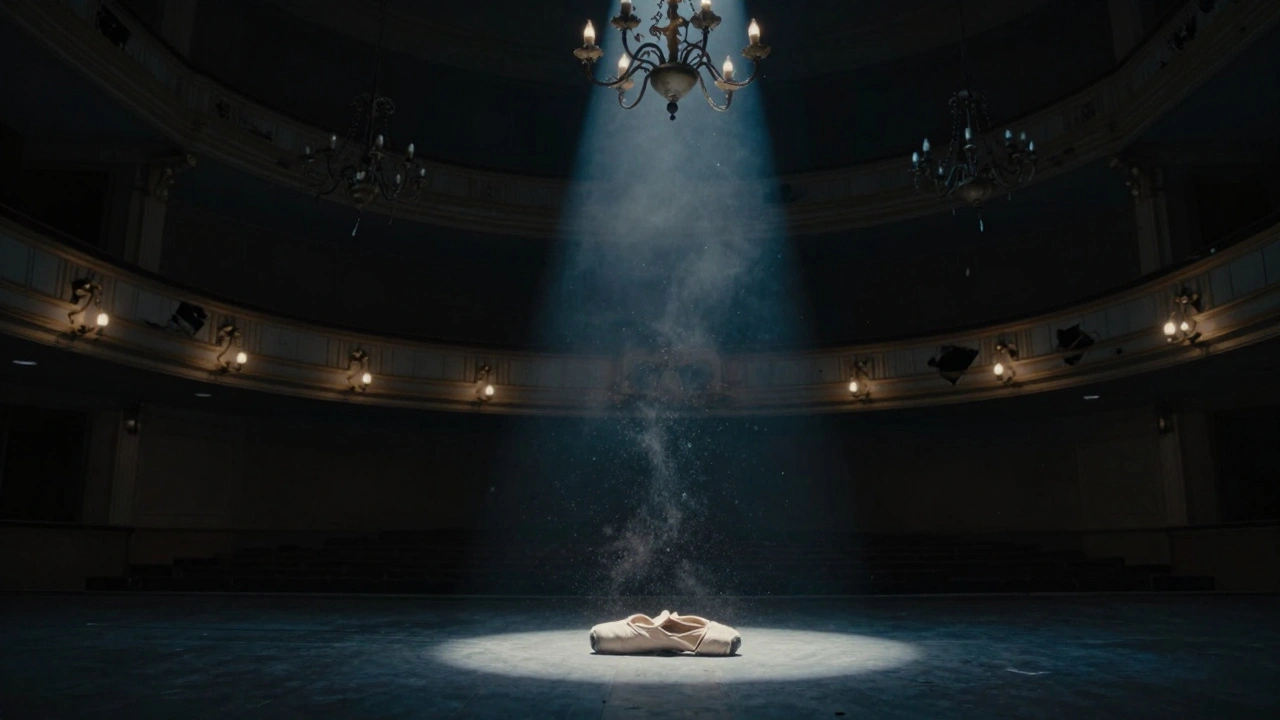
INT. ABANDONED THEATER - NIGHT
Broken chandeliers hang like skeletons. Dust floats in slow motion. A single spotlight hits the stage-illuminating a single, cracked ballet slipper.
Footsteps echo from the balcony. Slow. Deliberate.
A shadow steps into the light. No face. Just a coat. And the sound of breathing-too quiet to be human.
The first three lines? Lush. They build dread. The last line? Lean. It cuts the mood like a knife. That’s the rhythm you want.
What Industry Professionals Actually Say
John Logan, screenwriter of Gladiator and The Aviator, says: "Your job isn’t to describe the world. Your job is to make the reader see it in their mind’s eye-and then get out of the way."
Shane Black, known for Lethal Weapon and Kiss Kiss Bang Bang, writes lean scripts with punchy humor. He once said: "If you’re writing a description longer than three lines, you’re probably telling me how to direct it. Don’t. I’ve got a crew for that."
On the other side, Charlie Kaufman’s Being John Malkovich is full of lush, surreal descriptions-but only where they matter. The rest? Clean. Sharp. No wasted words.
The pattern? Even the most stylistic writers know: every line must earn its place.
How to Train Yourself to Write Better Scene Descriptions
Here’s a simple exercise you can do in 10 minutes:
- Take any scene from a movie you love.
- Find the script online (Final Draft or PDF).
- Read the description line by line.
- Ask: "Is this necessary? Does it move the story? Does it reveal character? Or is it just decoration?"
- Try rewriting it-first in lean, then in lush. See how the tone shifts.
Another trick: read your scenes out loud. If you find yourself pausing to breathe, or if a line feels like it’s dragging, cut it. Screenplays are meant to be read quickly. If it feels like poetry, that’s fine-but only if it still moves.
And never forget: the best scene descriptions don’t describe what’s there. They describe what’s about to happen.
Final Rule: Show, Don’t Explain-Even in Description
Lean or lush, the golden rule never changes: show, don’t explain.
Don’t say: "She’s terrified." Say: "Her fingers grip the edge of the table. The knuckles are white. A single drop of sweat rolls down her temple and lands on the wood-silent."
Don’t say: "The house is haunted." Say: "The front door creaks open. No wind. The hallway light flickers once-then goes out. Inside, a child’s laughter echoes from upstairs."
That’s the power of good scene description. It doesn’t tell you what to feel. It makes you feel it without asking.
Is lean scene description only for action movies?
No. Lean description works in any genre where pacing matters-dramas, thrillers, even comedies. It’s about clarity and speed, not genre. A quiet drama about grief can use lean writing to make silence feel louder. The key is using minimal words to imply maximum emotion.
Can I use lush description in a studio script?
Yes-but only in key moments. Studios prefer lean for most scenes because it’s faster to shoot and easier to budget. But if you’re writing the opening of a fantasy epic or a surreal drama, lush description can set the tone. Just keep it short. Two to three lines max. Anything longer risks getting cut in production.
How do I know if my scene description is too long?
If any description runs longer than five lines, it’s probably too long. Most professional scripts average 2-3 lines per scene. If you find yourself writing paragraphs, ask: What’s the one visual that says it all? Focus on that. Cut the rest.
Do I need to describe every character’s clothing?
Only if it matters. A detective in a rumpled trench coat? Yes-that tells us about his life. A woman in a blue dress? Only if the color or style ties into the story-like if she wears it to a funeral, or if it’s the same dress from a flashback. Clothing is only important when it reveals character or plot.
What’s the biggest mistake in scene description?
Explaining emotions instead of showing them. Writing "he is angry" or "the room feels lonely" is the fastest way to kill momentum. Always translate feeling into action, object, or sound. Anger? A fist slams the table. Loneliness? A clock ticks in an empty house. Let the audience feel it-don’t tell them.
What Comes Next
Mastering scene description isn’t about choosing lean or lush. It’s about mastering rhythm. Sometimes you need silence. Sometimes you need a symphony. The best writers know when to whisper-and when to shout.
Try this tomorrow: rewrite one scene from your script-first in lean, then in lush. Then pick the version that serves the story best. Not the one that sounds smarter. The one that makes the reader feel something without saying a word.




Comments(5)