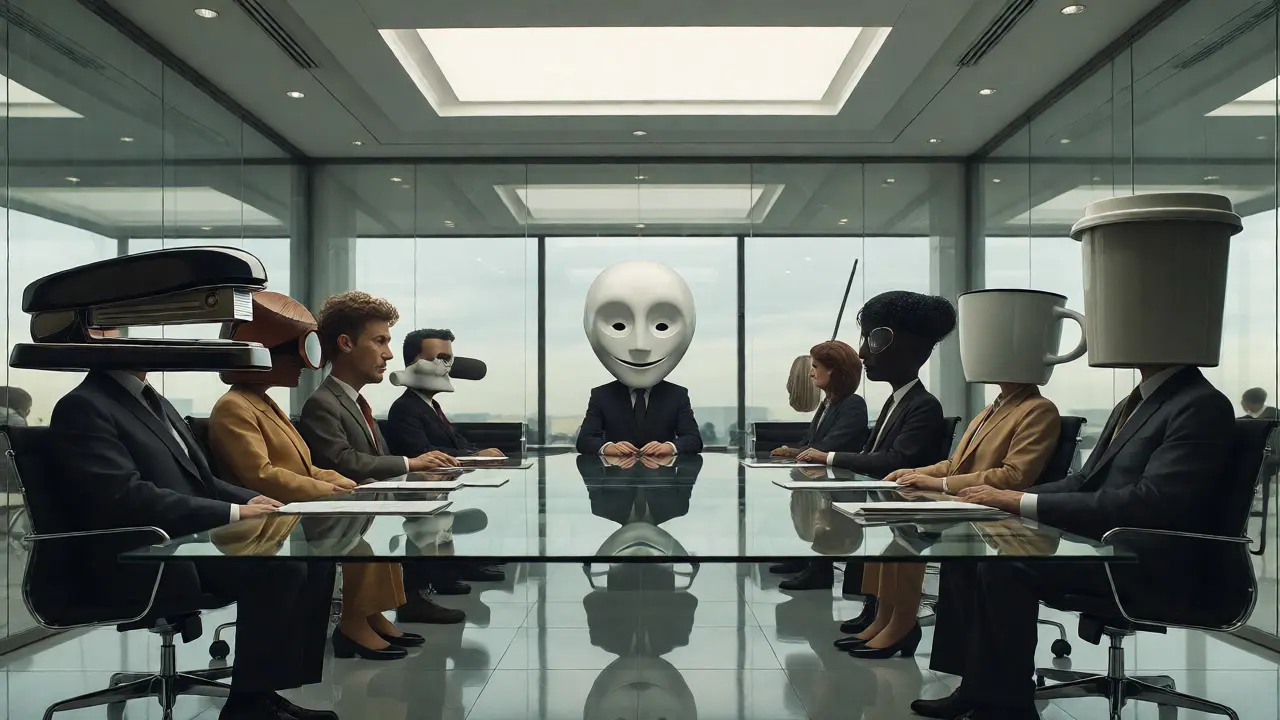
You laugh. Then you pause. Did that joke just expose a societal flaw or mock your own biases? Satire in cinema is not just about funny moments; it is a weaponized form of storytelling that uses exaggeration and irony to dismantle power structures. Unlike straightforward drama, which might tell you what is wrong with the world, satire shows you the absurdity of it until you can no longer ignore the truth.
This distinction matters because many viewers mistake cynicism for critique. A movie like Don’t Look Up isn't just complaining about climate change denial; it is holding up a mirror to media sensationalism and political paralysis. To understand how humor functions as cultural critique, we need to look at the mechanics behind the jokes. We are talking about narrative analysis tools that reveal why certain films resonate while others fall flat.
The Mechanics of Satirical Storytelling
At its core, satire relies on the gap between reality and representation. When a filmmaker amplifies a real-world behavior to an extreme degree, they create a cognitive dissonance in the audience. You recognize the trait, but the context is so ridiculous that you laugh at the recognition itself. This process is known as defamiliarization. It strips away the normalization of harmful habits.
Consider the work of Jorge Luis Borges influenced directors like Yorgos Lanthimos. In The Lobster, society mandates romantic pairing. If you fail to find a partner within 45 days, you turn into an animal. This is not fantasy for fantasy's sake. It is a sharp critique of modern dating apps and the pressure to conform to relationship statuses regardless of compatibility. The humor comes from the bureaucratic rigidity applied to human emotion.
- Exaggeration: Taking a minor social norm and blowing it out of proportion (e.g., corporate jargon in Office Space).
- Irony: Saying one thing while meaning another, often highlighting hypocrisy.
- Incongruity: Placing characters in situations where their values clash violently with their environment.
These elements work together to lower the viewer's defenses. People resist direct criticism. They accept laughter. Once you are laughing at a character's foolishness, you are more likely to accept the underlying message about why that foolishness exists.
Types of Cinematic Satire and Their Targets
Not all satire hits the same target. Understanding the subtype helps you decode the director's intent. Some films attack institutions, while others attack individual psychology. Identifying the target reveals the specific cultural nerve being touched.
| Subtype | Primary Target | Tone | Example Film |
|---|---|---|---|
| Horatian | Human folly and weakness | Gentle, forgiving, warm | Amelie (light touch) |
| Juvenalian | Vices, corruption, abuse of power | Bitter, angry, abrasive | Parasite |
| Mennippean | Mental attitudes and ideologies | Chaotic, surreal, fragmented | Dr. Strangelove |
Juvenalian satire is particularly potent in contemporary cinema. Bong Joon-ho’s Parasite does not ask us to feel sorry for the wealthy Park family; it asks us to see their obliviousness as a structural feature of capitalism. The smell metaphor used throughout the film is a visceral critique of class boundaries. You cannot wash off poverty, no matter how hard you try. This type of humor stings because it lacks the warmth of Horatian satire. It refuses to comfort the audience.
On the other end of the spectrum, Mennippean satire attacks ideas rather than people. Stanley Kubrick’s Dr. Strangelove targets the logic of nuclear deterrence. The characters are caricatures of Cold War paranoia, but the true villain is the abstract concept of mutually assured destruction. By making the apocalypse a boardroom misunderstanding, Kubrick exposes the fragility of systems built on fear.

Narrative Structure as a Tool for Critique
The way a satirical film is structured often mirrors the chaos it critiques. Traditional three-act structures imply order and resolution. Satire often rejects this. If the world depicted is broken, why should the story be tidy?
Look at Sorry to Bother You. Boots Riley shifts genres mid-film. It starts as a workplace comedy about telemarketing, morphs into a sci-fi dystopia, and ends as a surrealist protest piece. This structural whiplash forces the viewer to abandon conventional expectations. Just as the protagonist realizes his job is part of a larger exploitative machine, the audience realizes the genre rules they were following are inadequate for describing the horror of late-stage capitalism.
This technique is called narrative destabilization. It prevents the audience from settling into passive consumption. You have to actively re-evaluate what you are watching. Here is how effective narrative critique works in practice:
- Establish Normalcy: Show the status quo as acceptable or inevitable.
- Introduce the Absurd: Insert an element that breaks logical consistency.
- Escalate Consequences: Show how characters adapt to the absurdity rather than fix it.
- Collapse the System: Let the structure break down, leaving no easy solution.
In The Menu, the fine dining experience becomes a ritualistic punishment. The narrative does not resolve with a traditional escape. Instead, it offers a choice between complicity and destruction. The lack of a neat ending is the point. Cultural critique rarely offers simple fixes.
The Role of Audience Complicity
Why do we enjoy watching people suffer when the suffering is funny? Satire often implicates the viewer. If you laugh at the rich character’s ignorance, are you also laughing at your own desire to be wealthy? This is the trap of cinematic satire. It makes you an accomplice.
Think about American Psycho. Patrick Bateman is a monster, but he is also a product of consumer culture. The film critiques the obsession with business cards, reservations, and brand names. When audiences quote lines like "I love to return videotapes," they sometimes miss the irony. They adopt the persona without critiquing the emptiness behind it. This phenomenon is known as ironic detachment.
Directors use this to test cultural literacy. Does the audience get the joke, or do they become the joke? In Barbie, Greta Gerwig navigates this minefield carefully. The film critiques patriarchal structures while simultaneously celebrating the brand that embodies them. The humor lies in the contradiction. If you only laugh at the Ken dolls' incompetence, you miss the systemic critique of gender roles. If you only analyze the sociology, you miss the joy.
Ethical Boundaries in Satirical Humor
There is a thin line between punching up and punching down. Effective cultural critique usually targets those with power. When satire mocks marginalized groups, it risks reinforcing stereotypes rather than dismantling them. However, the definition of "power" shifts depending on the cultural context.
In 2026, we see a rise in meta-satire, where films critique the act of criticism itself. Movies like Triangle of Sadness by Ruben Östlund dissect the influencer economy and the fashion industry. But they also critique the audience’s hunger for such content. Are we consuming the critique, or just enjoying the spectacle of wealth falling apart?
Here are key ethical considerations for analyzing satirical films:
- Intent vs. Impact: Did the director intend to critique, or did the execution reinforce bias?
- Contextual Relevance: Does the joke land differently across different demographics?
- Agency of Characters: Do the mocked characters have any voice, or are they mere props?
For instance, Jojo Rabbit uses satire to dehumanize Nazi ideology by showing its absurdity through a child’s eyes. It punches up at Hitler (played by Taika Waititi) and down at the indoctrinated youth, but ultimately aims to reclaim humanity from hate. The balance is delicate. Too much humor trivializes history; too little loses the satirical edge.
How to Analyze Satire in Any Film
You don’t need a PhD to spot good satire. You just need to ask the right questions. Next time you watch a comedy-drama, try this framework to uncover the cultural critique hidden beneath the laughs.
First, identify the norm being violated. What social rule is being broken? Second, determine who benefits from the violation. Is it the powerful exploiting the weak, or the weak mocking the powerful? Third, look at the resolution. Does the system change, or does it absorb the rebellion? In most great satires, the system absorbs the rebellion, suggesting that the problem is systemic, not individual.
Consider Get Out. Jordan Peele blends horror and satire. The liberal community seems progressive, yet they commodify Black bodies. The satire lies in the politeness masking predatory intentions. The critique is not of racism as overt hatred, but as liberal fetishization. Recognizing this layer transforms the viewing experience from scary to insightful.
By focusing on these narrative cues, you move beyond entertainment into critical engagement. You start seeing films not just as stories, but as arguments about how we live. And that is the true power of satire in cinema. It doesn’t just reflect culture; it interrogates it.
What is the difference between satire and parody?
Parody imitates the style of a specific work or genre for comedic effect, often without a deeper social message. Satire uses humor, irony, and exaggeration specifically to criticize and expose vices, stupidity, or abuses in society. While a parody might mock the tropes of a spy movie, satire would use a spy movie to critique government surveillance or militarism.
Can satire be misunderstood by audiences?
Yes, frequently. This is known as the "Poe's Law" effect in media. If the satire is too subtle, audiences may take the exaggerated views literally. Conversely, if it is too broad, it may be dismissed as mere comedy. Films like Starship Troopers faced initial confusion where some viewers missed the critique of fascism and viewed it simply as an action movie. Over time, however, cultural consensus often clarifies the satirical intent.
Why is dark comedy often used for serious topics?
Dark comedy allows audiences to process trauma and anxiety through distance. Laughing at death, war, or inequality creates a psychological buffer. It enables discussion of taboo subjects without immediate emotional overwhelm. For example, Dr. Strangelove made the terrifying prospect of nuclear annihilation discussable by framing it as a bureaucratic farce, thereby reducing the paralysis caused by fear.
Does satire always lead to social change?
Not necessarily. Satire raises awareness and challenges dominant narratives, but it rarely changes policy on its own. Its primary function is to shift public discourse and make existing issues visible. Sometimes, it can even reinforce cynicism if audiences feel powerless to change the systems being mocked. However, it serves as a crucial catalyst for dialogue and reflection.
How has streaming affected satirical cinema?
Streaming platforms allow for niche, riskier satires that might struggle in theatrical releases due to unpredictable box office returns. Shows like The White Lotus or films distributed by A24 can target specific cultural anxieties without needing mass appeal. This has led to a proliferation of micro-satires targeting specific industries, tech cultures, or social classes, allowing for more nuanced and localized critiques.