You know that feeling when the strings swell, and suddenly you’re crying over a fictional dog? Or when a low, rumbling drone creeps in, and your heart rate spikes before you even see the monster? That’s not magic. It’s film music working its way into your nervous system. Most viewers think they’re watching a story with their eyes, but half the emotional heavy lifting is done by what they hear. The soundtrack isn’t just background noise; it’s a psychological trigger that dictates how you interpret every frame on screen.
Why does this matter? Because understanding the psychology of film music changes how you watch movies. You stop passively absorbing content and start seeing the mechanics behind your own reactions. Whether you’re a filmmaker trying to manipulate audience tension or a cinephile who wants to appreciate the craft, knowing why a minor key makes you feel uneasy-or why silence can be louder than an explosion-gives you a superpower. Let’s break down exactly how composers hack your brain.
The Biological Basis of Auditory Emotion
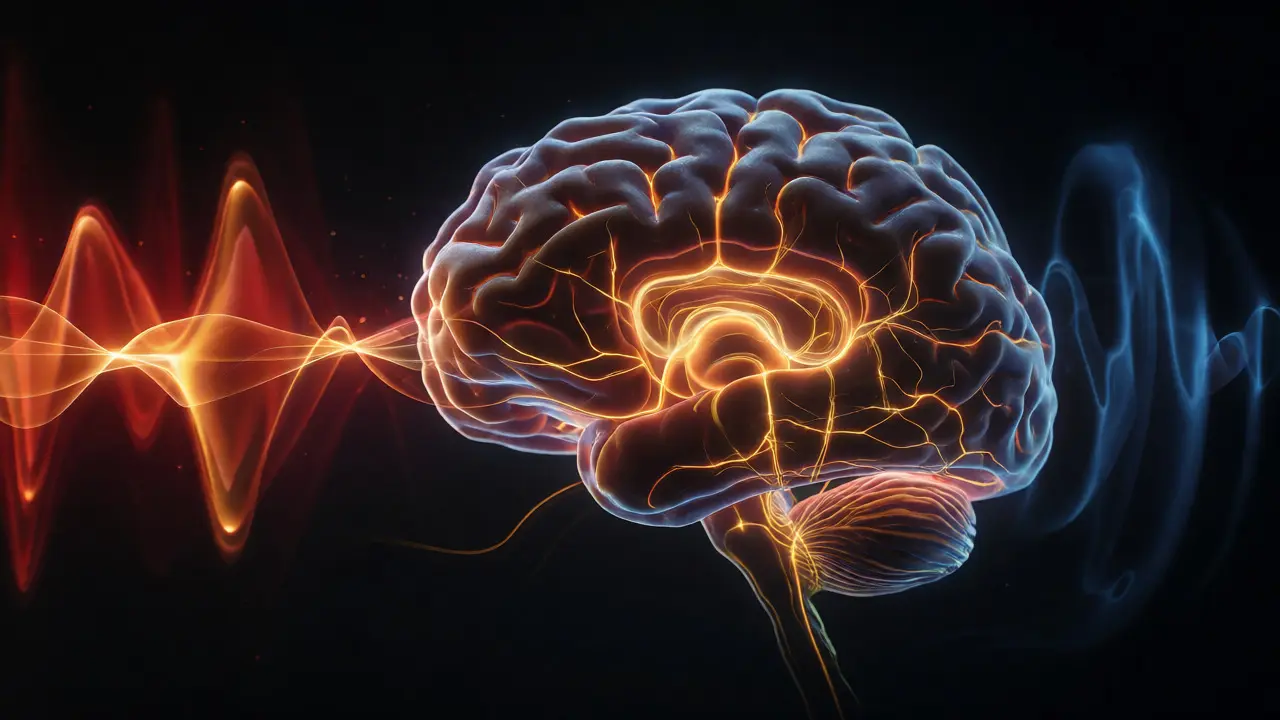
Your brain doesn’t process sound like a computer processing data. It processes it like an animal detecting threats or rewards. When you hear a sudden loud noise, your amygdala-the part of the brain responsible for fear-fires before your conscious mind even registers what happened. This is evolutionary baggage. In the wild, quick reaction meant survival. In a cinema, it means you jump in your seat during a horror movie.
Auditory perception is deeply tied to physiological responses. High-pitched sounds often signal urgency or pain (think a baby crying or a scream), while low-frequency rumbles are associated with danger or power (like thunder or a predator’s growl). Composers exploit this. They don’t need to show you the shark; they just need to play a low C-sharp on a cello, and your body prepares for attack. This isn’t subjective preference; it’s hardwired biology. Studies in psychoacoustics show that dissonant intervals-chords that clash rather than harmonize-create measurable stress in listeners because our brains expect resolution and don’t get it.
Leitmotifs and Character Association
If biological triggers are the hardware, leitmotifs are the software. A leitmotif is a short, recurring musical phrase associated with a specific character, place, or idea. Richard Wagner popularized this in opera, but John Williams perfected it for modern cinema. Think of the two-note motif for Jaws or the Imperial March for Darth Vader.
How does this work psychologically? It relies on classical conditioning. At first, the theme is neutral. But after hearing it three or four times alongside a specific visual cue-say, the villain entering the room-your brain forms a strong neural link between the sound and the concept. Next time you hear those notes, even if the villain isn’t on screen, you feel a sense of dread. You’ve been trained. This allows filmmakers to convey complex narrative information without dialogue. If the hero’s theme plays softly on a flute, we know hope remains, even if the character looks defeated. The music tells us the internal truth, bypassing the external performance.
| Musical Element | Psychological Effect | Cinematic Example |
|---|---|---|
| Minor Key | Sadness, melancholy, unease | The Godfather |
| Major Key | Happiness, triumph, safety | Star Wars (Main Theme) |
| Dissonance | Tension, chaos, insanity | Psycho (Shower Scene) |
| Tempo Increase | Anxiety, excitement, urgency | Dunkirk |
| Silence | Anticipation, shock, realism | No Country for Old Men |
Manipulating Time and Pacing
Music doesn’t just affect mood; it affects your perception of time. Have you ever noticed that action sequences feel faster when the drums are pounding at 140 beats per minute? That’s not coincidence. Fast tempos increase heart rate and respiration, making the viewer feel physically agitated. This agitation translates to perceived speed. Conversely, slow, sustained strings can make a five-minute scene feel like an eternity, stretching out moments of grief or anticipation.
Composers use this to edit reality. In Christopher Nolan’s films, Hans Zimmer often uses a "Shepard tone"-an auditory illusion that sounds like it’s constantly rising in pitch but never actually gets higher. In Dunkirk, this creates a perpetual sense of escalation and anxiety. Your brain expects the tension to resolve, but it never does. This keeps the audience on edge for hours. It’s a trick of frequency manipulation, but emotionally, it feels like relentless pressure. Without that sonic architecture, the visual editing might feel flat or disjointed.
The Power of Silence and Absence
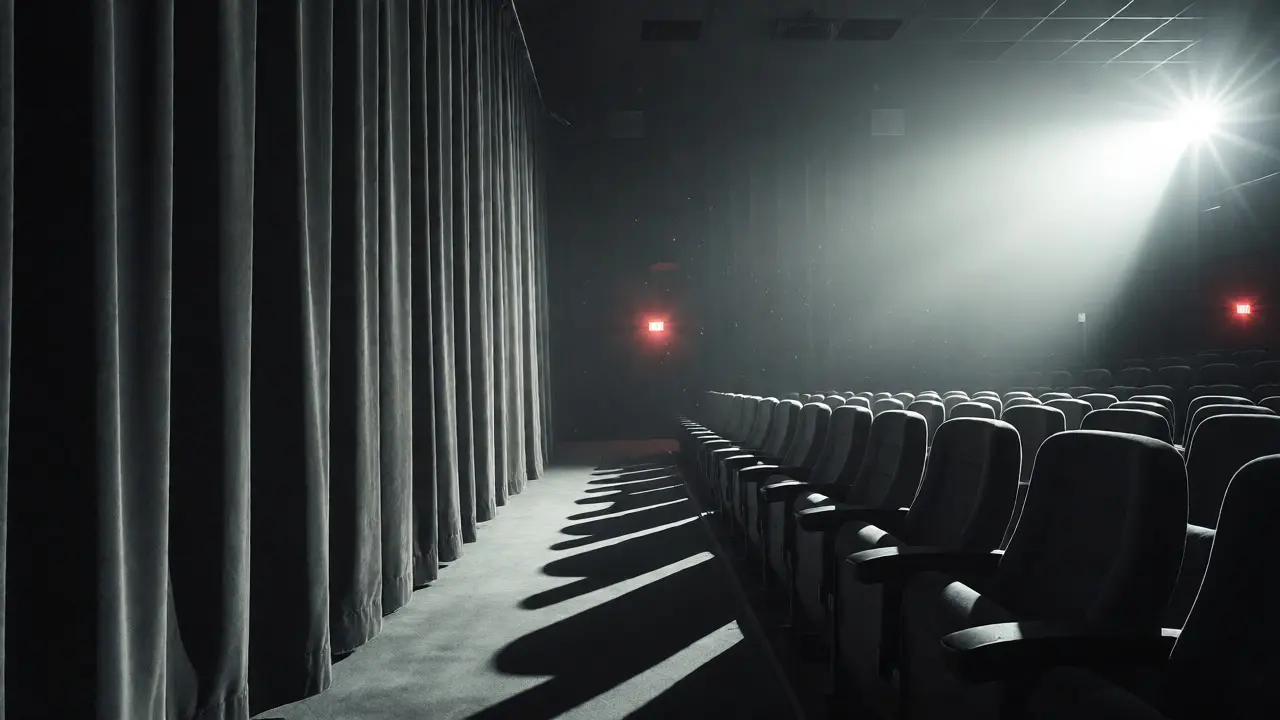
We talk a lot about what is heard, but what about what isn’t? Silence is one of the most powerful tools in the composer’s arsenal. In a medium saturated with sound, silence stands out. It forces the audience to lean in. It creates a vacuum that the viewer’s imagination rushes to fill.
Consider the Coen Brothers’ No Country for Old Men. There is almost no traditional score. The lack of music makes the violence feel raw, unmediated, and terrifyingly real. Music often signals "this is a movie," creating a safe distance between the viewer and the event. Removing it breaks that fourth wall. Suddenly, the death on screen isn’t dramatic; it’s tragic and abrupt. Silence also resets the ear. After a cacophony of explosions, a moment of quiet makes the next sound-like a ticking clock or a breathing pattern-feel deafeningly loud. It’s all about contrast. If everything is loud, nothing is loud. If there is silence, a whisper becomes a shout.
Cultural Conditioning vs. Universal Response
Not everything about film music is biological. Some of it is cultural. Western audiences associate major keys with happiness and minor keys with sadness, but this isn’t universal. In some Eastern European traditions, minor keys can signify strength or heroism. However, global cinema has largely standardized these associations through decades of Hollywood dominance. We have been culturally conditioned to react to certain cues.
This raises an interesting point for creators: do you follow the rules or break them? Breaking cultural expectations can create irony or discomfort. Using upbeat, cheerful music during a massacre (as seen in Tarantino’s films) creates cognitive dissonance. Your brain expects tragedy, so it hears comedy, then realizes the context is horrific. This juxtaposition amplifies the shock. It forces you to question the morality of the scene. Are you laughing because it’s funny, or because the absurdity is too much to bear? This technique turns the soundtrack into a commentary track, adding layers of meaning that visuals alone cannot provide.
Practical Takeaways for Viewers and Creators
So, how do you use this knowledge? If you’re a viewer, try watching your favorite scenes with the sound off. Then turn it back on. Notice how the emotional weight shifts. Does the scene feel hollow without the score? Does it feel more authentic? This exercise reveals how much of your emotional journey was guided by invisible hands.
If you’re a creator, remember that less is often more. Don’t tell the audience how to feel with obvious stingers unless you want melodrama. Use texture and rhythm to build subconscious tension. Match the tempo of the music to the heartbeat of the character, not just the action on screen. And never underestimate the power of a well-timed pause. The best film scores aren’t the ones you notice the most; they’re the ones you feel the hardest.
Why do minor keys make us feel sad?
While partly cultural, there is a biological component. Minor intervals contain frequencies that vibrate against each other in ways that create slight acoustic roughness, which the human ear perceives as unstable or tense. Over time, Western culture has reinforced the association between this instability and negative emotions like sadness or longing, creating a learned but deeply ingrained response.
Can film music change the meaning of a scene?
Absolutely. A classic experiment shows the same video clip of a person looking at a door can be interpreted as romantic, scary, or neutral depending solely on the accompanying music. Music provides the emotional context that visual ambiguity lacks. It tells the viewer whether to trust the character, fear the situation, or laugh at the absurdity.
What is a Shepard Tone?
A Shepard Tone is an auditory illusion created by layering sine waves separated by octaves. As the pitch rises, the lower tones fade out and higher tones fade in, creating the sensation of an endlessly ascending scale. In film, it is used to create a feeling of infinite tension or escalation that never resolves, keeping the audience in a state of high alert.
Is silence really effective in horror movies?
Yes, silence is highly effective because it removes the 'safety net' of the score. Horror scores often warn us of impending danger. When the music stops, the warning disappears, leaving the viewer vulnerable and hyper-aware of ambient noises. This heightened sensitivity makes any sudden sound-like a footstep or a creak-feel significantly more threatening.
Do different cultures react differently to film music?
To some extent, yes. While basic physiological responses to loudness and tempo are universal, harmonic associations vary. For example, pentatonic scales may evoke exoticism in Western ears but normalcy in East Asian contexts. However, globalization and the prevalence of Hollywood scores have homogenized many of these reactions, leading to a shared global language of cinematic emotion.