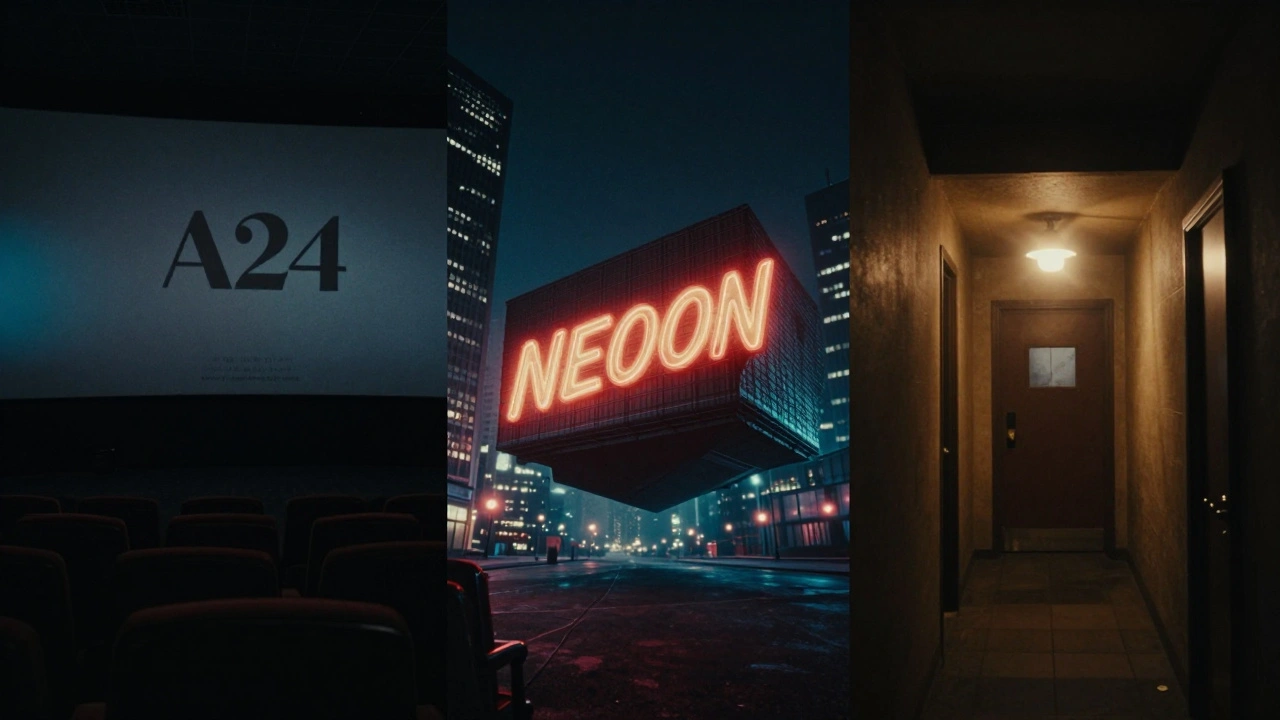
Independent films don’t just appear on streaming platforms or in theaters by accident. Behind every quirky horror movie, intimate drama, or bold experimental piece is a specialty distributor - the quiet force that gets these films seen. While major studios chase blockbusters, companies like A24, Neon, and Blumhouse have built empires by betting on the unusual, the uncomfortable, and the unforgettable. These aren’t just labels. They’re curators, marketers, and sometimes even co-creators. If you’ve ever been moved by indie film distribution, you’ve felt their work.
What Makes a Specialty Distributor Different?
Big studios operate on volume. They need 50 million-dollar openings. Specialty distributors operate on passion. They look for films that might not make $10 million but will spark conversations, win awards, and build loyal audiences over years.
These distributors don’t just buy movies. They shape how they’re released. A24 might open a film in just five theaters, then slowly expand based on word-of-mouth. Neon might drop a film on streaming the same day it hits theaters. Blumhouse often uses low budgets and high returns to fund more films. Each has its own rhythm, its own strategy, and its own kind of audience.
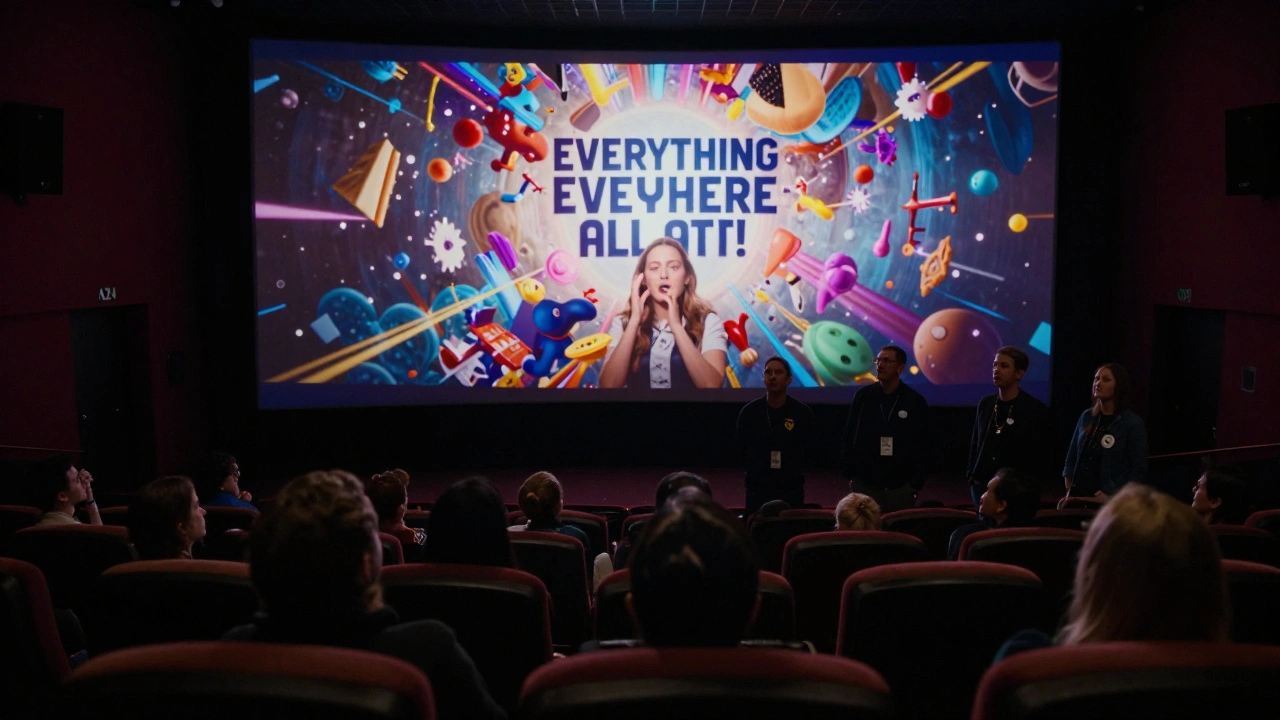
They also take creative risks. A film like Everything Everywhere All At Once would’ve been too weird for Warner Bros. in 2020. But A24 saw its potential. It wasn’t just a movie - it was a cultural moment. That’s the power of specialty distribution: turning niche into mainstream without losing its soul.
A24: The Cultural Curator
A24 started in 2012 as a boutique label for fashion and music. Then they bought the rights to Spring Breakers and everything changed. They didn’t just release films - they built a brand identity. Dark visuals. Minimalist posters. A sound design that haunts you.
By 2025, A24 had distributed over 150 films. They’ve won seven Oscars since 2017. Their biggest hit, Everything Everywhere All At Once, made $139 million worldwide on a $25 million budget. That’s a 456% return. Not bad for a company that once had zero theatrical presence.
What sets A24 apart? They treat films like art objects. Their marketing feels like a gallery opening, not a trailer drop. They release films with no trailers, or with only cryptic teasers. They let the audience discover the film. And when audiences do, they become evangelists.
They also don’t chase trends. They chase tone. A film doesn’t need to be a hit. It just needs to feel true. That’s why they’ve backed directors like Ari Aster, Daniel Kwan, and Sofia Coppola - artists who aren’t trying to please everyone.
Neon: The Bold Outsider
Neon came onto the scene in 2017 with a single goal: disrupt. Founded by Tom Quinn and Jason Janego, both ex-A24 execs, Neon wanted to do what A24 did - but faster, louder, and more aggressively.
They made their mark with Parasite in 2019. That film didn’t just win Best Picture - it became the first non-English language film to do so. Neon spent less than $5 million on marketing, yet Parasite grossed over $260 million. How? They didn’t just release a film. They turned it into a global event.
Neon’s playbook is simple: find the most polarizing film possible, then double down. The Square? They released it with a viral stunt: a fake museum exhibit that fooled people into thinking it was real. Triangle of Sadness? They launched a TikTok campaign where influencers pretended to be the characters.
Neon doesn’t care if you love a film. They just want you to talk about it. They’re the punk rock of distribution - loud, unapologetic, and always one step ahead.
Blumhouse: The Machine Behind Horror
Blumhouse isn’t just a distributor. It’s a factory. Founded by Jason Blum in 2000, the company has made over 100 horror and thriller films - most under $5 million. Their motto? ‘Make scary movies cheap, and make them count.’
They don’t rely on big stars. They rely on ideas. Get Out cost $4.5 million and made $255 million. Split cost $9 million, earned $279 million. Us? $7 million budget, $255 million. That’s not luck. That’s a system.
Blumhouse uses a unique model: they finance films through their own production arm, then license distribution rights to others - sometimes Universal, sometimes Sony. But they keep creative control. They give directors freedom, as long as they stick to the budget. No reshoots. No studio notes. Just pure, unfiltered horror.
They also own the rights to their films. That means they keep streaming rights, merchandising, and sequels. Insidious became a franchise because Blumhouse held onto it. They didn’t sell it off. They built a universe.
Other Indie Labels: The Quiet Powerhouses
A24, Neon, and Blumhouse get the headlines. But there are dozens of other indie distributors shaping what we watch.
- IFC Films - Known for launching Little Miss Sunshine and The Babadook. They still run a small but steady slate of dramas and documentaries.
- Sony Pictures Classics - The old guard. They’ve distributed Amour, Call Me by Your Name, and Marriage Story. They’re elegant, Oscar-focused, and deeply respected.
- Searchlight Pictures - A subsidiary of Disney, but they operate like an indie. They made Black Swan and The Shape of Water. They’re the only major studio that still champions weird, arthouse films.
- Focus Features - They’ve backed Brooklyn, Ex Machina, and Portrait of a Lady on Fire. They’re quiet, but they win awards.
These companies don’t need viral TikTok campaigns. They rely on film festivals, critic reviews, and word-of-mouth. They’re the backbone of the indie ecosystem. Without them, films like The Lighthouse or Past Lives would vanish into obscurity.
How Do These Distributors Find Films?
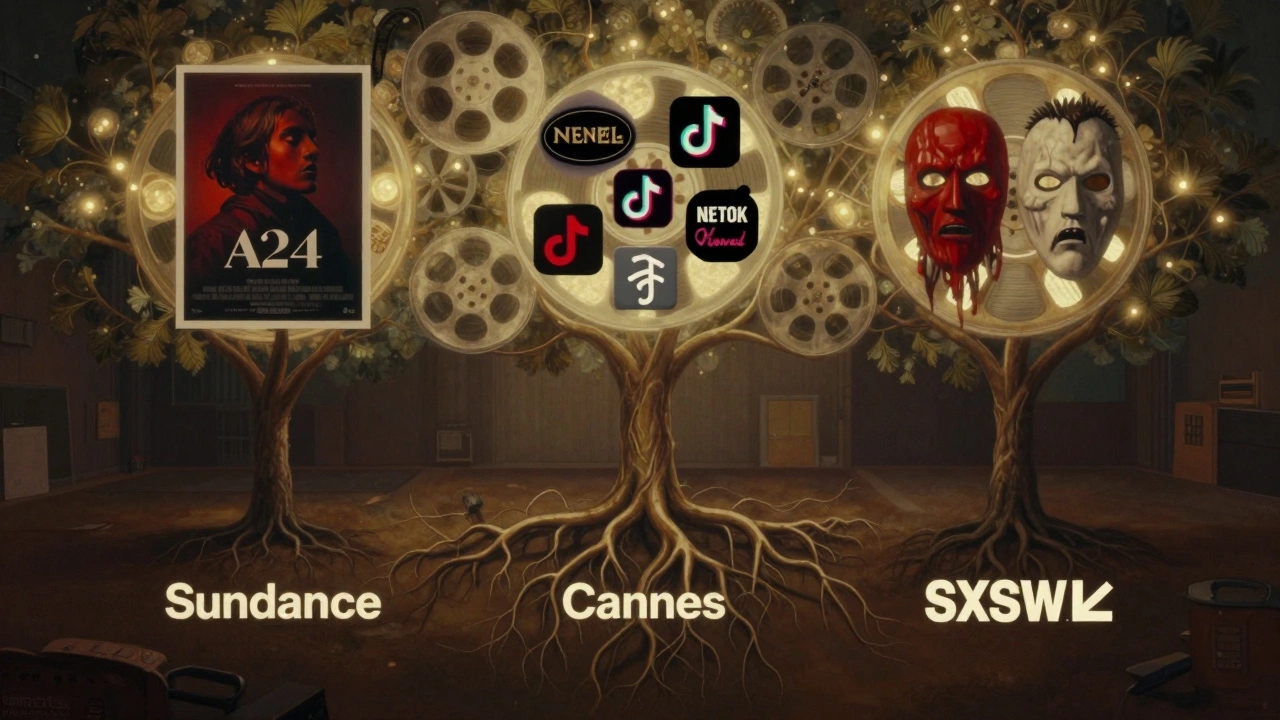
Most indie distributors don’t wait for scripts to land on their desks. They’re at festivals - Sundance, Cannes, Toronto, SXSW. They watch 300 films a year. They’re looking for one that sticks.
A24 scouts emerging directors. Neon hunts for films with a strong visual hook. Blumhouse looks for high-concept horror with a social angle. Searchlight wants emotional depth. Each has a different radar.
Some distributors even commission films. A24 once told a first-time filmmaker, ‘We’ll give you $1 million if you make a movie about grief in rural Maine.’ He did. It became The Killing of a Sacred Deer.
It’s not about who has the biggest budget. It’s about who understands the story.
Why Indie Distribution Matters
Without specialty distributors, Hollywood would only make sequels, reboots, and superhero movies. The weird, the quiet, the uncomfortable - they’d disappear.
Indie distributors are the reason we have Marcel the Shell with Shoes On. The reason we have The Worst Person in the World. The reason we still have directors who make films because they have to, not because they’re paid to.
They’re also changing how we watch movies. More films are going day-and-date - streaming and theaters at the same time. That’s a direct result of indie distributors testing new models. A24 did it first. Now everyone’s following.
These companies don’t just distribute films. They preserve cinema’s soul. They give space to voices that wouldn’t survive in a system that only rewards box office numbers.
What’s Next for Indie Distribution?
In 2026, the landscape is shifting. Streaming is no longer the savior - it’s the new bottleneck. Algorithms favor repeat content. Audiences are tired of the same formula.
That’s where indie distributors thrive. They’re the antidote. They’re betting on films that can’t be predicted. On directors who haven’t been vetted. On stories that don’t fit into a 30-second TikTok.
Some predict they’ll be absorbed by bigger players. But history shows otherwise. A24, Neon, Blumhouse - they’re growing. They’re hiring. They’re opening offices in London, Tokyo, and Mexico City.
The future of film isn’t in the hands of conglomerates. It’s in the hands of the ones who still believe a movie can change how you see the world.
How do specialty distributors make money if they don’t release big blockbusters?
They make money through low budgets, high returns, and long-term rights ownership. Films like Get Out and Parasite had budgets under $10 million but earned over $200 million. They also own streaming, international, and merchandising rights, which generate revenue for years after release.
Are indie distributors still relevant with streaming services dominating?
More relevant than ever. Streaming platforms need fresh, award-worthy content to stand out. Indie distributors supply exactly that - unique films with critical buzz. Netflix and Apple TV+ often license films from A24 and Neon because they can’t produce them internally.
Can new filmmakers approach these distributors directly?
Rarely. Most distributors find films through festivals like Sundance or Cannes. Some accept submissions via platforms like FilmFreeway, but competition is fierce. The best path is to make a strong short film, get into a major festival, and let distributors come to you.
What’s the difference between a distributor and a producer?
Producers fund and oversee the making of a film. Distributors handle everything after - marketing, theatrical release, streaming deals, and physical media. A producer says, ‘Let’s make this movie.’ A distributor says, ‘Let’s make sure the world sees it.’
Do indie distributors only handle horror and drama?
No. While horror and drama dominate, indie distributors also release comedies, documentaries, foreign films, and experimental works. A24 distributed Minari (drama), Everything Everywhere All At Once (sci-fi comedy), and Fire of Love (documentary). Their range is wide - their taste is narrow.



Comments(9)