
Quick Takeaways for Producers
- Completion bonds protect the money, not the artistic vision.
- Insurers often require a bond before they will issue a general production policy.
- Bonds give the guarantor the right to fire your director if the project goes off the rails.
- The cost typically ranges from 2% to 5% of the total production budget.
How the Completion Bond Actually Works
A completion bond isn't a traditional insurance policy where you file a claim after a disaster. It is a guarantee. When a bond company signs off on your indie feature, they are telling the investors: "If this movie doesn't get finished for the agreed price, we will pay the extra money to get it across the finish line."
To make this happen, the bond company doesn't just take your word for it. They perform a brutal autopsy on your budget and schedule before you even start. They look for "fat" in the budget-money you've tucked away for emergencies-and often force you to remove it. Why? Because they are the emergency fund now. If you've already budgeted for a rainy day, they aren't taking the risk; they're just paying for your padding.
If a production hits a wall-say, a massive storm destroys a set in New Zealand-the bond company steps in. They provide the additional funds to rebuild. However, there is a catch. Since they are now spending their own money, they have a say in how it's spent. This leads to the most feared clause in indie film: the right of the guarantor to take over production.
The Power Struggle: Creative Control vs. Financial Security
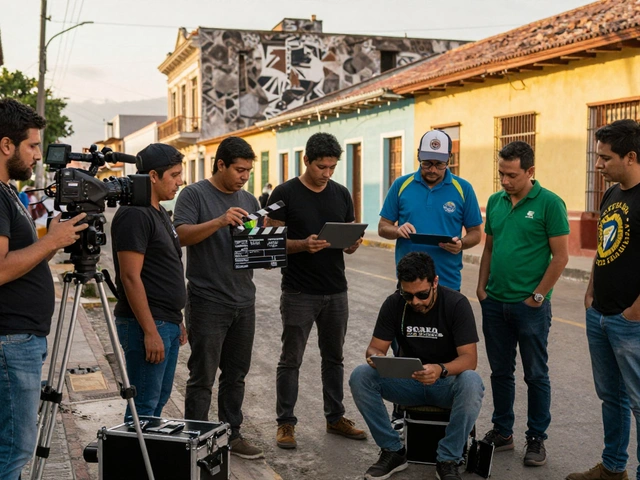
Here is where it gets tricky. If a project is wildly over budget or behind schedule, the Completion Guarantor can exercise their right to remove the director or producer to save the investment. This is a cold, hard business decision. They don't care if the director's vision is "revolutionary"; they care that the film is deliverable by the deadline.
For an independent filmmaker, this feels like a guillotine hanging over the set. But for an investor, it's the only reason they'll write the check. Without a bond, an investor is essentially gambling that every single person on a 50-person crew will be perfect for 30 straight days. With a bond, the risk is capped.
| Feature | Completion Bond | Production Insurance |
|---|---|---|
| Primary Goal | Ensures the film is finished | Covers specific losses (fire, theft, injury) |
| Who is Protected? | Investors and Distributors | The Production Company |
| Trigger for Payment | Budget overruns or delays | A defined "insured event" (e.g., accident) |
| Control Over Film | Can potentially replace staff | No influence on creative decisions |
| Typical Cost | 2-5% of budget | 1-3% of budget |

Essential Production Insurance Layers
While the bond handles the "will it be finished?" question, Production Insurance handles the "what if someone gets hurt or something breaks?" question. You cannot have one without the other.
First, you have General Liability Insurance. This is the basic requirement for renting any location. If a grip knocks over a vase in a rented Victorian mansion, this pays for the vase. Without it, no professional location manager will let you through the door.
Next is Cast Insurance. This is specific and expensive. If your lead actor gets a severe flu or a car accident and can't film for a week, the cost of keeping the rest of the crew on standby is astronomical. Cast insurance covers the lost wages and rental costs during that downtime. However, these policies often have "exclusion lists"-if your lead actor has a known history of health issues or a tendency to disappear, the insurer might refuse to cover them.
Finally, you need Equipment Insurance. Whether you are renting an Arri Alexa or using a boutique anamorphic lens set, the rental house will require a certificate of insurance (COI) proving that if the gear is stolen or smashed, they get paid the full replacement value.
The Interaction Between Bonds and Insurance
These two systems work in a tight loop. If a set fire happens, the Production Insurance pays for the physical damage. The Completion Bond then handles the costs associated with the delay-like paying the crew to wait or paying for a new location. The bond company will actually insist that you have robust insurance policies in place because it's easier for them to let an insurance company pay the bill than to pay it out of their own pocket.
Think of it this way: Insurance is for the accidents. The bond is for the failure of the process. If the director is simply too slow and the movie takes 40 days to shoot instead of 30, insurance won't pay a dime. That's when the completion bond kicks in.

Common Pitfalls for Indie Producers
Many first-time producers make the mistake of trying to "self-bond" or convince investors that they are "safe bets." This rarely works for budgets over $500,000. Professional equity investors know that indie films are high-risk. If you tell them you don't need a bond, you are essentially telling them you are okay with them losing their entire investment.
Another mistake is neglecting the "delivery" requirements. A completion bond doesn't just cover the act of filming; it covers delivery. If your film is finished but doesn't meet the technical specifications of the distributor (e.g., wrong audio format or missing deliverables), the bond company may have to pay for a rush post-production fix to ensure the movie can actually be sold.
Lastly, watch out for the "contingency" fight. Bond companies hate a 10% contingency line in a budget. They will try to strip it out to keep the budget "lean." A pro tip is to negotiate a compromise where a small percentage remains for the producer's immediate use, while the rest is handled by the guarantor. This gives you some breathing room without triggering a full bond takeover.
Next Steps for Securing Your Project
If you are currently in the finance stage, start by creating a "bond-ready" budget. This means having a detailed breakdown of every single line item and a realistic shooting schedule that includes travel and buffer days. Avoid vague categories like "Miscellaneous" or "Production Expenses." Be specific.
Once your budget is tight, approach a specialized film insurance broker. Don't go to a general agent; you need someone who understands the difference between a Completion Guarantor and a general underwriter. They can help you package your insurance and bond together, often saving you money and reducing the amount of paperwork you have to send to your investors.
Does every indie film need a completion bond?
No, but it depends on who is funding the film. If you are using your own money or a small group of friends, a bond is overkill. However, if you have institutional investors or a distribution deal that requires delivery, a bond is usually a non-negotiable requirement to protect the capital.
Can a completion bond company really fire my director?
Yes, they can. If the production is significantly over budget or behind schedule and the director is deemed the cause, the guarantor has the legal right to replace them to ensure the film is completed. This is why it is crucial to have a director who respects the budget and schedule.
What is the difference between a bond and a completion insurance policy?
A bond is a guarantee from a company to finish the movie. Completion insurance is a policy that covers the financial loss if the movie isn't finished. In practice, they serve the same purpose for the investor, but the bond involves more active management of the production.
How much does a completion bond typically cost?
Typically, you will pay between 2% and 5% of the total production budget. This fee is usually paid upfront and is considered a cost of doing business when seeking professional investment.
What happens if the bond company pays for overruns?
The bond company pays the costs to finish the film, but they don't do it for free. Depending on the contract, they may take a piece of the film's backend profits, a fee from the distributor, or seek reimbursement from the production company's remaining assets.



Comments(9)