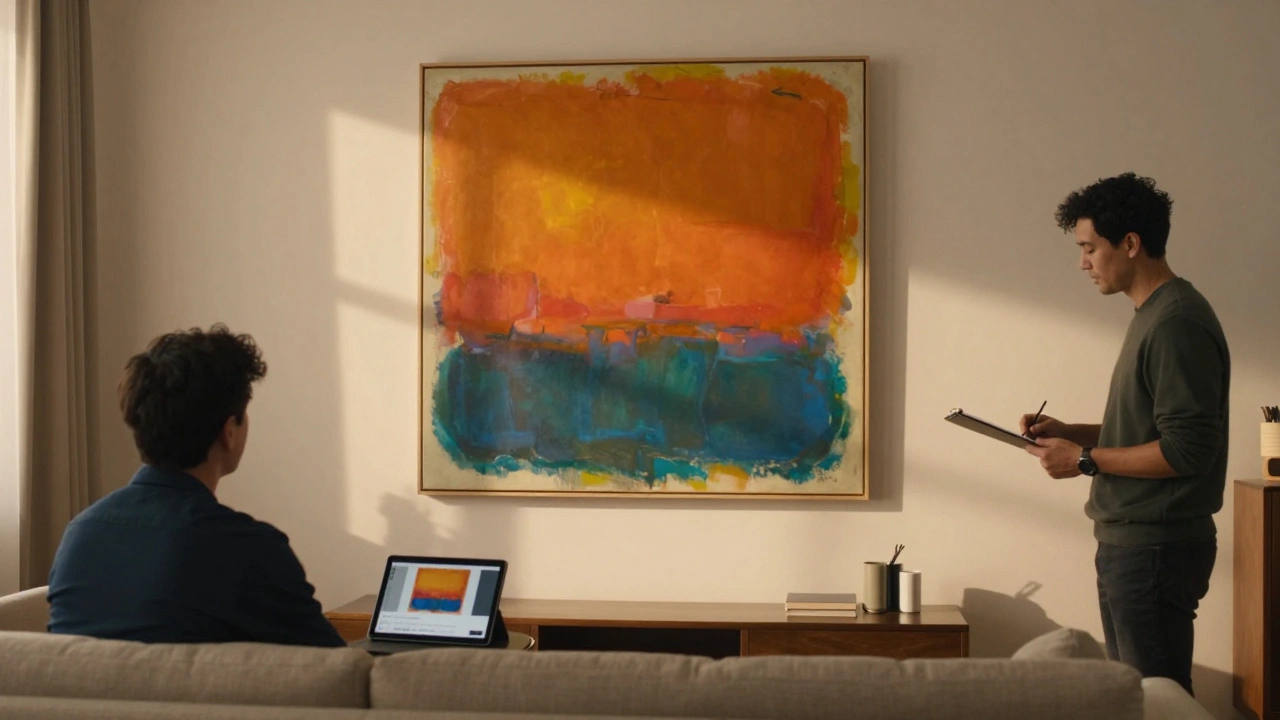
Ever notice how a painting in the background of a movie feels oddly familiar? Maybe it’s a Picasso, a Basquiat, or even a local artist’s work from a gallery you’ve visited. That’s not just set dressing. If you’re making a film and you show a piece of art - even for a few seconds - you need to clear the rights. Skipping this step can cost you millions in lawsuits, delays, or worse: having to pull your film from release.
Why Art in Films Isn’t Just Background Noise
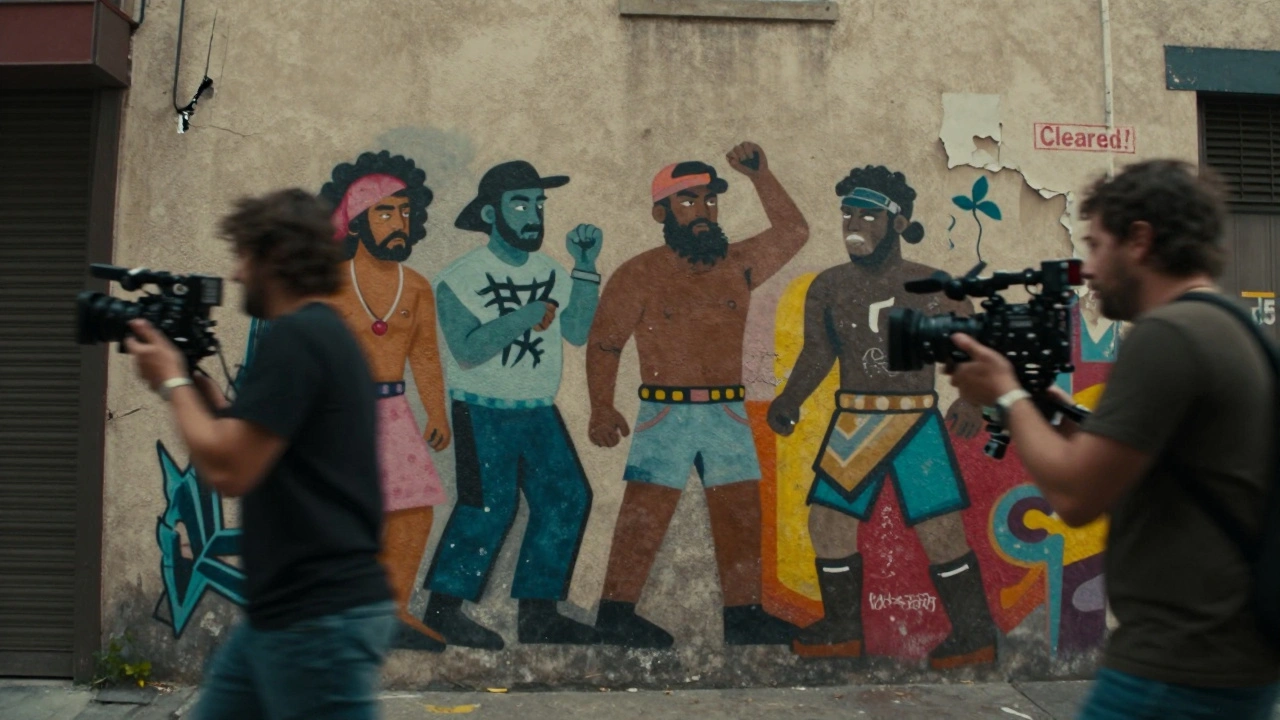
Artworks in films aren’t decorative. They carry meaning. A Rothko in a character’s living room isn’t just red and blue - it signals wealth, grief, or emotional isolation. But legally, that painting is still someone’s intellectual property. Copyright law protects original artworks for the life of the artist plus 70 years. That means if you film a Van Gogh from 1889, you’re fine - it’s in the public domain. But if you film a 2023 digital print by a living artist? You need permission.It’s not just paintings. Sculptures, murals, posters, tattoos, even digital art on a screen count. A 2021 case involving a documentary about a graffiti artist led to a $1.2 million settlement because the artist’s work appeared in the background without clearance. The court didn’t care that the art wasn’t the focus. It was still used.
What Counts as a “Use” Under Copyright Law
You don’t need to zoom in on the artwork to trigger copyright. Even a fleeting shot - 3 seconds, out of focus, in a hallway - still counts as reproduction. The law doesn’t care about intent or prominence. If the artwork is recognizable and you didn’t get permission, you’re infringing.There are only a few exceptions:
- Public domain: Art created before 1929 in the U.S. (or before 1955 in most other countries) is generally free to use.
- Incidental inclusion: Rarely accepted. Courts have ruled that if the artwork is clearly visible and identifiable, it’s not incidental - even if it’s not the subject.
- Fair use: Almost never applies to commercial films. Fair use is for criticism, commentary, or parody - not background decoration.
Some filmmakers try to argue that showing art in a film is “transformative.” But courts consistently reject this. A film isn’t transforming a painting - it’s copying it.
The Clearance Process: Step by Step
Clearing rights isn’t complicated, but it’s time-consuming. Here’s how it works:- Identify every artwork: Make a list. Include the artist’s name, title, year, location, and where it appears in the script. Don’t skip anything - even a poster on a wall.
- Track down the rights holder: This can be tricky. If the artist is alive, contact them or their gallery. If they’re deceased, the rights usually pass to their estate or a trust. The Artists Rights Society (ARS) and VAGA are two major U.S. agencies that manage rights for thousands of artists.
- Request permission in writing: Use a formal license agreement. Specify how the artwork will appear (duration, framing, context), where the film will be shown (theaters, streaming, TV), and for how long.
- Negotiate fees: Fees vary wildly. A small local artist might charge $500 for a 2-minute appearance. A major gallery representing a famous artist could ask for $25,000 or more. Some may ask for a credit. Others won’t allow it at all.
- Get it in writing: Verbal permission doesn’t hold up in court. Always have a signed license.
Pro tip: Start early. Clearance can take 6 to 12 weeks. If you’re on a tight schedule, you might need to replace the artwork or shoot around it.
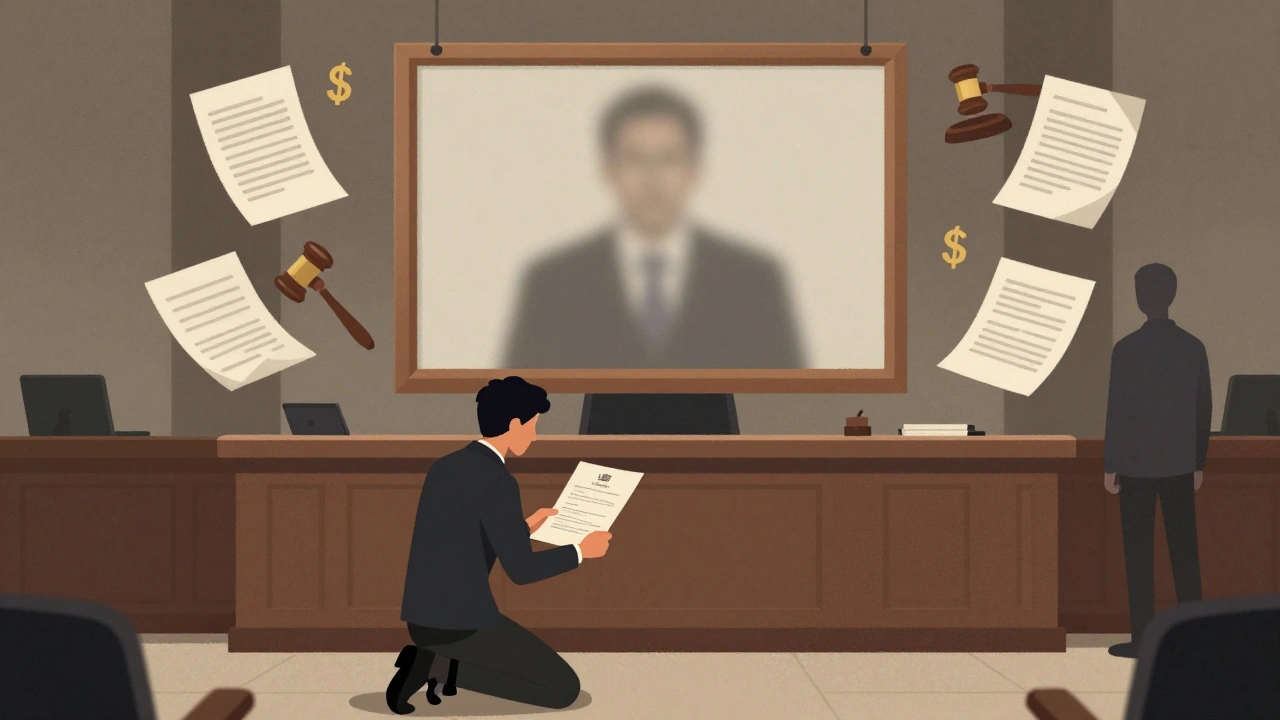
What Happens If You Don’t Clear Rights
The consequences aren’t theoretical. In 2019, a horror film had to be re-edited after release because a real-life painting by a deceased artist was used without permission. The artist’s estate sued for $5 million. The studio paid $1.8 million to settle - and had to pull the film from streaming platforms for six months to re-edit the scenes.Other risks:
- Streaming platforms like Netflix or Hulu may refuse to license your film if rights aren’t cleared.
- Film festivals like Sundance or TIFF require proof of clearance before accepting entries.
- Distribution deals can be voided if rights issues surface after signing.
Even if you’re a small indie filmmaker, you’re not immune. A 2023 survey by the Independent Film & Television Alliance found that 37% of low-budget films had unlicensed artwork - and nearly half of those faced legal threats after release.
Alternatives to Using Real Art
If clearance is too expensive or too slow, here are safer options:- Use public domain art: Websites like the Met’s Open Access collection or the Smithsonian’s digital archive offer thousands of high-res images you can use for free.
- Commission original art: Hire a local artist to create a piece that looks like the one you wanted. You own the copyright. No clearance needed.
- Use stock art: Sites like ArtGrid or ArtStation offer licensed artwork specifically for film and TV. Prices start at $50 per image.
- Blur or crop: If you can’t remove the artwork, blur it beyond recognition. Make sure no details - signature, brushstroke, color pattern - are visible.
One indie director in Asheville used a local painter to recreate a Warhol-style portrait for $300. The scene looked identical to the original - but legally clean.
Who’s Responsible for Clearance?
On big studio films, the production legal team handles clearance. On indie films, it often falls to the producer, art director, or even the director. Whoever picks the artwork should be the one who clears it. Don’t assume someone else is handling it.Include clearance in your budget. Many filmmakers forget this line item. Set aside at least $2,000-$5,000 for art rights, even on a low-budget film. If you’re using more than five pieces, budget $1,000 per artwork as a baseline.
Common Myths About Art in Films
- Myth: “I’m not selling the art - I’m just showing it in a movie.” Truth: Copyright law doesn’t care if you’re profiting directly from the art. Showing it in a commercial film is still a public reproduction.
- Myth: “It’s just in the background.” Truth: If it’s recognizable, it’s not background - it’s a visual element of your film.
- Myth: “I found it on Google Images - it’s free.” Truth: Google Images doesn’t grant rights. Most photos online are still protected.
- Myth: “I gave the artist credit.” Truth: Credit doesn’t replace permission. You still need a license.
How to Avoid Costly Mistakes
- Use a clearance checklist before shooting. Review every frame that includes art. - Work with a production lawyer who specializes in intellectual property. Don’t rely on a generalist. - Keep records of every permission, email, and contract. Store them in a cloud folder labeled “Art Rights Clearance.” - Don’t wait until post-production to fix this. Re-shooting scenes is far more expensive than clearing rights upfront.One filmmaker shot a scene with a mural on a building - only to learn later the artist had just sold the rights to a corporation. The company demanded $20,000. The filmmaker had to reshoot the entire sequence - at a cost of $45,000. That’s why clearance isn’t a formality. It’s insurance.
Final Thought: Art Is Not Free
Films are visual stories. Art adds depth, mood, and meaning. But every brushstroke, every line, every color choice belongs to someone. Respecting that isn’t just legal - it’s ethical. The artist who spent months creating that piece deserves to control how it’s used. And you, as a filmmaker, deserve to release your work without fear of a lawsuit.Clearing rights isn’t glamorous. But it’s the difference between your film being seen - and being buried under legal paperwork.
Do I need permission to show a painting if it’s only visible for two seconds?
Yes. Even a two-second shot counts as reproduction under copyright law. If the artwork is recognizable, you need clearance. Courts have ruled that duration doesn’t matter - visibility does.
Can I use artwork from museums without paying?
Only if the artwork is in the public domain - meaning the artist died more than 70 years ago. Museums may own the physical piece, but they don’t own the copyright unless they commissioned it. Some museums offer free-use images of public domain works, but always check their terms.
What if the artist is dead and has no heirs?
If the artist died more than 70 years ago, the work is in the public domain and you don’t need permission. If they died less than 70 years ago, the rights usually go to their estate, even if no living heirs are known. In those cases, contact the U.S. Copyright Office or a rights agency like ARS to trace ownership.
Do I need clearance for art in a documentary?
Yes. Documentaries are commercial products, even if they’re non-profit. Showing art to illustrate a point doesn’t qualify as fair use unless you’re directly criticizing or analyzing the artwork itself. Otherwise, you need a license.
Can I use a photograph of a painting instead of the real thing?
No. A photograph of a copyrighted artwork is still a reproduction of that artwork. You need permission from both the artist (or estate) and the photographer if the photo isn’t yours. The safest route is to use public domain images or commission original art.
Is there a way to clear rights for multiple artworks at once?
Yes. Organizations like Artists Rights Society (ARS) and VAGA offer blanket licenses for their represented artists. If your film includes multiple works from their roster, you can negotiate a single fee for all of them. This is common in big studio productions.




Comments(10)